

FLORIDA KEYS & EVERGLADES
Big Pine Key
fishing guide
Learn to read shallow flats, choose neighborhood ramps carefully and consider Bahia Honda as a separate managed shore option.
Explore the guide ↓Shallow water deserves a slow approach
Big Pine Key is surrounded by Lower Keys flats, channels and mangrove habitat. Bonefish and permit are demanding shallow-water targets. Mangrove snapper can offer a more direct approach near suitable cover, while other fish move through connected channels.
The attraction is not just clear water. Small changes in bottom and depth give fish feeding routes, shelter and a way to leave the flat. Learning those relationships is more useful than searching for one permanent secret spot.
Access needs equal attention. Neighborhood ramps, refuge lands, state park facilities and private waterfront are different places with different rules. Choose a confirmed starting point and a modest route before selecting the day’s target.
Check the exact neighborhood ramp
Monroe County lists Koehn Avenue and Eden Pines Neighborhood Ramp as public launch locations on Big Pine Key. Confirm the current parking arrangement, vessel suitability and any notices before bringing a trailer.
A ramp in a residential setting may have much less space than a large marina. Do not assume roadside parking or overnight storage is allowed. Keep driveways clear and prepare the boat away from the ramp.
For kayaks, a launch still needs to fit the route and return conditions. The nearest water may lead toward a broad exposed flat or a strong channel. Study the route instead of choosing solely by the shortest drive.
Protect the quiet neighborhood setting. Keep noise low early in the day, collect loose line and bait packaging, and avoid using residential docks as temporary fishing stations.
Bahia Honda is a separate, managed option
Nearby Bahia Honda State Park provides a more developed setting with beaches, boat access and designated recreation facilities. Its address is 36850 Overseas Highway, and normal day-use hours are listed as 8 a.m. to sunset. Check current notices and admission before travel.
The park permits fishing subject to applicable rules, but swimming areas and channel hazards still shape where a sensible session belongs. Ask staff about the current permitted shore positions rather than casting beside swimmers.
The park prohibits spearfishing and possession of spearfishing equipment. Do not bring that equipment expecting to use the park as a staging point. A rod-and-reel visit should also respect posted habitat and access boundaries.
The old bridge is a scenic feature, not a blanket fishing recommendation. Confirm the exact place where fishing is allowed and how a fish can be landed safely.
What makes permit fishing challenging
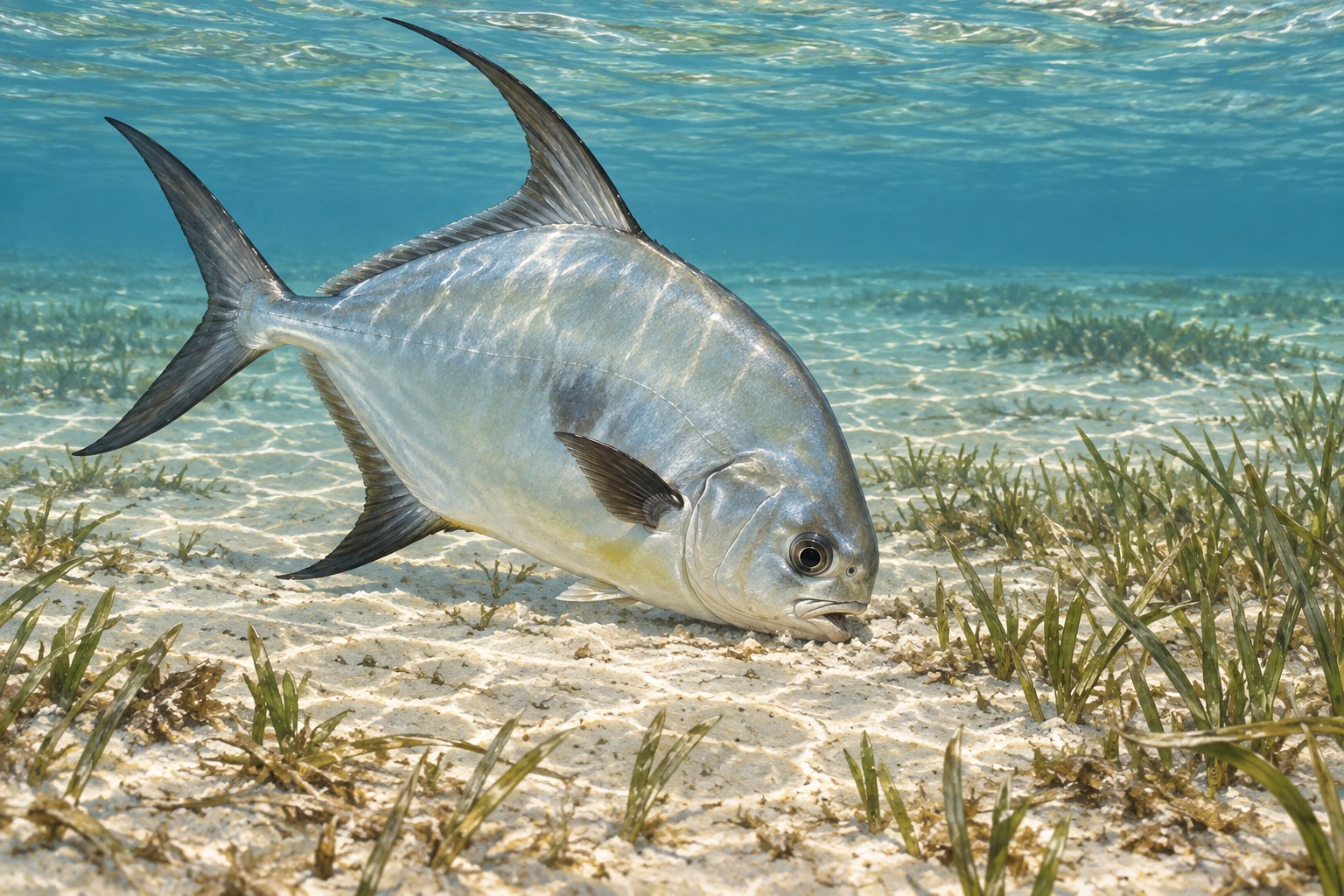
Permit can feed over shallow sand and grass while remaining alert to disturbance. Their deep silver bodies may flash briefly as they turn, but a fish can disappear against glare just as quickly.
Stop and watch before casting. Establish its direction, then present a crab-style offering ahead of it with as little splash as practical. The cast’s placement and timing often matter more than changing to another lure color.
A refusal is normal. Do not chase the fish with the boat or keep dropping the bait onto its back. Let the opportunity end cleanly and continue looking from a quiet position.
Choose a target that suits your patience and access
| Target | Useful habitat | Approach | Realistic expectation |
|---|---|---|---|
| Permit | Legal flats with sand and grass | Careful sight casting with a crab-style offering | Few good chances may fill a worthwhile session |
| Bonefish | Shallow feeding routes with small prey | Small shrimp imitation placed ahead of the fish | Spotting and approach are part of the challenge |
| Mangrove snapper | Permitted cover near deeper water | Small shrimp or cut bait | Compact bait and quick observation help |
| Barracuda | Clear channel or flat edge | Suitable lure and leader for a toothy fish | Handling tools and enough space are essential |
| Jacks | Bait moving through connected water | Small moving lure along the school edge | Action may be brief and fish can pull hard |
Do not measure every trip by the number of fish caught. Learning to identify a feeding fish and deliver one good cast is genuine progress on a flat.
Look for signs smaller than the whole fish
A bonefish may reveal itself through a moving shadow, a puff of disturbed bottom or a brief tail movement. Watch pale sand openings beside grass. Fixed dark marks do not move when you change your viewing angle; fish eventually do.
Keep the sun and glare in mind when choosing direction. Polarized glasses help, but they cannot make every angle clear. Reposition quietly rather than making blind casts across water you cannot read.
Use an offering that settles without plowing deeply into grass. A light shrimp imitation may fit calm shallows. More weight can be useful at a deeper edge, but it should not create an alarming splash.
When a fish approaches, reduce unnecessary movement. A subtle twitch can suggest living prey. Repeated fast pulls may take the lure away before the fish commits.
Refuge and sanctuary boundaries matter
The Lower Keys include wildlife refuge lands and marine sanctuary zones. An empty island is not automatically open for landing, and a clear reef is not automatically open for fishing.
Use current refuge and NOAA maps for the exact route. Respect closed islands, wildlife areas and any vessel restrictions. Keep distance from nesting or resting birds rather than using their shoreline as a convenient break.
Looe Key is a well-known protected reef setting. Do not treat its fame as a fishing invitation. Select lawful fishing water only after checking the relevant zone and permitted activity.
Depth decides when a flat is usable
A flat can be too shallow for both fish and boats at one stage, then offer feeding room as water rises. Nearby channels provide travel routes as the level falls. Observe the connection between those habitats.
Check the Lower Keys tide and weather outlook, then compare it with actual water level. Wind can affect how much water remains over a shallow route.
Do not motor across thin water to reach a visible fish. Stop before contacting grass or bottom. If the boat cannot pass without damage, choose another route or another fishing area.
Season, light and wind work together
Cooler weather can reduce shallow-water activity, especially after a strong front. A warmer part of the day may give a flat more appeal, but wind and cloud can still make spotting difficult.
Spring often brings increasing interest in flats fishing. Pick a day with manageable wind and enough visibility to learn the water. It is easier to improve sight-casting technique when you can see how fish respond.
Summer requires an early heat and storm plan. Shallow exposed water provides little shelter from lightning. End the session before a storm makes the route unsafe.
Fall can offer useful windows between weather changes. Watch actual bait and fish movement rather than assuming every warm day is equivalent. A clear calm period after unsettled weather may reveal a different pattern from the previous visit.
A simpler shore-based visit
If flats fishing from a craft is not suitable, ask about a permitted shore position at a managed facility such as Bahia Honda. Keep the target modest and use a small bait rig where allowed.
Confirm how to land the fish before casting from an elevated edge. Avoid positions that require lifting a heavy fish by the line or scrambling across rough ground.
Pack a small kit and choose a short session. A comfortable lawful place with clear casting room is more useful than a roadside location with uncertain ownership and difficult footing.
A first flat session with a clear goal
Set out to learn one shallow area and its nearby channel. Approach slowly and spend the opening period observing. Identify the bottom types, where water moves and where a fish could leave as the tide drops.
Make practice casts into empty safe water before a fish appears. This confirms how the lure lands and sinks. Keep spare tackle organized so changing weight does not create noise and confusion during a sighting.
Finish with notes about visibility, water level and fish behavior. That information helps you choose the next visit more effectively than recording only a coordinate.
Prepare for careful release
Check the FWC saltwater species rules before targeting bonefish, permit or other fish. Keep identification and handling requirements in the plan.
Use tackle that avoids an unnecessarily long fight. Keep fish supported and wet, and do not lay them on grass, sand or a hot deck for a picture. Move away if predators repeatedly threaten released fish.
Use the first sighting as a lesson
Before trying to improve the lure, consider whether the fish noticed the boat. A sudden turn immediately after a paddle stroke suggests an approach problem. A fish that follows the offering and then leaves gives different information. Keep those two situations separate in your notes. On a later visit, repeat the quiet approach and change only the presentation that the fish actually inspected. This patient method is especially useful around Big Pine’s clear flats, where a small disturbance can remove the chance long before the hook is near the fish.
Big Pine Key questions
Are neighborhood ramps the same as large marinas?
No. Space and parking can be limited. Check the exact facility before arriving with a trailer.
Can I bring spearfishing equipment into Bahia Honda?
The park prohibits possession of that equipment as well as spearfishing.
Is Looe Key a default fishing reef?
No. Check its protected zones and current restrictions before planning any activity there.
Where are the access and habitat references?
The Big Pine Key notes include the official sources and photograph attribution.