

SPACE / TREASURE COAST
Indialantic
fishing guide
Indialantic surf-fishing guide with Nance Park access, whiting and pompano bait, flounder habitat and clear advice about river facilities.
Explore the guide ↓Fish the Atlantic with a clear access plan
Indialantic sits between the Atlantic and Indian River Lagoon, but the simplest visitor fishing plan is often an open beach lane. A public ocean crossing gives access to sandy troughs where small baits can reach feeding fish without a boat.
Whiting and pompano are the main surf possibilities to build around. Other fish can pass through, and a flounder may use suitable sandy bottom, but no particular catch should be assumed from the town name alone.
Choose the entrance and current conditions before deciding on tackle. A beach session calls for controlled weight and careful spacing around swimmers. A lagoon visit requires separate confirmation of a legal fishing position or authorized launch.
Know what the town’s parks provide
The town lists Nance Park at 201 North Miramar Avenue, with beach facilities and metered parking. Sunrise Park is at 701 North Miramar Avenue. Use current entrance signs for parking and access details rather than relying on an old beach photograph.
Riverside Park, at 200 North Riverside Drive, includes an observation pier. That description should not be treated as confirmation of fishing permission. Ask the town or read the posted rules before bringing a rod onto it.
Plans or proposals for future boardwalk improvements do not establish a completed facility. Use the access available on the date of the visit and avoid work zones or closed sections.
At the beach, remain on designated crossings. Carry a compact kit that can be moved easily if the space near the entrance fills with other visitors.
Read the slope and the first bar
Watch how waves break and wash back down the beach. A steeper section may produce a stronger shore break, while a bar farther out can create a trough between it and the sand. Those differences affect both fishing and footing.
Start from a stable dry position and cast into a manageable lane. Do not walk into deeper wash simply to reach beyond a bar. A small increase in casting distance is not worth uncertain footing.
Notice whether the rig stays near its landing point or slides rapidly sideways. A controlled drift can cover water, but a line sweeping toward people is no longer useful. Retrieve before it becomes a problem.
The shoreline changes with storms and tide. Reassess it on every visit instead of assuming the same casting position will work unchanged.
Understand the fish that waits on the bottom
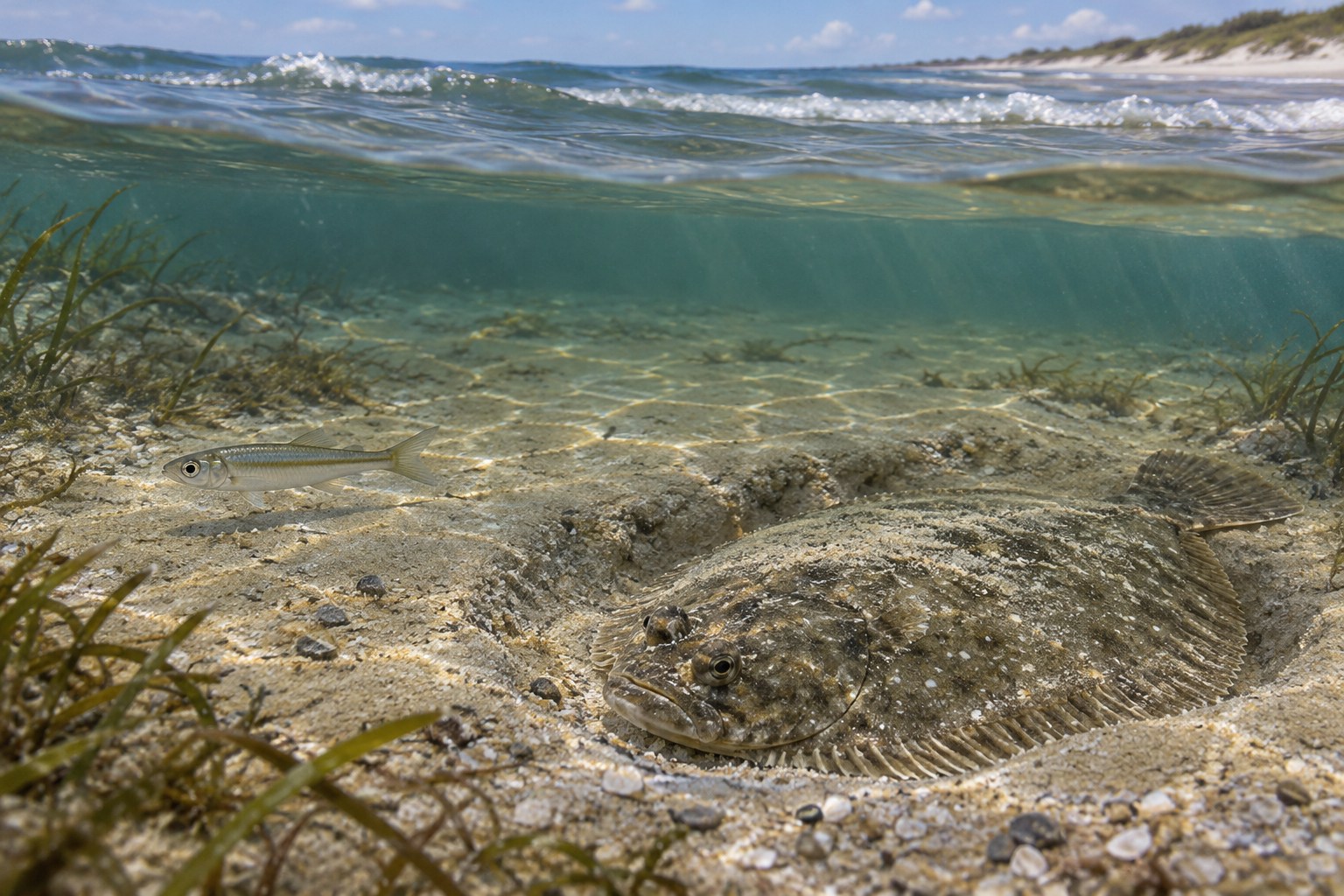
Flounder are built for a different feeding approach from fast surface predators. They can rest against the bottom and take prey that passes nearby. A sandy edge or change in flow can be more interesting than an open patch with no feature.
Where conditions and access allow, a small jig worked near the bottom can test that habitat. Use short deliberate movements rather than racing the lure high through the water. Keep enough contact to distinguish a bite from the weight touching sand.
Do not turn the method into blind dragging across rough ground. If the lure snags repeatedly, choose a cleaner lane. The illustration is a habitat lesson rather than a claim that a named park holds flounder every day.
Flounder regulations can include seasonal restrictions. Verify the current rule before planning to retain one, even if it is caught while targeting another species.
Make the first bait small and easy to take
For whiting, use a short shrimp piece on a suitably small hook. Leave the point exposed. A large loose bait can be nibbled repeatedly without producing a secure connection.
Test the inside trough with a moderate cast. If bites occur there, repeat the distance. If the bait remains untouched, try a slightly different lane rather than immediately changing the entire rig.
Check bait condition after light taps and at reasonable intervals. An empty hook cannot tell you whether the water is still productive. Keep spare bait chilled and out of the sun.
Use a sinker that the rod can cast comfortably. If waves require more than the outfit is rated for, choose another time or a more suitable setup instead of forcing the cast.
Present pompano bait above the sand
A compact dropper rig can keep a small bait slightly off the bottom. Sand fleas, where collection is allowed, are one option. Shrimp pieces and prepared baits can provide a simple comparison.
Keep the bait from covering the hook or twisting around the leader. Retrieve the first few casts to confirm the rig lands cleanly. A tangled rig may soak for a long time without giving a fair test.
Vary distance gradually. Pompano can move through different lanes as water depth changes, so the best cast may shift during the tide. Keep notes on where attention occurs rather than relying on a fixed number of steps or yards.
Clear water is helpful for seeing the beach shape, but it is not the only factor. Bait, movement and a manageable presentation also matter.
Use observations to choose the next step
| What happens | Useful interpretation | Next step |
|---|---|---|
| Repeated small taps | Fish may be reaching the bait | Check size, hook exposure and bait condition |
| No response in one lane | The cast may miss useful depth | Try a different distance with the same basic rig |
| Heavy drag from weed | The rig is no longer presenting cleanly | Clear it and test another open section |
| Bottom lure snags constantly | The chosen path is too rough | Move to sand or raise the presentation |
| Swimmers approach | The available fishing space has changed | Reel in and move or pause |
A deliberate change gives useful feedback. Several simultaneous changes make it harder to know why the result improved or worsened.
Keep the beach comfortable for everyone
Indialantic’s public beach attracts more than anglers. Watch the water and the path behind you before each cast. Keep the hook secured while walking between the parking area and sand.
Set a rod holder outside the main walking route and remain nearby. Do not let a line stretch unnoticed across an area where children are playing. When space is tight, one well-managed rod is enough.
Separate fishing from a family’s swimming activity. The safest arrangement is different space or a different part of the visit, not a baited line beside people in the water.
Before leaving, inspect the sand for hooks and leader clippings. A small sharp item can disappear from sight while remaining dangerous to a barefoot visitor.
Choose a workable window rather than a perfect forecast
A moderate breeze and manageable surf are enough for a useful learning session. Strong onshore wind, rough shore break or persistent weed can make the same beach unproductive and uncomfortable.
Summer heat favors water, sun protection and a short plan with a quick route to shelter. Thunder should end the outing early. Cooler periods can be pleasant, but fronts may reshape the surf overnight.
Check tides and weather near Indialantic before departure. For another nearby coastal plan, compare Melbourne Beach’s ocean and river options.
Allow time to load equipment and leave under the parking and park conditions that apply. A last cast should not turn into a rushed departure.
Prepare the release before the catch
Keep pliers and a ruler where you can reach them immediately. Support a fish with wet hands and minimize handling on dry sand. A photograph should be quick enough that it does not become the main event.
Use FWC’s recreational saltwater rules for licensing and current harvest requirements. Check the species rather than assuming all small surf fish share the same limits.
Keep a legal catch cool and store bait separately. Remove packaging and discarded tackle, and leave the public crossing clear for other visitors.
A useful trip record includes the access used, the depth lane and the bait that stayed intact. Those details help turn the next visit into a more informed attempt.
Choose a sinker by the rod rating and the water
The rod’s printed casting range places a useful limit on the total rig weight. Include bait and attachments when judging the load rather than considering the sinker alone. Use a smooth motion and inspect the connection before casting.
A sinker that holds perfectly is not always necessary, but the rig must remain within a clear lane. Slow movement over sand can cover ground; rapid movement toward people cannot. If suitable weight still fails to maintain control, shorten the attempt. The beach will provide another opportunity when conditions are more manageable.
Put the plan into practice
Check the leader where it meets the sinker connection after a tangle. A sharp kink or worn section is a reason to retie before making another loaded cast.
Indialantic fishing questions
Can I assume Riverside Park’s pier allows fishing?
No. The town describes it as an observation pier. Confirm the posted activity rules before using it with a rod.
Where is Nance Park?
The town lists it at 201 North Miramar Avenue. Check the current metered-parking and beach-access signs when you arrive.
Do flounder feed like surface predators?
No. They often wait near the bottom, so a controlled low presentation suits that feeding style better than a fast surface retrieve.
What is a simple first surf bait?
A small shrimp piece in a manageable nearshore trough is a practical starting point for whiting.