

SPACE / TREASURE COAST
Avalon State Park
fishing guide
Avalon State Park fishing guide with submerged-hazard advice, safe shore-based pompano and whiting methods, access and bait selection.
Explore the guide ↓Fish this beach with the underwater history in mind
Avalon State Park on North Hutchinson Island offers a natural Atlantic beach setting for surf fishing. Its most important planning detail is not a bait choice: submerged remnants of military training obstacles can remain offshore.
The state park describes steel and concrete hazards associated with the area’s World War II history. Do not assume the bottom is smooth sand or wade into unfamiliar water to improve casting distance. A conservative shore-based plan is appropriate.
Whiting and pompano are practical fish to consider in suitable sandy lanes. The useful task is to identify water where a small bait can work cleanly from a safe legal position.
Use the park’s designated beach route
Check the current state park notice for entrance hours, fees and any temporary closure before travel. Use the marked dune crossing and remain outside protected or closed sections.
Carry a compact surf kit that can be moved without difficulty. A long heavy load across sand makes a quick weather-related exit harder. Bring the drinking water and basic supplies needed for the visit.
Do not treat a quiet natural beach as unrestricted access. Dunes and wildlife areas still have boundaries, and park closing times still apply to anglers.
Read the signs at the actual entrance. Current warnings take priority over an older description of the park or a photograph taken under different conditions.
Stay clear of unknown submerged objects
Historic obstacles may not be visible through the surface. Sand can shift around them, and wave action can make depth difficult to judge. Even water that looks shallow can contain a hard or sharp object.
Remain on stable shore and avoid retrieving snagged tackle by entering the water. A lost rig is not worth an encounter with an unseen hazard. Break off safely if necessary and choose another lane.
Do not infer a safe swimming or wading route from someone else’s tracks. Conditions change and other visitors may not know the hazard. Keep children close to the planned shore position.
The history makes Avalon distinctive, but the fishing advice is practical: select an open sandy presentation you can manage without approaching unknown bottom.
Present a small bait over sand
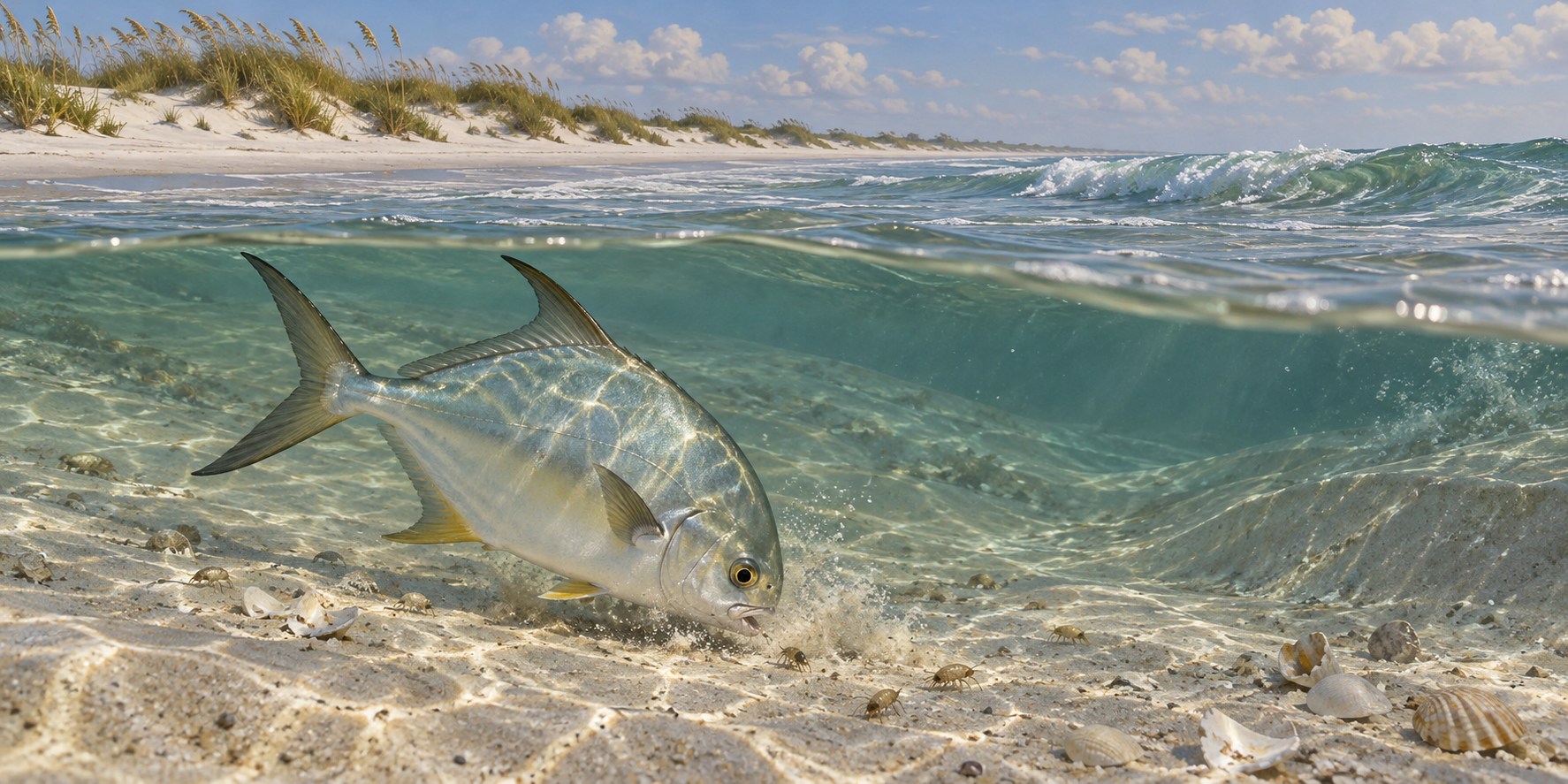
A compact dropper rig can hold bait just above the bottom. Use a small shrimp piece, appropriate prepared bait or sand flea where collection is permitted. Keep the point of the hook exposed.
Watch the first bar and try the trough inside it before making a maximum-distance cast. A modest cast can reach useful feeding water. If that lane is quiet, test another distance in a controlled step.
Retrieve early in the session to confirm the rig is not twisted or snagging. A bait that cannot remain cleanly presented is not giving the location a fair test.
Do not drag repeatedly across an obstruction. Move to another legal shore position or change the cast angle when bottom contact becomes suspicious.
Use whiting bites to narrow the distance
Whiting can feed close to the wash where waves uncover small food items. A short shrimp bait on a small hook is a useful way to explore the inside lane.
Light taps may be the only signal. Check whether the bait remains and keep the piece small enough for the fish to take near the hook. A long loose end can be stolen repeatedly.
When a cast produces a fish, repeat the placement before making other changes. Note the direction as well as the distance, since a small trough can angle along the beach.
Use a smooth casting motion with a sinker within the rod’s rating. If the sea requires more weight than the outfit can manage, the day may not suit that setup.
Let safety and presentation work together
| Situation | Useful action | Reason |
|---|---|---|
| Clear sandy lane within a moderate cast | Try a compact bottom bait | The rig can work without entering the water |
| Repeated hard snags | Change the lane or stop | Unknown obstacles may be present |
| Strong sideways drift | Retrieve and reassess conditions | The hook is leaving the intended area |
| Rough shore break | Remain back from the active wash | Footing and depth become harder to judge |
| Approaching thunder | Pack immediately and seek proper shelter | The exposed beach offers no protection |
A productive fishing position must also permit a safe retrieve and landing. Those are part of the location choice from the beginning.
Use a moving lure only when the lane is clear
Small baitfish scattering near shore can indicate a passing predator. A compact lure may be worth trying from a safe position, provided there are no people or birds in the casting path.
Keep the lure above uncertain bottom rather than letting it sink into a snag. A controlled retrieve through the active layer is more useful than a blind bottom drag.
Toothy fish such as bluefish need suitable leader and careful handling. Check for leader damage following a bite, and keep fingers away from teeth while unhooking. Do not let a brief feeding event rush the routine.
If the activity moves beyond reach, let it pass. The park’s underwater hazards make chasing fish by wading especially inappropriate.
Reassess the beach as water changes
A rising tide can deepen the inside lane and reduce dry sand. A falling tide can expose bars and shift the useful trough farther out. Neither stage is automatically best.
Watch where the rig lands as the session progresses. A distance that worked earlier may now place the bait on top of a shallow bar. Small adjustments can keep it in better water without a major change in tackle.
Use the tide and weather outlook to choose a workable window. The forecast should be followed by an on-site inspection, especially after strong weather.
For a different nearby setting with designated inlet access, compare Fort Pierce Inlet State Park. Its stronger current requires a separate plan.
Keep the natural beach undisturbed
Use the crossing rather than cutting through plants. Follow marked nesting protection and give birds room. A quiet stretch of beach can still be important habitat.
Keep bait containers closed and avoid feeding birds. Pause casting when wildlife enters the lane. Remove rod holders and all gear before leaving.
Do not leave line attached to a snag where it can be safely retrieved from shore, but never enter hazardous water to recover it. Better placement and changing a snag-prone method are the first ways to reduce losses.
Inspect the sand around the tackle position for small hooks and wrappers. Cleanup should include items that are easy to overlook.
Finish the catch without a long delay
Arrange the measuring board and hook-removal tool before the first cast. Use wet hands and support a released fish’s body. Avoid leaving it on dry sand while searching for equipment.
Check FWC’s current recreational saltwater rules for licensing and harvest requirements. Identify the fish before making a decision, rather than assuming all surf catches share one rule.
Chill a legal retained catch promptly and keep it separate from bait. Bring enough water for the angler as well as enough ice for the fish.
End with a note about the clean casting lane and any snag area to avoid. Those observations can improve a return visit while remembering that sand movement may alter the scene.
Keep a snag response calm and shore-based
When the rig stops moving, first distinguish a possible fish from a fixed snag by maintaining controlled pressure. Do not immediately make a violent pull toward yourself. A freed sinker or lure can travel back unexpectedly.
If the tackle is clearly fixed, remain on shore and keep the area around you clear. Use a safe method appropriate to the line and equipment to release or break it off. Never wrap tight line around bare hands, and do not enter the water to reach the hook.
Afterward, change the lane. A repeated snag at Avalon deserves particular caution because the park documents submerged historic material. Stronger line is not a solution to uncertain underwater obstacles.
Prepare the next rig away from the active wash and contain the damaged pieces. Check the leader above the break for wear, then make a shorter controlled test cast into a different clear area. If a clean route cannot be found, stop the fishing attempt. Protecting the angler and avoiding repeated tackle loss are better outcomes than persisting in the same obstruction.
Put the plan into practice
Keep any location notes about snags approximate. Shifting sand can hide or reveal obstacles, so an earlier clear cast does not establish a permanently safe route.
Avalon State Park fishing questions
Why is wading discouraged in this guide?
The park documents submerged steel and concrete remnants from military training. They may be difficult to see beneath shifting sand and water.
Should I enter the water to free a snag?
No. Recover tackle only from a safe position. Change the lane rather than risking contact with an unseen obstacle.
What is a practical surf target?
Whiting or pompano can be tried over a clean sandy lane with compact bait and controlled weight.
Does the illustration show a safe route?
No. It explains fish habitat and does not map the beach bottom or its hazards.