
SOUTHEAST ATLANTIC
Jupiter Beach Park
fishing guide
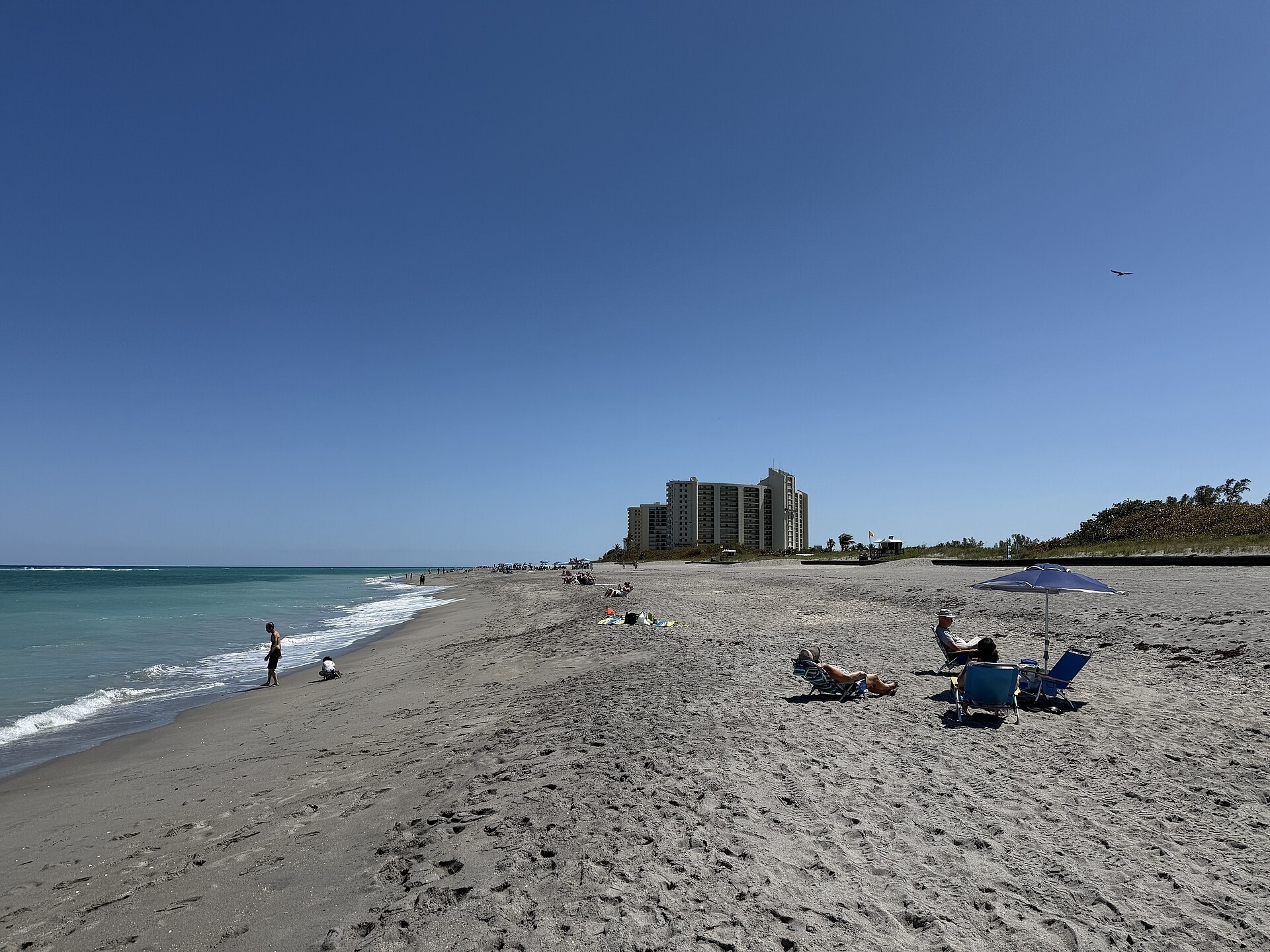
Jupiter Beach Park sits on the south side of Jupiter Inlet, where ocean surf meets a much stronger tidal flow. Choose between the permitted inlet fishing area and an approved beach section before unpacking.
Explore the guide ↓Separate the park schedule from inlet fishing access
The county park is at 1375 Jupiter Beach Road beside Jupiter Inlet. The general park schedule is sunrise to sunset. Official information separately identifies inlet and jetty fishing access as available around the clock.
That distinction does not open every park amenity all night. Check the actual entrance, parking signs and any current restriction before arranging an after-dark session. A fishing-access statement is not permission to enter closed picnic areas.
Guarded beach water remains a swimming space. Ask where fishing can be done without entering that boundary. The inlet shore and ocean beach have different hazards even though they are reached from the same park.
Leave barriers and marked work areas alone. The usable route can change after storms or repairs, so a previous visit is not proof that every edge is currently accessible.
Read the seam before sending a bait out
An inlet exchanges water between the ocean and inland waterways. Speed can vary sharply across a short distance. A slack pocket beside a faster stream may hold prey, while the strongest part can sweep tackle out of control.
Watch foam, floating weed and small baitfish to understand the direction. A tide-table time does not show every eddy or local delay. Use what the water is doing at your position to choose the cast.
Fish the edge of manageable flow instead of simply aiming for the center. Retrieve before the rig swings around rock or another line. If the bait cannot be followed safely, use a different lane or wait for less current.
An inlet is not a wading shortcut. Strong flow and irregular footing can create danger even beside apparently shallow water.
Give snook a controlled feeding opportunity
Snook can use inlet edges to intercept bait moving between habitats. A live baitfish, where legal and properly obtained, or a swimming lure can be presented beside a clear seam. Placement matters more than making the offering unusually large.
Let the current carry the bait through useful water without allowing it to disappear behind rocks. Use only the weight needed to maintain contact. A heavy rig pinned in a crack is not an effective drift.
For lures, cast at an angle that keeps the retrieve in the seam. Adjust the swimming depth when contact with rock becomes frequent. Check the leader whenever it rubs hard surfaces.
Choose tackle that can guide a fish into an approved landing position. A fish hooked from a place with no safe release route presents a problem before the fight even begins.
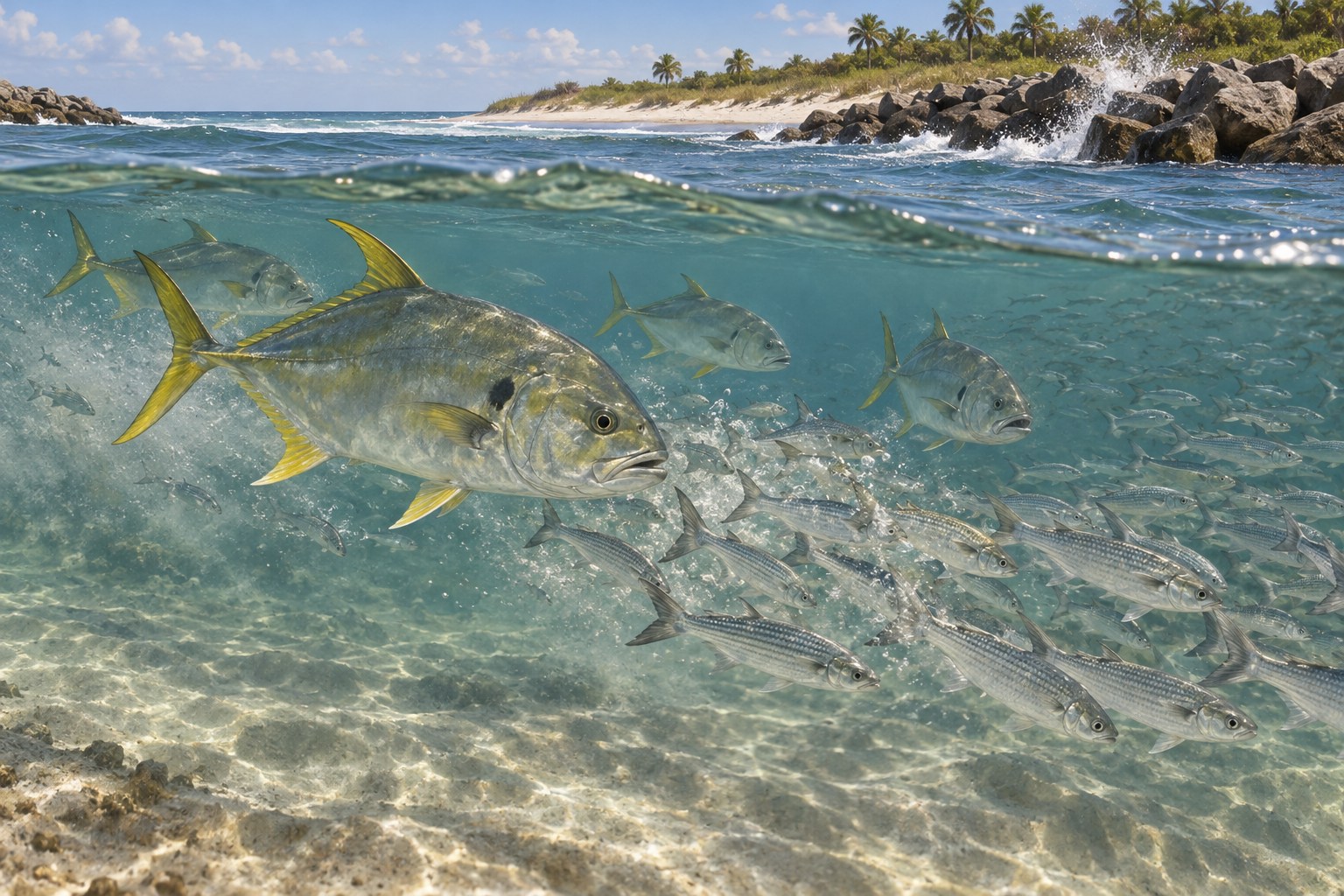
Watch for jacks and mackerel near moving bait
Jack crevalle and Spanish mackerel are possible visitors when bait gathers near the inlet mouth. Their appearance is irregular, so keep the method tied to visible activity. A school may pass quickly without remaining beside the structure.
A small metal lure or jig can imitate fleeing prey. Cast clear of boats and give other anglers room to handle their fish. Do not put a line across the navigation route to reach a distant splash.
Use pliers for a toothy catch and avoid lifting an unknown fish by its mouth. Identify it while supported and return unwanted fish promptly. Leader damage is worth checking after every hard strike.
Make a separate plan for the beach
On an approved ocean section, the fishing problem becomes sandbars and waves rather than inlet seams. Pompano and whiting may feed in a clean trough. Small shrimp pieces or sand-flea offerings are a straightforward way to test that habitat.
Keep the surf rig away from swimmers and the path of beach walkers. A sinker that rolls sideways may carry the hook into an unsafe lane. Move or change the setup before that happens repeatedly.
Do not combine an inlet drift with a beach rig by leaving both unattended. Each requires watching a different water movement. One rod used carefully can teach more than two rods constantly tangling.
Match the method to a safe position
Look for a secure place to stand before thinking about bait. Wave wash can reach a ledge that looked dry between sets. A view of fish beside wet rock does not make that rock an acceptable platform.
| Water feature | Possible approach | Reason to change |
|---|---|---|
| Clear edge of inlet flow | Controlled bait drift or swimming lure | Rig disappears behind rock |
| Bait in open ocean-side water | Small jig through the school edge | Boats or birds enter the lane |
| Approved sandy trough | Compact surf bait rig | Bathers or rolling sinkers |
| Wave-washed footing | Observe from a secure position | Water reaches the standing area |
Prepare differently for evening inlet fishing
The listed fishing access allows an evening plan, but darkness reduces the ability to see footing and line drift. Learn the route in daylight before considering a night visit. Keep lighting modest around the nesting beach.
Bring a companion when the setting is unfamiliar. A phone, secure footwear and an organized tackle bag are more important than another lure assortment. Do not leave loose hooks on a rail where they are difficult to see.
Avoid staying through deteriorating wind, lightning or larger wave sets. A productive tide cannot compensate for a position that is becoming unsafe.
Prepare the landing and release before casting
An inlet fish may need to be guided away from rough edges. Plan that path while the line is still dry. Use suitable permitted equipment rather than climbing down or dragging a fish across stones.
Snook, mackerel and other catches do not share one harvest rule. Check the current species requirements and licensing situation before keeping anything. A regulation saved from another Florida coast may not apply here.
Pick up leader pieces and bait packaging before moving along the inlet. Waste caught in cracks can reach the water on the next wave.
Begin with an observation visit or a short session
Walk the open route, identify the swimming boundary and watch how the inlet moves. Choose one safe seam that can be fished and landed from without crossing boat traffic. Leave the fastest or roughest water alone.
If the inlet does not offer a manageable position, try an approved beach lane or return under milder conditions. The nearby DuBois guide explains the opposite side's park setting and protected swimming areas.
Common questions
Is Jupiter Beach Park open all night?
The general park schedule is sunrise to sunset. Official information separately lists inlet and jetty fishing access for 24 hours, so verify the intended entrance and parking arrangements.
Should I fish the strongest current?
Only use water where the bait and hooked fish can be controlled safely. A slower seam beside strong flow is often a more manageable starting point.
Can I wade into the inlet to reach fish?
Do not treat the inlet as a wading area. Current, boat traffic and uneven footing make shoreline observation a safer way to study the water.
What is the simplest first bait plan?
Choose one permitted position with a clear drift and safe landing route. A suitable small bait or swimming lure can test the seam without a complicated rig.
Prepare for your visit
Check local tides and weather. Read more about snook, florida pompano, whiting. Check current FWC saltwater fishing rules.