
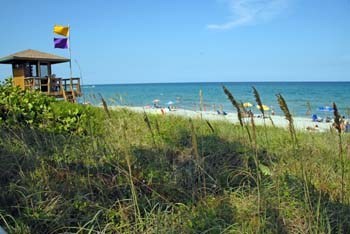
SOUTHEAST ATLANTIC
R.G. Kreusler Park
fishing guide
R. G. Kreusler Park provides Palm Beach ocean access beside the Lake Worth Beach area. Plan a permitted surf session beyond guarded swimming water and treat nearby pier access as a separate facility decision.
Explore the guide ↓Find the park at the Palm Beach end of the beach area
R. G. Kreusler Park is at 2882 South Ocean Boulevard in Palm Beach. It sits beside the broader Lake Worth Beach ocean recreation area. The county park and the neighboring facilities should be checked separately rather than treated as one entrance with one set of rules.
The county lists guarded ocean frontage and paid parking. At the review, its parking information specifies credit-card payment. Verify current rates, hours and space availability before choosing a long session.
Shore fishing belongs outside guarded swimming areas under county guidance. Ask where that boundary lies at the time of your visit. An empty patch within the bathing zone is not an automatic fishing opening.
Keep the dune crossing clear while carrying equipment. A public access path needs to remain easy for visitors using mobility equipment, strollers or beach bags.
Check the Lake Worth pier as its own option
The nearby Lake Worth Beach pier is a recognizable coastal landmark and a separate fishing facility. A photo showing it helps explain the surroundings, but does not establish admission or angling permission through the county park.
Verify the pier's current operating arrangements, charges and rules before planning a rail session. Do not assume that a park parking payment includes pier fishing. Equipment limits and landing methods may differ from a surf outing.
If the pier does not fit the day's plan, choose a legally available beach lane rather than an unauthorized structure. The county beach route and a paid pier visit are distinct ways to approach the water.
A pier offers height above waves, while the beach requires casting through them. Retie and prepare for the actual setting instead of using one rig without adjustment.
Study the first trough before casting past it
The sand close to shore can hold a feeding lane between the beach and a bar. Watch several waves to find where water reforms or moves along the edge. A lower strip may be useful even when the far water looks more dramatic.
Test it with a small bait on a rig that can hold and return cleanly. An early short cast tells you about weed, shell and current. Use that information to decide whether a farther presentation has an advantage.
Wind and wave action can change the bar shape between visits. A familiar landmark on land does not fix the bottom beneath it. Re-read the water before trying yesterday's distance.
Do not wade to explore a darker lane. Stronger flow or sudden shorebreak can make the apparent shortcut unsafe.
Choose a small bait for the sand feeders
Pompano and whiting may feed over suitable clean sand. Small shrimp pieces, sand fleas or durable strip bait are practical offerings. The hook should remain exposed rather than buried inside a large bait parcel.
Use a short dropper to keep bait slightly above bottom. Start with one hook if the angler is learning to cast and untangle rigs. More hooks can add handling trouble without improving the presentation.
Inspect the bait when bites fade. Small fish can strip it while the rod appears quiet. Replace weak or washed-out material and check that the leader has not twisted around the main line.
Increase sinker weight only when it restores safe control. A rig that rolls into bathing water needs retrieving and repositioning, not simply more time to soak.
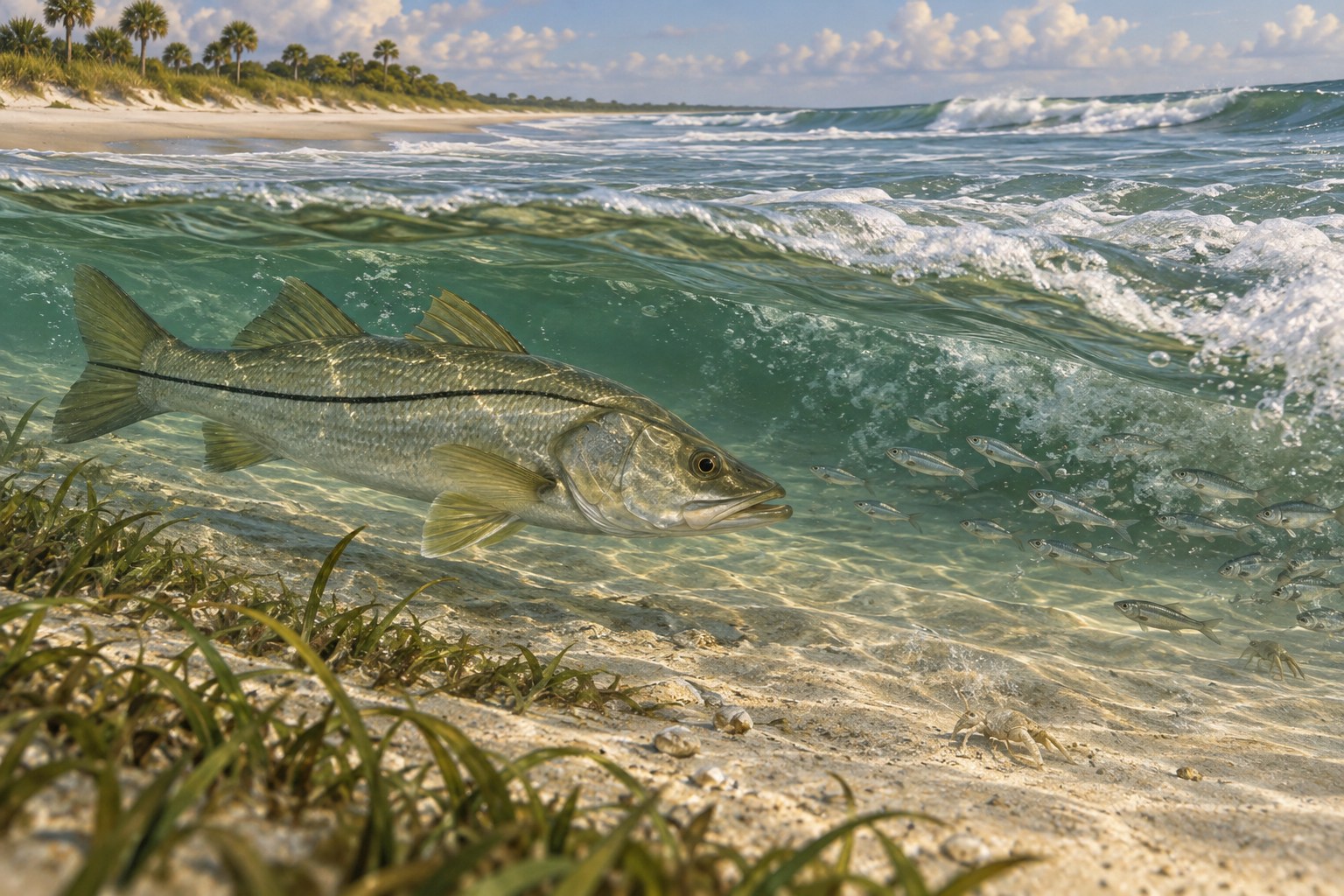
Search the open shoreline for moving bait
A small swimming lure can cover an approved clear section for snook or jacks when baitfish are present. Keep it traveling above the sand and across the fish's route. A cast parallel to shore may use the close feeding lane better than one straight out.
Spanish mackerel or bluefish can appear around concentrated bait. A compact metal lure is useful only when it can be cast without crossing people, birds or other lines. Let a school pass when it enters guarded water.
Check leader wear after a fish or hard contact. Toothy species and shells can damage it quickly. Keep pliers ready so handling does not become a hurried search through the bag.
A short lure session is easier to manage when the beach is quiet, but approved timing still matters. Ask about the actual boundary rather than assuming an early start permits fishing everywhere.
Combine tide with the local surf response
Moving water can refresh a trough, but the best stage depends on its depth and wave pattern. An inlet or lagoon station supplies a useful prediction without mapping every beach current. Look at the actual water once you arrive.
Cooler periods can change surf-fish movement, while warmer water may suit a shoreline snook search. Bait and clarity can shift those expectations. Use seasonal information to choose a method, not to promise a particular catch.
Check the wind and lightning forecast before paying for parking. If conditions shorten the safe session, the sensible choice may be a brief visit or another day. A favorable tide does not remove weather exposure.
Select one approach before spreading tackle
A focused setup leaves the public beach easier to share. Choose the method that matches the approved space and keep unused hooks packed.
| Chosen setting | Useful first setup | Separate check |
|---|---|---|
| Approved sand trough | Small bait rig with holding sinker | Swimming boundary |
| Clear shoreline bait route | Compact swimming lure | People behind and ahead of the cast |
| Neighboring fishing pier | Facility-approved rail tackle | Admission and landing rules |
| Crowded or restricted beach | A non-fishing visit | No casting through occupied water |
Make parking and beach services part of the plan
Bring a payment method suitable for the current parking system. Allow time to locate the park's entrance instead of assuming every nearby lot belongs to it. Paid time should include packing and the walk back.
Water, sun protection and a compact tackle bag keep a short surf visit comfortable. Keep bait sealed and sharp tools away from picnic food. A child should have a simple supervised casting lesson, not responsibility for several rods.
Store valuables so a wave cannot soak them while your attention is on a bite. Check the sky periodically and leave before lightning reaches the exposed beach.
Finish with a careful catch decision
Measure and identify a potential keeper against the current FWC guidance. Release fish promptly with wet hands and full support. Avoid letting a beach catch lie on hot sand while tackle is rearranged.
Collect hooks and line from the standing area before returning through the dune route. Record the trough's condition and bait movement so the next visit begins with a useful local observation.
Common questions
Is R. G. Kreusler Park the same as the Lake Worth fishing pier?
No. The county beach park and nearby pier are separate facilities. Check each one's access, charges and rules.
Can I fish in the guarded beach section?
County guidance keeps shoreline fishing outside guarded swimming areas. Confirm the boundary with staff before setting up.
What should I check about parking?
Verify the current rates, schedule and payment method. The reviewed county information specifies credit-card payment, and nearby lots may have different arrangements.
Do I need a long cast for surf fish?
A clean trough close to shore can be useful. Test that lane first and increase range only when it reaches better water.
Prepare for your visit
Check local tides and weather. Read more about snook, florida pompano, whiting. Check current FWC saltwater fishing rules.