

SOUTHEAST ATLANTIC
Red Reef Park
fishing guide
Red Reef Park combines Boca Raton beach access with nearshore reef habitat that also attracts snorkelers. A fishing plan must respect the swimming boundary and use recoverable water beside hard features rather than dropping tackle into them.
Explore the guide ↓Understand why access and habitat are different questions
Red Reef Park is at 1400 North Ocean Boulevard in Boca Raton. It provides beach recreation and access toward nearshore natural and artificial hard-bottom habitat. The reef is also a snorkeling attraction, so the water cannot be treated as an unrestricted angling area.
The city's facility information prohibits fishing in designated swimming areas during normal swimming hours. Ask the rangers or beach staff about the exact available section and timing. Do not interpret an empty moment in the bathing area as permission to cast.
The park's general hours and the ocean lifeguard schedule are separate details. Verify them before planning an early or late outing. A park gate remaining open does not mean every beach activity is allowed until closing.
Boca beach park gatehouses switched away from cash payments on October 1, 2026. Bring a currently accepted payment method or the appropriate annual permit. Check parking arrangements rather than relying on an old cash-only trip note.
Fish beside a feature instead of into its gaps
Hard bottom shelters prey and can create a useful feeding edge. It also catches hooks, leaders and sinkers. A bait placed in recoverable open water beside cover is usually easier to manage than one lodged inside it.
Look for a sand opening or an edge where the presentation can be retrieved cleanly. Observe waves and the material brought back on the rig. A dark patch is not a complete map of the bottom beneath it.
A lure kept above the feature can search without resting on every rough spot. Adjust depth after contact instead of repeatedly scraping the same route. Stop when the available lane is occupied by snorkelers or swimmers.
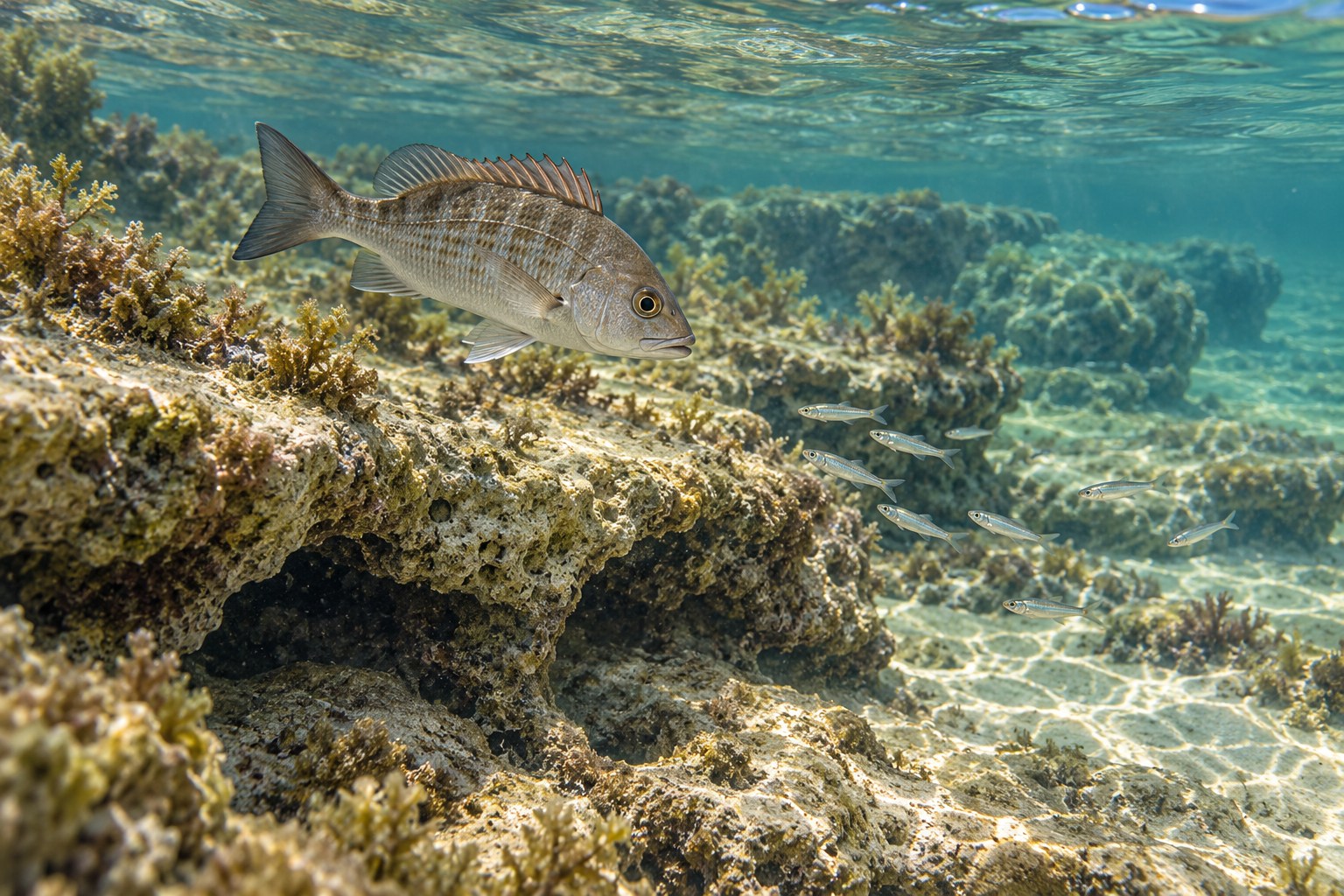
The illustration shows the feeding relationship between prey, cover and open water. It does not mark a fishing coordinate or imply that the pictured reef section is legally available for angling.
Use a small bait for suitable snapper habitat
Mangrove snapper can use coastal structure and surrounding feeding lanes. A small shrimp piece or baitfish offering is a practical method where fishing is permitted. Keep the hook point clear so a compact bite can be taken cleanly.
Place the bait near an open margin and watch the drift. If it disappears beneath cover, retrieve before it wedges. A controlled short presentation is more useful than leaving a heavy rig unattended beside rock.
Use tackle that allows a fish to be guided away from the edge without unreasonable strain. Check leader abrasion after a bite or snag. Repeated broken line is a reason to change the position or method.
Do not promise snapper from every visible rock. The species, tide and feeding activity can differ, and a protected or occupied section may remain an observation-only part of the visit.
Search a permitted open lane for passing snook
Snook can travel along suitable Boca beach edges following prey. A swimming plug or soft plastic can be worked above sand beside a hard feature. Look for bait movement before choosing the direction of the cast.
A lure placed ahead of a cruising fish gives it a chance to meet the offering. Repeated splashes beside the fish can interrupt that route. Change speed gradually when a fish follows without taking it.
Maintain enough contact to guide the lure through open water. If it continually touches rock, raise the retrieve or choose a shallower-running design. Inspect any scuffed leader before making another pass.
Do not follow a fish into a swimming or snorkeling lane. Public recreation boundaries remain part of the fishing decision even when the target is visible nearby.
Test clean sand when the reef edge is unsuitable
An approved sandy section can support a simpler surf method for whiting or pompano habitat. Small shrimp pieces, sand fleas or firm strip bait can be placed in a trough. The rig should hold without rolling toward people.
Begin close enough to understand where it settles. Retrieve and inspect for vegetation or shell contact before making a longer cast. A clean nearer lane can be more useful than a distant snaggy patch.
One tidy dropper hook simplifies handling around a busy public beach. Add tackle only when it solves an observed problem. Keep spare hooks packed until they are needed.
Match the presentation to legal recoverable water
Fish habitat is only one part of choosing a location. Safe access, swimming use and the ability to retrieve the tackle must also fit.
| Available water | Possible method | Boundary to respect |
|---|---|---|
| Permitted clean sand | Small surf bait rig | Designated swimming area |
| Approved open hard-bottom margin | Compact bait beside cover | Snorkeler routes and snags |
| Clear legal shoreline lane | Swimming lure above the bottom | People entering the cast path |
| Occupied reef recreation area | Watch fish without hooks | No casting through underwater visitors |
Plan for visibility and wave changes
A clear morning may help reveal the edge and bait movement. Surface glare can still hide people or hard features, so do not rely on a single glance. Observe the water before each change of position.
Stronger onshore conditions can make nearshore rock harder to fish and increase shorebreak. A heavier rig cannot correct an unsafe standing area. Leave exposed wet surfaces alone and fish from an approved secure place.
Use tide information to anticipate changing depth, then compare it with what happens at the actual lane. The reef does not behave like an open sandy trough in every water stage. Keep notes specific to the method used.
Keep the family visit and fishing setup organized
The park's seating and restrooms can make a beach day comfortable. Confirm available facilities and the current entrance fee before arriving with a group. Keep the fishing session separate from snorkeling or swimming plans.
Carry pliers, water, sun protection and a closed bag for line. A compact setup is easier to move when a permitted lane becomes crowded. Do not spread rods across a walkway or reef-access route.
Observe wildlife without feeding or touching it. Bait waste can attract birds toward exposed hooks, so keep the container shut and take leftovers away.
Make the next trip better through one useful observation
Record the part of the approved lane that allowed clean retrieval and how the tide affected it. That information can guide a return without assuming the same reef edge is always usable. Check the current access arrangement each time.
Identify fish carefully and consult current FWC harvest guidance before keeping any. Support release fish with wet hands and minimize time out of water. Collect every line scrap so the reef recreation habitat remains free of tackle.
Common questions
Can I fish the Red Reef snorkeling area?
The city prohibits fishing in designated swimming areas during normal swimming hours. Confirm the available angling boundary and keep hooks clear of snorkelers.
Does the park's name guarantee reef fish from shore?
No. The reachable habitat, current activity and permitted space decide the practical opportunity. The name is not a catch prediction.
Should bait be placed inside a rock crack?
A recoverable open margin is generally more manageable. Repeated snags and broken leaders mean the presentation needs changing.
Can I pay cash at the Boca beach park gatehouse?
The city announced cashless gatehouse payments from October 1, 2026. Verify accepted payment options or use the appropriate current permit.
Prepare for your visit
Check local tides and weather. Read more about snook, florida pompano, whiting. Check current FWC saltwater fishing rules.