
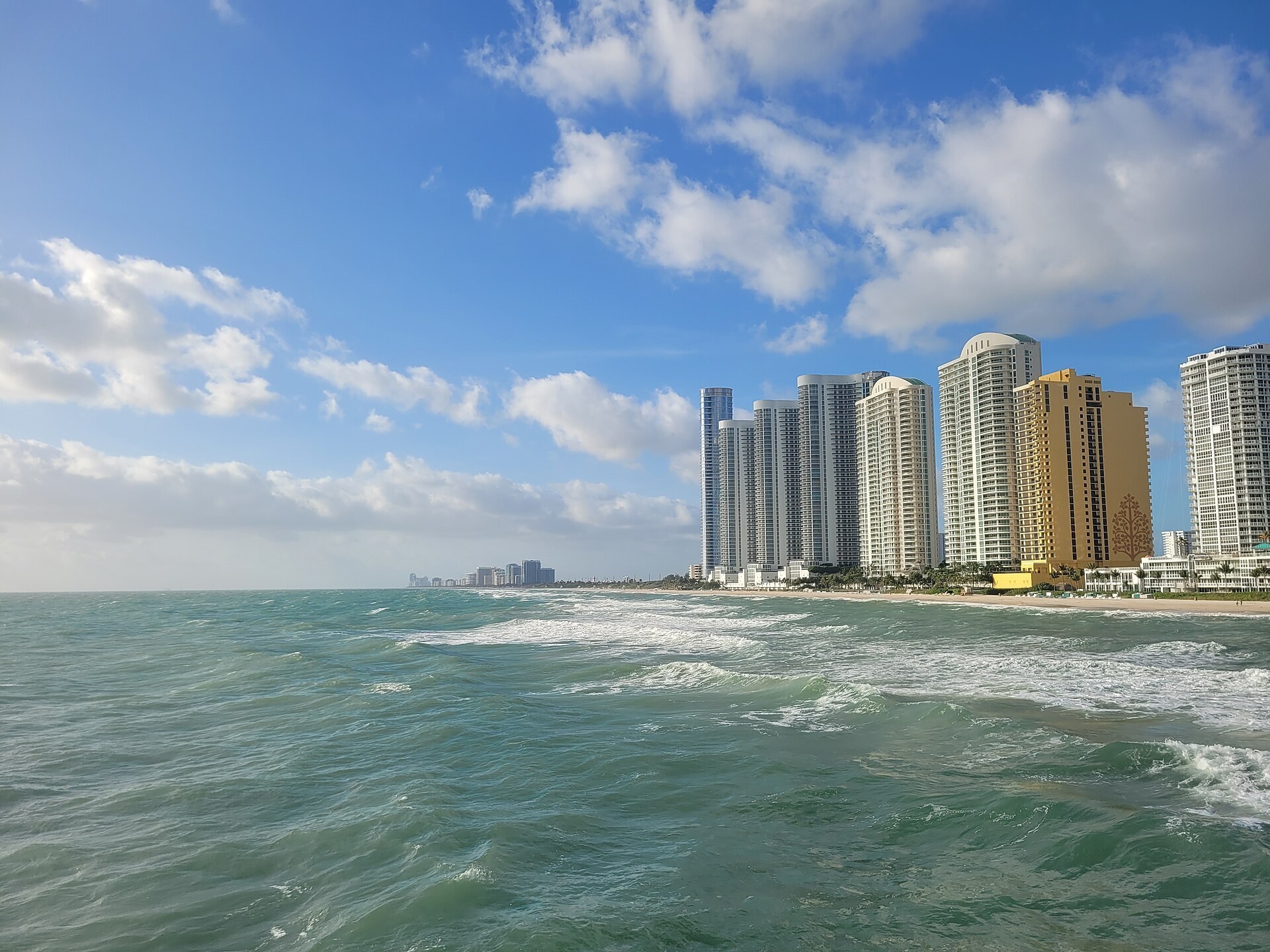
SOUTHEAST ATLANTIC
Sunny Isles Beach
fishing guide
Sunny Isles Beach directs fishing to Newport Fishing Pier rather than its swimming beach. Use the designated fishing section beyond the yellow line, follow the pier's tackle limits and verify current operating arrangements before traveling.
Explore the guide ↓Use Newport Pier instead of beach casting
The city's beach rules prohibit fishing on Sunny Isles Beach. Newport Fishing Pier is the defined fishing option at 16501 Collins Avenue. Follow its marked fishing section east of the yellow line.
Check the current operating schedule directly with the city or pier. Published facility and older question-and-answer schedules differ, so this guide does not promise a single fixed opening time. Verify admission arrangements before the drive.
The city lists a limit of three rods and additional tackle restrictions. Review them before packing the kit. A permitted pier visit does not allow transferring the same setup to the beach.
Follow current staff directions and posted boundaries. Keep the visitor section usable for people who came to walk and view the ocean.
Build the kit around the pier's restrictions
The pier's published rules exclude nets, treble hooks and several specialist rigs and target methods, including shark fishing. Do not bring a familiar beach or offshore rig without checking whether its components are allowed.
A simple single-hook bait presentation can be easier to fit to the permitted activity. Keep spare hooks secured and leaders organized. Staff guidance should settle uncertainty before a rod is set.
The city also describes protection around turtles. Give wildlife the required clearance and stop a presentation that could entangle an animal. Do not use a sighting as a reason to move bait closer.
Read the water from the approved section
A pier gives a higher view of bait, waves and bottom color than the sand. Compare several views before deciding whether a darker patch is fish, shadow or deeper water. The position of small prey can change quickly.
Watch where current carries a short test presentation. Keep line away from neighboring rigs and the structure. A cast that is easy to make may still be difficult to retrieve safely.
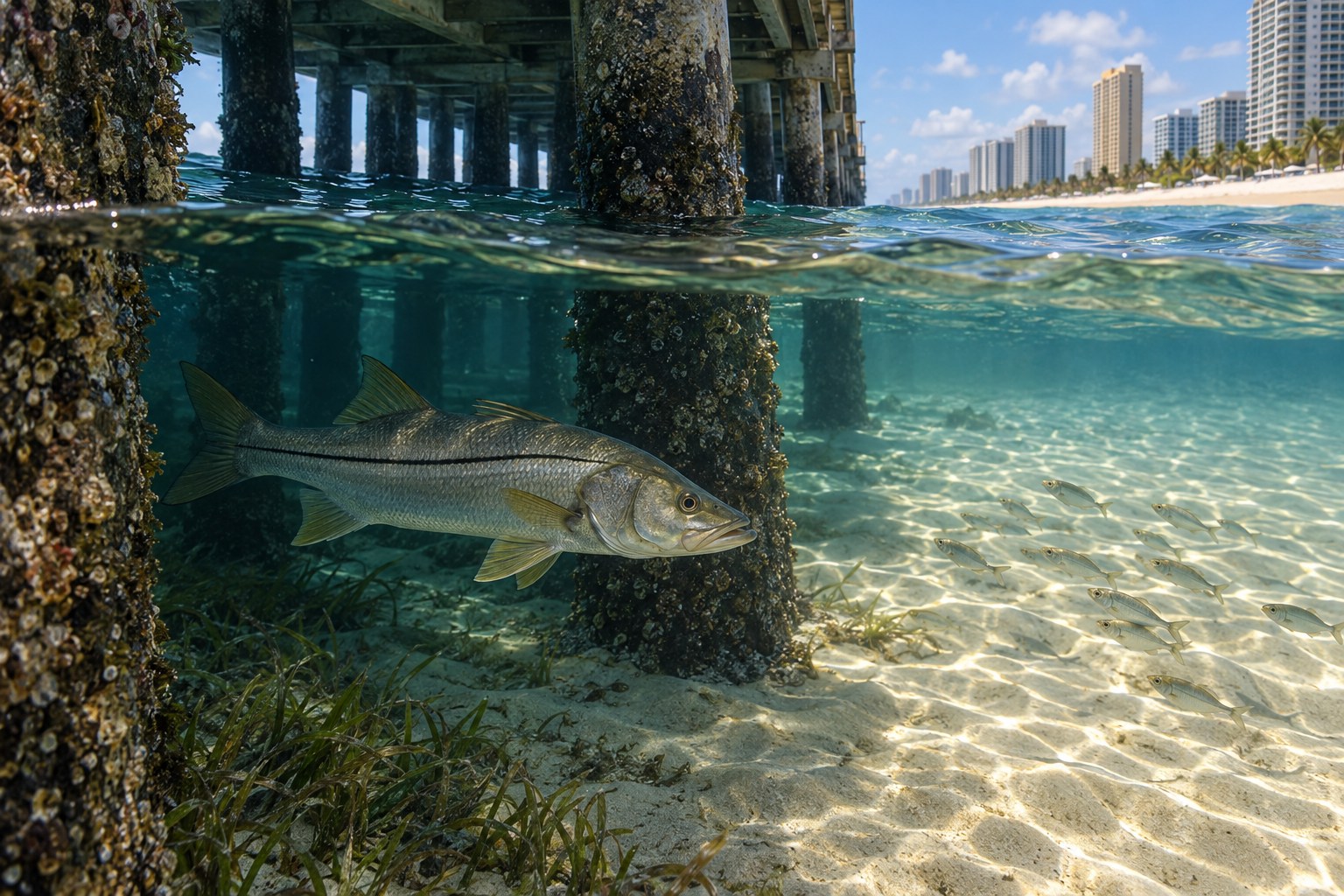
The illustration shows a general snook and pier-edge habitat relationship. It is not an exact drawing of Newport's pilings or proof that a fish is underneath the chosen rail.
Use a restrained presentation for a passing snook
Snook may travel through suitable nearshore margins in search of baitfish. A permitted single-hook offering can be placed in a clear open lane ahead of that route. Match the setup to the current pier rules.
Avoid pushing bait into a piling tangle to imitate cover. A recoverable path allows better control and less abandoned tackle. If a fish moves beyond the approved space, leave it rather than forcing another angle.
Choose tackle and drag that can guide a fish away from rough contact without excessive pressure. Inspect the leader frequently. The landing plan should already be ready before a large fish bites.
Start with one attentive bottom-bait rod
A compact shrimp piece or firm baitfish portion can examine suitable open water for small coastal feeders. Leave the point exposed and select weight from the actual drift. Avoid a large soft bundle that hides the hook.
Check short bites promptly. A stripped bait asks for a shorter inspection interval, while weed on the hook asks for a different recoverable lane. Learn from one rod before using the maximum allowed number.
Identify every catch before a harvest decision. Several coastal species can share the same small-bait presentation while having different rules.
Keep the setup inside the permitted method
The marked fishing section and tackle rules work together. Resolve both before choosing the bait or target.
| Planning question | Practical answer | Avoid |
|---|---|---|
| Where should the rod be used? | Marked fishing section beyond the yellow line | Fishing the swimming beach |
| How many rods are needed first? | One attended setup to learn the drift | Packing every allowed rod immediately |
| What tackle fits? | Current approved components and methods | Unverified treble-hook or specialist rigs |
| How will a fish be landed? | Staff-approved supported method | Leader lifting or climbing |
Prepare handling at pier height
Ask staff about suitable permitted landing equipment and the handling procedure. Do not improvise by climbing or lifting a heavy fish on the leader. A target is unsuitable if it cannot be supported safely from the approved position.
Keep pliers and measuring equipment accessible. Work with a helper when needed, leaving the visitor route clear. Release unwanted fish promptly with support rather than dragging them across a dry deck.
If turtles or other wildlife approach the rig, follow the pier's protective rules and retrieve as necessary. A good catch never takes priority over preventing entanglement.
Verify the schedule and choose manageable conditions
Confirm the current opening, closing and admission details before departure. Allow time for parking, the walk and packing at the end. A tide prediction should not dictate arrival at an unverified opening hour.
Wind can bow line into another angler's space, and waves can alter the safe presentation. Shorten or retrieve when control declines. Take drinking water and sun protection for an exposed rail.
Stop early for developing thunderstorms. Keep the bag compact so the departure does not require a long cleanup in worsening weather.
Check harvest rules and leave no sharp waste
Verify current FWC requirements and any pier-specific licensing arrangement before fishing. A facility rule and a species harvest rule are different checks. Identify and measure a catch before keeping it.
Collect leader clippings, bait packaging and stray hooks from the deck. Close the tackle bag for the walk through visitors. Recheck the pier's current rules whenever planning a different target or rig.
Common questions
Can I surf fish on Sunny Isles Beach?
The city's beach rules prohibit beach fishing. Use the permitted Newport Pier section instead.
Which part of Newport Pier is for fishing?
The city identifies the section east of the yellow line. Follow current marks and staff directions.
Can I use treble-hook lures on the pier?
The published pier rules exclude treble hooks. Check the full current tackle rules before bringing a setup.
What are the exact opening hours?
Published schedules differ. Verify the current operating arrangements directly rather than relying on an older schedule.
Prepare for your visit
Check local tides and weather. Read more about snook, permit. Check current FWC saltwater fishing rules.