
PANHANDLE
Okaloosa Island
fishing guide
Okaloosa Island gives anglers several different kinds of water in one compact area. The Gulf beach, the fishing pier and sheltered water across the island require different plans. Decide which setting fits your tackle and the day's conditions before leaving the car.
Explore the guide ↓Separate the Gulf beach from sheltered water
The island's Gulf side has open surf, sandbars and beach traffic. Across the land, sheltered coastal water has different bottom cover and boating activity. A bait rig that works on a clean surf trough is not automatically suitable for a grassy margin or a deep pier drop. Choose a setting before choosing a rig.
Use a designated public access for the water you intend to fish. The county maintains several kinds of parks and accessways in this area, but a beach crossing is not necessarily a boat launch. Likewise, nearby military land and a private resort entrance are not public alternatives when a preferred lot is full.
Compare the island's Gulf entries
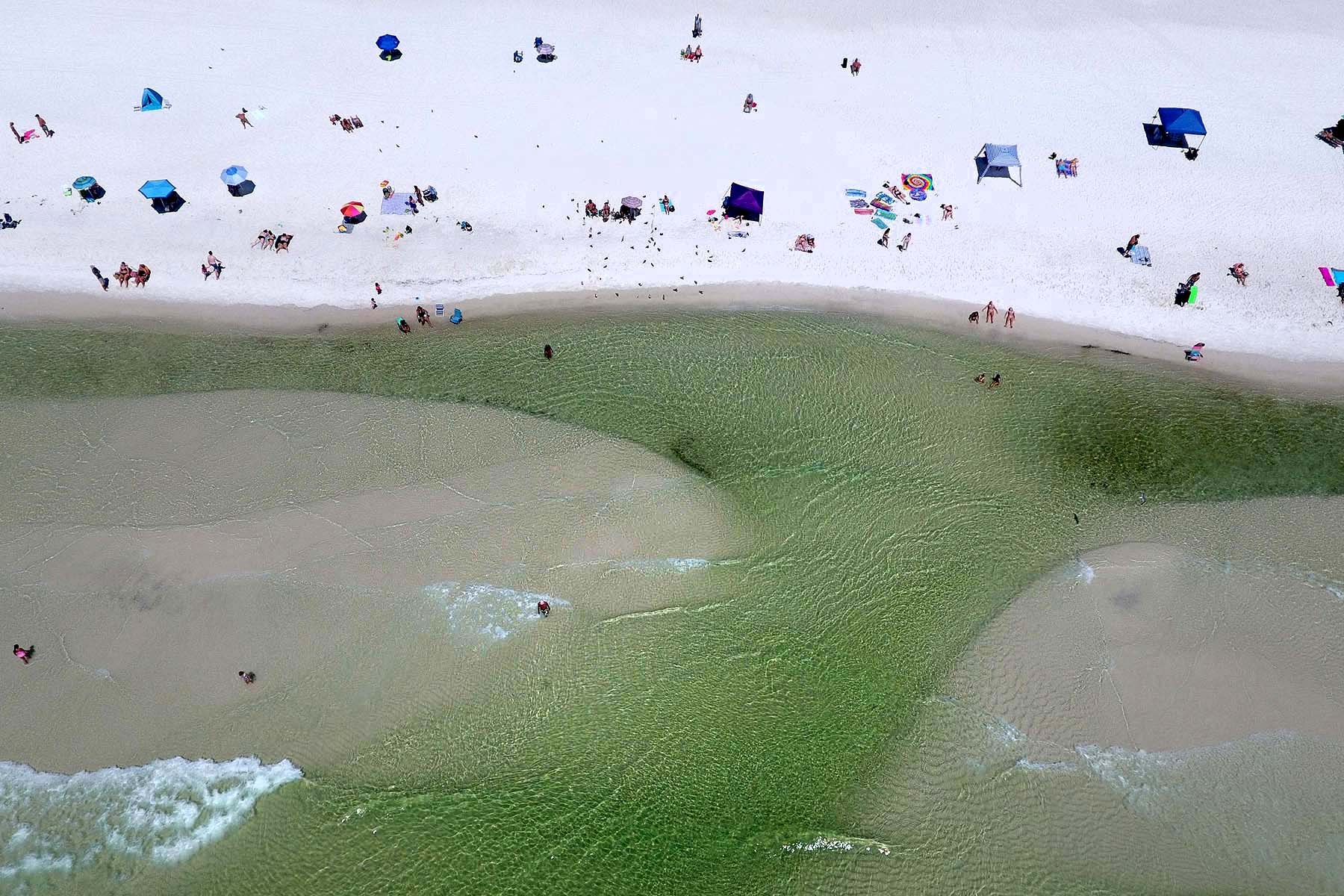
John Beasley Park offers a larger developed beach setting with pavilions and restrooms. Numbered beachwalks along Santa Rosa Boulevard give smaller entry points between developed properties. Jerry Melvin, Mike Mitchell and Seashore are examples of those county crossings. Their smaller parking areas encourage a compact kit and a flexible arrival plan.
Read the signs at your chosen site. County-owned property prohibits shark fishing. County beach-use rules also cover early setup and emergency travel lanes, separately from general park opening hours. Do not place a rod spread across a crossing or set equipment where it blocks access behind the beach.
Work the sand for pompano and whiting
For a simple surf session, inspect the nearest trough beside a breaking sandbar. Test a small shrimp piece or sand flea with a controlled bottom presentation. Pompano can move along the coast during favorable seasons, while whiting provide another possible target. A short accurate cast can reach useful feeding water.
Keep one rig at a repeatable distance long enough to compare results. Replace washed-out bait promptly. If the sinker moves steadily sideways, check line bow and the holding weight. Do not continue a drifting presentation when the line crosses swimming water or moves through another angler's setup.
Treat the fishing pier as its own destination
The Okaloosa Island fishing pier reaches beyond the nearshore beach environment. That can create opportunities for fish following deeper water and passing prey. It also requires facility-specific admission, hours and equipment rules. Check the current pier arrangements instead of assuming a public park visit includes pier fishing.
Watch what other anglers are doing without crowding their working space. A landing from height needs different tools and help than a catch on the sand. Ask pier staff about the appropriate method before targeting a fish too large to lift safely. Never swing a hooked fish across a walkway full of people.
Use an inshore approach only from lawful access
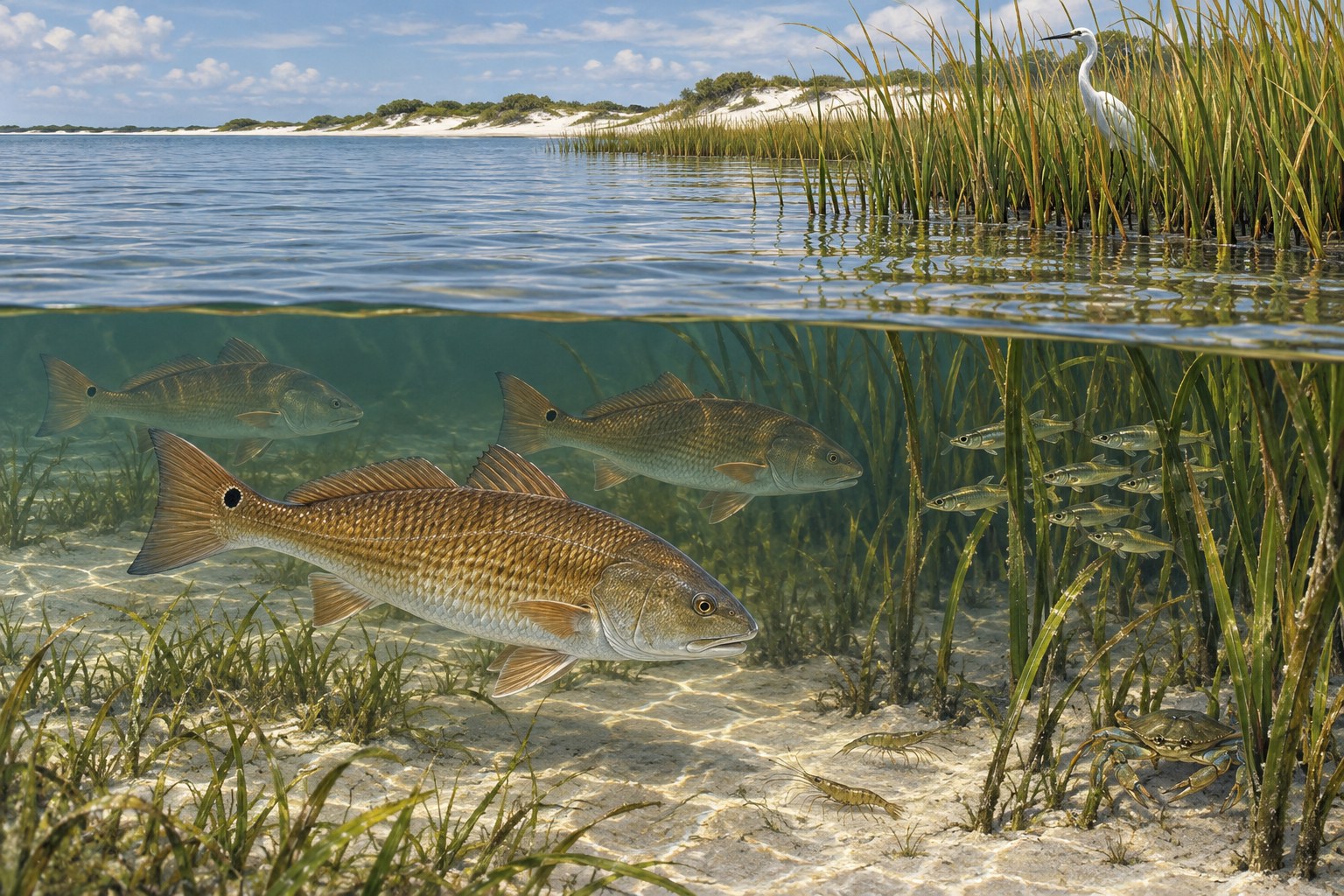
Sheltered local water can suit redfish, spotted seatrout and other coastal species around suitable sand, vegetation and feeding edges. These are habitat-based possibilities, not a promise for every public bank. Verify that your chosen park allows fishing and that the particular shoreline is open before unpacking an inshore outfit.
A shrimp under a float can stay above submerged grass. A light soft plastic can probe an open sand edge without dragging across living cover. Cast ahead of a likely feeding route, then let the presentation settle. Boating channels, launch lanes and heavily used boardwalks should remain free of your line.
Carry the kit for the setting you selected
A long surf rod is awkward on a narrow sheltered bank, while an ultralight outfit may be unsuitable for a heavy beach sinker. Match rod, line and leader to the presentation and nearby obstacles. The goal is a controlled cast and a recoverable catch, rather than maximum strength everywhere.
Bring a small reserve of useful rigs and keep the rest in the vehicle. A measuring tool, pliers and a waste container belong in every setting. Bait care changes with the location: shrimp need protection from heat, while live bait also needs suitable oxygen and water conditions throughout the outing.
| Setting | Possible starting target | Starting presentation |
|---|---|---|
| Clear Gulf sand trough | Whiting or seasonal pompano | Small crustacean bait on a holding rig |
| Open sheltered vegetation edge | Spotted seatrout | Shrimp suspended clear of cover |
| Sheltered sandy margin | Redfish | Compact soft plastic or shrimp |
| Separate fishing pier | Fish following passing prey | Facility-approved tackle suited to current activity |
Let wind decide whether to switch plans
The same breeze can improve the appearance of one shoreline while making another difficult to fish. Inspect the actual water at the access rather than relying only on a regional forecast. A Gulf rig may become unmanageable in strong side drift, while a sheltered bank may still have boat wakes and an exposed return route.
A switch of locations should include a new rules check. It is not permission to move onto private land or a closed park. If considering a paddle craft, account for the return against wind and wear a suitable flotation device. Flat water beside the launch says little about a longer open crossing.
Build realistic expectations around the season
Panhandle spring and fall attract surf anglers following pompano movements. Warm periods can bring passing baitfish and active predators, alongside thunderstorms and heavy swimming use. Cool fronts can alter water clarity quickly. Select a target and a method that fit present conditions rather than trying to catch every island species in one visit.
Tide predictions are useful for scheduling, but current can behave differently at the beach, a narrow channel and a pier. Look at drifting foam, bait movement and line travel. Write down those observations after a session. Over time they help you recognize a productive pattern without claiming that one tide hour always produces fish.
Common questions
Is all Okaloosa Island water the same for fishing?
No. Gulf surf, the fishing pier and sheltered shorelines need different tackle, access checks and safety plans.
Can I target sharks on county park property?
Okaloosa County's published park rules prohibit shark fishing on county-owned property. Follow the rules at the exact site you choose.
Do numbered beachwalks provide boat launches?
A beachwalk is a land crossing to the beach. Use a specifically designated launch when planning a boat or paddle outing.
What is a good beginner island plan?
Choose one open public Gulf access with enough clear room and test a small shrimp bait near a visible sand trough.
Prepare for your visit
Check local tides and weather. Read more about florida pompano, whiting, spotted seatrout. Check current FWC saltwater fishing rules.