
PANHANDLE
Seashore Beachwalk
fishing guide
Seashore Beachwalk is Okaloosa Island's Beach Access 3. Its picnic facilities suit a short outing, but fishing still depends on clear water space. A restrained surf setup lets you learn the beach while keeping the crossing easy for everyone else.
Explore the guide ↓Recognize the county's Seashore access
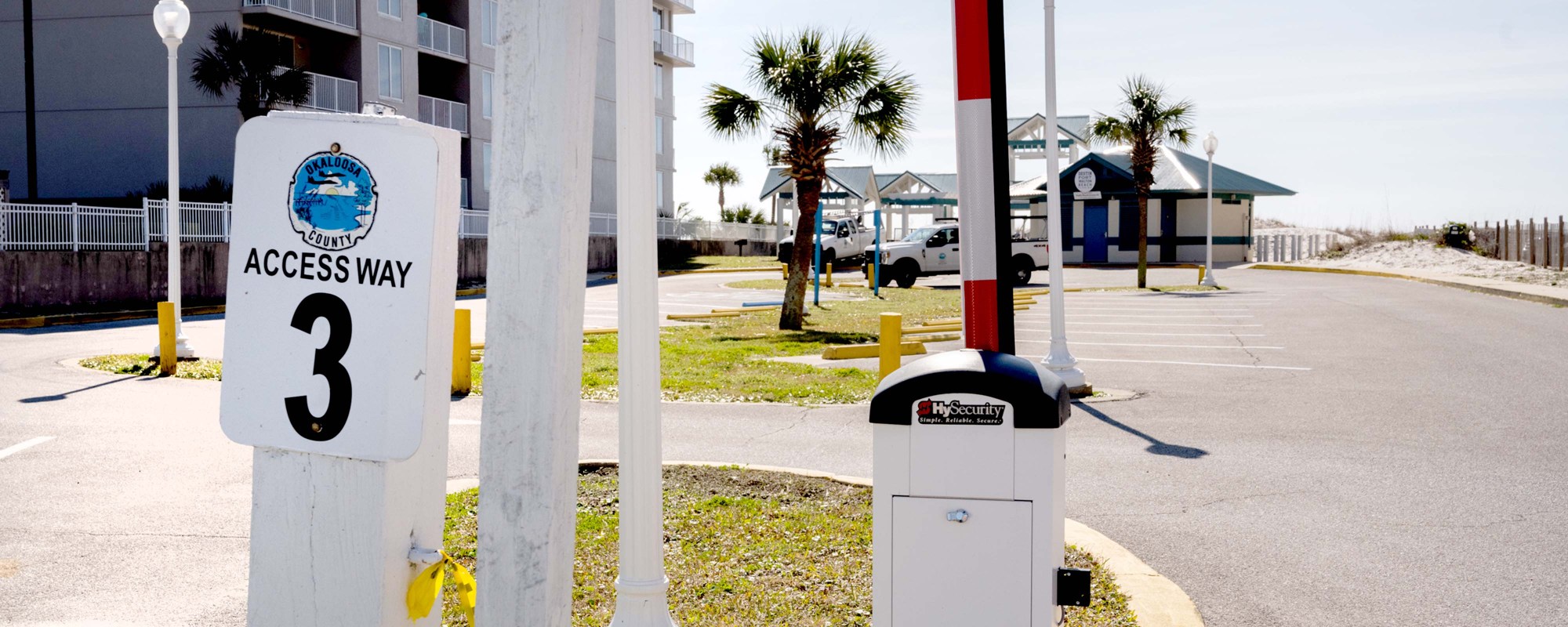
Okaloosa County lists Beach Access 3 at 530 Santa Rosa Boulevard. The official page spells its heading 'Sheashore,' while the location is commonly identified as Seashore Beachwalk. The county describes two pavilions, picnic tables, grills, restrooms and a modest parking lot. Use the numbered access and street address to avoid confusion.
The listed opening window extends from one hour before sunrise until one hour after sunset. Separate county conditions restrict beach setup before 7 a.m. and require an emergency travel lane. Check the present notices before placing equipment. Shark fishing is prohibited on county-owned property, so this guide focuses on ordinary surf targets.
Keep the picnic and fishing spaces separate
The pavilions make Access 3 useful for a group that wants more than fishing. Agree on where sharp tackle will stay and where food will be unpacked. A bait knife or loose hook does not belong on a shared picnic table after the angler leaves. Use a closed rig pouch and a firm container for waste.
Carry gear through the designated crossing without placing it across the route. Once on the sand, find a lane outside active swimming. A compact base lets you move when beach traffic changes. If the group includes a new angler, begin with one supervised rod rather than a spread that nobody can fully watch.
Use repeated wave patterns to locate depth
Waves breaking along the same line can identify a shallow bar. A smoother band just inside or outside it may indicate deeper water. Those edges can direct prey and feeding fish along the coast. Spend several minutes observing before making the first cast, especially when glare hides the sand beneath the water.
Do not assume the most distant water is the best. Whiting and passing pompano may feed within reach of a short controlled cast. Test the near trough, note bait checks and bite distance, then adjust. A gap through the bar can carry returning water, so keep that observation separate from a decision to enter it.
Let bait condition guide your next cast
Fresh shrimp, a small sand flea or a piece of prepared strip bait can test different feeding responses. Start with a compact offering that leaves the hook point clear. A bait bundle that flutters awkwardly and folds over the hook is harder for a small surf fish to take cleanly.
Heat and repeated casting gradually weaken shrimp. Keep a reserve cold and take out small amounts. Retrieve periodically even when the rod appears quiet. If the hook comes back empty, you have learned something about the presentation. Shorter checks or a tougher bait may help more than moving the entire fishing camp.
Match the presentation to a realistic surf target
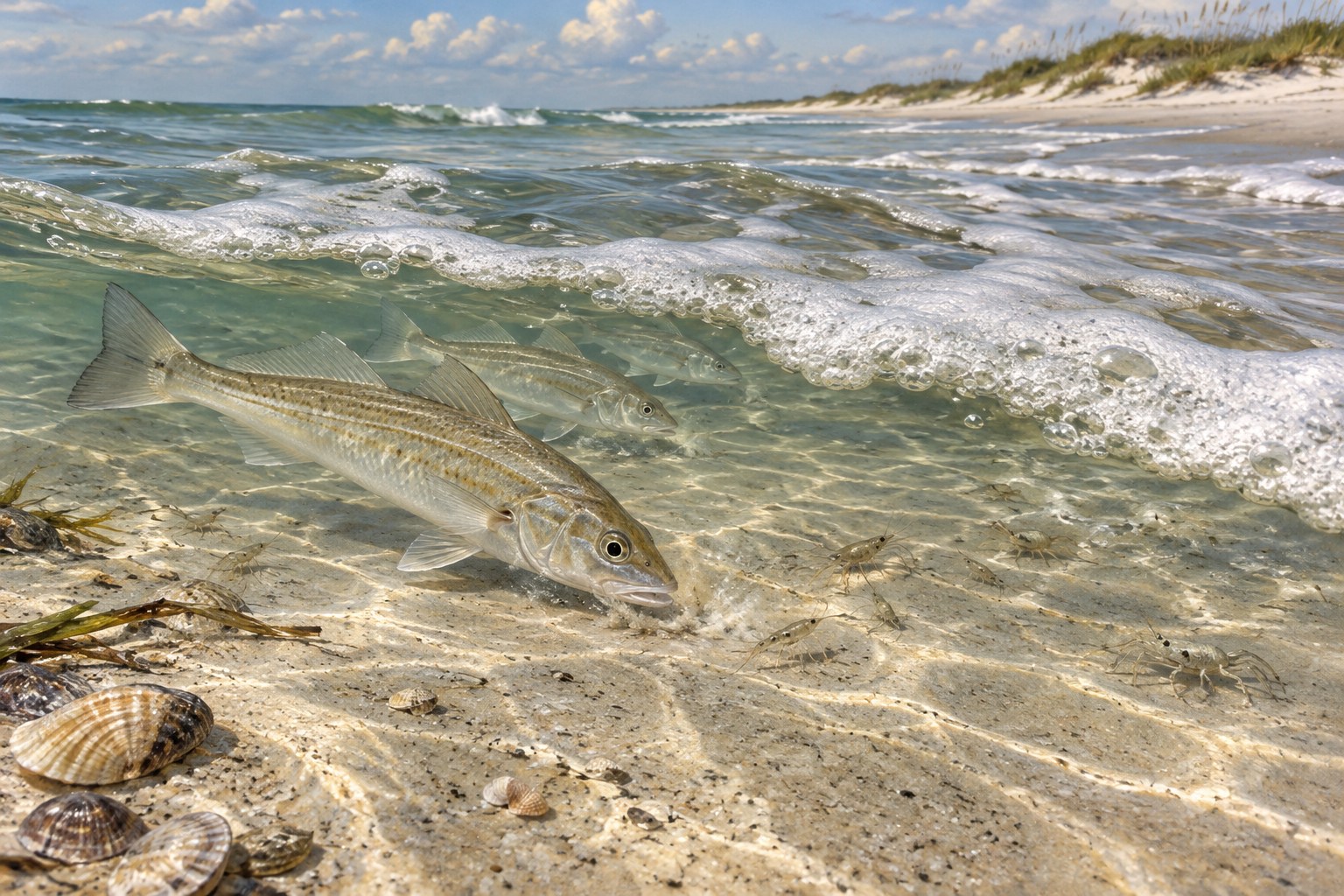
Whiting are a sensible small-bottom-fish possibility on sandy Gulf beaches. Their feeding style suits modest shrimp pieces near the sand. Pompano are another seasonal interest along the Panhandle coast and often suggest compact crustacean offerings. Neither fish requires you to begin with a very large bait or a heavy wire leader.
A passing school of predators changes the opportunity. Visible small fish scattering may justify trying a compact spoon, provided there is room for repeated casts. A lure session is more active than waiting on a bottom rig. Keep its final retrieve controlled and put it away when swimmers move into the lane.
Keep the rig inside the water you can safely use
Sideways wash can pull line across a broad area even when the sinker initially lands in a safe gap. Follow the line's travel after the cast. Take up excess slack and select an appropriate holding weight within the rod's rating. Do not solve an unsafe sweep by simply casting harder.
The rod holder should remain beside you, clear of the boardwalk route and emergency lane. Use a drag that allows a strong fish to take line without pulling the outfit down. Inspect knots and leaders after damage. The following signals help decide whether the useful adjustment concerns bait, distance or the safety of the location.
| Signal | Useful response | What you learn |
|---|---|---|
| Shrimp returns untouched | Try another clear trough range | Whether distance matters |
| Bait is repeatedly removed | Reduce the offering and shorten checks | How quickly small feeders act |
| Rig sweeps toward others | Reel in and reassess the lane | Whether the setup remains safe |
| A lure catches weed each cast | Pause or choose cleaner permitted water | Whether hooks can fish effectively |
Use the season as a starting clue
Spring and fall are often investigated for pompano movement on the Panhandle. During hot months, the beach may have more swimmers and a higher need for shade and storm awareness. Winter fronts can make a previously manageable shore rough or cloudy. Build the visit around conditions you can safely handle today.
A tide table supports arrival planning, but it does not predict every wave or gust at Access 3. Observe the current through foam and your line. If a breeze strengthens, reevaluate the weight and available space. A flexible short session can produce useful experience even when the chosen calendar window does not produce fish.
Avoid a risky wade for a replaceable rig
Sandbar channels can be deeper and stronger than they appear. Stay on secure footing while casting and landing. Do not follow a snagged leader into the water or ask another visitor to retrieve it. Beach flags and lifeguard instructions matter even when your original plan was simply to stand on land.
Lightning, heat and dehydration can become the main problem long before a tackle issue. Keep water available and leave enough energy for the return walk. The pavilion is a comfort feature, not a dependable lightning shelter. Move toward a suitable safe building or vehicle before a nearby storm reaches the beach.
Finish with an accurate catch decision
Learn the species you may encounter and measure only after securing the fish gently. Current size, bag and season rules decide whether it can be kept. Similar fish can have different regulations. When identification remains uncertain, release promptly instead of choosing a rule from memory that may fit another species.
Keep released fish supported and avoid coating them with dry sand. Check around the rod holder for small leader scraps before packing. Leave the public table and crossing as you found them. This simple care helps Seashore remain a useful access for fishing visitors and families sharing the same beach.
Common questions
Why does the county page say Sheashore?
The page heading uses that spelling for Beach Access 3. Use 530 Santa Rosa Boulevard and the access number to identify the location.
Can I set up whenever the park opens?
The county lists separate restrictions on beach setup before 7 a.m. Read the current signs instead of treating early opening as automatic setup permission.
Is Access 3 useful for a mixed picnic and fishing day?
The county lists pavilions, tables, grills and restrooms. Keep bait and sharp tackle separate from shared food and walking spaces.
What should I try before a long cast?
Observe the inner trough and make a compact bait presentation at a repeatable distance. Nearshore feeding water can be worth testing first.
Prepare for your visit
Check local tides and weather. Read more about florida pompano, whiting. Check current FWC saltwater fishing rules.