
PANHANDLE
Blue Mountain Beach
fishing guide
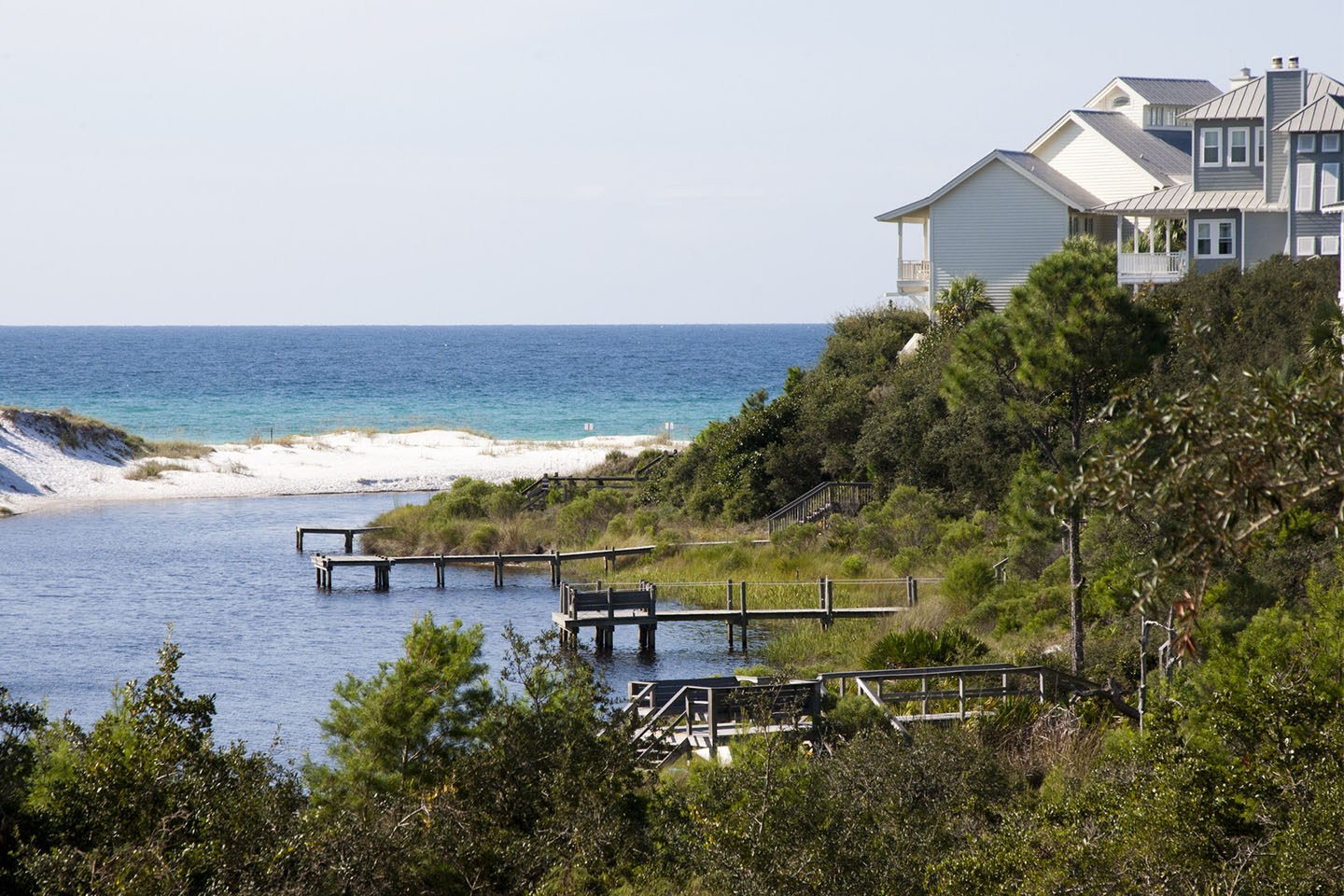
Blue Mountain Beach offers a public regional access on South Walton's Gulf coast. Anglers can use its facilities to plan a measured surf session. The main challenge is finding clean feeding water while keeping the tackle within a clear, lawful beach lane.
Explore the guide ↓Find the regional access at Highway 83
Visit South Walton lists Blue Mountain Regional Beach Access as Access 36 at 2365 South Scenic Highway 83. Its facilities include parking, restrooms, a water fountain and a beach-condition flag. Accessible parking and restrooms are listed, with seasonal lifeguards. Confirm current services rather than assuming every beach path in the neighborhood has them.
Use this designated access and observe the public shoreline boundaries. Nearby neighborhood crossings may be intended mainly for people walking or cycling. A full lot does not justify parking in landscaping or blocking a road. Walton's code guidance specifically warns that landscaping is not an overflow parking space.
Plan the last part of the trip before bringing rods
County tourism information describes park-and-ride connections serving Blue Mountain, with schedules that can change. If using a tram, check today's route, operating period and whether your equipment can be carried safely. Long rods and heavy coolers are awkward in shared transport. A light shore kit is easier to adapt.
Make an initial walk to observe the sand before moving all the gear. Seasonal lifeguards and a marked public access do not ensure an empty fishing lane. Choose a location outside active swimming, with clear space behind the cast. Keep access corridors open so other visitors can reach the water without stepping over your rig.
Look for a repeatable depth change
A shallow sandbar makes waves break along a fairly consistent line. The trough beside it can offer a route for feeding fish. Watch the pattern through several wave sets and shifting light. A dark strip alone can be misleading when a cloud moves across the Gulf or floating weed passes through.
Test a nearby trough with one attended rod before choosing a long cast. Small crustaceans and fish can be close to shore. Vary range in deliberate steps and note where taps occur. If a channel appears through a bar, use it as an observation clue only. It may carry a strong return flow.
Give pompano a compact bottom offering
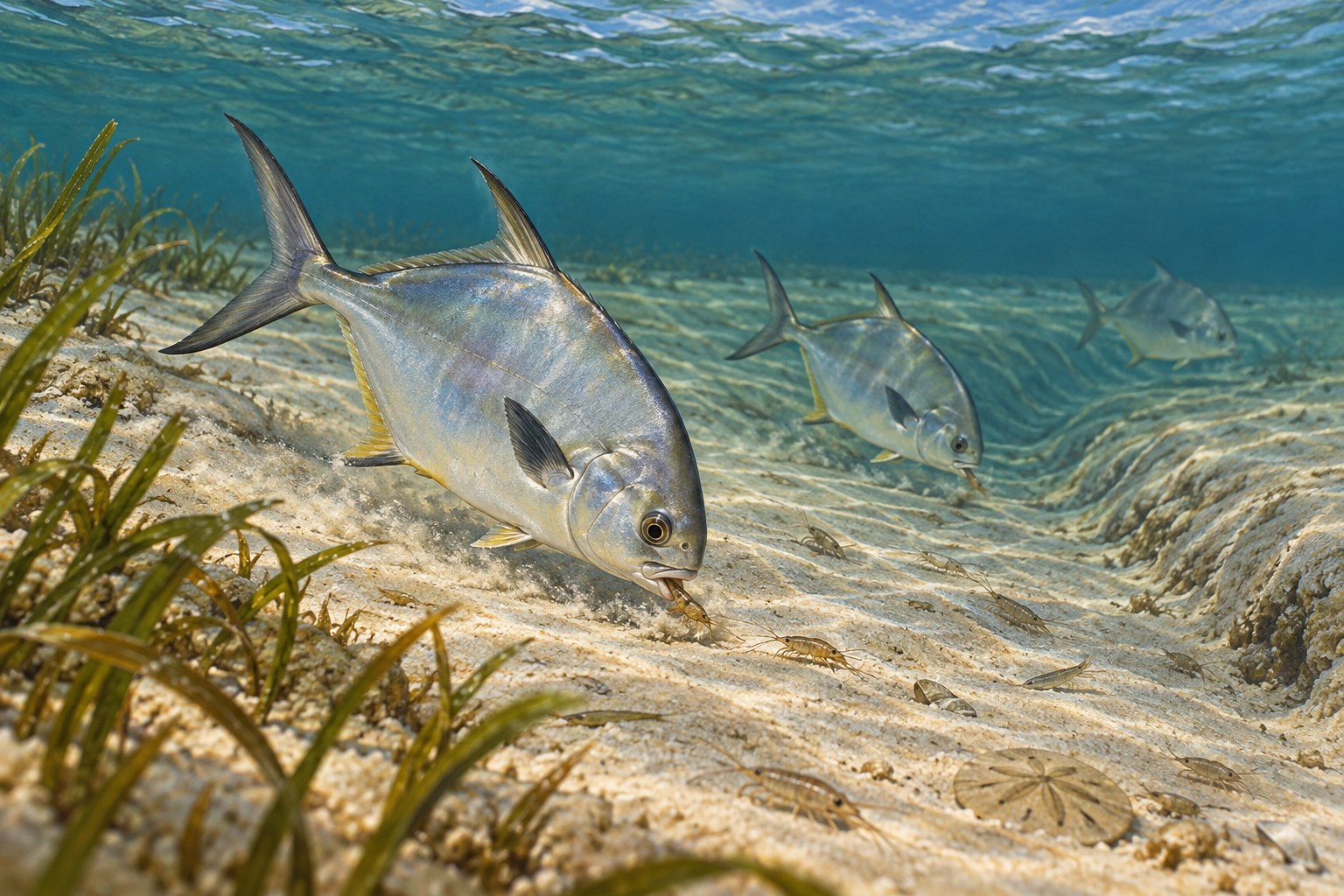
South Walton surf anglers often consider pompano during suitable seasonal movements. A sand flea, a modest shrimp piece or a narrow prepared bait strip is a sensible starting selection. Keep the point of a suitable small hook available. An oversized bait bundle can turn and cover the point before a fish reaches it.
Choose a bottom rig that holds without exceeding the rod's safe casting range. A small float can lift bait above shifting sand. Compare a plain hook and floated offering only when there is enough room to manage both safely. Learn from bait condition after retrieval rather than judging the rig only by whether a fish is landed.
Keep a close-range option for whiting
Whiting are another possible sandy-surf target. Small shrimp pieces suit a patient nearshore test. Keep enough tension to notice a sustained change after a wave passes, but avoid dragging the sinker every few seconds. Frequent checks reveal whether small feeders have removed the offering without a clear rod movement.
A moderate outfit can make this kind of fishing comfortable. Set the drag so a stronger unexpected fish can take line safely. A simple spare leader makes recovery from a tangle quick. Do not treat small fish as disposable; use wet hands and remove the hook promptly when releasing a catch.
Match the adjustment to the problem you see
Wind, wave wash and tackle condition all influence what reaches the fish. Before replacing the lure or bait, identify the specific problem. A rolling sinker needs a different response from repeatedly stripped shrimp. A leader full of weed cannot present cleanly even when the bait itself looks fresh.
Keep a small selection of suitable weights, hooks and leaders organized in a closed pouch. Loose tackle disappears easily in bright sand. Carry a measuring tool and pliers where you can reach them during landing. The following choices keep the setup focused on what the beach is actually telling you.
| Problem | Reasonable test | Avoid |
|---|---|---|
| No bites at one range | Place the next bait in a different visible trough | Changing every rig part together |
| Soft shrimp falls apart | Use a fresh small piece or tougher strip | Leaving the full supply in the sun |
| Line sweeps across the beach | Review weight, slack and safe lane | Keeping a rig in occupied water |
| Hooks return with weed | Pause or use cleaner lawful water | Assuming scent can overcome buried hooks |
Put beach conditions ahead of a favorite tide
Blue Mountain's Gulf shore is exposed to wind and moving surf. A tide prediction can help plan arrival but does not establish current strength beside a bar. Watch foam, breaking waves and the line after casting. Reassess when the breeze shifts or beach flags change. A manageable lane matters more than a perfect-looking tide time.
Spring and fall can be promising periods to investigate pompano movements. Hot months require extra water, storm awareness and accommodation of swimmers. Cooler weather brings fronts and sudden clarity changes. Build a short achievable target plan for the conditions, then learn from the outing even when seasonal expectations do not produce a catch.
Keep access easy without entering protected sand
Stay on the designated crossing rather than climbing dune vegetation to avoid the steps or shorten the route. Dunes support protected wildlife and help hold the beach in place. Nesting enclosures should remain undisturbed. Keep tackle bags and rod holders out of the corridor connecting the access with the water.
No surf fish requires a risky wade. Bar gaps may look calm while carrying water offshore. Respect beach flags and current lifeguard guidance, and do not enter hazardous water to free a sinker. When thunder or rapidly building wind arrives, leave enough time to reach an appropriate safe shelter.
Use current rules and remove the small scraps
Identify the fish and check present size, bag and season conditions before keeping it. Young pompano and similar species can confuse beginners. Carry a reliable identification aid and measure carefully. If uncertainty remains, release the catch promptly. A rumor about a neighboring beach is not a legal harvest decision.
Put clipped leaders, damaged hooks and bait wrappers straight into a closed waste container. Wind can scatter them before you finish packing. Take a final look at the sand around the rod holder and the route back to Access 36. Careful departures keep this public entry useful for anglers and other beach visitors.
Common questions
Which public access serves Blue Mountain Beach?
Visit South Walton lists Blue Mountain Regional Beach Access 36 at 2365 South Scenic Highway 83.
What amenities are listed there?
Parking, restrooms, a water fountain, beach flags and seasonal lifeguards are listed. Accessible parking and restrooms are also identified.
Can I use landscaping when the lot is full?
No. County code guidance says landscaping is not an overflow parking area. Check a legal alternative or the current transport options.
Are long casts necessary?
Start by observing and testing the nearest useful trough. Controlled short casts can reach feeding water without forcing extra distance.
Prepare for your visit
Check local tides and weather. Read more about florida pompano, whiting. Check current FWC saltwater fishing rules.