

SOUTHWEST
Andy Rosse Lane Park
fishing guide
Andy Rosse Lane Park is a pedestrian beach access on Captiva. The west end reaches the Gulf, while the east end is not recommended for paddlecraft launching. With no park parking listed, the first task is arranging a lawful arrival before carrying a small fishing kit to an allowed shore position.
Explore the guide ↓Use the correct end of Andy Rosse Lane
Lee County identifies the park at 11570 Andy Rosse Lane. The west end provides foot access to the Gulf. The east end is a different waterfront situation and should not be mistaken for the beach entry.
The county lists no parking at either end. Arrange lawful parking elsewhere with permission or a clearly authorized public option. Do not use a business lot merely because the beach walk appears short.
Regular park hours are dawn to dusk. Check the current shore-fishing instructions once you reach the access. Remain on the public foot route, and keep equipment narrow enough for other visitors to pass without stepping around exposed hooks.
Do not build a paddling trip around the east end
The county states that launching or landing at the east end is difficult and not recommended. That warning matters more than the appearance of a water opening on a map. Choose a verified suitable launch if you intend to use a kayak.
The absence of park parking also complicates carrying a craft and collecting it later. A nearby curb is not an authorized staging area. Do not unload across traffic or occupy a private driveway while deciding what to do.
For this guide, the practical plan is a pedestrian Gulf beach visit. Boat or bay fishing needs its own legal access and weather preparation. Keeping those trips separate avoids turning a light shore outing into a difficult retrieval.
Watch the beach edge before making the first cast
A walk-in access encourages a compact lure kit. Before fishing, stand back and look for baitfish moving along the wash. A clear permitted section with small prey is a better starting point than the most convenient place to drop your bag.
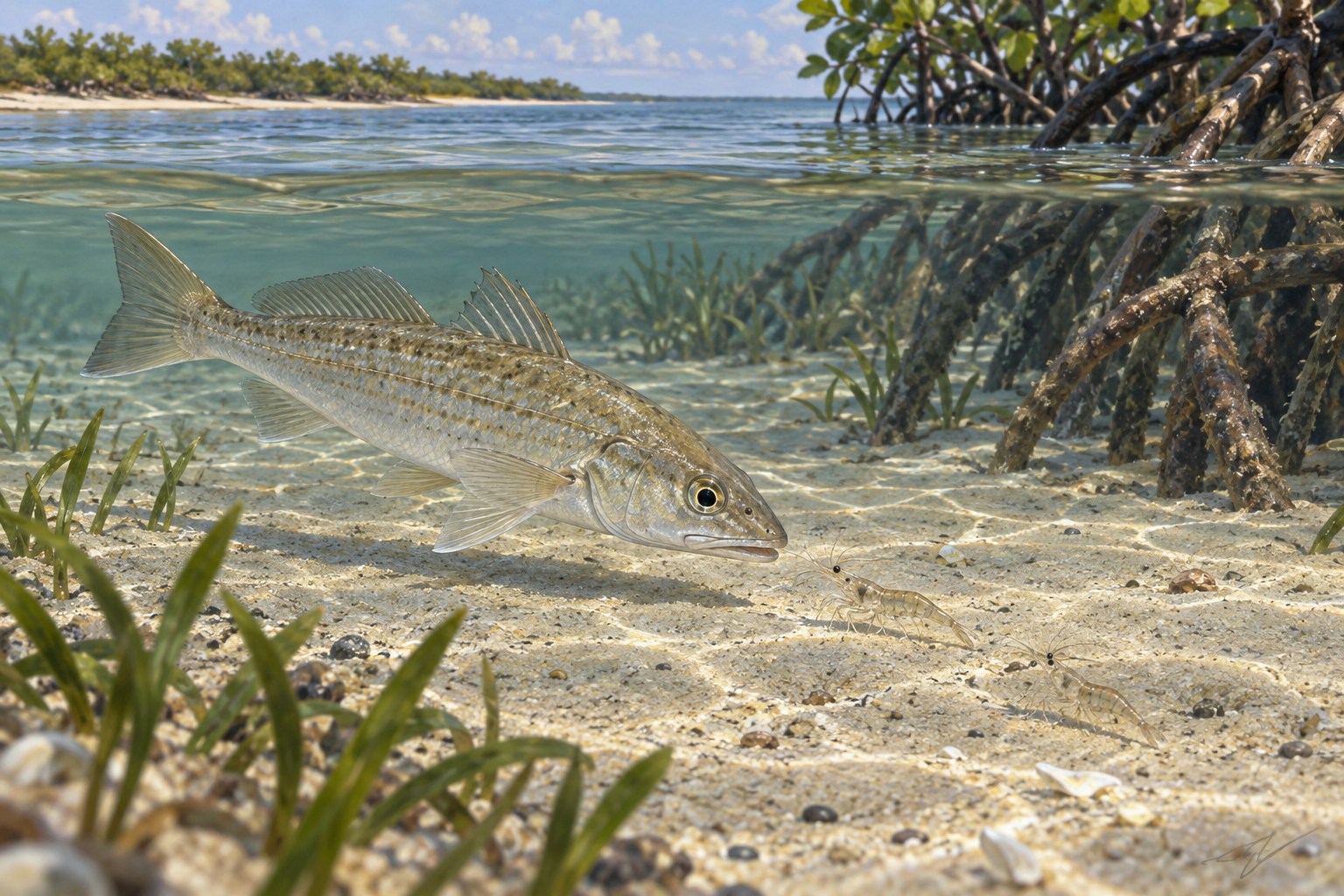
Snook may patrol regional Gulf beaches in warm water. A small soft plastic can be retrieved near the sandy edge when a safe lane is clear. Cast ahead of visible movement instead of repeatedly landing a lure over it.
Walk slowly and avoid pushing into the water simply to gain distance. Beach fish sometimes feed close enough that a modest cast is useful. Watch other users behind you as carefully as the water in front.
Use one tidy rig when the trough suits bait
Small surf fish such as whiting and pompano offer another regional option. Bring shrimp pieces, purchased sand fleas or strip bait in a sealed container. A single bait outfit is easier to carry and monitor than a broad rod spread.
Choose weight after observing the wash. The rig should remain reasonably controlled without sweeping across neighboring feet. If the current prevents that, move only to another allowed clear position or stop fishing.
Check hook exposure and replace bait that has become ragged. Compare a near cast with a slightly farther one to find the feeding distance. Keep any spare bait and sinkers inside the bag rather than spread through the access sand.
Match the day to the likely shoreline activity
Cooler Gulf conditions can support a focused surf-bait trip. Warmer periods favor watching for shallow baitfish and snook movement. These tendencies help select equipment, but they do not establish a fixed calendar for bites.
An incoming tide may cover a trough that was nearly dry on arrival. Falling water may widen the beach but leave the bait farther from a useful edge. Recheck the actual shoreline position after each change in wave wash.
Busy beach periods can remove the room needed for any method. Visit ready to enjoy a walk without fishing if the access is crowded. A small pedestrian park cannot promise a safe casting lane throughout the day.
Keep the walk comfortable and the tackle covered
Pack only the lures or bait needed for the chosen approach. A medium spinning outfit, leader, pliers and measuring tool cover many ordinary inshore tasks. Bring water and sun protection before adding a second heavy tackle box.
Protect hooks during the entire walk from your parking location. Cover rod tips when moving through a crowd, and keep long rods upright only where overhead clearance is safe. Do not lean tackle across a restaurant entrance or public path.
The table is a quick way to choose the size of the outing. Each option assumes that current rules allow the intended fishing position.
| Visit plan | Carry | Access consideration |
|---|---|---|
| Beach lure search | One spinning rod and small lure pouch | Need a clear permitted retrieve route |
| Small surf-bait test | One rig and sealed bait box | Attend the rod beside other beach users |
| Beach walk without casting | Covered tackle or no rod | Useful when the sand is crowded |
| Kayak fishing | Use a separately verified launch | East-end launching is not recommended |
Use the forecast to decide whether to make the walk
Gulf-facing wind can turn a calm edge into a rolling wash with drifting weed. Check conditions before carrying everything from an off-site parking location. A long walk is less appealing when the surf cannot hold a controllable presentation.
Summer thunderstorms demand an early return toward proper shelter. An isolated palm and a beach umbrella do not provide lightning protection. Leave enough time to reach your arranged transport without rushing with an exposed rod.
Heat also affects the walk back. Keep some drinking water in reserve and wear footwear suitable for hot pavement. If someone in the group is tired, shorten the route instead of extending a marginal fishing session.
Treat the access as a route everyone needs
Families, beach walkers and other visitors use the same narrow approach. Set your bag away from that route and keep the retrieve clear of swimmers. Stop immediately when a moving line would become a hazard.
Private land on either side remains private even if people have walked there before. Stay within signed public space. Do not cross planted dunes or move a fence to avoid carrying tackle around a building.
Watch for seasonal wildlife boundaries and keep bait away from birds. Nesting closures may narrow the walkable beach. They are part of access planning rather than an obstacle to step around.
Make fish identification part of the outing
Beach catches can include species beyond your main target. Bring a clear identification reference and measure fish when a current rule requires it. Do not use an uncertain common name as a reason to keep a fish.
Check Florida saltwater license requirements for the angler, not just the location. Resident shore provisions and visitor licenses differ. A lawful parking arrangement has no bearing on those fishing requirements.
Release fish promptly when necessary and pack every piece of tackle out. Recheck the sand where you stood for small hooks or line scraps. A short pedestrian visit should remain easy for the next beach user.
Common questions
Is there parking at Andy Rosse Lane Park?
Lee County lists no parking at either end. Arrange a separate lawful option before bringing equipment.
Which end reaches the Gulf beach?
The west end is the listed pedestrian Gulf beach access. The east end has a separate launch warning.
Should I launch a kayak from the east end?
The county says launching or landing there is difficult and not recommended. Find a verified suitable launch instead.
Should I bring several surf rods?
A compact single-outfit plan is easier to carry through this pedestrian access and safer to monitor on a shared beach.
Prepare for your visit
Check local tides and weather. Read more about snook, florida pompano, whiting. Check current FWC saltwater fishing rules.