
NORTHEAST ATLANTIC
Atlantic Beach
fishing guide
Compare Atlantic Beach surf and estuary fishing, including Dutton Island, Tide Views access notices, local fish and useful bait methods.
Explore the guide ↓Surf on one side, tidal marsh on the other
Atlantic Beach is more than an oceanfront fishing stop. Its eastern edge faces the Atlantic, while western preserves connect visitors with tidal creeks and the Intracoastal setting. These are different habitats, with different fish-holding features and different access rules.
Choose the ocean when you want a simple sand-and-surf outing. Consider Dutton Island when you have a plan for its permitted fishing access or kayak launch. A short drive does not mean you should combine both methods in a rushed session.
There is one important current limitation: the city lists Sunset Pier at Tide Views Preserve as closed from July 30, 2026, until further notice. Do not make that pier the basis of your visit without a confirmed reopening.
Where to begin on land
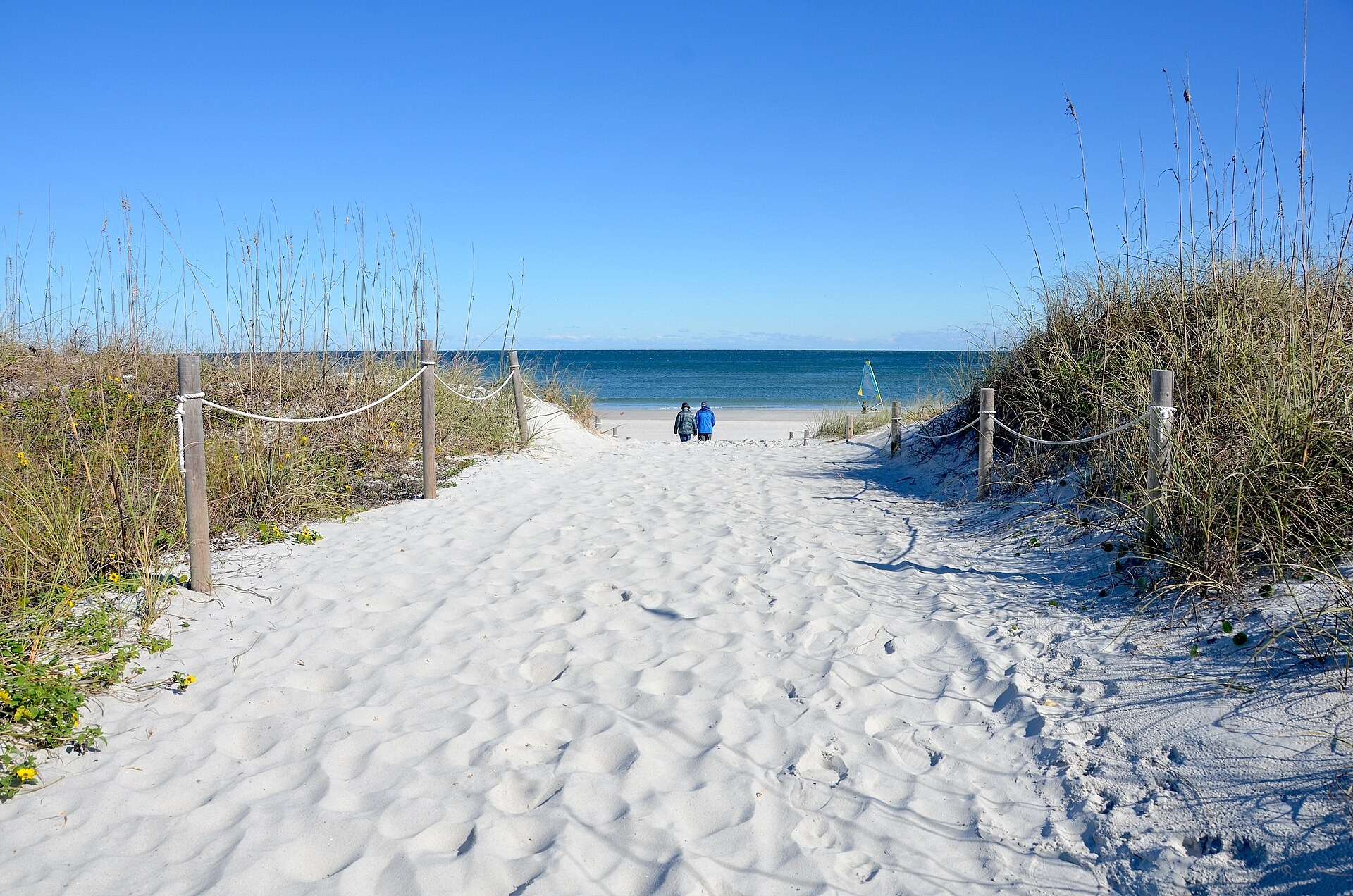
Use an established public beach crossing for an ocean session. Check nearby parking signs carefully. Residential streets and private driveways are not overflow parking just because an entrance is close to the water.
Dutton Island Preserve offers a fishing pier and a kayak launch in a marsh setting. It is a useful alternative to the exposed surf, but access can be affected by very high tides. The city warns that king tides may flood the access road. Check conditions before committing to the drive.
Tide Views Preserve should be treated as a separate destination. Its Sunset Pier closure does not establish that every trail or part of the preserve is closed, but it does remove that pier as a dependable fishing plan.
For paddlers, a launch is a starting point rather than proof that a route is easy. Wind, tidal flow and soft creek banks can complicate a return. Pick a short route with clear landmarks and avoid leaving the launch so late that you must navigate unfamiliar water in darkness.
Fish the habitat you actually have
| Setting | Fish to consider | First presentation |
|---|---|---|
| Ocean trough | Whiting and occasional pompano | Small shrimp bait close to sand |
| Marsh drain | Redfish and spotted seatrout | Live shrimp carried along the edge |
| Sand beside a creek channel | Flounder | Slow soft plastic near bottom |
| Shell-lined bend | Black drum and redfish | Fresh bait just outside the shell |
| Moving bait near the beach | Bluefish or jacks | Compact lure through a clear casting lane |
A creek does not need dramatic current to hold fish. Small shrimp and minnows moving across an edge may be enough. Conversely, a deep-looking pool without food or movement can be quiet.
Keep the target list short. Trying for seatrout with suspended shrimp calls for a different depth choice from dragging a bait for flounder. Decide what you are testing before each change.
Let a marsh drain deliver the bait
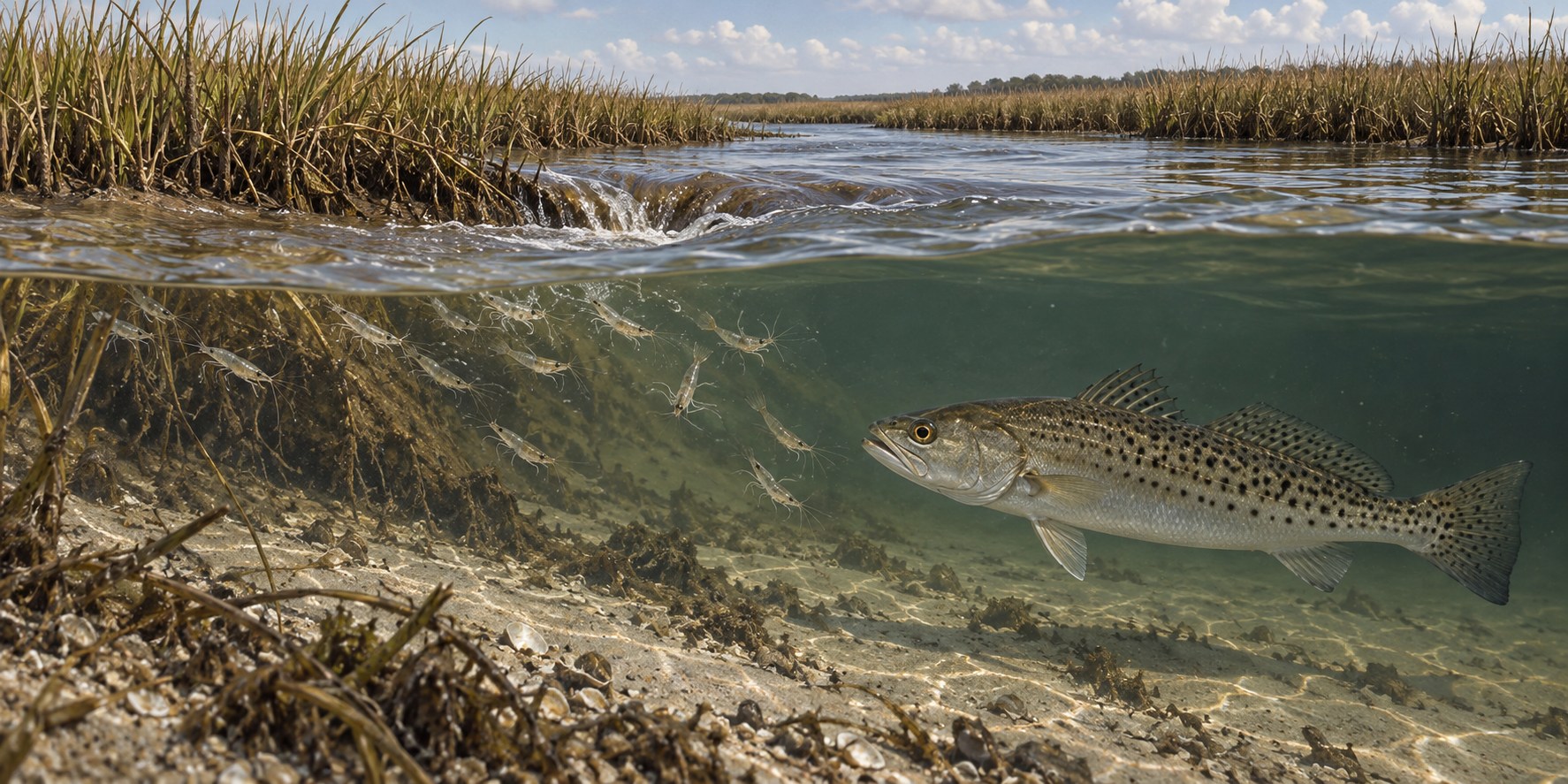
On a falling tide, water leaving a small marsh opening may carry shrimp and little fish. A seatrout can hold nearby and intercept that food. Cast so the bait enters the flow before reaching the likely holding area.
A float is useful when you need to keep shrimp above shell or uneven bottom. Set the depth deliberately. If the bait hangs far above the feeding level, a beautiful drift may still pass over the fish.
Give the bait room to move without leaving a large loop of loose line. Too much slack makes it difficult to recognize a bite or steer away from a snag. Tightening slightly is different from dragging the shrimp against the current.
With lures, start with a gentle swimming action. A small paddletail can cover the edge without excessive splashing. If the water is cold or the fish seem reluctant, slow the retrieve and use shorter movements.
Approach shallow water quietly
Fish in a narrow creek have less room between themselves and the bank. Heavy footsteps, dropped tackle and repeated casts directly onto a visible fish can spoil a good position. Pause before the first cast and look for movement.
From a kayak, stop paddling well before the target. Let the craft settle while maintaining a safe position outside navigation traffic. Do not drift into an oyster bed while watching the rod tip.
A weedless soft plastic is useful beside vegetation, but it is not snag-proof. Aim along the edge rather than into the thickest cover. A retrieve that follows the bank can keep the lure in useful water longer than one pulled straight away from it.
If a fish follows without taking, change speed or direction before immediately replacing the lure. The response itself tells you that the fish noticed the presentation.
Keep the ocean method uncomplicated
On the Atlantic beach, watch for a strip of deeper water inside the first breaking bar. Place a small shrimp bait there and check it often. This approach can find whiting without requiring heavy tackle or a very long cast.
Use a sinker that holds under the current wave conditions. Stay within the equipment’s casting limit. If the rig drifts continuously, it can become a hazard to nearby swimmers and other anglers.
Leave generous space from bathers, surfers and beach walkers. A lure cast toward a bait school is not acceptable if people are in its path. The sea does not become a private fishing area because you arrived first.
For a neighboring oceanfront option with a managed pier, see Jacksonville Beach fishing. That is a different visit with its own admission and fishing arrangements.
Choose a small, useful tackle kit
A medium spinning rod with modest line strength covers many light inshore situations. Add leader material suited to abrasion around shell. For surf weights, use a rod specifically rated for the load rather than assuming the same outfit handles everything.
Carry shrimp hooks, a few jig heads, soft plastics and one small metal lure. This leaves enough choice to respond to the water without turning every quiet period into a long tackle search.
Bring pliers, a ruler and a way to keep bait cool. A net can help at a suitable low bank or pier, but check whether it actually reaches the water. A short net is not a landing plan for a high edge.
For kayaking, wear a properly fitted life jacket and secure essential gear. Keep communication equipment accessible after a capsize, not buried beneath a cooler. A short, sheltered route still deserves preparation.
Use wind and tide to choose the side
An easterly breeze may add surf on the ocean side. The marsh can sometimes offer shelter, but a strong wind can still make open Intracoastal water difficult. Look at the exact launch and return route rather than assuming the western side is always calm.
Spring and autumn often provide comfortable fishing weather between fronts. Summer favors early sessions and careful attention to lightning. Winter may require a slower presentation and a search for protected depth.
Check the area’s tides and forecast, including unusually high-water conditions that could affect the Dutton Island road. Tide information is useful for access as well as fish activity.
When water is extremely low, avoid pushing a kayak into a creek that may become too shallow to exit. Soft mud can be difficult to walk through, and leaving the boat may not solve the problem.
Fish within the current access and harvest rules
The FWC saltwater fishing pages provide current license and harvest information. Verify the rules for the species before placing it in a cooler.
Leave closed piers and flooded access routes alone. A barrier is not a suggestion to find another way around the structure. Check city notices before returning to Sunset Pier.
Release fish promptly with wet hands and support under the body. Keep hooks and discarded leader away from the marsh edge. Small pieces of line can be difficult to see among grass but still harm birds.
Use visibility to choose a quieter approach
Clear estuary water lets fish see both the lure and the angler more easily. Stand back from the edge and avoid repeated movements directly above a shallow lane. A natural-looking retrieve can matter more than making the bait conspicuous. In stained water, place the presentation closer to the likely route rather than expecting a fish to find it across a large area.
On the ocean side, clarity also affects how well you can read the trough, but it does not establish safety. A visible bottom may still slope sharply or carry current. Keep the fishing position conservative even when the water looks inviting.
Atlantic Beach fishing questions
Can I currently fish Sunset Pier?
The city notice lists it as closed from July 30, 2026, until further notice. Confirm a reopening before planning to use it.
What makes Dutton Island different from the beach?
It provides a tidal marsh setting with a fishing pier and kayak launch. The methods focus on current edges and creek habitat instead of ocean troughs.
Can high tides affect the drive?
Yes. King tides can flood the Dutton Island access road. Check the current situation and do not drive through unfamiliar floodwater.
Which bait covers several inshore fish?
Live shrimp is versatile when kept lively and presented at the right depth. Around shell, a float can help keep it above the snagging surface.