
NORTHEAST ATLANTIC
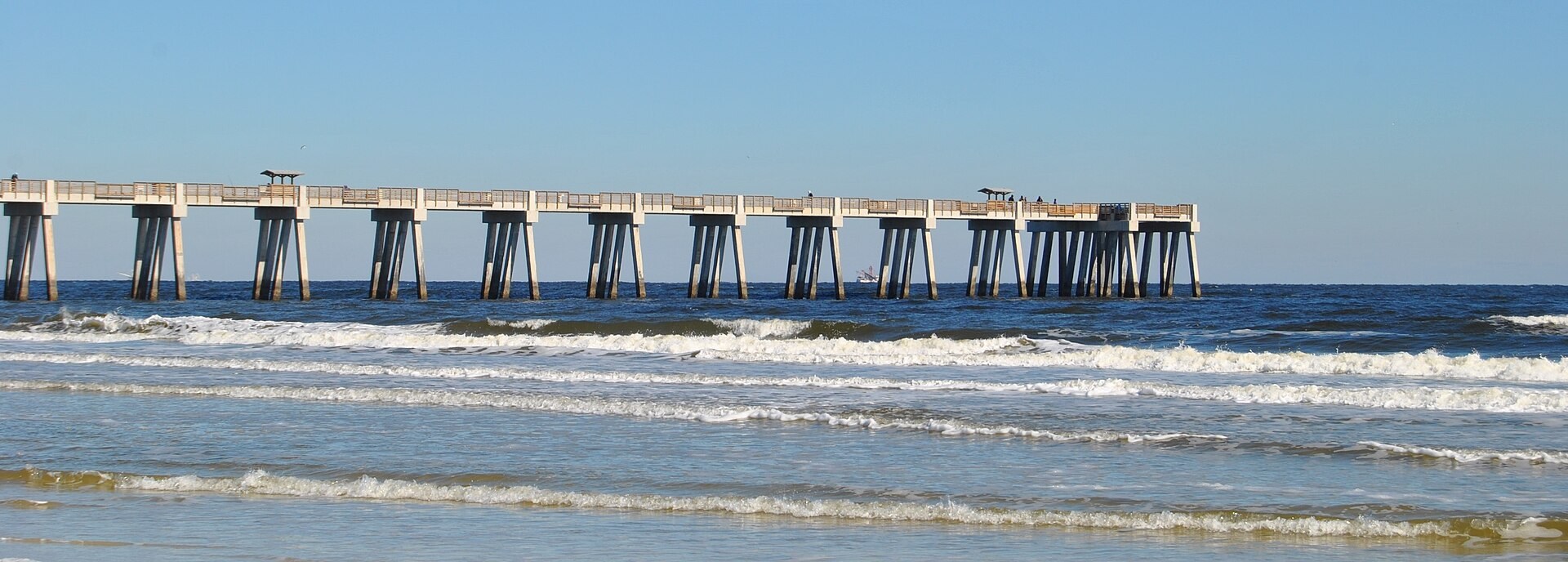
Jacksonville Beach
fishing guide
Jacksonville Beach fishing guide with pier access, surf targets, bait and lure choices, beach rules and tips for shared public water.
Explore the guide ↓Pick the pier or the sand
Jacksonville Beach gives anglers two clear starting points: a managed fishing pier and the open Atlantic beach. The pier reaches water without requiring a surf cast. The sand gives more freedom to choose a trough, but also brings waves, beach crowds and a separate license check.
For a visitor without much equipment, the pier is often the practical first stop. Its bait and rental services simplify the day. An experienced surf angler may prefer a quieter legal beach stretch with room to compare different distances.
Neither option guarantees the same fish every day. Bait movement, wind and water clarity can change quickly. Arrive ready to learn from the water rather than trying to reproduce a photograph from another season.
What to know about the fishing pier
Jacksonville Beach Fishing Pier is at 503 North First Street. The city’s listing provides 904-372-0798 as the contact number. Check current hours, admission and weather closures before a special trip.
Fishing admission includes the pier’s license coverage. That coverage applies to fishing from the licensed pier, not automatically to a later session on the beach or elsewhere. Ask about rental availability and bait before assuming that every item will be in stock.
Choose a position that leaves space for walkers and neighboring anglers. The far end is not always the best place. Fish can use shallower water nearer shore, especially when small prey gathers around the pilings.
Before making a cast, identify how you will land and release a fish. A long drop to the water requires appropriate pier equipment. Do not lift a large fish by the leader or improvise by climbing outside a railing.
Keep beach fishing separate from pier traffic
The city’s beach rules prohibit entering the water within a 300-foot radius of the pier. Respect the posted boundary and keep fishing lines clear of swimmers and surfers. A place with breaking waves and people in the water is not an open casting lane.
Use public crossings and legal parking. Beach driving is not allowed. Carry a setup you can manage on foot, especially when soft sand separates the crossing from the water.
Early visits can provide more space, but check access and parking restrictions rather than assuming every lot operates all night. Leave a clear path along the beach and avoid arranging several rods so widely that other visitors cannot pass.
When the beach becomes busy, a shorter session is better than repeatedly asking people to move around a baited line. The pier may offer a more clearly defined fishing space, subject to its own crowding and conditions.
Targets from shallow surf to passing schools
| Fish | Useful clue | Starting method |
|---|---|---|
| Whiting | Clean sand and modest surf | Small shrimp bait near bottom |
| Florida pompano | Moving clear water over sandy lanes | Sand flea or short shrimp piece |
| Spanish mackerel | Baitfish gathering in warmer coastal water | Small metal lure worked briskly |
| Bluefish | Bait spraying or being chased | Durable spoon or fresh fish bait |
| Sheepshead | Feeding close to hard structure | Compact shrimp or crab presentation |
Redfish and black drum are also possible in the wider coastal setting. Larger visitors demand tackle and landing equipment that a basic rental outfit may not provide. Ask for an appropriate setup rather than assuming the biggest bait is the best choice.
Identify mackerel carefully before keeping one. Spanish and king mackerel are different species with different rules. Spots alone are not a reliable shortcut for every size of fish.
Follow bait activity without chasing every splash
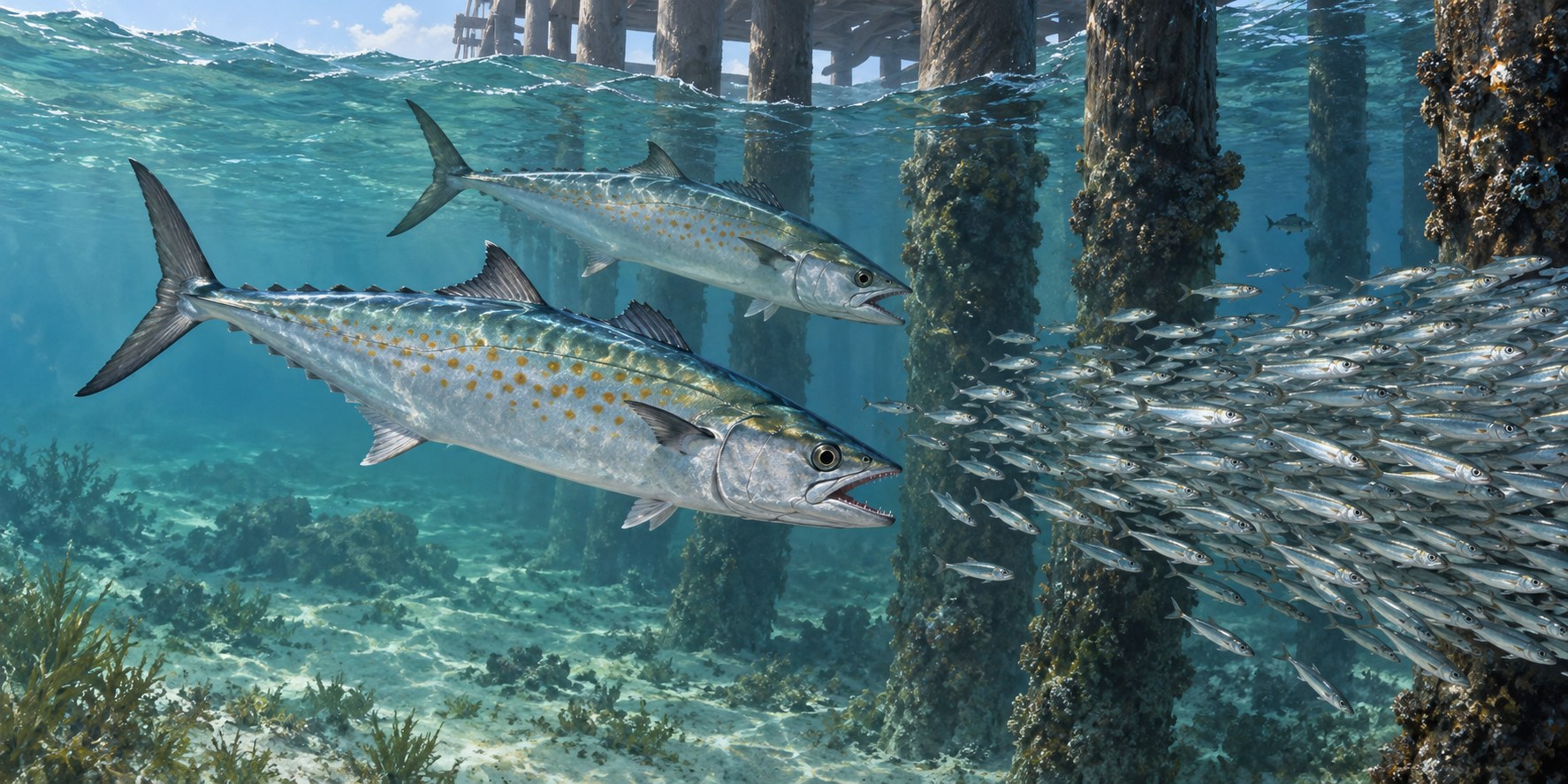
Spanish mackerel often respond to a small, fast-moving lure that resembles the bait they are pursuing. Start with a compact metal lure and a steady retrieve. Change speed before changing every piece of tackle.
Watch the direction the bait is moving. Casting across several other lines to reach a splash is poor practice and often creates a tangle. Wait for a clear lane or keep fishing the water available to your position.
Teeth can damage leaders. Examine the last section after a strike and replace it when rough. A bite-resistant connection may help in some situations, but excessively bulky tackle can reduce strikes in clear water.
If surface activity ends, there is no need to keep racing a lure through empty water indefinitely. A small bottom bait can test for fish holding below the visible feeding zone.
A simple bottom-fishing routine
From the sand, begin in the first useful trough. From the pier, try a controlled drop or short cast where permitted and clear of other lines. In either case, the important question is whether the bait remains in a workable feeding lane.
Use fresh bait in small portions. A long shrimp tail can be stolen without the hook entering the fish’s mouth. Shorten the bait when repeated taps produce empty hooks.
Choose enough sinker weight to hold, but stay within the rod rating. If the line keeps sweeping across neighboring positions, retrieve and adjust. A crowded pier is not the place to let a rig drift unchecked.
Keep a record of depth, distance and bait condition. A few observations make the next visit more useful than simply remembering that the fishing was good or bad.
Time the trip around water and people
Warmer water can favor passing mackerel and active bait schools. Cooler periods may shift attention toward patient bottom fishing. Pompano opportunities depend on suitable conditions rather than a fixed date that works every year.
A strong east wind can make the surf rough and put more strain on pier lines. Wind-driven weed may be as limiting as wave height. If each retrieve brings a heavy weed bundle, waiting for improved conditions may beat adding more weight.
Summer mornings offer relief from the hottest part of the day. At the first sign of nearby thunder, stop fishing and seek proper shelter. Rods and open pier structures are not a reason to delay leaving.
Use the local forecast and tide planner to choose a window. Weather closures can still override the plan, so check the pier’s current information before setting off.
What to carry onto the pier
Bring a small tackle box, pliers, a measuring device, water and sun protection. Keep bait cool in a closed container. A crowded walkway becomes harder to share when every angler brings more equipment than the session needs.
Secure loose hooks before walking. Carry rods so the tips do not swing into faces, lights or other lines. If you need help with a landing net, arrange it before a fish is hanging near the surface.
For a beginner, use one rod until the casting and landing process feels comfortable. Watching one bait closely is often more productive than managing several poorly. Children should have an adult within immediate reach around railings and hooks.
For another nearby style of fishing, the Atlantic Beach guide compares surf access with marsh-side options.
Know what admission does and does not cover
Check the FWC recreational fishing requirements for current harvest and gear rules. Pier license coverage does not remove size limits, closed seasons or species restrictions.
Have a release plan for fish you cannot keep. Wet hands and brief handling help protect smaller catches. A fish that must go back should not wait while several people take turns photographing it.
Keep birds away from exposed bait without feeding or chasing them. Close the bait container when changing a rig. Remove discarded line from your own area before leaving.
Jacksonville Beach fishing questions
Does pier admission include a fishing license?
The city lists fishing-license coverage with pier admission. Confirm the current arrangement at entry. It does not extend automatically to fishing elsewhere.
Can I rent equipment?
The pier offers rentals and bait services. Check availability and current prices before arriving without your own outfit.
Is the end of the pier always best?
No. Bait and feeding fish may be closer to shore or beside a particular set of pilings. A manageable position with a safe landing plan matters more than being farthest out.
Can I fish close to people swimming beside the pier?
Keep hooks and lines away from all water users, and respect the city’s 300-foot in-water exclusion around the pier. Choose an open, permitted fishing lane.
Put the plan into practice
A pier session benefits from a small tackle box that stays closed between changes. Separate prepared leaders from loose hooks, and keep the cutting tool in a known pocket. This helps when wind pushes small items across the deck or a bite arrives while you are changing bait. Never leave a baited hook hanging at a child’s eye level.
Before settling into a rail position, picture the entire retrieve. Check where the line will pass, whether supports lie below and how a fish can be brought to an appropriate landing point. A spot with a promising view but no manageable finish is a poor choice. Ask pier staff about suitable landing equipment if uncertain. Start with a short presentation that you can control, then extend the reach only after learning how the current moves the rig. The first useful lesson may be a safe line angle rather than a fish.