
NORTHEAST ATLANTIC
Amelia Island State Park
fishing guide
Plan Amelia Island State Park fishing with Nassau Sound habitat, redfish methods, bridge restrictions and careful access advice.
Explore the guide ↓Nassau Sound needs a tide-aware plan
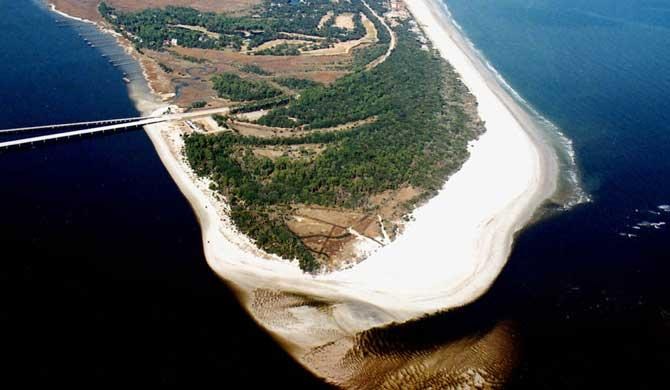
Amelia Island State Park sits at the island’s southern end, where beach, marsh and Nassau Sound meet. It gives shore anglers a different setting from the developed oceanfront farther north. Here, moving water and changing shoreline matter as much as casting distance.
The nearby George Crady fishing bridge is an important part of the area’s fishing identity, but its current access is limited. The middle section is closed because of damage associated with erosion. Accessible ends are separate approaches. A plan that depends on walking across the whole bridge will fail.
Choose either a beach session or a permitted bridge position before arrival. Each has a different landing problem, amount of current and walking route. Check current park notices so that the day’s plan starts with an open place rather than a remembered photograph.
Understand the bridge closure
The George Crady Bridge Fishing Pier State Park information says the middle section is closed. Do not cross barriers or assume that a gap visible from a distance is only a minor inconvenience. Erosion can affect both the structure and its approaches.
Bridge anglers must finish within the permitted daytime access window. The park also prohibits pets there. These details matter when arranging a family visit or planning an evening bite. Arrive with enough time to fish and return during the allowed period.
A bridge rail changes how a fish must be landed. Bring equipment suited to the height, or choose a shore position where a release is straightforward. Lifting a heavy fish by the fishing line can injure it and break tackle.
Keep the walkway clear of coolers and spare rods. Other visitors need room to pass without stepping over hooks. Use controlled casts and check behind you every time the rod moves backward.
Respect the southern shoreline
Parts of the southern point are managed as a critical wildlife area, with seasonal restrictions to protect nesting birds. Stay outside marked closures even when the water beyond them looks promising. Open access can change with wildlife needs and shoreline conditions.
Use the currently authorized route for pedestrians and fishing. Do not infer driving permission from tire tracks. Rules on state park sand and nearby county beaches are not interchangeable.
Inlet edges can deepen quickly. Remain on firm dry ground and leave a route back as water rises. A broad sand area at low tide can become much narrower before the end of a fishing session.
The open Atlantic shore offers a more familiar surf approach, but wind and waves still control whether a rig can be held safely. If current carries the line toward a restricted area or another visitor, retrieve and reposition.
Match fish to the water in front of you
| Target | Place to investigate | Presentation |
|---|---|---|
| Flounder | Sandy edge beside a deeper lane | Mud minnow or soft plastic close to bottom |
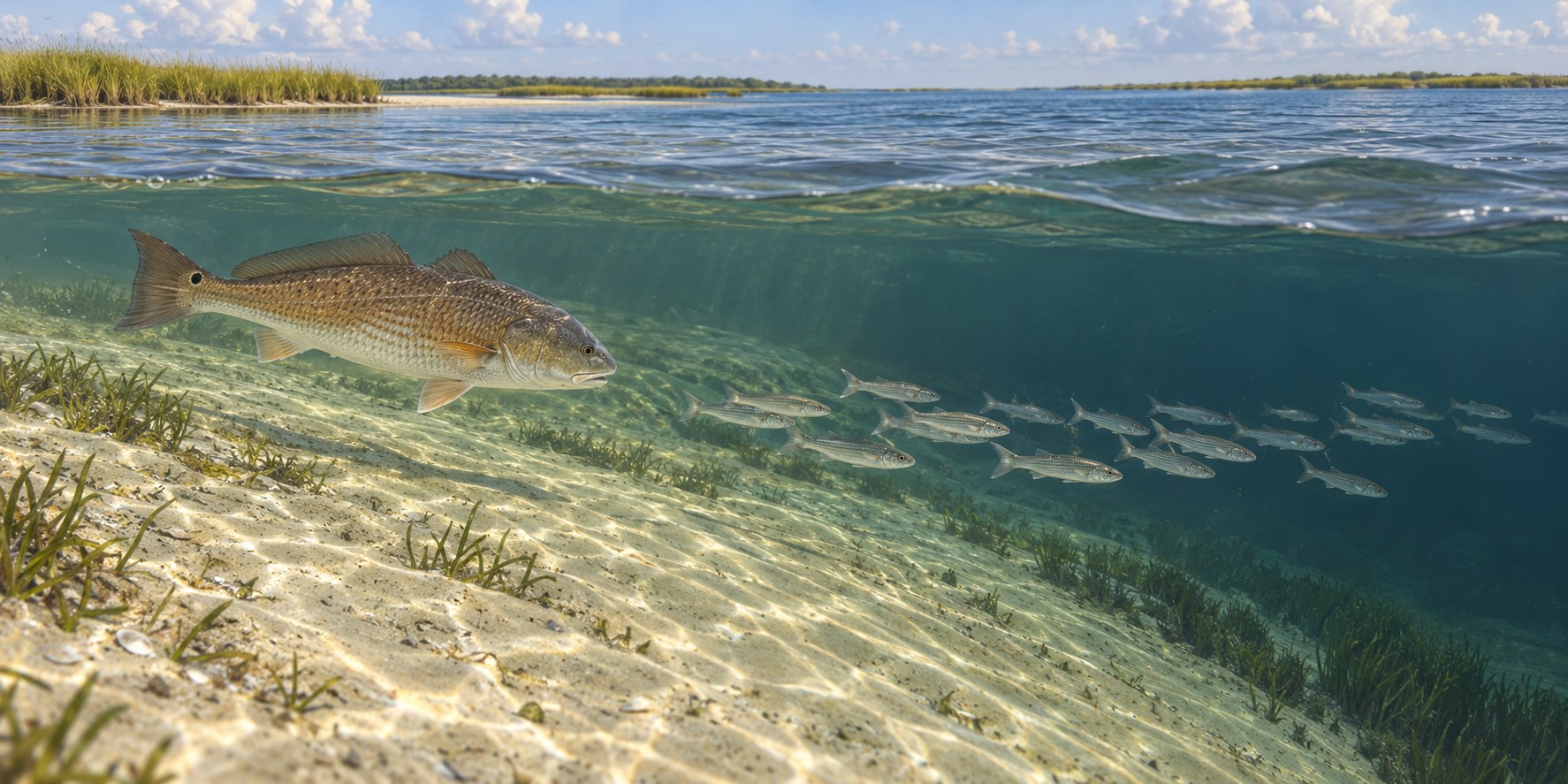
| Redfish | Flow boundary near marsh or sound shoreline | Shrimp or mullet-sized imitation |
| Spotted seatrout | Moving water above an uneven bottom | Suspended shrimp or slowly swimming lure |
| Whiting | Surf trough along the sandy beach | Short shrimp bait on a small hook |
| Jack crevalle | Passing bait schools | Durable lure retrieved through open water |
These are habitat-based possibilities, not a daily catch list. A quiet bridge may simply have little bait passing it at that moment. A beach trough with feeding whiting may be the more productive choice.
Large fish can arrive unexpectedly in the sound. Keep drag pressure sensible and avoid locking the reel to stop a run. If tackle is too light to control a fish near structure, change the target or position rather than repeatedly risking prolonged fights.
Slow down for the bottom edge
A flounder’s shape helps it blend with the bottom. The useful cast often follows the boundary between a shallow shelf and deeper moving water. Work a small bait slowly enough to remain near that boundary without dragging continuously into snags.
A soft plastic on a light jig can be lifted a short distance, allowed to settle and moved again. If it never reaches the bottom, adjust the weight within the rod’s limits. If it plows the sand heavily, reduce weight or shorten the cast.
Keep contact with the lure as it settles. A bite may feel like unexpected weight rather than a violent strike. Avoid leaving natural bait unattended for a long delay after a bite, because deeper hooking becomes more likely.
Do not treat this method as permission to keep flounder in every season. Harvest rules need a current check even when fish are readily caught.
Use a small part of the tide
The strongest current is not always the best current for your equipment. Near the peak flow, a light rig may sweep across several positions before reaching the desired depth. A less forceful stage can make the presentation easier and reduce lost tackle.
Watch floating material and the angle of other lines without crowding other anglers. A seam that remains in one place offers a more repeatable target than scattered surface disturbance. Put the bait where it can pass through that seam naturally.
As the tide changes, reassess the walking route and landing area. The safest position at the start may not remain the best one. Keep bags well above the rising edge and do not leave the return decision until water blocks it.
The tide and weather page is useful for planning, but actual flow at a bridge or shore bend may lag the listed tide height. Use the forecast as context, then observe.
A compact bait selection
Live shrimp covers several sound fish when it stays lively and passes at a useful depth. Carry it in cool, aerated water and avoid overcrowding. A weak shrimp spinning unnaturally in the flow can be less convincing than a fresh dead piece placed carefully.
Mud minnows suit a deliberate bottom approach where they are obtained legally. Hook placement should keep the bait secure without turning it into an awkward rotating shape. Check the presentation beside the shore before making a long cast.
For beach whiting, divide shrimp into smaller portions. There is little benefit in offering a large mouthful when fish are taking only the end. A smaller bait also makes it easier to see whether the hook point remains clear.
Bring a few soft plastics and a compact metal lure for visible bait activity. Keep treble hooks covered while walking. Changing tackle on a narrow bridge requires more care than doing the same job at a wide beach cart.
Season and weather choices
Warm periods can increase bait movement and surface activity, but summer heat makes drinking water and shade breaks essential. Early outings also reduce the chance of being caught far from the vehicle when thunderstorms build.
Autumn can bring moving bait through the sound. Cooler winter water may reward a slower retrieve and patient bottom fishing. Spring warming can shift fish back toward shallower feeding ground. These broad patterns still depend on the week’s weather.
Wind blowing against sound current can produce rough, uneven water. For a shore visit, that may mean more spray and less secure footing. For a kayak, it can turn a short crossing into a poor decision. Do not use a bridge fishing guide as a boating route plan.
Current rules and careful releases
Use the FWC recreational saltwater rules to check licensing and the species you intend to keep. A park entry payment does not settle every fishing requirement.
Prepare release equipment before the first cast. Wet hands, body support and a short time out of water improve the handling process. Keep large fish in the water whenever practical rather than lifting them for a bridge photograph.
Take all line and hooks home. Birds feed around this sound, and baited hooks left on the rail or beach are an avoidable hazard. For another nearby shore setting, compare the American Beach surf guide.
Planning questions for Amelia Island State Park
Can I walk the entire George Crady bridge?
No. The middle closure prevents a through-walk. Check which approach is open and plan to return to the same side.
Can I fish the bridge after dark?
The current park information does not permit after-hours fishing there. Arrange the session within the posted access period.
Is the southern point always open?
Wildlife protection can close marked sections seasonally. Follow the current boundaries instead of assuming the whole sandy point is available.
What is a useful backup if the sound is too rough?
A separate, open Atlantic beach access may suit small bottom baits when its surf is manageable. If both settings are rough, postponing is the sensible option.
Put the plan into practice
Prepare for a bridge catch before lowering the bait. A fish that feels manageable in the water may be too heavy to raise safely on the rod. Check which landing tools are allowed and usable from the open section, and avoid a setup that leaves no safe way to release the catch. The rod is designed to fight a fish, not serve as a lifting crane. If other visitors occupy the landing space, wait for a clear opportunity rather than swinging a hooked fish over the walkway.