
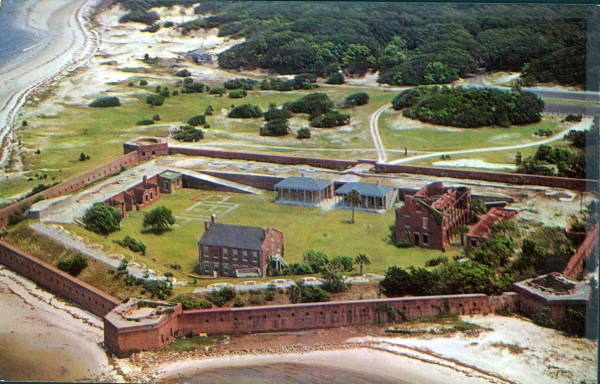
NORTHEAST ATLANTIC
Fort Clinch State Park
fishing guide
Fort Clinch fishing guide covering inlet and Atlantic access, current, black drum, safe shore positions and tackle for a day at the park.
Explore the guide ↓Where the Atlantic meets St. Marys Inlet
Fort Clinch State Park occupies the northern end of Amelia Island. Its fishing appeal comes from the meeting of an open sandy coast and a large tidal inlet. Those two settings need different decisions. The beach can suit a small bottom rig. The inlet adds fast current, deeper water and rock that can damage line.
The best first move is to choose the side that matches the day’s conditions. A calm beach may offer more useful fishing time than an impressive inlet with waves breaking across the edge. There is no prize for standing closest to the strongest water.
Allow time for the park entrance and the drive to the fishing area. This is a state park with several activities, not simply a roadside jetty. Bring supplies before entering and make the return walk part of the plan.
Choose an authorized shoreline
The park identifies fishing along its Atlantic shoreline and near St. Marys Inlet beside the jetties. East and west inlet parking areas provide approaches to different shoreline sections. Follow current signs to the open area rather than relying on an old photograph of a pier or access path.
The inlet shore has steep drop-offs, and swimming there is prohibited. Stay out of the water. An apparently quiet surface can hide powerful movement below it. Keep children well back from the edge and choose a position with a clear route away from rising water.
Beach fishing gives more room to spread out when visitors are sparse. That room can disappear as swimmers and walkers arrive. Set up so that people can pass without stepping over a line or walking behind a swinging sinker.
Check admission and opening arrangements before making an early or late visit. Camping permission, park entry and permission to fish a particular place are separate matters. Ask park staff when a sign or access route is unclear.
Fish associated with the park’s habitats
| Fish | Useful setting | What to try |
|---|---|---|
| Sheepshead | Shell-covered structure | Crab or shrimp worked beside accessible structure |
| Redfish | Current edges beside deeper water | Live or fresh bait with enough tackle to control the fish |
| Whiting | Atlantic sand trough | Small shrimp portion on a bottom rig |
| Flounder | Sand along a slower current boundary | Slow-moving minnow or soft plastic |
| Black drum | Bottom near shell and rock transitions | Shrimp presented just outside snags |
Spotted seatrout may use suitable moving-water edges, while bluefish or jacks can follow passing bait. The park’s published fishing information lists several possibilities, but the productive species on one day can be very different from the next.
Do not judge an area only by the size of fish in an old report. A smaller target with a safe landing route is a better choice than a large fish that your position and equipment cannot handle.
Present bait beside rock, not deep inside it
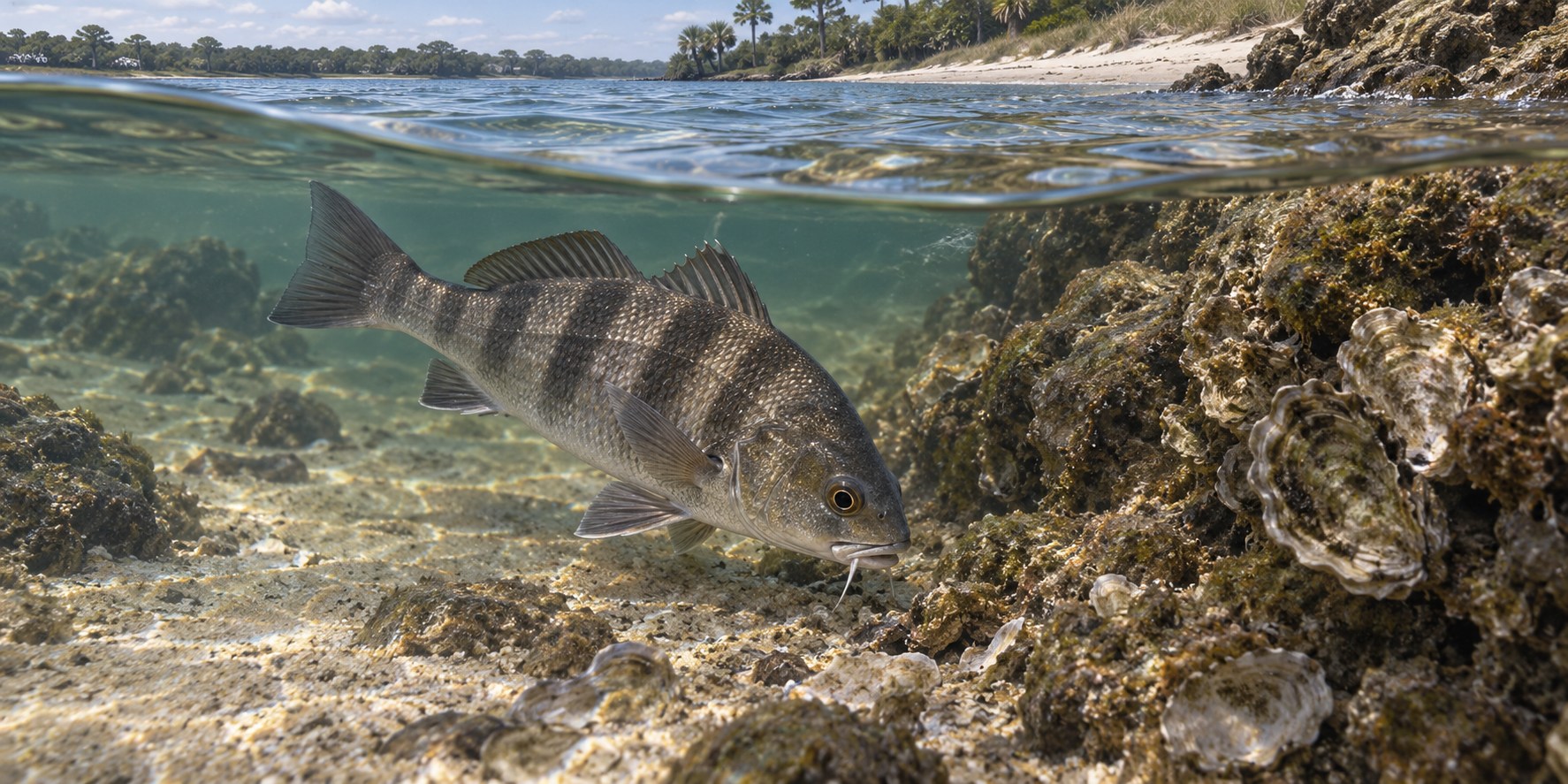
Sheepshead pick food from hard surfaces. A small bait near shell-covered rock can be more effective than a large bait drifting far away. Keep the presentation compact enough that a fish can take the hook with the bait.
Use only enough weight to maintain contact with the chosen lane. If the sinker wedges on every drop, change the angle or fish farther from the structure. Repeating the same snag usually removes tackle without improving the chance of a bite.
Keep light tension so a subtle bite is easier to feel. Check the hook when the bait disappears. A bare hook left in the same position will not explain whether the fish rejected the rig or simply stole the food.
Rock fishing requires footwear and stable footing, but good shoes cannot make wave-washed rock safe. Avoid climbing to an exposed position. If you cannot fish from an authorized secure place, use the beach instead.
Read the inlet from a safe distance
A visible seam can form where faster water meets a slower pocket. Small fish and floating material may travel along it. Predators can hold on the quieter side and move briefly into the flow to feed.
Watch the direction of a test cast. If the rig sweeps rapidly toward rock or another angler, retrieve before it reaches them. Heavier tackle is not a substitute for a workable fishing angle.
Fish the manageable edge of the current rather than trying to stop a bait in the center of the inlet. A tide change may create a short period when the same location becomes easier to fish. It can also make a formerly safe edge less suitable.
Large vessels and wakes add another variable. Keep bags and bait above the waterline, and never turn your back on approaching waves while concentrating on a knot.
Use the Atlantic side for a simpler approach
On the beach, search for a trough between the dry sand and the first bar. A small bottom bait can cover whiting without the snag risk of the inlet rocks. Cast at a comfortable distance and watch whether the sinker holds its place.
Fresh dead shrimp is easy to divide into small pieces. A modest bait often catches better than a whole large shrimp when fish are pecking. Keep the point uncovered and replace a ragged piece before it becomes only shell.
Move only after giving a useful lane a fair trial. Ten random casts to different distances are hard to compare. A few deliberate casts into one trough, followed by another, give clearer information.
Do not use a break in the waves as an invitation to wade out. That opening may carry outward current. Fish it from the shore if it is within safe casting range.
Match equipment to the landing area
A medium spinning outfit may suit beach fish and lighter presentations. Inlet fish near structure can require stronger line and a more abrasion-resistant leader. Choose gear around both the target and the place where it must be brought in.
Inspect the last few feet of line after any contact with rock. A rough section can break on the next fish even when the knot is sound. Retie before another cast instead of hoping the damage is cosmetic.
Carry long-nose pliers and a practical release tool. Plan how to land a fish without dragging it over sharp surfaces. If a position demands lifting a large fish by its mouth or line, it is not a sensible place to target that fish.
Keep tackle compact on narrow access paths. Rod tips, hooks and landing nets can catch other visitors as they pass. A covered hook and rods carried low reduce avoidable trouble.
Seasonal patterns and a useful weather check
Cooler periods often encourage a slower bottom-fishing approach. Warmer months can bring more active bait and passing predators, but also heat and afternoon storms. Autumn may concentrate moving bait near the inlet and beach.
Strong wind against the tidal flow can make inlet water steep and rough. A protected-looking patch beside the bank does not describe the whole inlet. Shore anglers should still pay attention to the marine forecast.
Review local weather and tide information, then make the final choice at the park. If waves are reaching your intended standing area, change the plan before unloading everything.
For a broader comparison of nearby shore choices, see the Fernandina Beach guide. A different beach entrance may suit a relaxed outing better than forcing an inlet session.
Check rules before keeping fish
The FWC saltwater regulations cover current licenses, harvest limits and species requirements. Park admission alone should not be treated as proof of a fishing-license exemption.
Respect closed shoreline, wildlife protection signs and the inlet swimming prohibition. Fishing permission does not include entering every part of the shore. Leave protected vegetation and shell habitat undisturbed.
Measure a legal harvest fish promptly and keep it cold. Return unwanted fish with wet hands and body support. A fast, organized release is more useful than several photos from different angles.
Choose a rod for control around the inlet
A medium or medium-heavy spinning outfit can serve many modest shore targets, provided its line and lure ratings fit the chosen rig. The important limit is what you can cast and land safely from the permitted position. Heavier tackle does not make wet rock or a difficult landing route acceptable.
Test the drag before fishing. It should release smoothly under a firm pull, with enough resistance to guide the intended fish away from cover. Keep fingers clear of a tight line when checking it. Replace rough leader after contact with shell or structure rather than waiting for a break.
Fort Clinch fishing questions
Is the inlet a good place for a child’s first cast?
The current and drop-offs make it a demanding setting. A calm, uncrowded section of the Atlantic beach is usually easier to manage with close adult supervision.
Can I swim beside the inlet fishing area?
No. The park prohibits swimming along the inlet shore because of its hazards. Keep the fishing visit on the authorized dry shoreline.
Which bait is useful around structure?
Small shrimp or crab baits can interest sheepshead. Put the bait near the feeding surface while keeping the rig out of the deepest gaps.
Why does my leader break after a fish runs?
Rock abrasion may have weakened it before the run. Examine the leader frequently and replace rough or flattened sections before continuing.