
NORTHEAST ATLANTIC
American Beach
fishing guide
Fish American Beach with Burney Park access, sand-trough tactics, whiting and pompano bait, dune protection and simple trip planning.
Explore the guide ↓A beach outing built around the first trough
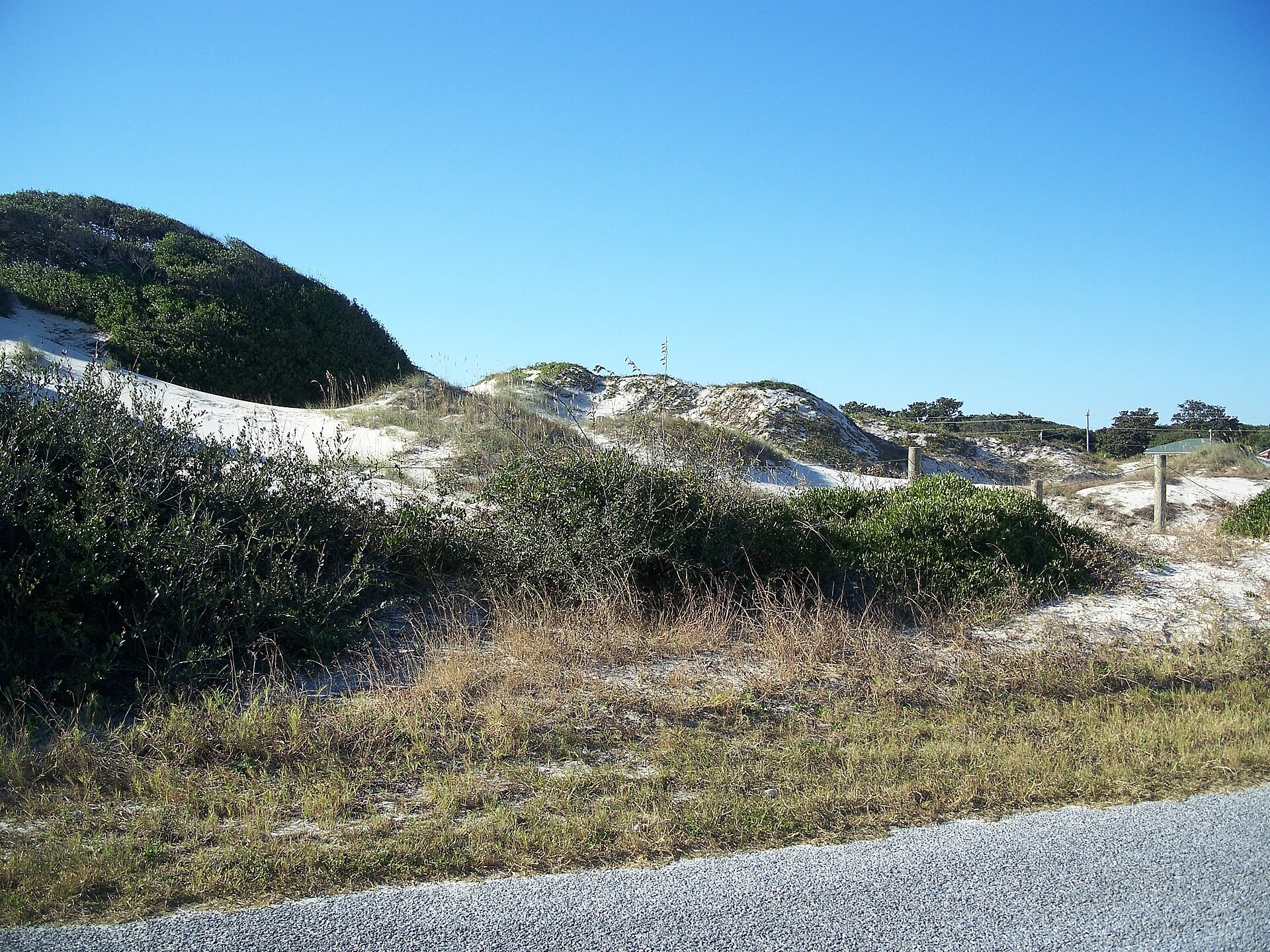
American Beach offers an Atlantic surf setting on Amelia Island. The fishing lesson here is simple: useful water can be close to your feet. Waves wash small animals off the sand and into shallow lanes. Whiting and other sand-feeding fish may work those lanes without ever coming near a very long cast.
Begin with the beach itself, not a list of distant river spots. Burney Park provides an established entrance in the American Beach area. Once on the sand, look for room away from swimmers and watch several wave sets before deciding where to place a bait.
This is also a historic community. Treat neighborhood streets, homes and dune vegetation with care. A public beach visit should not turn into parking on a private verge or cutting through a yard to save a few steps.
Use Burney Park as your starting point
Burney Park is at 1556 Gregg Street. It provides public beach access with facilities that make a short fishing visit more manageable. Check the posted parking and opening information when you arrive, especially if planning to stay into the evening.
Carry equipment through the designated crossing. Dunes are part of the coast’s protection, not a shortcut around another group. If a storm or restoration project closes an entrance, use another authorized crossing instead of walking around barriers.
Nassau County beach-driving eligibility is restricted. Do not build the outing around driving onto the sand unless you have confirmed that you qualify and understand the current rules. Ordinary parking and a manageable load of tackle are the simpler visitor plan.
Pack in one trip if possible. A small bait container, one rod, a compact tackle bag and water are enough to explore the first trough. Large carts can be awkward where crossings meet soft sand.
Likely fish and realistic expectations
| Possibility | Clue to watch | Bait or lure |
|---|---|---|
| Whiting | Gentle wash over a sandy trough | Small peeled shrimp piece |
| Florida pompano | Clean surf over sand with small crustaceans | Sand flea or compact shrimp bait |
| Bluefish | Small baitfish scattering near the breakers | Metal spoon or suitable cut bait |
| Redfish | Bait concentrated in a deeper cut | Fresh shrimp or fish bait on appropriate tackle |
| Black drum | Bottom feeding near shell-rich sand | Shrimp fished close to the seabed |
Whiting are a sensible first target because the method does not depend on seeing a predator school. Pompano are a welcome possibility, but their presence changes with water temperature, clarity and movement. Avoid treating a season chart as a promise.
Catfish and rays can also take bottom baits. Learn safe handling before fishing. Keep hands away from spines and do not pull an unfamiliar fish into your lap while trying to remove a hook.
Find the feeding lane before adding distance
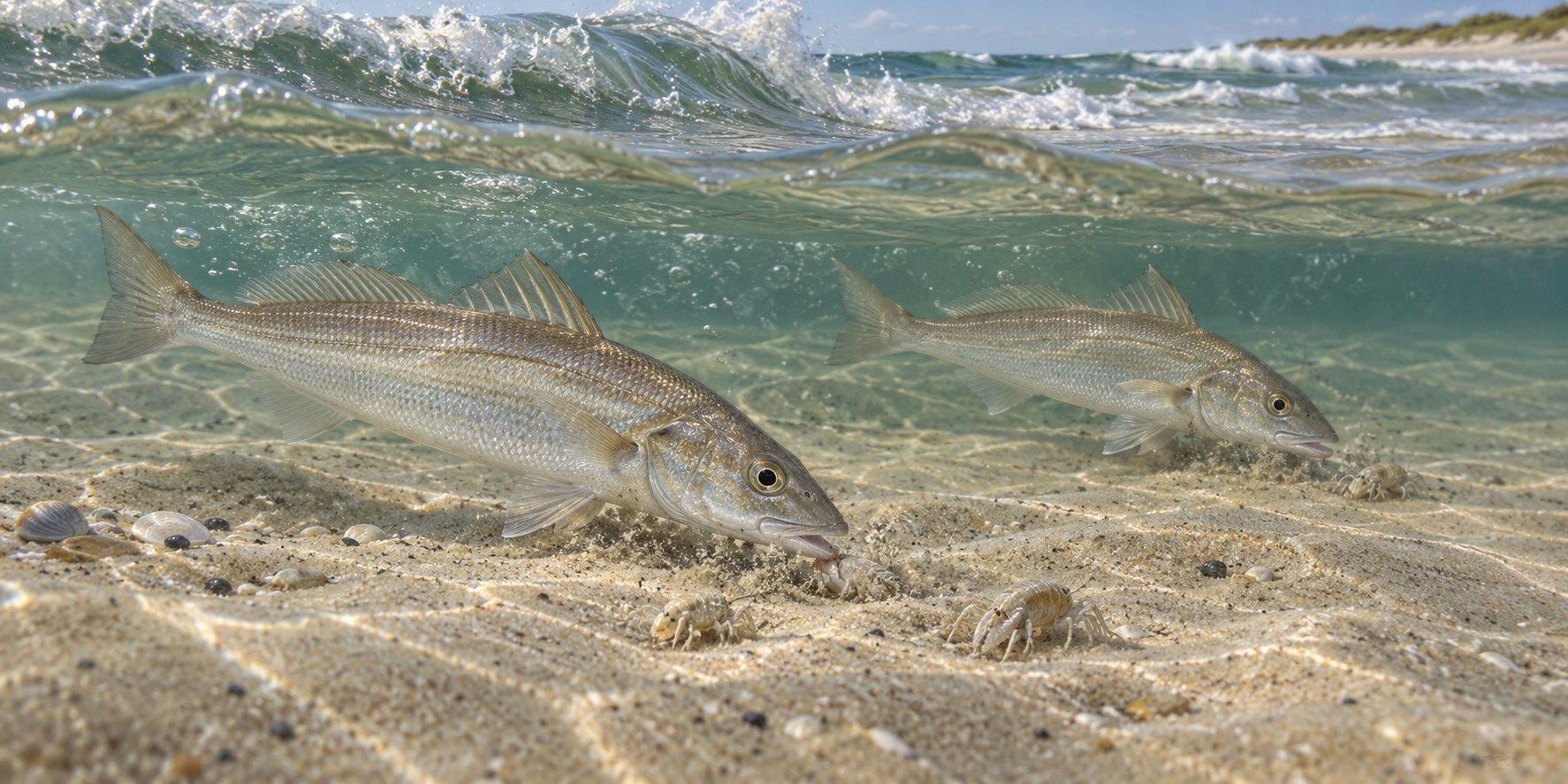
Watch where foam lingers after a wave breaks. A shallow bar may show as a repeated white line. Between that bar and the beach, a slightly deeper strip can carry food along the shore. Start by fishing this inner strip.
Do not wade out to measure it. Depth changes can be abrupt, and outward-flowing water is a swimming hazard. Observation from the dry beach is enough to choose an initial cast.
After several casts, compare results. Bait disappearing quickly means something is feeding, even if the hook is too large or the bait is too long. Repeatedly clean bait suggests trying another distance or walking to a different open stretch.
A fish caught close in is useful information. Return to that distance before assuming that a larger fish must be farther offshore. Keep notes about the tide stage and wave size so the next visit begins with a better question.
Prepare small baits carefully
Fresh shrimp is convenient and versatile. Peel a small section when delicate bites make it difficult to hook fish. Leave the hook point exposed and avoid a long loose tail of bait that can be nipped away.
Sand fleas suit fish that search the wash for crustaceans. Use bait collected or purchased legally, and check restrictions before gathering anything in a protected area. A bait rake is not permission to disturb dune vegetation or nesting wildlife.
Keep only the amount you are using in a small working container. Leave the rest cool and covered. Warm, dried bait falls apart easily and can make a good fishing lane look unproductive.
Artificial bait strips may help a compact bottom rig withstand small pickers. They are a useful backup, not a reason to stop checking the hook. Weed or a buried point can spoil any presentation.
Choose a rig you can control
A light surf setup works well when waves are modest. Select the sinker from the rod’s stated casting range. The goal is to hold a chosen patch of water without making the cast unsafe.
A simple bottom rig with short hook branches keeps the bait near the sand. Too many extra beads, swivels and long branches can make tangles harder to diagnose. Start with a clean setup and change one part only when there is a reason.
Place the rod in a secure holder above the wash, with enough angle to see a bite. Stay close enough to respond immediately. An unattended rod can be pulled down, crossed by a walker or buried by a rising wave.
When retrieving, glance behind you before lifting the rig from the water. A sinker swinging at the end of a long rod can reach farther than expected. Keep children beside you rather than directly behind the casting shoulder.
Pick a comfortable window
A modest surf often makes the first visit easier. Strong easterly wind may increase waves and floating weed. If every retrieve arrives covered in weed, moving a short distance may help, but sometimes the better choice is a different day.
Summer mornings reduce heat exposure and leave more room before the busiest swimming period. Afternoon thunderstorms require an early decision to leave. A beach shelter or open pavilion does not provide the protection of a substantial enclosed building or hard-topped vehicle.
Cooler months can still offer bottom fishing, though cold fronts change conditions quickly. After a front, watch the actual water rather than assuming a clear sky means a calm sea.
The HookCurrent weather and tide planner helps narrow the time window. Leave space in that plan for parking, walking and assessing whether the beach is suitable when you arrive.
Make a short family session work
Set one clear fishing area with bait and hooks on the landward side of the rod. Explain that nobody runs across the line, even when the tip appears still. Put spare hooks in a closed box as soon as a rig change is finished.
Give a beginner one task at a time: watching the rod, winding slowly or helping measure a fish. A complicated multi-rod setup can hide the simple connection between a bite and a catch.
Bring shade and water, but keep shelters clear of the public path. Plan a finish time before everyone becomes tired. A short visit with a few close bites can be more memorable than an all-day wait for a particular species.
If the beach fills with swimmers, retrieve the lines. There is no need to defend a casting lane against families enjoying the water. The wider Amelia Island guide explains other fishing settings for a separate outing.
Protect fish and beach wildlife
Consult the FWC saltwater fishing guidance before the trip. License rules, harvest seasons and size limits need a current check. Keep a ruler available rather than estimating from a photograph later.
Release unwanted fish near the water with wet hands and minimal delay. Do not lay them on hot, dry sand for a long photo session. A small net can help with some catches, but avoid equipment that tangles fins or removes slime unnecessarily.
Pack out broken line, bait packaging and food scraps. Keep away from marked nesting areas. If a bird approaches a baited rig, stop casting until it moves clear rather than trying to cast around it.
Keep the first rig easy to inspect
Use a leader short enough to untangle without spreading hooks across the sand. After the first cast, check whether the bait remains attached and whether the hook has wrapped around the sinker line. Solving that small problem early prevents a long session with a rig that never fishes properly. Keep the replacement leader prepared in a closed bag until needed.
American Beach questions
Do I need to cast beyond the breakers?
Not as a starting rule. Whiting may feed in the inner trough. Compare a close cast with a farther one and let the bites tell you which lane is useful.
Can a visitor drive onto the beach?
Beach driving is subject to county eligibility and access rules. Plan to park normally unless you have confirmed that your vehicle and status meet those requirements.
Is this a good place to learn surf fishing?
It can be when the surf is manageable and there is space away from swimmers. Small bottom baits and a short session keep the first attempt straightforward.
What should I do when weed keeps catching the line?
Try an open lane nearby and check whether the drift is temporary. If weed overwhelms each cast, continuing to add sinker weight is unlikely to make the outing enjoyable.