
PANHANDLE
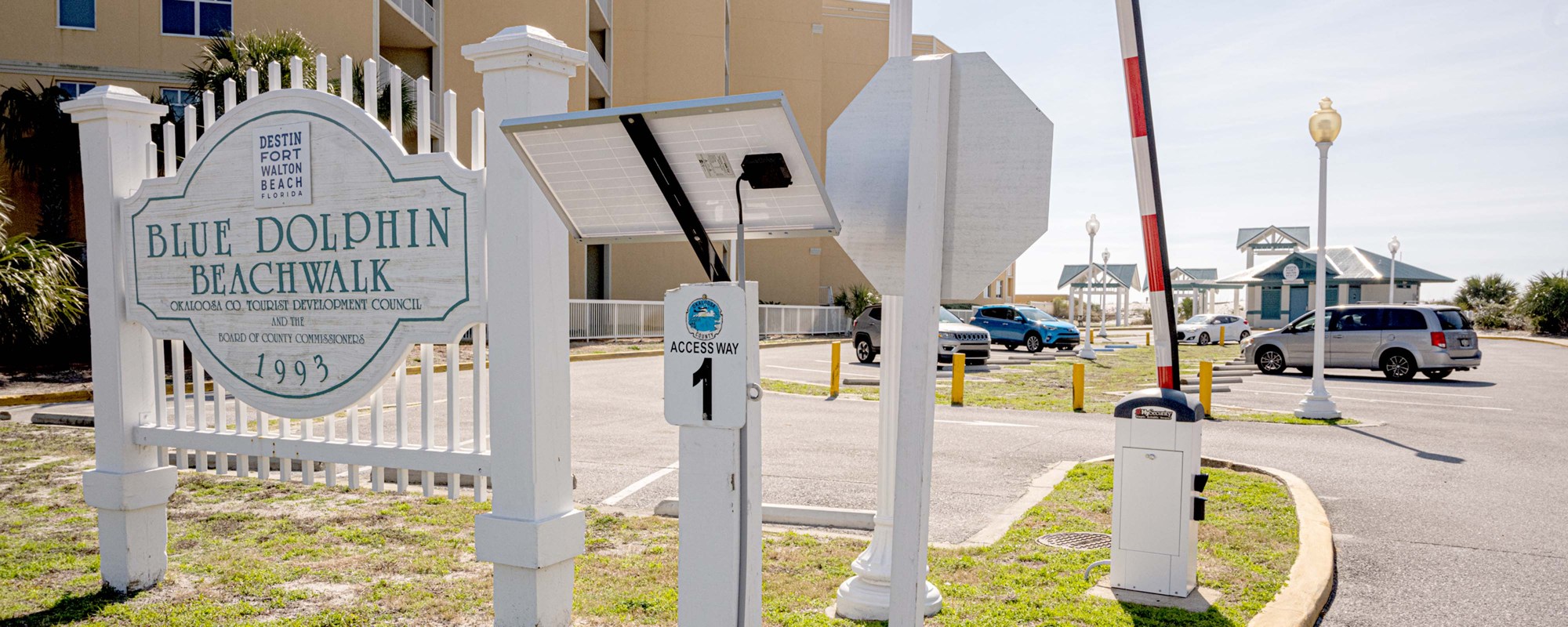
Blue Dolphin Beachwalk
fishing guide
Blue Dolphin Beachwalk is a small public Gulf access on Okaloosa Island. Its limited parking and shared beach space favor a light fishing kit, an early access check and a short surf session outside occupied swimming water.
Explore the guide ↓Find Beach Access 1 on Santa Rosa Boulevard
Okaloosa County identifies Blue Dolphin Beachwalk as Beach Access 1 at 372 Santa Rosa Boulevard. It is on the Gulf side of Okaloosa Island. The Fort Walton Beach mailing address does not make it a mainland bay park.
The county lists a pavilion, picnic tables, 25 regular parking spaces and two accessible spaces. This is a compact lot. Keep an alternative public access in mind rather than parking outside marked spaces or blocking the approach.
Normal county access hours begin one hour before sunrise and end one hour after sunset. Confirm any temporary closure or posted change on arrival. A hotel guest's private entry nearby does not extend this public lot's hours.
Carry gear along the designated route to the beach. Before setting a holder, locate any swimming boundary and find a clear casting lane. Public entry gives you a way to reach the shoreline, not a right to fish through the other people using it.
The early opening hours do not permit early equipment setup. County beach rules prohibit setting up before 7 a.m. and prohibit shark fishing on county property. Keep this visit within those limits, even if the beach looks quiet.
Give the nearest water a proper inspection
The Gulf beach can have an inner trough close to the shore. Watch several waves from dry sand and look for a strip of water that breaks less sharply than the surrounding bar. You do not need to wade out to investigate it.
Observe how foam moves after each wave. A persistent sideways pull can carry the fishing line into another person's space. Choose a position where the bait can stay in a narrow safe lane.
Make the first test cast deliberately short. If the bait holds and returns clean, try another distance. Comparing two distances from one sensible position is easier to understand than casting randomly across the surf.
Choose whiting tackle by bait size
Whiting feed on small food close to sandy bottom. A trimmed shrimp offering fits that approach. Use a suitable small hook and secure the bait so its point and gap remain open.
A rod tip moving with every wave is not proof of a bite. Tighten the line gently after the sinker settles, then look for taps that interrupt the regular wave movement. Frequent bait checks help separate a fish taking food from empty-hook waiting.
When the hook returns bare, reduce the bait piece and try again before changing the whole rig. Keeping one detail consistent helps you learn which adjustment made a difference.
Test small crustacean baits over open sand
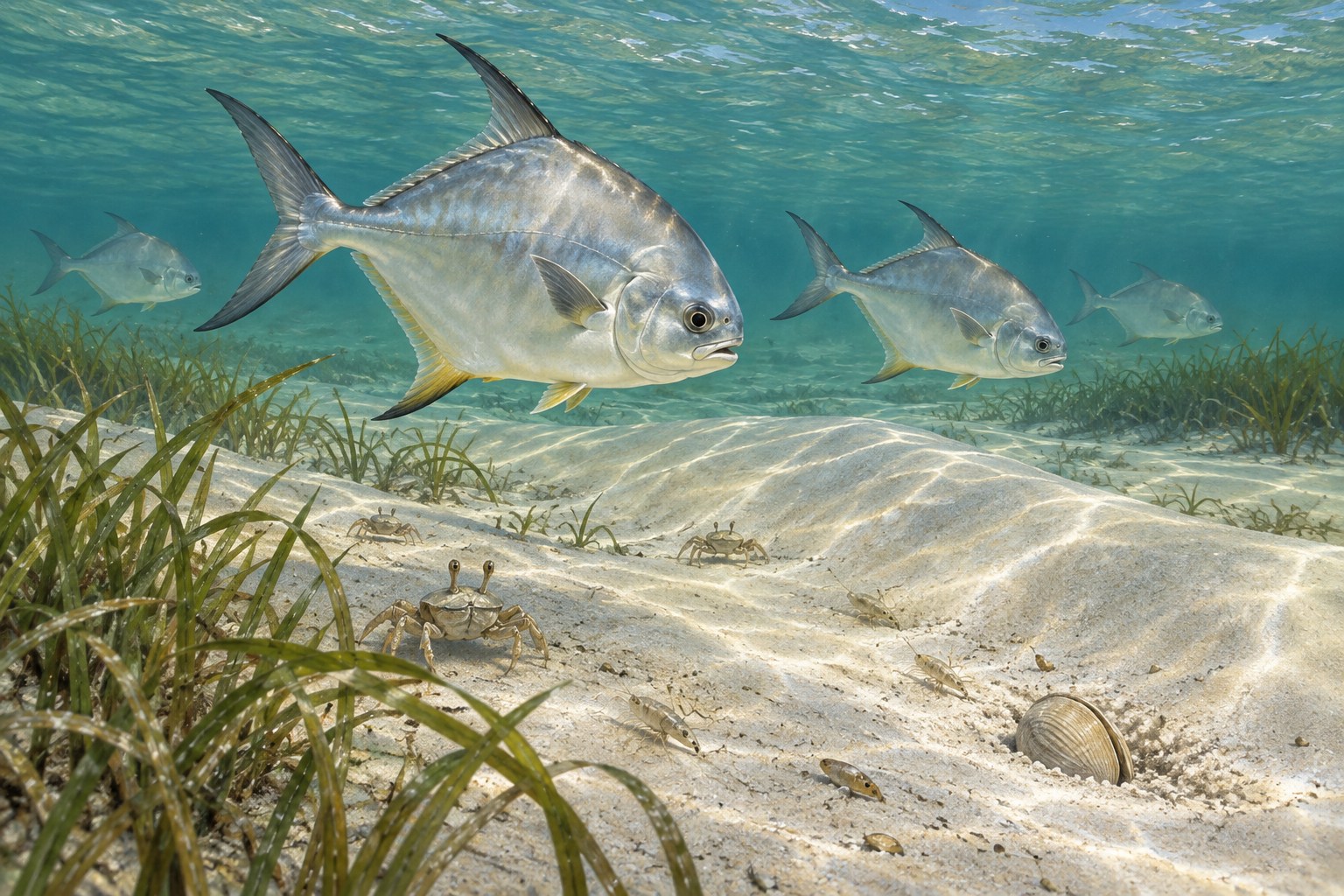
Pompano can travel along suitable Gulf sand when conditions and seasonal movements bring them within reach. Sand fleas and prepared strip baits offer options alongside shrimp. Their compact size helps keep the hook available.
A basic dropper rig can lift an offering just above the sand. Avoid adding bulky floats that make the rig sail sideways in the wind. The important questions are whether the bait remains in a feeding lane and whether you can control it.
Confirm the identity of any similar deep-bodied silver fish before keeping it. Learn the distinction between pompano and permit and check the current rule for the actual catch. A target written on a bait packet does not identify the fish.
Keep a compact lure ready for obvious prey movement
If small fish repeatedly scatter just beyond the wash, a little baitfish-shaped lure gives you a different way to test the area. Use it only when there is room behind the rod and no one across the line path.
Try a smooth retrieve through the open feeding lane. A brief pause can change the lure's movement without requiring another tackle change. If activity travels along the shore, keep your own movement inside the permitted public section.
Toothy coastal fish need an appropriate hook remover or pliers. Do not pull a swinging hooked lure toward your fingers. Keep the rod steady, support the fish sensibly and handle the hooks away from passing beach visitors.
Build a beach bag you can lift in one trip
This small access suits a modest outfit. Bring a rod, suitable holding weight, spare leaders, pliers and a measuring tool. A cooled bait container and drinking water complete the practical essentials for a short visit.
Match sinker weight to the rod's casting range and include the bait in that calculation. Add weight only when it improves a controllable presentation. If the sea carries the rig into occupied water anyway, the safe answer is another location or another day.
Keep spare hooks and line in closed compartments. The pavilion is a place for shared rest, not a reason to spread sharp tackle across picnic tables. Use the following checks to keep the kit manageable.
| Kit item | Why it helps | What to avoid |
|---|---|---|
| Compact shrimp bait | Simple test for small surf feeders | Bait packed over the hook point |
| Suitable holding sinker | Keeps the rig in one open lane | Exceeding the rod's total casting rating |
| Spare leader and pliers | Quick repair and safer hook removal | Loose hooks on a shared table |
| Closed line-scrap container | Contains wind-blown tackle waste | Leaving scraps beside the holder |
Use open hours and wind together
The early opening can provide a quieter beach visit, but it does not promise fish. Check the forecast, actual flags and surf after entry. A calm-looking horizon can still leave a strong pull in the near wash.
A breeze along the beach bows the line differently from a breeze directly offshore. Watch the rig's actual position before adding another rod. A single well-managed lane is a better fit for a narrow shared shoreline.
Summer heat can shorten a comfortable session, while a cold front can change clarity and prey movement. Let the day's conditions set the trip length. Avoid treating a predicted high tide as a reason to stay in unsafe weather.
Take home a fishing note rather than a beach mess
Check the license required for your own shore-fishing circumstances and the current rules for each species. If you plan to retain fish, have identification and measuring equipment ready. A simple setup still needs a legal harvest decision.
Keep released catches off hot dry sand where practical and support them with wet hands. A small fish does not benefit from a long photograph session. Return it promptly when it is not being kept legally.
Write down the bait, distance and wind direction that made the rig manageable. Then inspect the ground for hooks, leader scraps and packaging. That small finish protects both the access and the next person's visit.
Common questions
Where is Blue Dolphin Beachwalk?
It is Okaloosa County Beach Access 1 at 372 Santa Rosa Boulevard on the Gulf side of Okaloosa Island.
Does this access have a large parking lot?
No. The county lists 25 regular spaces and two accessible spaces. Use marked parking and keep a public alternative in mind.
What is a good first fishing method?
In an open permitted section away from swimmers, try a small shrimp bait in a manageable sandy surf lane.
Can I leave gear here overnight?
Plan the visit within the posted access hours and take every item home. Do not use unattended tackle to claim public beach space.
Prepare for your visit
Check local tides and weather. Read more about florida pompano, whiting, permit. Check current FWC saltwater fishing rules.