

PANHANDLE
Doris Jordan Freeway Beachwalk
fishing guide
Doris Jordan Freeway Beachwalk is a small public route to the Gulf on Okaloosa Island. Its compact parking area suits a simple surf trip. The useful fishing water lies beyond the walkover, where waves reveal changing sand bars and shallow feeding lanes.
Explore the guide ↓Find the walkover before unloading
Okaloosa County lists this site as Beach Access 5 at 700 Santa Rosa Boulevard. The county records 16 parking spaces and two accessible spaces. That small total matters on busy days. Choose another legal public access if the marked lot is full, rather than blocking a driveway or roadside route.
Despite the word Freeway in its name, this is a beachwalk. It does not give motorists permission to drive across the sand. Carry your equipment through the marked pedestrian route and keep the way clear for visitors coming back from the water.
The listed facilities include a pavilion, restrooms and a beach-toy borrowing bin. Those conveniences help a family beach visit, but they are not tackle storage or a fish-cleaning station. Bring your own bait container and a bag for hooks, line and food wrappers.
Separate opening hours from beach setup
The county lists access hours from one hour before sunrise until one hour after sunset. Its beach rules separately prohibit setting up equipment before 7 a.m. An open access route does not cancel that later setup limit. Follow posted instructions if a repair or temporary restriction changes the normal arrangement.
Okaloosa County also prohibits shark fishing on county property. Plan for ordinary surf species with suitable light tackle instead of heavy shark rigs. Fishing must remain clear of swimmers and other beach users, even when a particular part of the shore looks productive.
Morning arrival can offer more room once setup is allowed. Watch how the beach is being used before selecting a casting lane. A spot that was empty on arrival may become a swimming area within minutes, so keep enough flexibility to pack up or move.
Let the wave pattern choose the cast
This is a Gulf-facing sand shore. The beach does not provide a fixed channel edge or a dependable piece of deep structure. Its best clues are the water color, breaking-wave lines and places where foam passes through a gap in a bar.
A darker strip between the beach and a line of breakers may mark a nearshore trough. Sand-bottom fish can feed there without being far offshore. Test that reachable water before attempting a long cast past several breaking waves.
A gap where foam runs seaward can indicate a rip current. Fish may use the moving water, but an angler should stay on dry sand and avoid treating that gap as a safe wading route. Conditions are easier to judge with several minutes of observation than with one quick glance.
Make a small bait easy to find
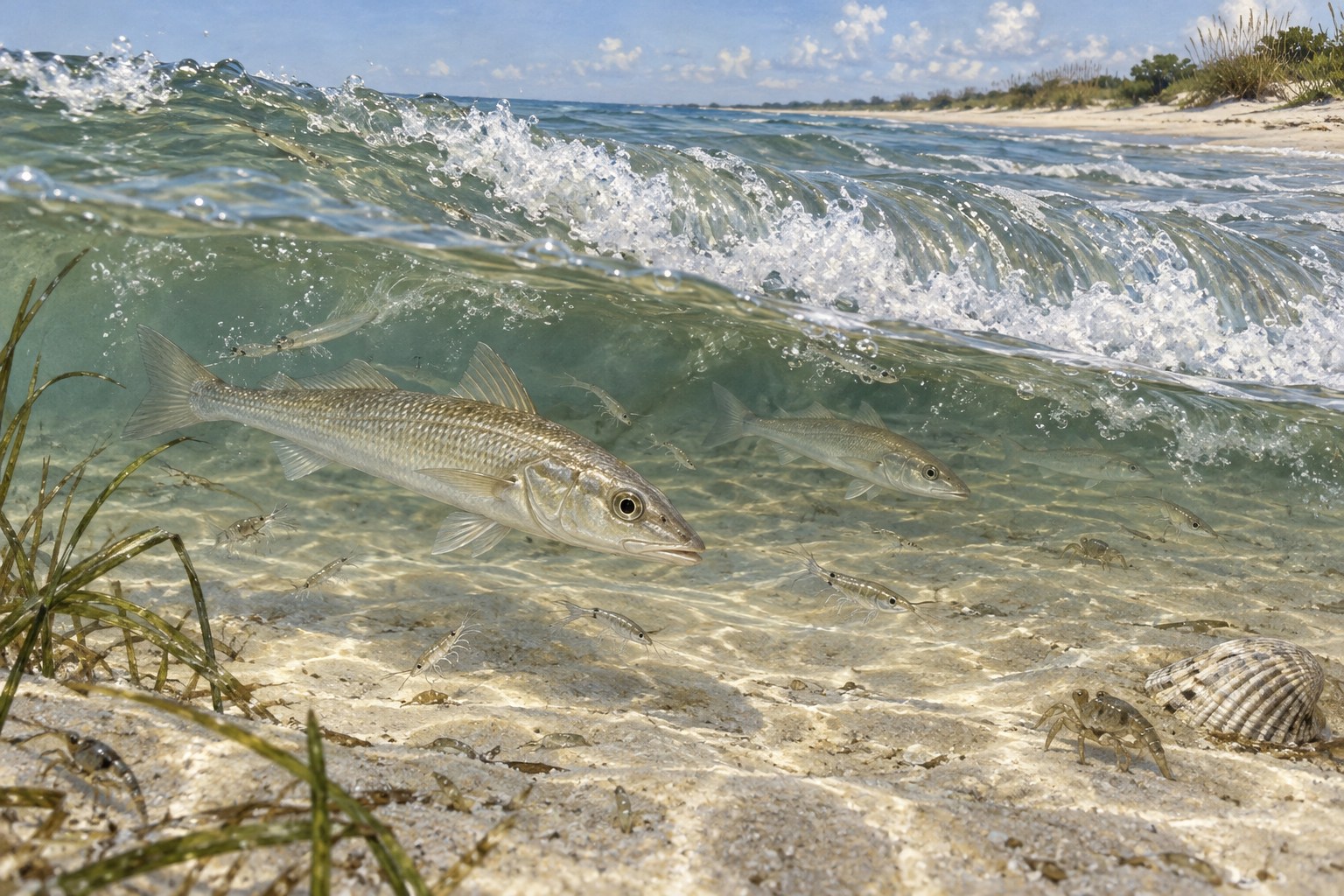
Fresh pieces of shrimp are a practical bait for whiting. Keep each piece short enough that the hook point remains exposed. A long loose tail can be pulled away by small fish while the hook stays untouched.
For pompano, small sand fleas or clam pieces can suit bottom-feeding fish where collecting and using that bait are lawful. Purchased bait avoids assuming that every collecting method is allowed on this beach. Carry a modest supply in a cool container rather than leaving a large open tray in the sun.
A compact surf rig with one or two small hooks is easier to handle around people than a sprawling setup. Start with the lightest sinker that holds the chosen lane. If every cast washes far sideways, shorten the session or seek calmer water instead of steadily adding more weight.
Keep a second method ready for visible fish
A small metal lure offers a change of pace when feeding fish show within casting range. Retrieve it through the active water, then stop when the fish leave or swimmers enter the lane. Blind casting across occupied water is not a useful way to extend a brief feeding event.
Inspect the leader after a bluefish bite. Sharp teeth can leave damage that is hard to see until the next fish pulls. Replace frayed material, and use a safe grip or pliers when removing hooks from a toothy catch.
A second rod is optional, not necessary. One well-managed rod leaves more attention for the beach, waves and people around you. Too many baited lines can turn a small public access visit into an awkward obstacle course.
Match the trip to wind and water color
A light wind and modest surf make this access more comfortable for beginners. Persistent onshore wind can build rough waves and weed-filled lines. Offshore wind can flatten the visible beach edge while making floating craft harder to return, so calm-looking surf does not justify an unplanned launch.
Use local tide information as part of the picture. On this open Gulf beach, wind and wave action can change the water edge more noticeably than a small tide prediction. Check the forecast again before departure if storms are developing.
Spring and fall can offer useful surf-fishing conditions, while hot summer days encourage shorter visits. Cold fronts may rapidly alter clarity and comfort in winter. These are planning patterns rather than a calendar showing guaranteed fish at this beachwalk.
Carry less and keep the return walk easy
Pack a manageable rod, a small tackle pouch, bait, pliers and drinking water. Use covered containers for loose hooks. A heavily loaded cart can be difficult on soft sand and can block the narrow access route while being unpacked.
Keep footwear handy for the walkover and hot pavement. Shade from a pavilion does not extend across the fishing beach. Plan sunscreen and breaks for the actual time spent beside the water, especially with children.
After a catch, keep handling brief and support the fish properly. Release unwanted fish promptly. Finish the visit with a careful sand check for dropped hooks, short leader pieces and sinkers, which can be difficult for another visitor to notice.
A straightforward first visit
Arrive after the permitted setup time and confirm that parking and the walkover are open. Watch the surf without a rod in hand first. Pick a clear short casting lane, try a small shrimp bait in the nearest trough and adjust one thing at a time.
If the lane fills with bathers or the surf becomes difficult, end the fishing part of the visit. The pavilion and beach setting still offer a pleasant break. A flexible plan is particularly useful at an access with fewer than twenty ordinary parking spaces.
| What you find | Practical response |
|---|---|
| Clear shallow trough | Try a short bottom-bait cast |
| Baitfish within reach | Use a small lure in an empty lane |
| Heavy weed or sideways sweep | Retrieve the rig and reassess conditions |
| Swimmers moving into the lane | Stop casting and choose another activity |
Common questions
Where is Doris Jordan Freeway Beachwalk?
Okaloosa County identifies Beach Access 5 at 700 Santa Rosa Boulevard on Okaloosa Island.
Can I put my fishing gear out before sunrise?
County opening hours begin before sunrise, but the separate county rule prohibits equipment setup before 7 a.m.
Is this access suitable for shark fishing?
No. County beach rules prohibit shark fishing on county property.
What is a sensible first bait here?
A small fresh shrimp piece on a manageable bottom rig is a useful starting approach for sandy-shore fish when the lane is clear.
Prepare for your visit
Check local tides and weather. Read more about florida pompano, whiting, jack crevalle. Check current FWC saltwater fishing rules.