

TAMPA BAY / SUNCOAST
Bradenton Beach
fishing guide
Work pier cover, search Gulf troughs or study the pass from safe access. Each setting gets its own bait and trip plan.
Explore the guide ↓A pier, a Gulf beach and a moving pass
Bradenton Beach occupies the southern part of Anna Maria Island. Its fishing choices include the Historic Bridge Street Pier on the bay side, Gulf-facing sand at Cortez and Coquina beaches, and the moving water near Longboat Pass. These are close together geographically but require different tackle and judgment.
A good first visit stays focused. Choose a pier session if the facility is open and you want a defined fishing space. Choose a beach session when the surf is manageable and swimmers leave room. Treat the pass as a current hazard rather than a shortcut to deeper fish.
Do not confuse Bradenton Beach with the mainland city of Bradenton. The names are similar, but launch points, traffic and water conditions differ.
Use the Historic Bridge Street Pier
The city’s pier page identifies the Historic Bridge Street Pier at the eastern end of Bridge Street. It developed from the old bridge connection and includes a fishing area with waterfront amenities. Confirm any current repair restrictions before relying on a particular section.
Start by walking to the permitted fishing space and observing other users. Keep clear of restaurant circulation, boat landings and any temporary dock reserved for vessels. The pier’s public setting does not make every edge a casting position.
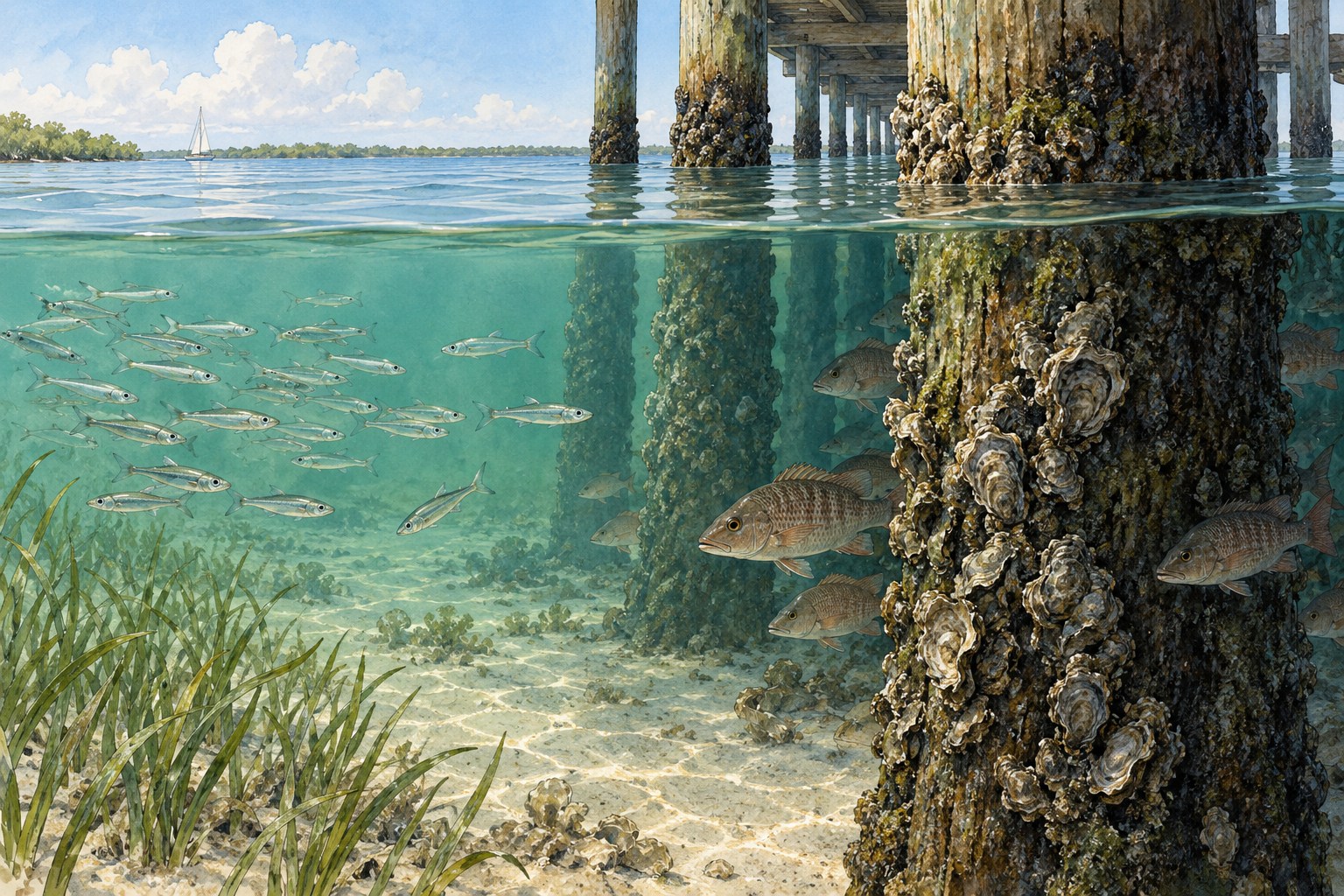
Look below for shade and shell-covered supports. A short bait presentation can be useful close to those features. Avoid throwing directly under the structure where the line is likely to wrap around a piling.
Decide how you will land and release a fish. Keep a net ready where appropriate, and avoid hoisting a fish heavier than your tackle can safely handle.
Use Cortez and Coquina as beach outings
Cortez Beach and Coquina Beach are recognized public beach areas along the Gulf. They also serve swimmers and other visitors. Follow current signs, lifeguard directions and any designated swimming boundaries before choosing a fishing position.
Coquina’s south end approaches Longboat Pass. That does not make the channel a wading option. Fish from a safe permitted shore position and keep away from fast flow, boat routes and slippery structures.
The bay-side Coquina area offers a different landscape of sheltered water and launch activity. Use the correct entrance for your purpose. Carrying a fishing rod through a nature walk does not automatically permit casting from every boardwalk.
Beach restoration or other work can change access and bottom shape. Read current notices and study the beach when you arrive rather than relying on a remembered sandbar.
Find fish beside a piling
A piling offers shade, rough feeding surfaces and shelter from flow. Mangrove snapper may hold close to the dark side. Sheepshead can feed on attached life. Both reward accurate bait placement more than maximum casting distance.
Lower a small shrimp into an open lane beside the support. Let it reach the chosen depth while keeping enough contact to notice a bite. If the line begins to rub against the piling, retrieve before a fish makes the problem worse.
Change your angle before changing everything else. A bait approaching with the current can look more natural than one pulled across it. At busy times, choose only angles that remain within your own fishing space.
Different targets for pier and sand
| Target | Likely feature | Useful choice |
|---|---|---|
| Mangrove snapper | Shaded pier cover | Live shrimp with a small exposed hook |
| Sheepshead | Shell growth on structure | Small crab or shrimp |
| Whiting | Shallow Gulf trough | A short piece of fresh shrimp |
| Pompano | Clean sand and moving beach water | Sand flea or compact jig |
| Snook | Warm shoreline lanes | A lightly weighted baitfish lure |
Spanish mackerel can appear with active bait in open water. Keep a small spoon available, but pause if birds are diving into the same area.
Make the bait fit the place
At a pier, a whole lively shrimp may draw snapper or other predators. Around small bait thieves, a smaller piece can keep the hook from being picked clean unnoticed. Use a modest hook and inspect bait regularly.
For sheepshead, a small crab needs careful positioning near the feeding surface. Keep the line under gentle tension and respond to steady pressure. Repeatedly jerking the rod can pull the bait away from a cautious fish.
On the beach, a compact bottom rig is easier to manage than a complicated spread of hooks. Begin close to shore. Add casting distance only after testing the first trough.
Keep bait chilled or properly aerated, depending on how you intend to use it. Do not leave open containers where pelicans or gulls can take hooked scraps.
Choose equipment for safe landing
A medium spinning outfit covers many smaller pier and beach fish. Braid around 10 to 20 pounds provides control, with leader chosen for the expected abrasion. Rough structure may require more protection than clean sand.
Carry pliers and a measuring tool in an accessible pocket. A fish should not remain on a hot deck while you search the bottom of a bag. If using a lure with multiple hooks, be especially careful when a fish thrashes beside people.
A net helps where the platform allows one. If there is no safe landing method for a large fish, do not target it from that position. Heavy line does not solve an unsuitable landing space.
Use the season to narrow the method
Cooler months often encourage close structure fishing for sheepshead. Mild winter beach conditions can still suit whiting. Spring brings warmer water and more bait movement, with occasional fast open-water action.
Summer beach sessions are easier early, before heat and recreation use build. Snook may be close to the sand, but handling should be quick and careful. Autumn can offer changing schools of bait and short feeding windows.
Compare the local tides and wind conditions before deciding between the bay and Gulf sides. A calm bay view does not prove that Longboat Pass is suitable for a small craft.
Keep Longboat Pass in perspective
The pass concentrates movement between bay and Gulf. Fish may use its edges, but the center is a working navigation route. Never cast across a boat’s path or enter the water to follow a hooked fish.
Choose a quieter permitted edge only if you can keep the tackle under control. When the line sweeps into hazards, move away or wait. A current change may provide a more manageable period without requiring heavier and heavier sinkers.
Small-craft anglers should treat wind opposing current as a serious consideration. The conditions at a sheltered launch may not reveal what is happening at the mouth.
A first visit that does not depend on luck
Confirm the pier or beach access before leaving home. Pack one main outfit and a small alternative lure kit. On arrival, spend a few minutes observing water and people before selecting a position.
At the pier, test one shaded edge with shrimp. On the beach, test two distances with the same bait. Keep the method consistent long enough to learn whether the location is useful.
If the site is crowded or partly closed, accept the limitation and use your planned alternative. Do not fish through a busy walkway simply because you already paid for parking.
Record the useful details afterward: water clarity, wind, current direction and where the bites happened. Those notes are more repeatable than a vague claim that an entire beach was good.
Follow current rules and leave clean access
Pack every piece of discarded line and keep hooks away from birds. Support released fish with wet hands and avoid dragging them across sand or decking.
The FWC saltwater rules and limits should be checked before retaining fish. Public access does not remove licensing or seasonal requirements.
Learn the difference between a bite and a snag
Close to a pier, a sinker can touch wood, shell or a crosspiece. That contact may feel like a quick tap. Lift gently to see whether the rig moves freely before striking hard. Learning the shape of the bottom helps you recognize a different pressure from a fish.
Sheepshead bites can be subtle. Keep a small bait close to the feeding surface and maintain enough contact to notice a change. Mangrove snapper may take more quickly, but an oversized bait can still hide the hook and reduce useful hookups.
If you use a circle hook, let steady pressure load the rod rather than making a sharp strike. With other hook styles, match the response to the bait and fish. There is no advantage in swinging the rod violently on every small movement.
After landing a fish or freeing a snag, inspect the leader where it passed the structure. A rough patch may hold for one cast and fail on the next. Replacing it takes less time than losing a fish and leaving line behind.
On the beach, wave action creates another kind of false signal. Watch the regular rhythm, then notice movement that differs from it. Holding the rod during the first few casts teaches that rhythm better than immediately leaving it in a holder.
These small observations make a Bridge Street or Gulf beach visit more useful. You learn what the tackle is doing, instead of treating every tap as proof that a large fish stole the bait.
Bradenton Beach questions
Is Bridge Street Pier on the Gulf?
No. It is on the bay side. Gulf beach fishing is a separate option to the west.
Can I wade closer to Longboat Pass?
Do not use wading to approach the channel. Current and changing depth can make that dangerous.
What is a useful first bait?
Shrimp is versatile for both pier cover and small beach fish, with bait size and rig adjusted to the setting.