
TAMPA BAY / SUNCOAST
Longboat Key
fishing guide
Find a legal public starting point, then choose beach sand, bay grass or a manageable edge near New Pass.
Explore the guide ↓A long island with three fishing settings
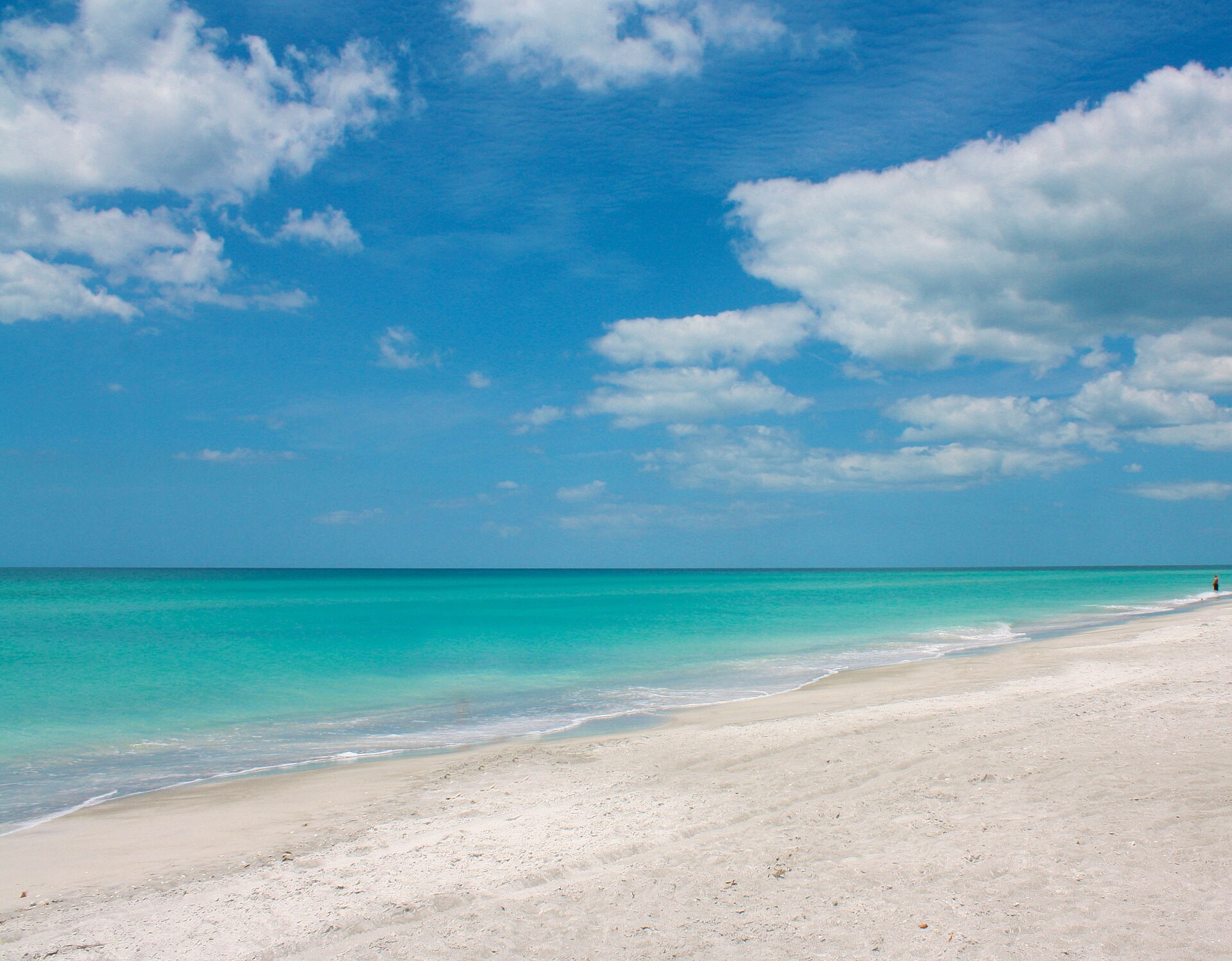
Longboat Key has Gulf beach along its western side, Sarasota Bay to the east and tidal passes at its ends. Those settings offer different opportunities. The beach suits light surf fishing. Bay edges favor grass-flat methods. Pass-side water requires more attention to current and boat traffic.
Public access is limited compared with the amount of shoreline visible on a map. Many docks and beach walkovers belong to private properties. Plan around a named public entrance rather than arriving at an attractive-looking seawall and hoping it is available.
For a visitor carrying one rod, a quiet Gulf beach or a permitted fishing position at a public park is a sensible starting point. A boat or kayak adds range, but also makes wind and return planning more important.
Public access spacing makes a small tackle bag especially useful on this key. Keep enough water for the walk back, and check the parking allowance before committing to a distant stretch of beach. A comfortable legal return is part of choosing the fishing spot.
Consider Overlook Park at New Pass
Overlook Park is at 101 Gulf of Mexico Drive near the southern end of the key. The town lists fishing among its activities and gives normal hours of 5 a.m. to 11 p.m., with gates locked at closing.
The nearby wooden route connects toward Quick Point beneath the bridge. Use only open designated paths, and inspect the actual fishing position before casting. New Pass carries boats and strong water movement. Keep lines out of the channel and do not enter the water to retrieve tackle.
A quieter edge beside the main flow can be worth testing. Watch the current first. If a bait cannot remain in a safe lane, wait for a gentler stage or choose a different shore.
Leave time to pack and depart before the gate closes. A good bite does not extend park hours.
Read Quick Point as habitat
Quick Point Nature Preserve protects mangrove and lagoon habitat at the southeastern tip of Longboat Key. Its shallow water supports young fish and the small animals they feed on. The preserve is useful for understanding why the nearby bay edges attract predators.
Follow marked access and fishing signs. Do not treat every lagoon or boardwalk as a place to cast. Avoid trampling roots, collecting wildlife or blocking a narrow path with rods.
Where fishing is permitted, work open water beside habitat rather than throwing hooks deep into it. A lure placed outside the roots gives a fish room to strike and you room to retrieve without damage.

Choose a legal Gulf beach entrance
The town lists several public beach access points along Gulf of Mexico Drive. Parking availability differs by entrance. Confirm that a space is public and that your visit fits the posted hours before carrying tackle to the sand.
Once on the beach, look for room away from swimmers and a clean trough close to shore. Start with a small shrimp bait rather than assuming a long cast is necessary. Whiting often use the wash and nearshore sand.
Pompano may pass along sandy bars when water conditions suit them. A compact jig or small natural bait can cover that opportunity. For warm-season snook, a quiet walk and a light lure can be more useful than a stationary surf setup.
Do not cross dune vegetation to follow a fish or shorten the walk back. Use the same authorized route you used to enter.
Explore Sarasota Bay’s grass edges
The eastern side of the key includes bay access, but private seawalls are common. Use an authorized launch or public park and respect its specific rules. From a small craft, target grass transitions and sand pockets without running over them.
Trout may hold above slightly deeper grass. Redfish can feed on shallower margins. Watch for bait and moving wakes before deciding where to stop. A flat with no visible activity may still hold fish, but a clean food-rich edge gives you a better starting point.
Keep lures high enough to avoid fouling. If the water is too shallow for your propeller or kayak fin, choose another route rather than cutting through vegetation.
Targets and useful presentations
| Fish | Setting | First offering |
|---|---|---|
| Snook | Warm beach lanes and mangrove points | Small paddletail or live baitfish |
| Spotted seatrout | Bay grass with sandy gaps | Light jig or suspended shrimp |
| Redfish | Shallow bay edges | Weedless soft plastic |
| Sheepshead | Permitted structure with shell growth | Crab or shrimp placed close |
| Whiting and pompano | Gulf sand and troughs | Small natural bait near bottom |
Choose the target after considering safe access. A fish reported around a bridge does not justify standing in a restricted or unstable position.
Carry one outfit with a few adjustments
A medium spinning rod and 10 to 20-pound braid can handle many ordinary inshore situations. Use lighter leader over clean sand and more abrasion protection near structure. Snook and rough cover deserve regular checks for frayed line.
For beach bait fishing, keep the rig compact and weight modest. For grass, use a lightly weighted lure or shrimp under a float. For a pass edge, choose enough weight to maintain control without sending the bait into the navigation lane.
If the required sinker is too heavy for your rod, the answer is a different position or time. Overloading tackle makes casting and landing less safe.
A small net, pliers and measuring tool help complete the catch properly. Keep them accessible instead of buried beneath spare lures.
Watch the wind at both ends of the key
Longboat Pass to the north and New Pass to the south can be demanding when wind opposes current. Calm water inside a bay pocket does not establish safe conditions at either entrance.
Use the Longboat-area tide and weather information to choose a modest window. Shore anglers should also consider how rising water reduces dry standing room.
Spring and fall may bring mobile bait and varied catches. Summer beach fishing is often more comfortable early, with careful attention to storms. Winter favors sheltered options during stable weather and a slower approach around structure.
These are planning patterns, not an open-season calendar. Check harvest rules independently before keeping a fish.
A first visit without unnecessary travel
Choose either a southern public park session or a Gulf beach walk. Confirm the entrance, parking and current access before leaving. Pack a small bait supply and one alternative lure rather than equipment for every possible species.
At a pass-side position, watch two or three minutes of current before fishing. Test a short drift and retrieve early. On the beach, inspect the nearest trough and work a small area thoroughly.
If the conditions are wrong, change the plan without forcing a pass crossing or an improvised private access. A simple return on a better tide is preferable to an uncomfortable outing.
Protect a narrow strip of habitat
Longboat’s mangroves, grass beds and beaches support more than fishing. Keep hooks away from birds, avoid disturbing manatees and use approved dune crossings. Do not leave bait on public benches or railings.
Wet your hands before handling fish and support larger catches horizontally. Read the FWC’s current saltwater fishing rules for licensing, gear restrictions and harvest limits.
Find a manageable pass edge
At New Pass, first distinguish the main stream from the quieter water beside it. Watch a patch of foam for several moments. The point where it slows or circles may reveal an eddy, but only use it if you have a permitted position and a safe retrieval path.
Make the first presentation short. Allow the bait to enter the quieter pocket without letting the line sweep across the channel. If the drift immediately moves toward boats or rough cover, recover it and adjust. A controlled short drift is more useful than a long uncontrolled one.
The fastest current is not automatically the best fishing current. Fish can feed along its boundary, and anglers may handle a gentler stage more accurately. Waiting for that stage can be a better decision than adding more weight.
Compare this with the bay grass plan. There, your job is to keep the lure above vegetation rather than hold it beside a deep current edge. Change the rig when you change settings. One heavy pass rig is a poor tool for a shallow grass pocket.
On a Gulf beach fallback, remove unnecessary terminal tackle and start small again. A neat shrimp bait in the first trough can turn a difficult pass day into a manageable shore session.
Give yourself time to move legally between the settings. Limited access and parking mean that a nearby shoreline on the map may not be a nearby public entrance. Confirm the destination before packing up, and keep the final plan within the remaining daylight and park hours.
Longboat Key questions
Can I use any dock along the bay?
No. Much of the waterfront is private. Public water does not make an adjacent dock public access.
Which pass is easiest for a beginner?
Neither should be treated casually. Start with a permitted sheltered position or beach and avoid the strongest flow.
Why choose a sand pocket in the grass?
It creates an edge where prey leaves cover and a lure can travel cleanly without catching vegetation.