
SOUTHWEST
Sarasota
fishing guide
Build an inshore plan around healthy grass, sand pockets and confirmed access, with clear guidance on waterfront repair limitations.
Explore the guide ↓Build a Sarasota trip around the bay
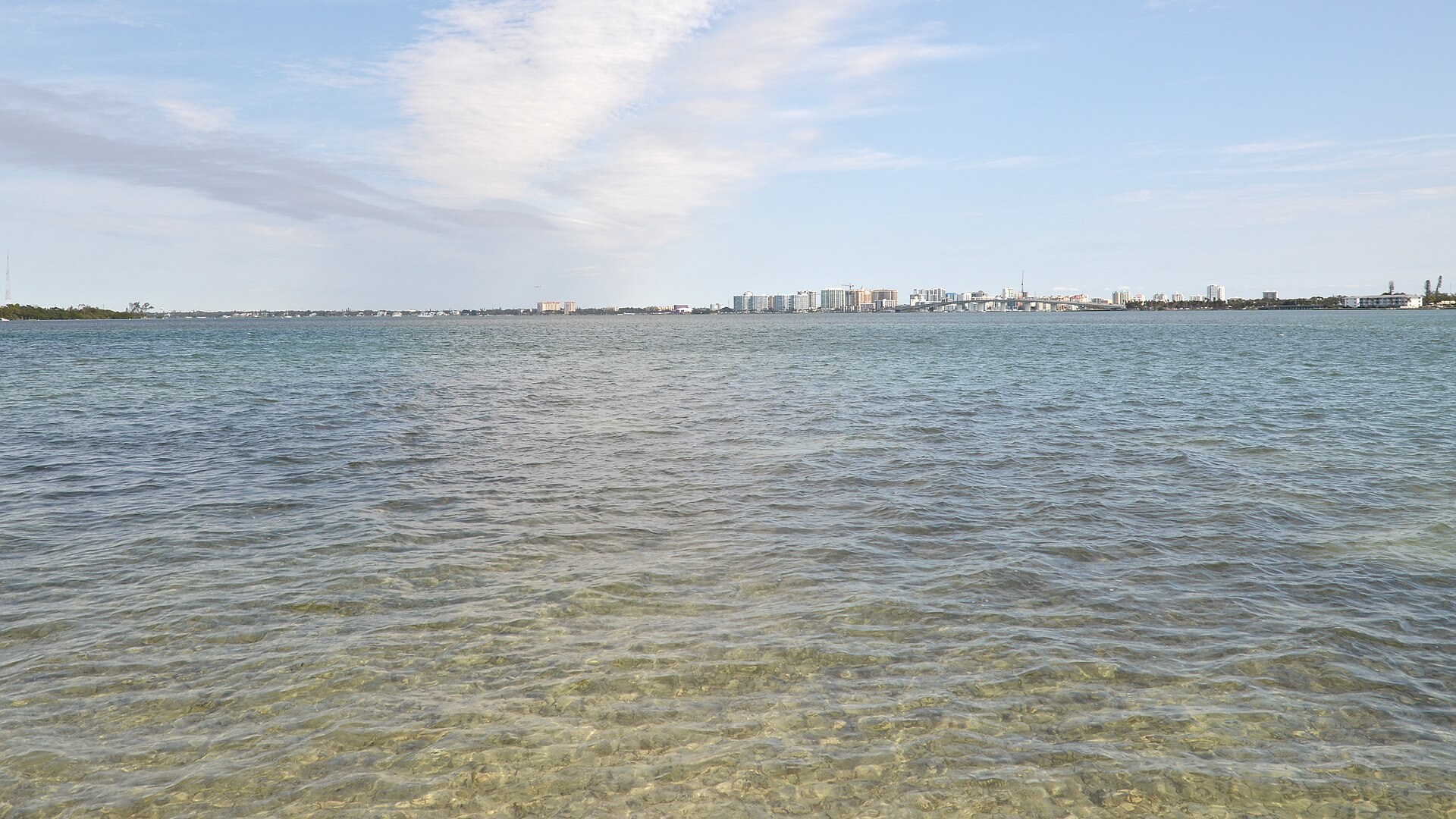
Sarasota’s inshore fishing centers on a broad estuary with seagrass, sand openings, channels and developed shoreline. The barrier islands add Gulf beaches and passes, but those deserve separate plans. A mainland bay outing is not the same as a walk along Lido or Siesta Key.
For many anglers, the most useful skill here is keeping a bait or lure just above the grass. Fish use the bed for food and cover, while nearby deeper water provides a route between feeding areas.
Public shore access has also been affected by storm damage. Before choosing a familiar pier from an older guide, verify that the exact facility is open. Sarasota offers good habitat, but a named landmark alone is not a complete fishing plan.
Check waterfront repairs before you travel
The city’s hurricane-recovery information lists work affecting Tony Saprito Pier, Hart’s Landing facilities, Ken Thompson Park and other waterfront sites. Do not assume their former fishing platforms or bait services are operating simply because they remain on a map.
Repair schedules can change. A project listed as designed, funded or under construction is not a public reopening notice. Confirm the facility and the particular access you need before traveling with rods, a wheelchair, children or a boat trailer.
For an outing near New Pass, a separate public option to investigate is Overlook Park on Longboat Key. For a Gulf beach visit, consult the Lido Key guide. Keep these as distinct destinations with their own current rules.
Understand a seagrass flat
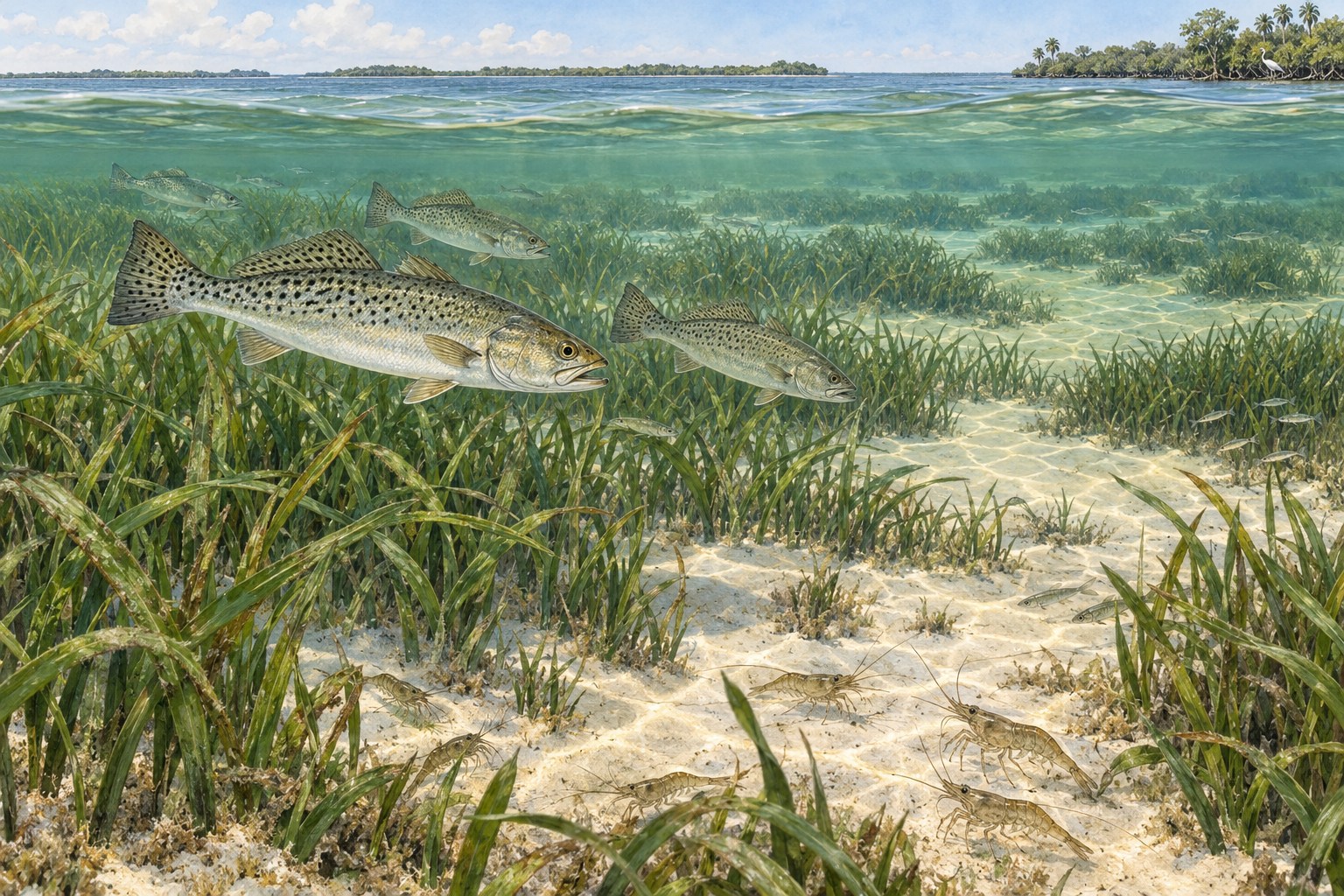
A grass flat is not uniform. Some sections are very shallow, while small depressions and sand pockets provide extra depth. Fish can move between them as the tide changes. Look for the transition rather than choosing the middle of the largest dark patch.
Small baitfish and shrimp use the vegetation. Trout may suspend above it, while redfish feed along edges and openings. A lure that swims just clear of the grass stays visible and moves naturally.
Do not anchor or run a propeller through a bed unnecessarily. If you see a shallow area ahead, slow down before reaching it. A propeller scar can outlast the fishing trip by a long time.
Pick an inshore target
| Fish | Feature to search | Starting presentation |
|---|---|---|
| Spotted seatrout | Grass edges with modest depth | A lightly weighted paddletail |
| Redfish | Shallow sand pockets and mangrove margins | Weedless lure or shrimp |
| Snook | Warm points, shade and moving-water cover | A small baitfish imitation |
| Mangrove snapper | Permitted structure with shade | Live shrimp on a small hook |
| Sheepshead | Shell-covered hard surfaces | Small crab or shrimp held close |
Jacks, ladyfish and mackerel may appear with active bait. Their fast feeding can be brief, so keep a suitable lure accessible without abandoning an unattended bait rod.
Use a controlled drift over open habitat
From a suitable small craft, position outside the intended fishing lane and let a gentle drift carry you along it. Cast toward untraveled water rather than repeatedly over the route of the hull. Keep the drift short enough that you can reset easily.
A lure should move above the grass, not dig into it. Begin with a light jig head and adjust the sink time. If it returns covered in weeds, lighten the head or raise the retrieve before changing color.
Wind can move a boat faster than the lure can be presented effectively. If you cannot keep contact or remain in safe water, stop the drift and select a more sheltered area. Do not improvise anchoring in a busy channel.
Watch for manatees and give them room. Reduce speed in marked zones and whenever visibility makes wildlife difficult to see.
Use shrimp at the right height
Live shrimp under a float is a useful way to explore grass without constantly snagging. Start with the bait above the vegetation, then adjust a little at a time. The float should move within your fishing lane rather than wander toward other boats.
Where the bottom is clean, a lightly weighted shrimp can drift naturally. Near structure, choose a hook that leaves the bait lively and keeps the point exposed. Excess weight can pin the bait against cover before a fish finds it.
If small fish remove the shrimp quickly, use a smaller bait or change location. Adding a much larger hook may simply reduce the bait’s movement without reaching larger fish.
Keep the live supply aerated and shaded. Warm water and crowding can weaken shrimp quickly on a summer outing.
A useful Sarasota bay outfit
A seven-foot medium spinning rod with a modest reel and 10 to 15-pound braid handles many grass-flat presentations. Carry leader suited to both open grass and abrasive cover. Stronger leader is useful around snook and structure, but needlessly heavy material can hamper a tiny bait.
Bring spare jig heads in several light weights. Depth control changes with wind, current and the amount of grass. A small selection of weights is more useful than a large selection of nearly identical lure colors.
Keep pliers and a landing net ready. Trout have delicate mouths and should be handled gently. Support fish in the water when possible and avoid squeezing them while removing a hook.
Follow conditions through the year
Cool-season fishing often shifts toward deeper pockets and protected water during cold spells. After a few mild days, fish may return to shallower edges. A warming afternoon can be a reasonable time to try again.
Spring brings more activity across the flats. Summer requires attention to heat and lightning, with shorter early outings often more comfortable. Autumn bait can move between bay and coastal water, changing which edges hold feeding fish.
Use the Sarasota-area tide and weather planner to match a route with wind and water level. A tide table cannot show the exact condition of a grass bed or the chop around a point.
Make access the first decision
For shore fishing, verify a named public facility and its open fishing area. Ask about temporary barriers and whether nearby services are operating. Do not rely on a general park listing that still includes a damaged pier among its amenities.
For boat fishing, confirm the launch and trailer arrangements independently. Prepare the craft before entering the lane. Choose a route that avoids unnecessary pass crossings and has a clear return if wind increases.
For a kayak, wear a flotation device and keep communication within reach. A large bay deserves a conservative plan even when the launch cove looks calm.
A simple way to learn one flat
Choose an accessible edge with enough depth to approach without touching the grass. Observe bait, water clarity and the drift direction. Work a light lure across a sand opening, then along the neighboring grass margin.
Make one depth change before moving. If the first retrieve travels too high, allow a little more sink. If it fouls, reduce depth. This gives you useful information about where the lure is actually swimming.
Keep notes on the water level and wind at the beginning and end. The same flat can look very different several hours later, and those changes help explain why fish moved.
Keep the bay healthy
Take discarded line home, avoid disturbing wildlife and stay out of closed restoration areas. Do not continue fishing a stressed or visibly unhealthy area.
Check the FWC saltwater fishing information for current licenses, regional limits and seasons. Fish presence and legal harvest are separate questions.
Use a sand opening to improve bite detection
A clean opening in the grass lets you feel the lure without constant contact with vegetation. Cast beyond the near edge and begin with a steady swim. As the lure enters the sand, allow a brief pause, then continue before it reaches grass again.
Watch the line during that pause. A small sideways movement may be easier to notice than a strong pull. Take up slack smoothly before applying pressure. Striking against a large loop of loose line often gives poor contact.
If the lure reaches the opening too high in the water, add a little sink time on the next cast. If it drags heavily, reduce weight. Keeping the same lure while adjusting depth helps you understand the pocket instead of guessing which color made the difference.
A float with shrimp can test the same opening. Set the depth so the bait remains just above the grass at the edges. Let it cross the sand naturally within a safe lane, then retrieve before it leaves your control.
From a drifting craft, reset before the hull crosses the area you want to fish. A productive pocket may be small enough that one noisy pass disturbs most of it. Quiet repositioning is part of the presentation.
For future Sarasota trips, note the approximate depth, clarity and wind when the opening held fish. Those conditions are more informative than a saved point alone. A location becomes useful when you understand how the habitat and water movement work together.
Sarasota fishing questions
Should I assume Hart’s Landing services are available?
No. Waterfront recovery work affects familiar facilities. Confirm the current operation before depending on bait or access.
Do I need to leave the bay for worthwhile fishing?
No. Inshore grass and shoreline edges offer plenty to learn without heading offshore.
What is the most useful adjustment over grass?
Control depth first. Keep the bait or lure above the vegetation so it remains visible and free of weeds.