
SOUTHWEST
Don Pedro Island State Park
fishing guide
Don Pedro Island combines a boat-only barrier-island beach with a separate mainland park base. The island reopened in March 2026, but the dock and facilities remain unavailable in the current notice. Plan a self-sufficient visit and verify how you can legally and safely land.
Explore the guide ↓Know which part of the park you are visiting
The park's mainland address is 8450 Placida Road in Cape Haze. Its island section lies between Knight Island and Little Gasparilla Island. Driving to the mainland entrance does not place you on the Gulf beach.
The official notice, effective March 6, 2026, says the park and island are open while the dock and facilities are unavailable. Treat that alert as more specific than general descriptions of tying up at the island dock. Confirm any new changes before departure.
The normal listed schedule is 8 a.m. to 5 p.m., with a $3 vehicle fee at the mainland base. The island is reached by private boat. Ask the park about current permitted landing arrangements rather than improvising through mangroves.
Use mainland access only when the facility is open
The park describes a mainland land base with a kayak launch, trails and fishing dock. A facility description is not proof that a particular dock is currently usable. Check which mainland amenities the present closure notice covers before bringing gear.
Where an allowed fishing position is open, the bay-side setting calls for controlled inshore casts. Keep launch space clear for paddlecraft and remain on an established route. Do not cut through vegetation to extend the casting angle.
A mainland visit can be a shorter alternative to an island expedition. It lets you study water movement and habitat without depending on a boat landing. Choose it only after confirming the exact facility you intend to use.
Work the island surf as its own outing
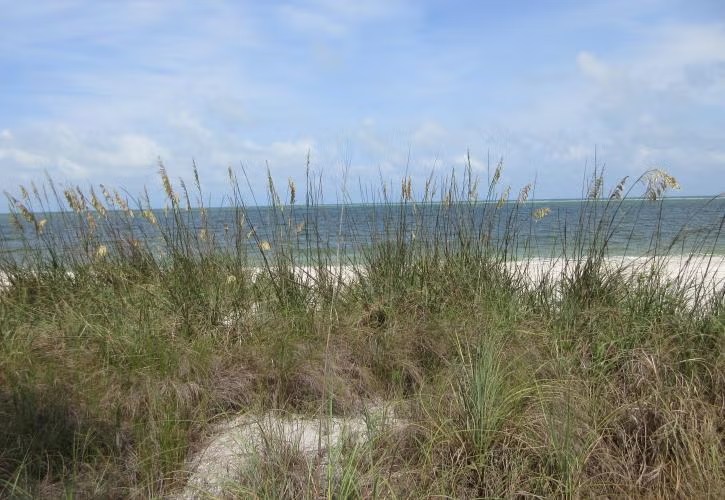
The Gulf side offers sandy coastal water rather than the sheltered mainland view. In permitted beach sections, look for a darker trough or a break in a sandbar. Those features can concentrate small prey within a manageable casting distance.
Pompano and whiting are reasonable surf targets when conditions suit them. Small shrimp pieces, purchased sand fleas or prepared strip baits can test clean sand. Do not assume the largest visible wave marks the best fishing depth.
The barrier-island return depends on the boat as well as the beach. Have the pickup point and departure time settled before walking away. A promising fish bite is not a reason to miss the remaining safe landing window.
Search a clear shoreline for snook
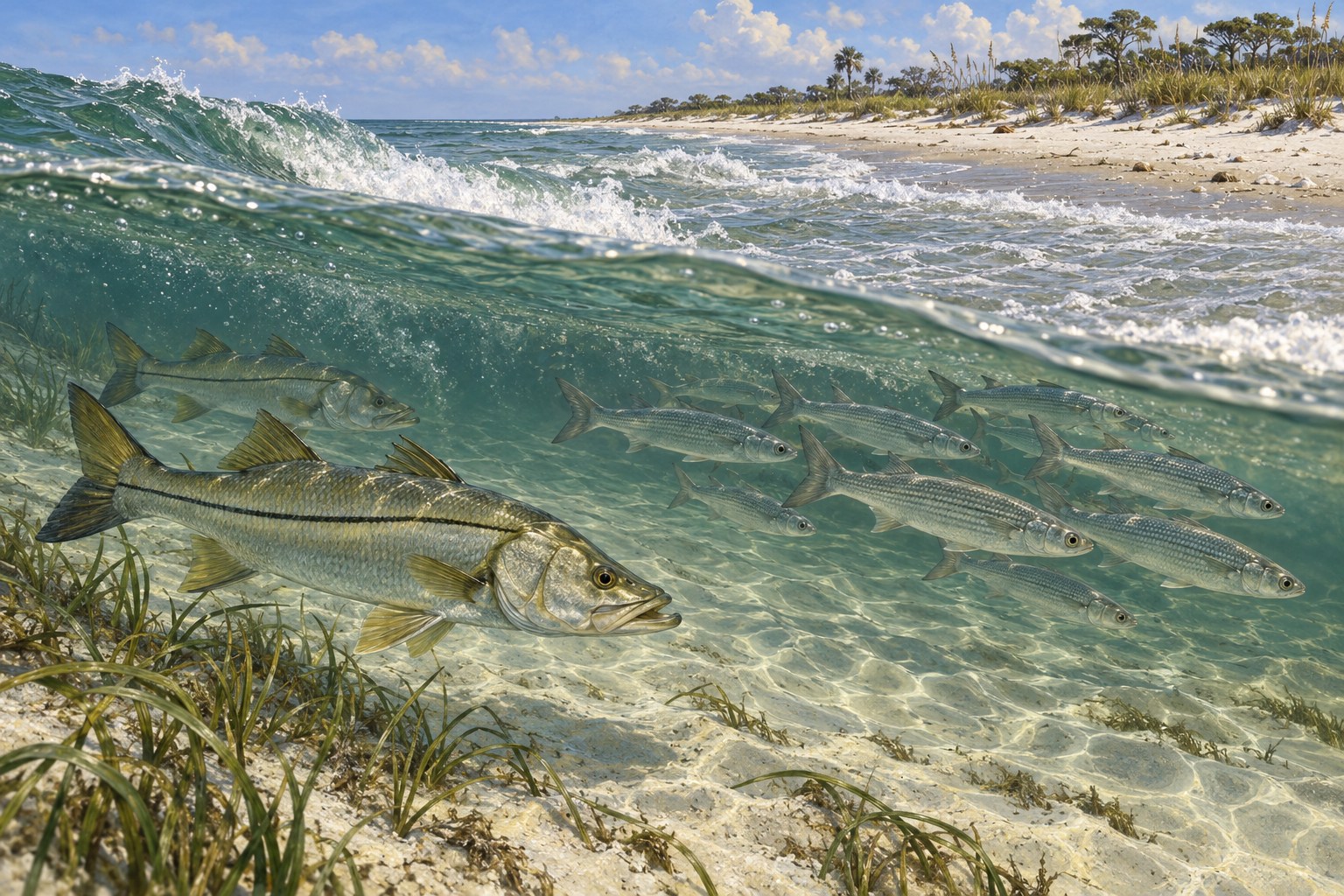
Warm-season snook can use coastal beaches and pass-related feeding routes in the broader region. A small baitfish imitation or suitable live offering can be worked along an open edge. Cast only where beach users and wildlife closures leave room.
Begin with a quiet presentation in the nearshore trough. Fish moving in the wash may be much closer than expected. Observe a route and place the lure ahead of it rather than repeatedly casting across the fish's back.
Use a leader able to tolerate the fish's rough mouth and any cover encountered. Prepare to support the catch and release it promptly. Current regional snook rules decide whether harvest is allowed, regardless of the season in which beach fishing improves.
Keep bay-side rigs above sensitive bottom
Mangrove margins and mixed shallow bottom can hold redfish, seatrout and small snapper in suitable open water. A shrimp under a float can keep the offering above vegetation. Set the depth so the hook does not drag through plants.
A lightly weighted soft plastic can search a sand edge without the constant splash of a larger lure. Use enough weight for control, then reduce it if the bait comes back loaded with vegetation. Change position instead of repeatedly snagging roots.
Avoid crossing very shallow banks under power. The safest route may be longer than the direct line to a feeding area. Protecting the bottom is part of maintaining the prey and shelter that support the fish.
Take what the island cannot supply
With island facilities unavailable, do not expect drinking water, a working restroom or a dock to simplify the day. Bring enough water, sun coverage and a waste plan. Keep the fishing kit light enough for the actual landing and walking conditions.
A medium spinning outfit handles many ordinary inshore presentations, while a suitable surf outfit may help on the Gulf beach. Match casting weight to the rod rating. Large fish near a pass require a separate safe landing and tackle plan.
The table helps distinguish the two sides of the outing. Every option depends on current park permission and access.
| Part of trip | Useful fishing approach | Access concern |
|---|---|---|
| Gulf beach | Compact shrimp surf rig | Boat pickup and open beach section |
| Sand-edge snook search | Small baitfish lure | Clear safe casting lane |
| Bay vegetation edge | Shrimp under a float | No dragging through grass |
| Mainland base | Verified open fishing position | Current dock and launch status |
Leave margin for landing and retrieval
The park's general description notes shallow bay-side access. Tide and wind can reduce usable depth in a channel or along a landing. Inspect the actual water and use current navigation information rather than relying on a printed minimum alone.
For a paddle outing, plan the return against the expected wind, not only the outgoing breeze. A loaded kayak is harder to move into building waves after hours on the beach. Keep the route within your crew's ability.
If changing weather threatens the boat pickup or launch return, pack up early. The island is not a place to wait until the last safe moment. A conservative exit is more useful than one final cast.
Adjust the day to the exposed coast
Gulf wind can make a quiet beach visit rougher than the mainland view suggests. Check the marine forecast and observe the landing conditions before unloading people or tackle. A safe arrival must also leave a safe departure.
Cooler fronts can produce surf and current that complicate bait control. Summer brings strong sun and sudden lightning. Set a short walking limit and do not get so far from pickup that a storm leaves no practical return margin.
Wear suitable footwear for shells and uncertain landing surfaces. Do not climb into closed damaged facilities for shelter. Bring a communication method that remains available if a bag gets wet.
Keep the natural park shore intact
Stay away from posted bird and turtle nesting areas. Leave mangrove branches and dune plants untouched. Public enjoyment of an open island does not authorize building a landing trail through sensitive habitat.
Check Florida saltwater licensing and current harvest rules before fishing. Keep a measuring tool with the kit rather than back in the mainland vehicle. Identify a catch correctly and release it if its legal status is uncertain.
Pack bait waste, line and food scraps back onto the boat. Inspect the beach around the resting area before departing. The lack of island facilities makes self-sufficient cleanup essential.
Common questions
Can I drive to Don Pedro Island beach?
No. The mainland base has a road address, while the island section is reached by private boat.
Is the island dock available after reopening?
The March 6, 2026 notice says the island is open but the dock and facilities are unavailable. Confirm any newer update.
Should I assume the mainland fishing dock is usable?
No. Ask the park which facilities are open before relying on a dock or launch description.
What is the main island packing priority?
A safe landing and return plan, enough drinking water and the ability to take all waste back with you.
Prepare for your visit
Check local tides and weather. Read more about snook, florida pompano, whiting. Check current FWC saltwater fishing rules.