
PANHANDLE
Grayton Beach State Park
fishing guide
Grayton Beach State Park offers two distinct fishing environments: Gulf surf and Western Lake. The lake's sheltered edges need a lighter approach than the beach. Confirm reopening first, then choose the designated water and route that match the day's conditions.
Explore the guide ↓Check the current park notice before planning entry
When reviewed on October 11, 2026, the official park page displayed a storm closure notice. Confirm reopening through the park at 850-267-8300 before traveling. The entrance is listed at 357 Main Park Road, with a usual 8 a.m. to sunset schedule. Normal hours are not evidence that a temporary closure has ended.
The park also warns of intermittent capacity closures during high visitation. Day visitors, including those arriving by bicycle or on foot, must wait until entry resumes. Plan a separate open lawful alternative rather than assuming the gate can be bypassed. A reservation or an old park map should not replace a current access check.
Choose Gulf surf or Western Lake after reopening
The park's current activity information permits surf fishing and fishing on Western Lake with the proper license and compliance with harvest rules. These are different tasks. Gulf sandbars call for a holding rig in waves, while an approved lake edge or paddle route calls for careful attention to cover and lighter presentations.
Ask staff which designated access and launch areas are available on the day. Do not treat a trail overlook as a casting platform or every visible bank as an open shore. Make the first session specific: one environment, a small group of likely targets and an equipment load suited to the route.
Read the lake before making a long paddle
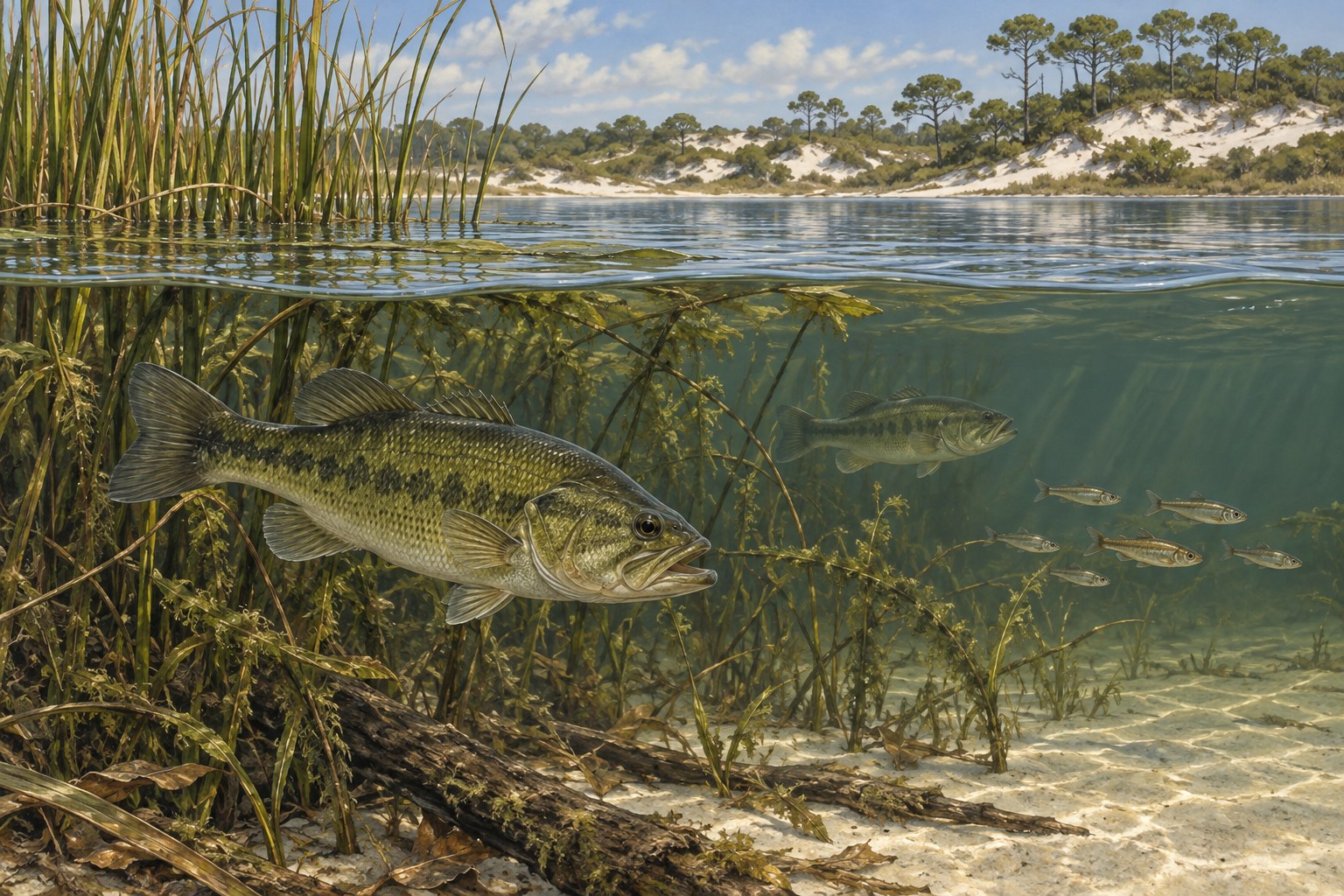
Western Lake is a coastal dune lake with a changing coastal setting. Observe the water's clarity, visible prey and bottom cover before assuming a particular species mix. A dark vegetated edge and a clean sandy lane demand different presentations. Where a route is approved, look for depth or cover changes instead of casting randomly across open water.
Do not force a boat through shallow vegetation or scrape the bottom repeatedly with a paddle. Find the return launch from the water before exploring farther. Wind across open lake reaches can build even when the first shoreline is quiet. A flotation device and a conservative turnaround point make the outing more useful than a risky distant bank.
Keep lake baits clear of cover
A small soft plastic can search an open bottom edge without requiring a heavy sinker. Retrieve it slowly and watch whether grass gathers on the hook. A suitable bait suspended under a float offers another way to keep the hook above vegetation, with the bait and target chosen for the actual water conditions.
Adjust depth before adding more weight. If a lure returns tangled after every cast, it is not working in clean feeding water. Move to a clearer lawful lane or shorten the presentation. A gentle cast ahead of visible prey can be more useful than dropping tackle directly into the most tangled vegetation.
Test the Gulf trough for small surf feeders
On the beach, whiting and seasonally passing pompano provide realistic possibilities for a compact bottom rig. Start with a modest shrimp piece or sand flea in the nearest useful trough. Wave patterns can reveal where a bar is shallow and the adjoining lane is deeper. Watch several sets before choosing a range.
Use a holding weight within the rod's safe rating and inspect the bait frequently. A small float may lift the offering from moving sand. The same rig should remain outside swimming water and active visitor routes. If the current carries it sideways beyond your clear lane, retrieve and change the plan rather than adding uncontrolled force.
Carry a different working kit for each setting
For a lake plan, a manageable medium spinning outfit, a float rig and a few small lures can cover useful tests. For the surf, choose a rod and line suited to the casting weight and beach distance. Keep the backup simple. Two heavy kits make the walk harder without necessarily improving the fishing.
Both settings need pliers, a measuring tool and a secure place for used leaders. Keep bait and drinking water protected from heat. A landing net can help support fish at a suitable lake edge or paddle craft. Choose gear by a controlled landing as well as by the first cast.
| Setting | Useful first test | What changes the plan |
|---|---|---|
| Open approved lake margin | Light soft plastic along a clean edge | Repeated grass on the hook |
| Lake vegetation boundary | Suitable bait under an adjusted float | Depth or water conditions |
| Gulf trough | Compact crustacean bait on a holding rig | Current beyond the safe lane |
| An exposed return paddle | Shorter route with flotation device | Building wind over open water |
Use changing conditions rather than a rigid schedule
Spring and fall bring seasonal interest in Gulf pompano. Hot periods bring a greater need for water, shade and storm awareness. Cooler fronts can change wind and clarity in both settings. Choose a manageable target based on the water you can observe after the park is confirmed open.
A tide forecast may be relevant to coastal conditions, but a dune lake does not simply behave like an open beach. Its connection and water level can vary. Do not publish a universal best tide for every bank. Inspect the actual movement and ask staff about present conditions if a route or lake connection is unclear.
Give dunes and nesting wildlife a wide margin
Stay on the marked beach route and approved lake access. Dunes, marsh margins and nesting areas should not become shortcuts. A seemingly convenient landing can harm plants or wildlife when repeated by many visitors. Keep a paddle and propeller clear of shallow vegetation, and turn around rather than forcing passage.
Secure loose bait before shorebirds gather near a rig. Keep casts away from feeding birds and handle catches without drawing a crowd into the hook-removal area. The park's protected landscape supports the experience on both sides of the dunes. A careful route preserves that value more effectively than trying to fish every visible corner.
Know the fish before choosing to keep it
Current rules concerning size, number, method and season apply to park fishing. Identify the catch accurately and check whether freshwater or saltwater licensing conditions fit the chosen activity. Do not guess from the word lake alone. Staff and current wildlife guidance can clarify the requirements before the outing.
Release uncertain fish promptly, supported with wet hands and as little air exposure as possible. Remove every clipped leader and discarded bait item. Return along the designated route with enough time before closing. Grayton's two fishing environments reward a focused plan and clear respect for their different access and habitat conditions.
Common questions
Is the park open after its storm notice?
The official page still showed a closure when checked October 11, 2026. Confirm reopening directly before a visit.
Does the park permit both surf and lake fishing?
Its activity page identifies both Gulf surf fishing and Western Lake fishing, subject to proper licensing and current regulations.
Can a bicycle visitor bypass a capacity closure?
No. The park says capacity restrictions affect day visitors arriving by bicycle or on foot as well as by vehicle.
Do I need heavy surf tackle for Western Lake?
Choose tackle for the lake presentation and actual cover. A Gulf holding rig is a separate setup for a different environment.
Prepare for your visit
Check local tides and weather. Read more about florida pompano, whiting, permit. Check current FWC saltwater fishing rules.