

TAMPA BAY / SUNCOAST
Gulfport Beach
fishing guide
Start with Williams Pier or explore the Clam Bayou setting. Learn how bay cover, shrimp and a controlled drift shape a useful outing.
Explore the guide ↓A sheltered-bay approach to Gulfport fishing
Gulfport faces Boca Ciega Bay rather than the open Gulf surf. That changes the whole outing. You are looking for pier shade, small changes in bottom, shell growth and bait moving through bay water. Long surf casts are usually less useful than accurate presentations within a manageable space.
Williams Pier is the best-known public fishing landmark. Clam Bayou and the municipal marina area offer another side of the waterfront, with mangroves and paddle access. The town beach, boat facilities and fishing areas sit close together, so make sure you are using the right part of each.
A light outfit and fresh shrimp can introduce you to the bay. Plan to learn the bottom and current before deciding that every bite should come from a large redfish or snook.
Start with Williams Pier
The city places Williams Pier at Shore Boulevard South and 54th Street South. Its published description lists a 521-foot pier, lighting, benches and a fish-cleaning table. The city advertises free access and round-the-clock use, but temporary barriers or repair notices take priority on the day.
Walk the pier before setting up. Look at where the water is moving, which side has shade and whether anglers are already fishing tight to the pilings. Choose a gap with room to lower a bait and land a fish without crossing lines.
Fishing farther from land does not always mean fishing better water. A piling closer to shore may hold more shell growth or a useful shadow. Test nearby cover with controlled drops before spending the session casting toward the middle of the bay.
Bring a landing net suitable for the platform if needed. Do not plan to swing a heavy fish over a rail on light line. Keep the center walkway clear for people enjoying the view.
Clam Bayou and the marina area
The municipal marina is at 4630 29th Avenue South. City information identifies a public boat ramp and trailer parking there. The Clam Bayou area east of the marina channel includes walking routes, fishing docks and kayak access.
Separate those functions in your plan. A launching dock needs to stay clear for boats. A nature trail does not turn every mangrove opening into an access path. Use the designated fishing positions and launch area rather than trampling roots to reach a hidden bank.
For a small paddle trip, study the route and tide before launching. Narrow mangrove water may look protected, but the connection to the bay can be windy and busy. Keep the first outing short enough that you can return without racing a closing gate or an approaching storm.
Read pier cover and bay edges
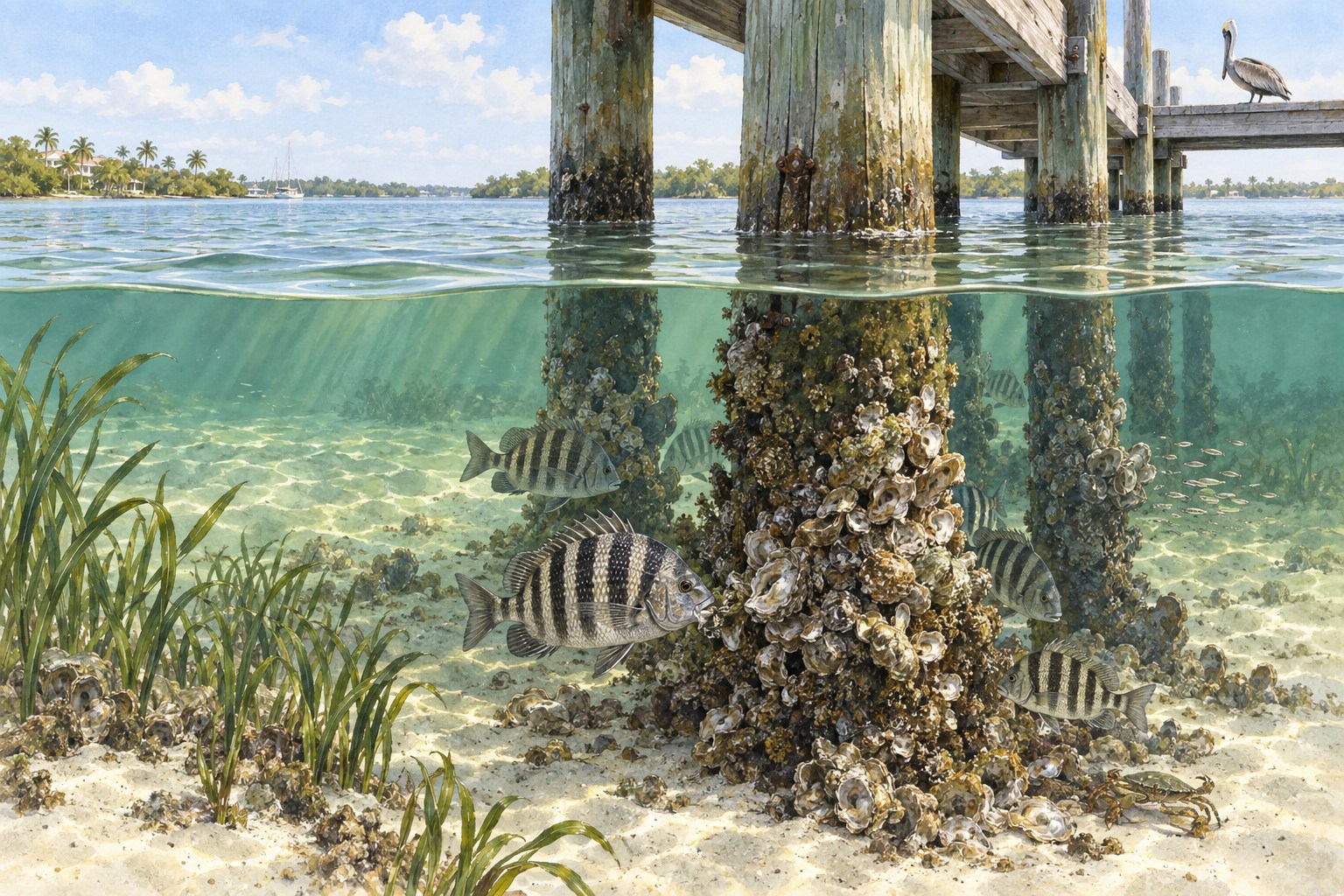
Shell growth supports small food items, which helps explain why sheepshead stay close to pilings. A bait dangling several yards away may never pass through their feeding space. Lower it close enough to be noticed while retaining a clear route back.
On more open bottom, look for a change from dark grass to pale sand. Redfish may nose along that border. Seatrout can suspend above it. A lure dragged through the grass collects weeds, while one passing just above the tops stays useful longer.
At a drainage opening, notice whether floating material is entering or leaving. Falling water can move small prey away from cover. The useful position may be the first pocket outside the opening rather than the narrowest part of the creek.
Likely targets and sensible first choices
| Fish | Area to study | Bait or lure |
|---|---|---|
| Sheepshead | Encrusted pier supports | A small shrimp or fiddler crab |
| Mangrove snapper | Shade beside structure | Live shrimp on a small hook |
| Spotted seatrout | Grass edges and sandy gaps | A paddletail swimming above grass |
| Redfish | Shallow edges with food and cover | Shrimp or a weedless soft bait |
| Snook | Warm mangrove edges and moving water | A small baitfish imitation |
Pinfish and other small residents may be the first to respond. Their bites show that the bait is being noticed, but they can also strip a large shrimp quickly. Smaller baits and a move to a different edge can help.
Make shrimp fishing more precise
Use a hook that suits the shrimp rather than the largest fish you imagine catching. Leave the bait able to move. From a pier, begin with little weight and observe its descent. Add weight gradually until you can keep it near the selected feature.
For sheepshead, maintain gentle contact and watch for repeated pressure rather than waiting for a dramatic run. For snapper, avoid burying the hook in a bulky bait. A small lively presentation in shade can be more convincing.
Over grass, a float can hold shrimp above weeds. Set the depth conservatively at first. If the hook gathers grass, shorten the distance below the float. Do not let a drifting float enter a boat lane or someone else’s casting space.
Store unused bait in the shade with good aeration if alive. Remove dead shrimp from the live supply and keep any intended cut bait chilled separately.
Explore with one soft plastic
A three-inch paddletail is a practical searching lure for open bay edges. Start with a light jig head and a steady retrieve. If the lure catches grass, raise it in the water before adding more speed. A lighter head may solve the problem more neatly.
Near mangroves, a weedless hook helps avoid repeated snags. Cast to open water beside the roots, not deep inside branches. Fish should have room to strike and turn without instantly tangling your line.
Use a medium spinning rod and roughly 10 to 20-pound braid according to the cover. Stronger tackle is useful near abrasion, but excessively heavy line can reduce the natural movement of a small lure.
Bay wind changes the plan
Boca Ciega Bay is sheltered compared with offshore water, but a long reach of wind can still produce steep chop. A comfortable morning pier can become wet and difficult to fish later. Keep bags away from the edge and watch the direction of approaching weather.
The weather and tide guide can help choose a window with moving water and manageable wind. On site, watch your line to see whether the flow matches the prediction.
Cool months can favor patient work beside structure. Warmer months widen the possibilities along mangroves and shallow edges. After a cold front, a later start may let the sun warm protected water before you arrive.
A pier outing for new anglers
Prepare a single rod before walking onto the pier. Keep hooks covered during the walk. Once in position, show a new angler how to lower the bait beside the rail without swinging it toward another person.
Begin with a small shrimp piece and a short line. Learning what the sinker feels like on bottom makes it easier to notice a fish. Count a careful release as part of the catch, and keep hands wet before touching the fish.
Use breaks to watch birds, bait and boats. Fishing does not have to mean casting continuously. Pack up if crowding, lightning or fatigue makes supervision difficult.
Use the bay responsibly
Keep discarded line out of the water and never feed hooked bait to birds. Respect marina traffic and avoid casting near people launching kayaks. A quiet area is not permission to enter private shoreline.
Before taking fish home, consult the FWC saltwater fishing regulations. Confirm both the species identification and the current local management rules.
Read the small bites at Williams Pier
Not every tap means the same thing. A quick series of tiny nips can come from small fish removing the edge of a shrimp. A slower increase in pressure may indicate a fish holding the bait. First learn what the rig feels like when it simply touches bottom.
Keep the rod in hand while learning. A rod propped against the rail may conceal light bites until the bait is gone. Use a neat small piece with the hook point exposed, then check it regularly. Replacing an empty hook with another large shrimp does not solve the underlying problem.
If the taps remain tiny, move the bait a little deeper or to another side of the same open feature. Shade and current can change over just a few feet. Avoid immediately casting far into featureless water merely because the first fish are small.
Watch how nearby boats affect the line. A wake can lift a float or briefly move a bottom rig. Wait for the water to settle before deciding that movement was a strike. Keep gear away from a wet edge while the wake passes.
For a new angler, this is useful practice. They can learn to distinguish bottom contact, current and a bite without trying to cast across the bay. Keep the session short enough that attention stays on the rod.
Afterward, note which side of the pier had the cleaner drift. That observation will help more on the next Gulfport visit than assuming every part of the platform fishes identically.
Gulfport fishing answers
Is Gulfport Beach an open Gulf surf beach?
No. It fronts Boca Ciega Bay. Plan around bay habitat and local recreation rather than ocean surf.
Is every marina dock available for fishing?
No. Boat slips and launching facilities serve different purposes. Use the designated public fishing space.
What should I bring for Williams Pier?
A manageable rod, small bait supply, pliers, drinking water and a suitable landing plan will cover a short first visit.