

SPACE / TREASURE COAST
Hobe Sound
fishing guide
Hobe Sound fishing guide comparing refuge North Beach and Intracoastal access, snook habitat, surf bait, passes and wildlife rules.
Explore the guide ↓Choose the refuge’s ocean or Intracoastal setting
Hobe Sound offers a distinctive fishing landscape with Atlantic beach and quieter Intracoastal shoreline. Nathaniel P. Reed Hobe Sound National Wildlife Refuge permits saltwater fishing in designated beach and waterway settings, while protecting important coastal habitat.
The two sides require different plans. North Beach is the Atlantic surf setting. The mainland visitor-center area leads toward the Indian River Lagoon shoreline. The photograph in this guide shows the lagoon side, not an ocean fishing beach.
Whiting and other surf fish fit a small-bait ocean plan. Snook, trout, redfish and flounder are among the fish associated with suitable refuge waters. Their presence depends on habitat and conditions rather than the name of the access.
Use the correct entrance for the water
The refuge headquarters is at 13640 Southeast Federal Highway on the mainland. North Beach is reached from North Beach Road at the northern end of Jupiter Island. Do not set navigation to the visitor center if the intended destination is Atlantic surf.
The refuge’s ocean beach parking requires an entrance pass, while the mainland visitor-center tract has a different fee arrangement. Check current pass options, hours and notices before traveling.
Use designated paths and remain within open areas. A trail reaching the lagoon does not make every nearby shoreline or private property available to anglers.
Confirm the practical route if carrying bulky gear or if mobility access is essential. Natural sandy trails can be more demanding than a paved park crossing.
Year-round access does not mean year-round harvest
The refuge describes its fishing season as year-round. That concerns the availability of the activity under refuge rules. It does not cancel seasonal closures, size limits or other rules for individual fish.
Plan the visit within current refuge hours and keep tackle attended. Temporary wildlife protection or management work can affect particular routes. Follow the posted restriction even when the fishing water beyond it looks appealing.
Pets are not permitted throughout the refuge. The published exception concerns leashed dogs on trails around the visitor center; it does not extend to the Atlantic beach. Check the current rule before bringing an animal.
Keep a fishing outing separate from any assumption of boat-launch access. Verify an authorized launch elsewhere if a craft is part of the plan.
Look for a feeding route rather than a fixed spot
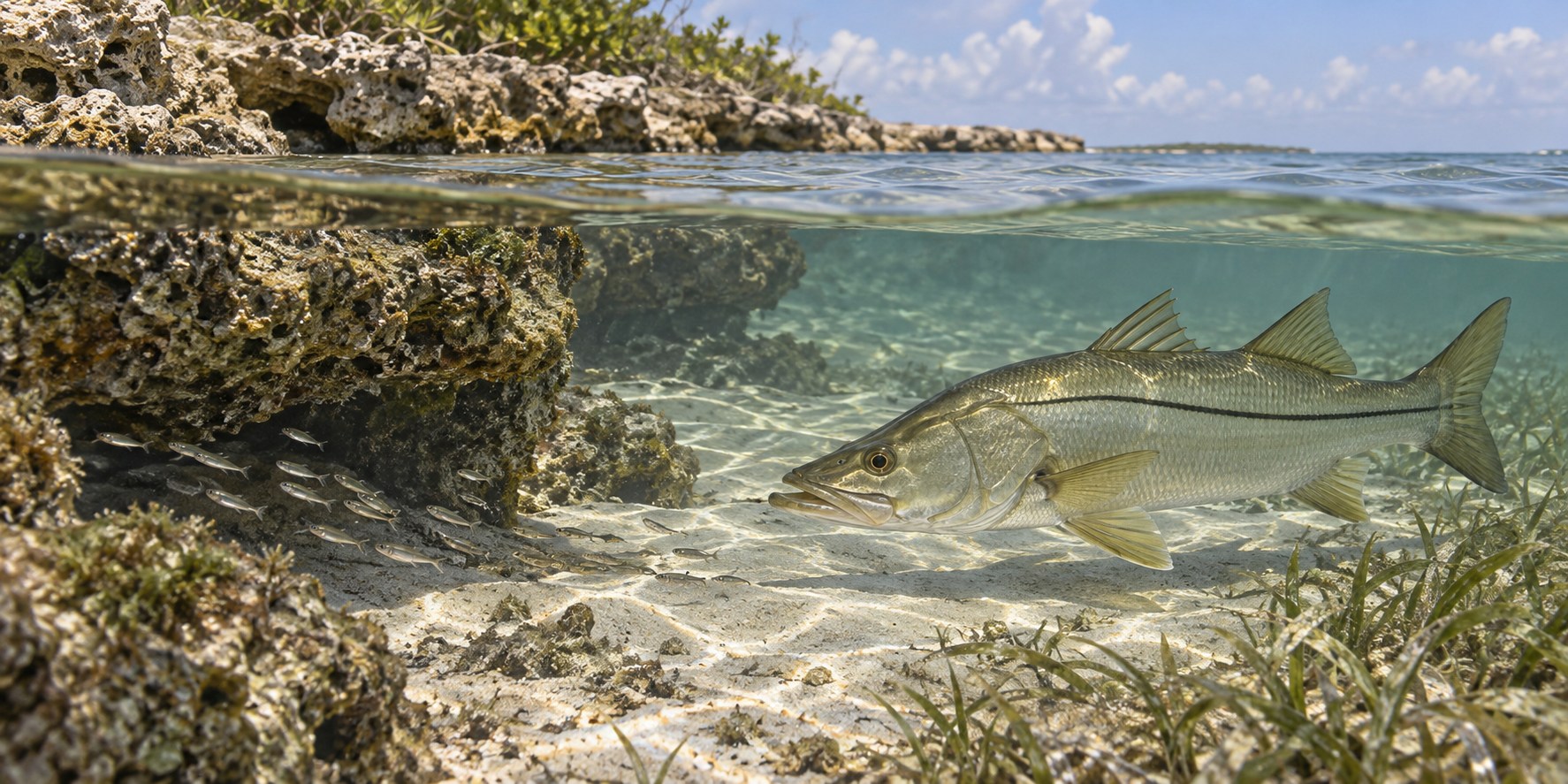
Snook can use a shoreline edge, depth change or structure to meet passing food. Watch for bait and a route the fish could follow. A well-placed lure ahead of that route is more useful than repeated casts directly onto visible fish.
A swimming presentation should remain in the useful layer without constantly hitting bottom. Change the angle or retrieve depth if it snags. Use leader that can tolerate abrasion while keeping the tackle manageable.
From a permitted shore position, guide a fish toward a safe landing area. Do not enter uncertain water or climb onto rough cover to shorten the fight.
Keep current snook regulations available and prepare for release. Support the fish and minimize time out of water rather than making the photograph the priority.
Fish the reachable lagoon edge quietly
On the Intracoastal side, look for small prey along an open lane beside cover. Spotted seatrout may feed in that water, while redfish can move along shallower boundaries.
A light swimming soft plastic allows a controlled search. Bring it across a depth edge at a steady pace, then slow the next pass if it remains clear. Repeated plant contact means the lure needs a higher path.
Live shrimp can be suspended above clutter or lightly weighted according to depth. Keep the drift within the area you can manage. Retrieve before it reaches another visitor, root tangle or obstruction.
Stay on established access and avoid stepping through habitat to gain distance. Soft mud is not a dependable walking surface, and shoreline plants should remain undamaged.
Use North Beach for a surf-specific outing
At the Atlantic access, inspect the waves and choose an open legal lane away from swimmers. A first trough may lie inside the breaking bar. Test it with a small shrimp bait before casting much farther.
Whiting can take compact pieces near the sand. Check after light taps and keep the hook point clear. If the bait disappears repeatedly, shorten it or use a firmer section.
Pompano may pass through clean moving water over sand. A small dropper rig and suitable bait are practical options. Check refuge rules before gathering bait instead of assuming collection is unrestricted.
Avoid wading through gaps in the breakers. Fish from a stable shore position and keep equipment above the active wash.
Match the setting to a focused method
| Setting | Useful focus | First presentation |
|---|---|---|
| North Beach sandy trough | Small surf fish and passing pompano | Compact bait under controlled weight |
| Permitted Intracoastal edge | Trout or redfish in suitable habitat | Light lure or shrimp above cover |
| Reachable depth change | Snook using a feeding route | Swimming lure placed ahead of the lane |
| Sand beside slower water | Possible flounder habitat | Deliberate low retrieve without snagging |
The refuge protects a range of habitats, but not every one is accessible for fishing. Use the table only within a confirmed legal position.
Use bait size to improve the presentation
A small bait that remains attached and leaves the hook clear can be more effective than a large piece that folds over the point. Match it to the intended fish and the rig rather than the size of the bait container.
Check the first few retrieves for tangles. If the bait spins in current or twists the leader, reduce its bulk and cast more smoothly. Presentation problems should be solved before assuming the water has no fish.
On the lagoon side, use only the weight needed to remain in the chosen layer. On the beach, use enough to control the surf within the rod’s rating. Those are different requirements.
Keep notes on what changed the response. A depth adjustment that produces attention is useful information even without a landed fish.
Fish as a visitor to protected habitat
The refuge supports sea turtles, shorebirds and other wildlife. Respect marked nesting areas and avoid disturbing animals. Use the designated paths so the route to fishing does not damage the habitat that supports it.
Keep bait scraps contained and do not feed birds. Pause casting if wildlife moves into the line’s path. An unattended rig can become an entanglement hazard.
Do not remove natural features or enter a closed section to improve the view. A protected shoreline is valuable beyond the immediate catch.
Carry all equipment out at the end, including small leader clippings and damaged hooks. Inspect the exact place where the bait and rod holder were used.
Choose a window that allows an easy return
Summer mornings can reduce heat, but thunderstorms need an early exit. Bring drinking water and pack so the walk back is straightforward. A natural trail can take longer with wet gear than it did on arrival.
Cooler periods may offer comfortable fishing between fronts. Wind can affect both the Atlantic and open Intracoastal water, so neither side is an automatic fallback.
Check the local weather and tide outlook before deciding. For another Martin County ocean plan, compare Stuart Beach, which has a different public-park setting.
Leave enough time to exit under the current refuge schedule. A late feeding period does not extend access hours.
Apply the fish rules as well as refuge rules
Use FWC’s current recreational saltwater guidance for licensing, seasons and harvest requirements. Refuge entry fees and year-round fishing access do not replace those obligations.
Keep a ruler and pliers ready, identify the fish carefully and support released catches with wet hands. Avoid prolonged handling on sand or hard surfaces.
Chill any legal retained fish and keep the area clean. Finish by noting which entrance, habitat and presentation suited the day, so a later visit starts with useful information.
Identify the shoreline shown in a photograph
The refuge contains both Atlantic and lagoon scenery. A calm shore beside the mainland trails does not describe wave conditions at North Beach, and an ocean image does not show the footing on an Intracoastal path. Keep photographs tied to their captions when planning the route. Use current entrance information for access, then assess the actual water on arrival rather than treating any attractive image as evidence of today’s conditions.
Hobe Sound fishing questions
Is the visitor center at the ocean beach?
No. The headquarters is on the mainland along Federal Highway. North Beach uses a separate entrance at the northern end of Jupiter Island.
Does year-round fishing mean every species is open?
No. Species seasons and harvest rules still apply in addition to refuge access rules.
Can I bring a dog onto the refuge’s Atlantic beach?
The published refuge rule does not permit pets there. The limited leashed-dog exception concerns visitor-center trails.
Does the snook illustration identify an exact fishing spot?
No. It explains a type of feeding habitat and is not a map of a particular ledge or public access.