

BIG BEND / NATURE COAST
Homosassa
fishing guide
Take a measured approach to a winding river. Fish marsh, grass and hard edges while leaving room for wildlife and a safe return.
Explore the guide ↓A WINDING RIVER WITH MARSH AND HARD BOTTOM BEYOND
Homosassa is a route to learn slowly
The Homosassa River winds from spring-influenced water toward the Gulf through a coast of marsh, islands and shallow channels. Fishing here begins with understanding that route. A familiar-looking opening between islands can lead into water much shallower than expected.
The lower river and outer estuary offer different opportunities from the wildlife-viewing areas upstream. Keep those activities separate. A place known for seeing manatees is not automatically a place to cast.
For a first visit, choose one launch or permitted shore position and a short fishing area. Learn how the current moves past an edge before trying to cover the whole river.
A named launch and realistic shore expectations
Duncan J. MacRae Public Boat Ramp, commonly associated with MacRae’s, is listed at 5300 South Cherokee Way. Confirm current fees, parking and access conditions before arriving. Organize passengers and tackle before entering the launch lane.
A boat ramp is not automatically a roomy shore-fishing platform. Keep launching and docking space clear. Use a specifically allowed fishing position and move if boat operations make casting unsafe.
Much of the attractive riverfront belongs to businesses or private homes. Ask permission where needed. Do not step onto a dock because its pilings look likely to hold fish.
Homosassa Springs Wildlife State Park is a wildlife-viewing destination, not a substitute for a public fishing bank. Yulee Sugar Mill Ruins is a historic site, not a river launch. Check the function of a destination before driving there with tackle.
Hard edges hold food and cut line
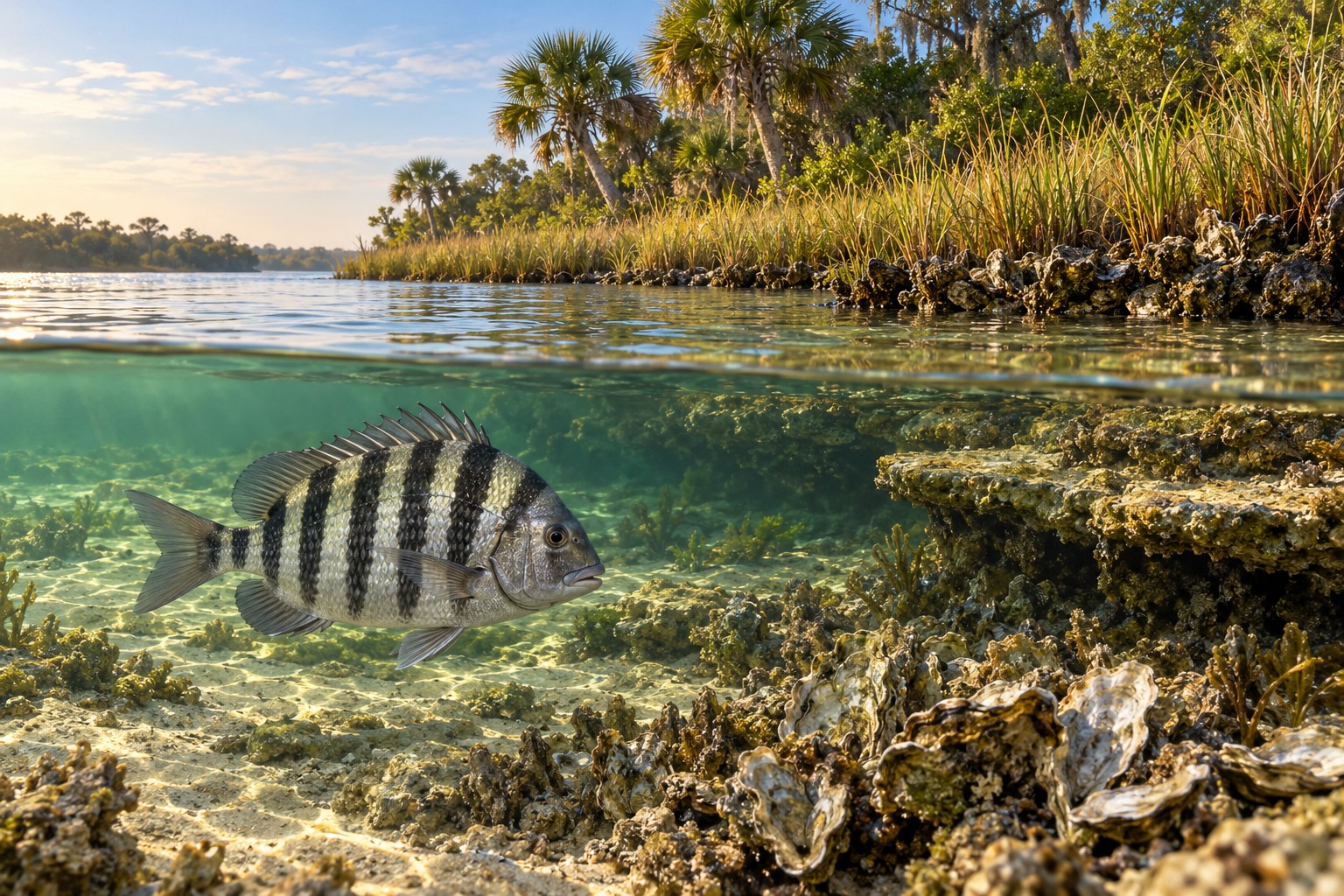
Oyster shell and limestone give small animals places to live. Fish can feed along the edge where that cover meets deeper or clearer water. The same surfaces can quickly damage a leader.
Present a bait beside the feature instead of burying it in the roughest part. Use just enough weight for control. If the rig repeatedly wedges, change the position or presentation before sacrificing more tackle.
A small crab or shrimp piece can suit sheepshead around appropriate hard cover. Keep the bait compact and the point available to hook the fish. Watch for a light tap rather than waiting only for a strong pull.
Choose a fish and the right piece of water
| Fish | Useful setting | Method to test |
|---|---|---|
| Redfish | Marsh turns, shell margins and shallow lanes | A shrimp or weed-resistant soft plastic |
| Spotted seatrout | Coastal grass beside sand and depth changes | A light paddletail kept above vegetation |
| Snook | Cover near moving water where access permits | A small baitfish imitation passed along the edge |
| Sheepshead | Hard structure and shell-rich bottom | A compact crustacean bait under control |
| Flounder | Sandy bottom adjoining a deeper route | A slow small jig near the sand |
Tarpon and other large seasonal fish require more specialized equipment and planning. They should not dictate a beginner’s tackle choice for a simple river or grass-flat trip.
Keep a grass-flat lure clean
On the outer coast, begin over a safely reachable grass edge with nearby sand. A light lure can imitate a small fish while staying above the vegetation. Use a steady retrieve first so you can understand its depth.
If the lure comes back coated in grass, reduce weight or raise its path. A weed-resistant hook arrangement can help, but it does not excuse dragging through the habitat. Change the drift if you cannot keep the presentation clean.
With shrimp beneath a float, set the bait above the bottom and inspect it often. A float that keeps catching at one point may be telling you about shallower water, not a cautious fish.
Mark the kind of feature that produces bites. A sandy pocket, marsh point and outer grass edge are different clues. Repeating the productive kind of water is better than simply fishing every dark patch.
Time the whole journey
A trip from the river to outer fishing water includes slow-speed travel, launch time and a changing tide. Do not budget only for the minutes you expect to fish. Leave enough daylight and water for the route back.
Check the tide and weather forecast before selecting an outer destination. Wind can change depth and create uncomfortable open water while the river near town remains calm.
For a kayak, choose a short route suited to your ability and wear your life jacket. Avoid committing to a return against stronger wind or current than you can manage. A quiet creek does not eliminate the difficulty of reaching it.
How the seasons change the search
Spring can make warming shore edges and coastal grass more active. Keep a nearby deeper option for days following a cold front. Watch the bait before deciding on a fast retrieve.
Summer requires heat management and attention to boating traffic. Fish a focused early session, then reassess the sky before extending the route. Never let a late bite trap you outside as storms develop.
Fall often suits a careful search along marsh edges. Try several short presentations around a point rather than racing past after one cast. Moving water and bait together are useful clues.
Winter can concentrate attention around deeper, more stable water. Respect wildlife protections and do not pursue fish into restricted areas. A slow lure at a legal depth change offers a better plan than crowding a spring sanctuary.
Make fish handling part of the setup
Keep pliers and a net close enough to use immediately. Support a fish’s body and avoid dragging it over shell. Wet hands protect its surface better than a dry towel.
Bring spare leader, a measuring board and a bag for clipped line. Inspect knots after contact with hard bottom. Small maintenance steps prevent avoidable breakoffs and abandoned tackle.
Use the Florida Fish and Wildlife Conservation Commission to verify current license, season and harvest requirements. Keep only fish that you can confidently identify and legally retain.
Distinguish a bite from rough bottom
A lure touching limestone may feel like a sharp tap. A fish may produce a similar sensation. Keep gentle contact and watch the line rather than making a hard strike every time something touches the rig.
If the contact happens in the same place on each cast, inspect the angle and depth. You may be hitting a fixed feature. Swim the lure slightly higher or bring it along the outside edge to test the difference.
Natural bait close to structure needs frequent inspection. A small fish can remove shrimp without producing a strong pull. Use a compact piece, keep the point exposed and replace bait that no longer offers much substance.
After retrieving from rough cover, check the final section of leader. A cloudy, frayed or nicked surface is a reason to replace it. Do not wait for a fish to confirm that the damage matters.
Build a river route you can use again
Separate travel observations from fishing observations. Note the marked route, slow-speed areas and places where visibility is limited around a bend. Record fishing features without treating them as safe travel lines.
Allow more time for the return than the straight-line distance suggests. Traffic, wildlife and lower water can slow the trip. A route that requires rushing to beat darkness was too ambitious for that day.
Choose an outer limit before leaving the ramp. If wind increases, shorten it. Do not let a quiet river start convince you that the exposed coast will remain equally comfortable.
Carry a river method and a grass method
A small natural-bait rig can work a suitable hard edge. A light soft plastic or float-and-shrimp rig can cover grass. Keep both simple enough to change without spreading hooks across the boat.
When switching habitats, check the weight and running depth. A rig that behaved well beside a deeper edge may drag through a shallow meadow. The adjustment is part of changing locations, not an optional final detail.
End each pass by asking what you learned. Was there bait? Did the lure stay clean? Did the drift remain over safe water? The answers help choose the next small move and prevent an aimless search through unfamiliar channels.
Leave the best-looking private dock alone unless you have permission. Good fishing knowledge includes access boundaries as well as fish habitat. A lawful, repeatable outing is more useful than a catch obtained from the wrong place.
Homosassa fishing questions
Can I fish anywhere along the riverbank?
No. Many sections are private or serve other uses. Begin with a designated public access or explicit permission.
Is the spring wildlife park a fishing access?
Do not use it as one. Build the fishing trip around appropriate river or coastal access instead.
Why does my leader keep breaking near the bottom?
Shell and rock can abrade it. Change the angle, avoid dragging through rough cover and replace damaged leader before another cast.
Does a calm river mean the Gulf is calm?
No. Sheltered river conditions can hide stronger wind and rougher water outside. Check the full route’s forecast.