

TAMPA BAY / SUNCOAST
Indian Rocks Beach
fishing guide
Learn to read the first beach trough, choose simple bait and make a practical shore-fishing plan for Indian Rocks Beach.
Explore the guide ↓A beach where the first trough matters
Indian Rocks Beach rewards anglers who look closely at shallow water. You do not need to throw a bait halfway to the horizon. Whiting often feed just beyond the wash. Pompano work sandy cuts. During warm months, snook can travel along the beach so close that a long cast passes over them.
The Gulf shore is the simplest starting point for a visitor. The Intracoastal side has a different character, with docks, seawalls and private property. Seeing fish beside a waterfront home does not give you access to its dock. Decide which public entrance you will use before carrying your tackle across the island.
Where to enter and where not to launch
The city lists 17 beach access points. Parking arrangements differ between them. Some spaces need a resident decal, while other spaces use paid visitor parking. Read the actual sign beside your vehicle. A vacant resident space is not a visitor space simply because it is early.
The county beach access at 1700 Gulf Boulevard is a useful place to begin planning. Carry only what you can comfortably move along the sand. Cross dunes on the provided walkover. Once on the beach, choose an open section with enough room behind you to cast safely.
The 15th Avenue boat ramp is not a general visitor launch. City information restricts it to residents and property owners with the required city decal. Visitors bringing a trailer should choose an authorized public ramp elsewhere and check its parking rules before setting off.
Indian Rocks Beach Nature Preserve offers a look at the island’s mangrove habitat. Treat its boardwalk as a nature facility, not an assumed fishing pier. Use a rod there only where signs or city staff clearly permit fishing. That distinction matters on a shoreline with many attractive but unsuitable casting spaces.
Read the sand before you cast
Stand above the wet sand and watch several sets of waves. White water usually marks a shallower bar. A smoother, darker lane between that bar and the beach may be a trough. Fish use the trough as a feeding route because waves wash shrimp, small crabs and shellfish into it.
A break in the line of white water can show a gap in the bar. That gap may concentrate food, but it can also carry a strong outward current. Fish it from dry sand. Do not walk into the gap to gain casting distance.
On a flat, clear morning, look for tiny baitfish scattering along the edge. A single wake following them may be more useful than a flock of birds far offshore. Walk slowly and cast ahead of moving fish. Repeated casts directly onto a visible snook usually end the opportunity.
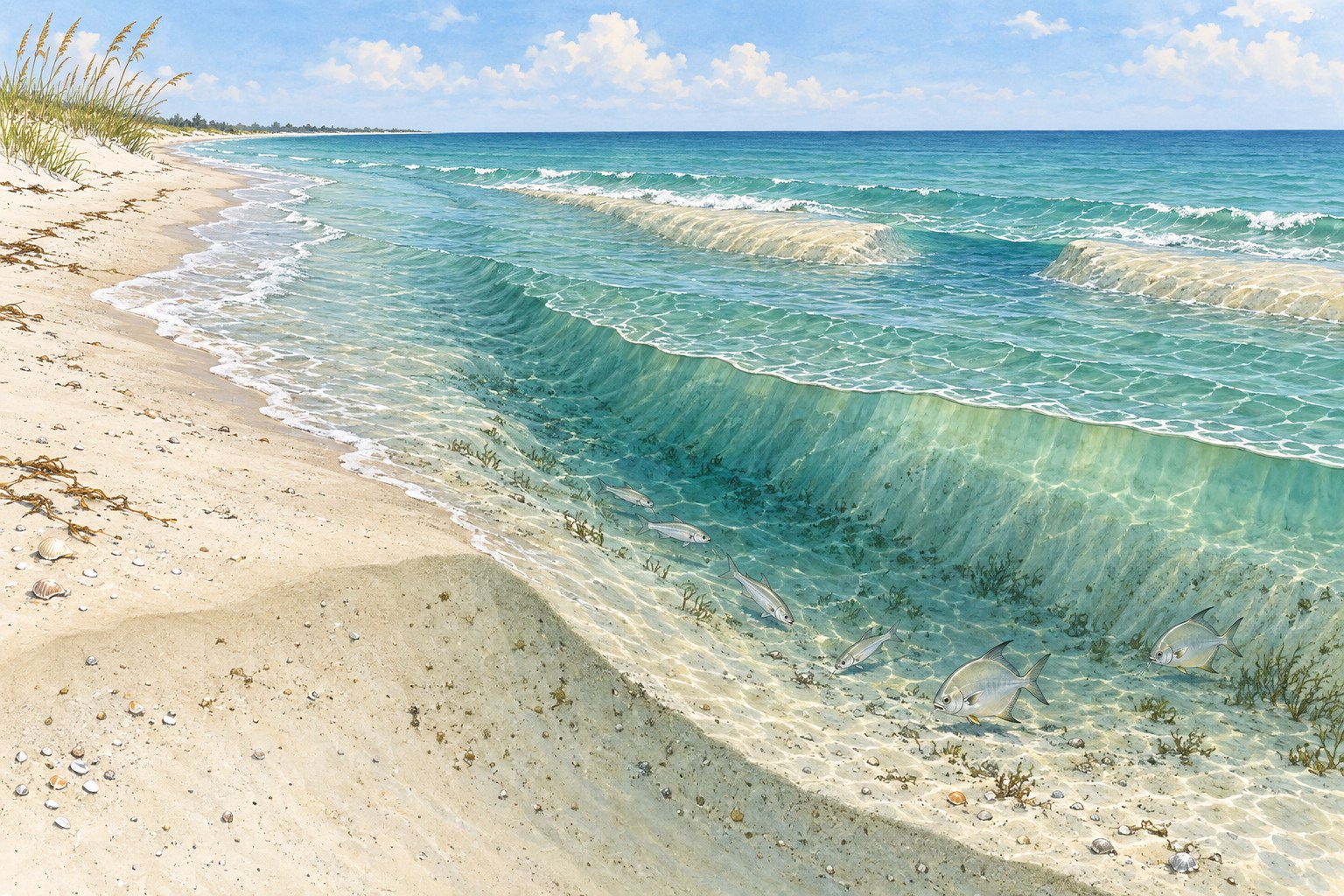
Fish to look for along Indian Rocks Beach
| Fish | Useful clue | First offering |
|---|---|---|
| Whiting | Small waves stirring the first trough | A small piece of fresh shrimp near bottom |
| Pompano | Clean moving water over sandy bars | Sand flea, shrimp or a compact pompano jig |
| Snook | Bait schools tight to the beach in warm weather | A small paddletail or lively baitfish |
| Spanish mackerel | Fast surface strikes beyond the trough | A slim metal lure retrieved briskly |
| Ladyfish and jacks | Repeated splashes and bait pushed toward shore | A small spoon or soft plastic |
These are possible targets, not a promise that all will be present together. A dirty surf after a front may suit bottom fishing better than sight casting. Very clear, still water often calls for a smaller lure and a lighter approach.
Build a simple beach bait kit
Fresh shrimp is a practical starting bait because you can adjust its size. Use a small section for whiting. Leave a whole shrimp for a larger bite when small bait thieves are less active. Keep the rest chilled in a separate container, rather than warming the whole supply on the sand.
Sand fleas can suit pompano, but you should not spend your entire fishing window searching for them. Look for small disturbances in the retreating wash. If they are scarce, shrimp is a sensible fallback. Collect bait only where permitted, and stay clear of marked wildlife areas.
For bottom fishing, a short leader and a small hook often outperform a bulky rig covered in bright beads. Add only enough sinker weight to keep the bait from washing into neighboring swimmers or anglers. If every wave buries the rig in weed, move to a cleaner stretch instead of adding more lead.
A second rod is useful only when you can watch it closely. On a busy beach, one attended rod is easier to manage and leaves fewer loose hooks where people walk.
Work a lure along the beach
A seven-foot spinning rod with roughly 10 to 15-pound braid handles many light beach situations. Start with a fluorocarbon or monofilament leader suited to the target. Around open sand, 20-pound leader may be enough; snook or abrasive structure may require a stronger section. These are starting points, not fixed rules.
Cast a small paddletail diagonally along the trough. Retrieve it slowly enough to remain below the chop without dragging constantly. If you feel sand on every turn, lift the rod tip or use a lighter jig. When fish follow without striking, reduce lure size before changing to something louder.
Keep a small metal spoon ready for mackerel. Cast beyond the moving school and bring the lure through its edge. Their teeth can cut ordinary leader, so inspect it after each bite. Retrieve a lure before birds dive onto it, and pause fishing if they keep targeting your casts.
Choose a useful time window
Spring often brings a wider mix of moving bait and coastal predators as the water warms. Summer favors early beach walks for snook, before heat and swimming crowds build. Fall can produce brief feeding bursts as bait schools move along the coast. Winter calls for more patience, with whiting and occasional pompano worth considering during settled weather.
Wind can matter more than the name of the season. A light offshore breeze may flatten the Gulf enough to see fish, but it can also push floating gear away from land. An onshore wind brings surf and may cloud the water. Strong wind, lightning or rough shorebreak is a reason to change plans.
Use the local tides and weather page to compare the likely tide window with the wind forecast. Then watch the beach itself. A tide prediction does not show whether floating weed has filled your chosen trough.
A practical two-hour beach session
Arrive with a parking plan and spend ten minutes walking without casting. Identify one trough, one bar opening and a stretch without swimmers. Pick the safest of those opportunities, rather than the one requiring the longest cast.
Fish a small shrimp bait for about twenty minutes while watching for baitfish. If the bites are tiny and constant, shorten the bait and hook gap. If nothing happens, move a modest distance to a different piece of bottom. Change one thing at a time so you learn whether location, bait or depth made the difference.
When a school appears, put the bait rod securely away before picking up a lure rod. Do not leave a hooked bait unattended while chasing surface activity. Finish by checking the sand around your bag for clipped line and hooks. A short outing can teach you more than several hours spent in one empty patch.
Share a small beach well
Keep casting lanes well away from beach chairs and waders. Fishing before the main beach crowd arrives gives you room, but does not remove your responsibility to stop when people enter the area. Carry fish back to the water promptly, supporting larger fish horizontally with wet hands.
Sea turtle nests and shorebird protection zones can change the space available during the year. Stay outside marked areas and keep loose line packed away. If a bird approaches your bait bucket, cover the bucket rather than feeding it scraps.
Review the FWC saltwater fishing rules for licensing, current species limits and permitted gear. A fish being easy to catch does not make it legal to keep.
When the beach looks empty
A quiet surface does not mean the trough has no life. Bottom-feeding fish can take small baits without chasing anything above water. Give a carefully placed shrimp time to work before deciding the entire beach is unproductive.
If your bait comes back untouched, test the edge of the trough instead of its center. If it comes back missing, shorten the bait and pay closer attention to light taps. If the rig returns buried in weed, move along the beach until you find cleaner water. Each result suggests a different adjustment.
Do not judge the whole outing from the first cast. A useful Indian Rocks session can be a sequence of small tests along one public stretch, with each test helping you understand the sand.
Common Indian Rocks Beach questions
Do I need a boat for useful fishing here?
No. The Gulf beach provides a straightforward shore option when conditions and beach activity leave a safe casting area. A boat opens different water but also adds launch restrictions and weather decisions.
Is a very long surf rod necessary?
Often it is not. A manageable spinning rod can reach the first trough and work small lures. Use heavier surf gear only when the conditions and sinker weight actually call for it.
Can visitors use the city boat ramp?
The 15th Avenue facility requires the appropriate local authorization. Arrange a different public launch if you do not qualify.