

TAMPA BAY / SUNCOAST
Indian Shores
fishing guide
Choose between Gulf sand and the Intracoastal edge, with clear advice on access, current, bait and a manageable first outing.
Explore the guide ↓Two shorelines on a narrow island
Indian Shores places the Gulf and the Intracoastal Waterway close together. They ask for different fishing decisions. The beach is a place to search sand troughs and moving bait. The inland water holds deeper boat lanes, seawalls and small pockets of sheltered shoreline.
Choose the side that fits your experience and the day’s conditions. A calm-looking channel can carry more current than an open beach. A smooth Gulf can become unsuitable once swimmers fill your casting space. The best choice is the water you can reach legally and fish without crowding anyone.
This guide focuses on light shore fishing and careful exploration. It does not assume that condominium docks, roadside seawalls or every waterside boardwalk are public fishing access.
Plan around the public entrances
The town’s access information identifies the Town Square Nature Park area at 191st Avenue, with metered parking and restrooms. Tiki Gardens provides another useful beach access area farther south. Check the entrance signs for the permitted uses and parking period before unloading.
Town Square Nature Park has an 800-foot boardwalk leading to a fishing pier. Use the designated fishing area, keeping the walking route clear. The town also lists restrooms and covered pavilions. Check for any repair notices before visiting, and give people watching the water enough room to pass without stepping around hooks or loose line.
The county’s Park Boulevard boat ramp is a separate facility from the town’s beach entrances. A car space beside a beach walkover does not serve as trailer parking. If launching, verify the ramp’s current operating condition, parking charge and return arrangements before towing to Indian Shores.
Keep your load compact. A shoulder bag, one rod, a small bait container and drinking water are easier to move between the island’s limited public spaces than a large cart. Public access can be busy long before the beach looks crowded.
Understand the inland water
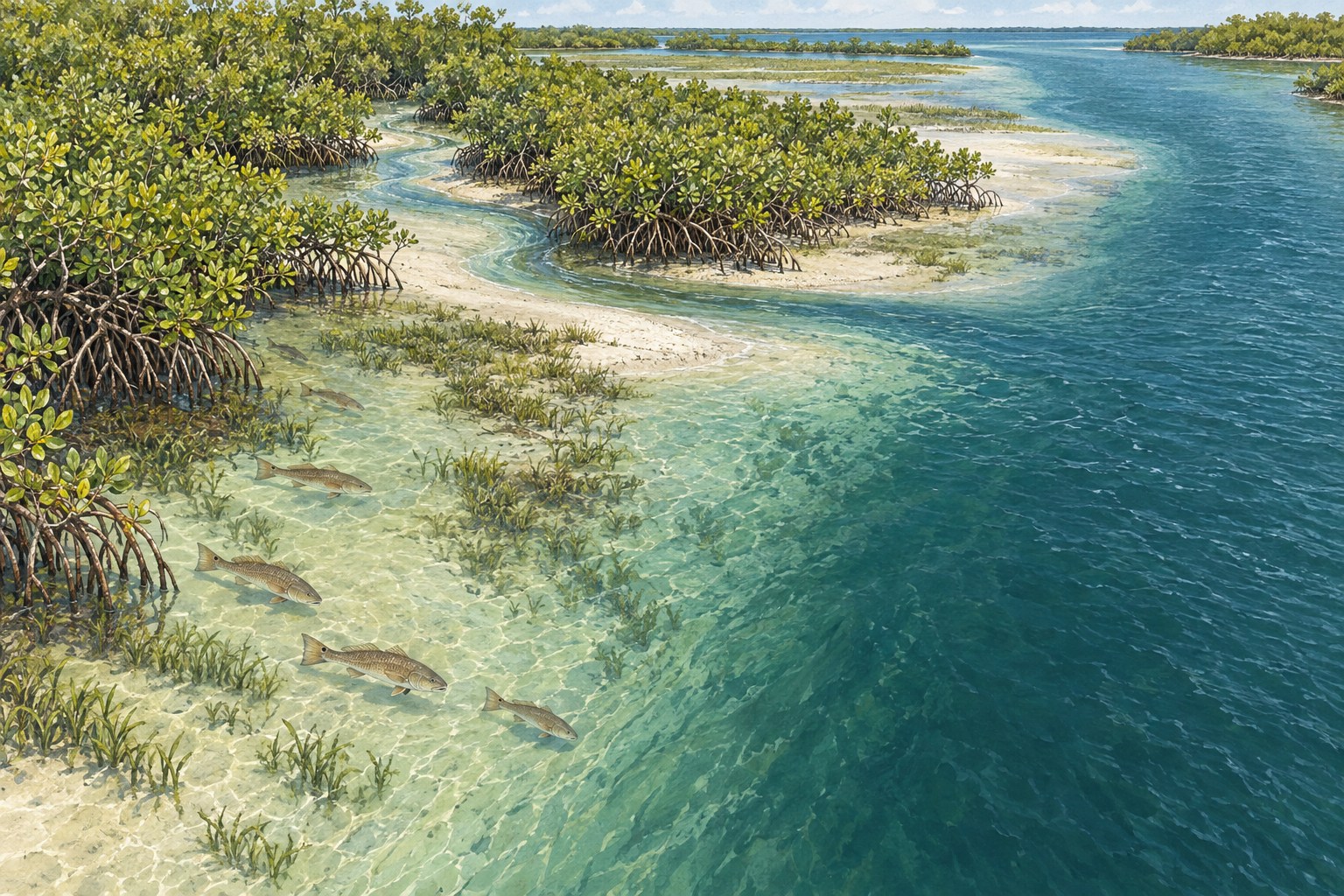
The Intracoastal has a working boat channel. Its darker center is not a place to wade, anchor a small kayak casually or cast across passing traffic. Focus instead on the edges where a shallow shelf meets deeper water and where bait can gather without being swept through the busiest lane.
Watch floating leaves or foam to see the real direction of flow. Water can turn later inside the waterway than a Gulf tide table suggests. A bait dropped straight down may swing under a dock or into a mooring line if you have not watched the current first.
A small drainage opening beside mangroves is worth studying. On falling water, shrimp and tiny fish may leave the flooded roots. Predators can wait just outside. Cast to the open edge, not into roots where hooks snag and retrieving them damages vegetation.
Find a productive Gulf-side lane
Indian Shores has long sandy stretches, so subtle changes matter. A small dip in the beach, an area with more shell fragments or an interruption in breaking waves may point to different bottom. Walk past featureless water until you find something to test.
For whiting, keep the bait low and close. For pompano, explore the sand beyond the first wash when you can do so without crossing another person’s space. Neither approach requires standing in the surf. Remaining on dry sand makes it easier to notice waves, walkers and your other equipment.
Warm clear mornings may reveal snook traveling along the beach. Let a visible fish come into range rather than following it quickly. A lure landing well ahead of its path is less alarming than one dropped beside its head.
Match your target to the side of the island
| Setting | Possible fish | Useful approach |
|---|---|---|
| Gulf wash and trough | Whiting, pompano | Small shrimp bait held near sandy bottom |
| Clear summer shoreline | Snook | A light soft plastic placed ahead of traveling fish |
| Channel-side structure | Sheepshead, mangrove snapper | Shrimp lowered into an open pocket beside cover |
| Shallow inland edge | Redfish, spotted seatrout | Slow paddletail or shrimp presented above the bottom |
| Fast surface feeding | Jacks, ladyfish, Spanish mackerel | A small metal lure kept moving through the school |
Fish the habitat you actually have in front of you. A bag of fiddler crabs makes little sense on open sand if your plan was to find sheepshead beside a closed dock.
Carry two useful presentations
One presentation can cover sandy beach bottom. Use a small hook, a short bait and sufficient lead to resist the ordinary wash. Keep the sinker light enough that you can cast it accurately. If heavy surf demands tackle beyond your rod’s rating, choose another time.
The other presentation can cover quieter inland water. A shrimp under a small float lets you set the bait above snaggy bottom. Start shallow, then adjust after watching how much depth you have. Keep the float out of navigation lanes and reel in early for boats.
Do not assume chumming or shark fishing is allowed simply because someone nearby is doing it. Indian Shores has local beach and fishing rules in addition to statewide regulations. This guide recommends ordinary small-bait and lure fishing, with posted restrictions taking priority.
For artificial lures, pack one natural-colored paddletail and one brighter version for stained water. Carry spare jig heads in a few light weights. Changing depth and speed usually teaches you more than replacing the lure every third cast.
What changes through the year
Cool weather can make inland structure attractive for sheepshead. On the beach, a mild spell after rough weather may give bottom feeders a chance to settle back into a trough. Cold fronts can remove water from the shallows, so yesterday’s shoreline route may not work today.
As spring warms the Gulf, watch for small bait schools and quick visits from mackerel. Summer puts more emphasis on dawn, shade and short sessions. Snook may be visible along the beach, but spawning fish deserve careful handling and a prompt release.
Autumn offers moving bait and changing winds. A good tide window can be brief. If the beach is full of floating weed, use the time to inspect a legal inland option or return on a cleaner day instead of spending hours clearing hooks.
Use wind and tide together
Look at the area weather and tide outlook before leaving. Select the nearest relevant location, then compare the forecast with what you see at the water. Tide height alone says little about the chop crossing a narrow channel.
A crosswind can pull a large bow into light line. Lower the rod tip and shorten the cast to regain contact with the bait. If you cannot keep your tackle within a safe space, end the session. More weight does not solve every wind problem.
Thunderstorms can arrive while the Gulf still looks inviting. Identify shelter before you start and leave exposed water when thunder is heard. A beach umbrella does not provide lightning protection.
Make a short visit count
For a first outing, choose either beach bait fishing or a legal inland fishing position. Trying to learn both in one hour usually means more time carrying gear than watching fish.
At the beach, make three controlled casts at different distances. Keep the bait type the same. A bite close in tells you more than repeatedly casting maximum distance into empty water. Once a distance works, fish a small section thoroughly.
From an inland position, begin with a single bait in the quieter side of the current. Note whether it stays in place, drifts naturally or immediately snags. Move the presentation a few feet before adding weight. If every cast catches bottom, use a float or select a cleaner patch.
Write down which side you fished, the wind and the stage of water movement. Those simple notes make a return visit far easier to plan than a list of lure brands.
Protect the shoreline you came to enjoy
Indian Shores supports nesting wildlife as well as beach recreation. Keep rods, bags and footprints outside marked nesting zones. Do not leave bait on the sand where gulls can swallow hooks or become conditioned to approach anglers.
Use wet hands for fish and avoid laying them on hot pavement. Carry line scraps in a closed pocket until you reach proper disposal. On a confined boardwalk, stop fishing when your activity prevents safe passage.
The state saltwater regulation guide from FWC is the place to check license requirements and current harvest rules before keeping a catch.
Solve one problem at a time
A beach rig rolling continually is a holding problem. A shrimp disappearing beside a dock is a bait-size or small-fish problem. A lure collecting grass is a depth problem. Treating all three by adding a heavier sinker makes the fishing harder to understand.
At Indian Shores, the short distance between coast and waterway makes switching sides tempting. First decide whether the problem is local to your position or affects the whole side. A single weed-filled trough may have cleaner water nearby. Strong surf along the entire beach is a better reason to inspect another permitted option.
Leave time to walk back before the parking period ends. Rushing through a public entrance with exposed hooks is an avoidable way to spoil an otherwise relaxed outing.
Before your first visit
Is Indian Shores the same place as Indian Rocks Beach?
No. They are neighboring municipalities with separate facilities and local rules. Check the correct town when planning access.
Which side is better for a beginner?
A quiet, gently breaking Gulf beach with room to cast is often simpler than a busy channel. Rough surf or crowds can change that choice.
Can I fish from a rental property’s dock?
Only if the owner allows it and the location permits fishing. Rental access does not automatically include a dock, boat slip or neighboring seawall.