
TAMPA BAY / SUNCOAST
Madeira Beach
fishing guide
Understand the difference between fishing open beach sand and working a safe current edge near busy John’s Pass.
Explore the guide ↓Fish a working pass and a sandy coast
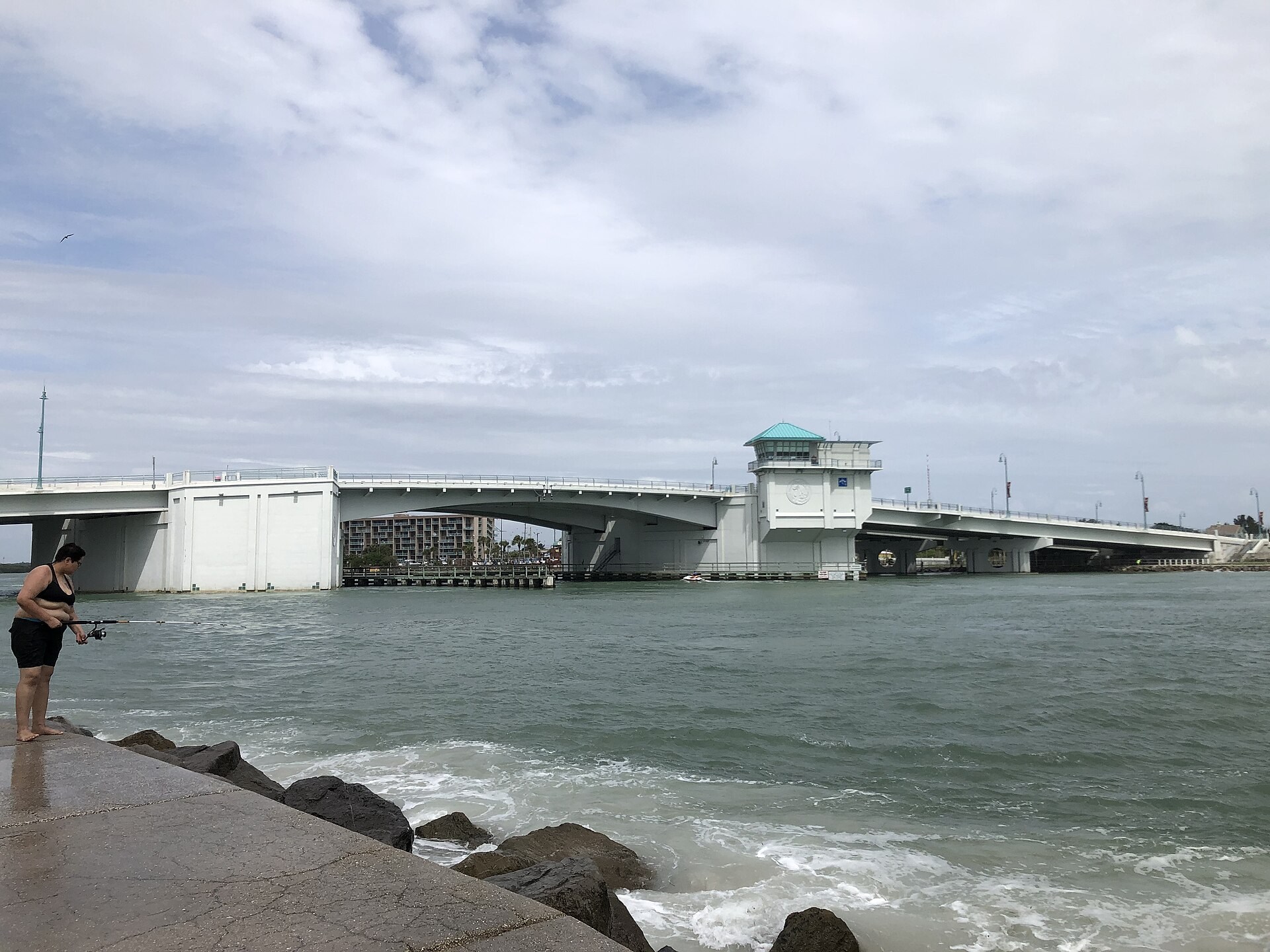
Madeira Beach offers a sharp contrast between open Gulf sand and John’s Pass. On the beach, fish often spread along shallow troughs. At the pass, moving water collects bait beside structure. The pass also carries heavy boat traffic, which makes careful position and line control essential.
Do not choose a fishing spot only because the water looks deep. Choose somewhere with legal access, secure footing and a safe place to land a fish. A bridge, restaurant deck or marina walkway is not automatically a public fishing platform.
For a relaxed first visit, a quiet beach session or a confirmed open public fishing pier is more manageable than the middle of the inlet. Keep the fast channel for observation until you understand how boats, wakes and tidal flow share the space.
Three kinds of water to consider
The Gulf beach
The sandy coast can suit whiting, pompano and seasonal snook. Public beach entrances provide access, but fishing still needs room away from swimmers. Watch the shorebreak before committing to a spot. A shallow gutter just off the sand may hold more food than the water beyond a distant bar.
John’s Pass
The inlet joins Boca Ciega Bay with the Gulf. Observe the edges of current, not just the center. Fish may hold behind a piling or along a drop while bait passes nearby. Use only designated, open fishing positions. Keep lines out of the marked boat route and recover a drifting rig before a vessel reaches it.
City fishing facilities
Madeira’s recreation area around R.O.C. Park is another place to check for public fishing access. Confirm the current status of its pier before arranging a family outing. Storm work can affect a small dock even when the surrounding park is open. Bring your own basic bait and tackle unless a current operator confirms supplies.
Find the slower water beside the flow
A piling splits the current. Water pushes against its upstream face and curls around the sides. Behind it, there may be a softer pocket. A bait that swings into that pocket can remain within reach of a waiting fish longer than one dragged through the main stream.
First watch a leaf or foam patch travel past the structure. Then make a short cast that lets your bait move naturally toward the edge. You should be able to retrieve before the hook reaches a snag. Casting farther upstream is not helpful if it simply sends your line under another angler.
When the flow becomes too strong to keep the rig in a safe lane, pause or move. The quieter period near a current change can offer better control. Tide height and current speed are related, but their timing is not identical at every position around the bridge.

Build your plan around the fish
| Target | Where to concentrate | Presentation |
|---|---|---|
| Sheepshead | Barnacle and oyster growth on permitted structure | A small crab or shrimp close to the piling |
| Mangrove snapper | Shade and cover with manageable flow | A lively shrimp on a small hook |
| Snook | Pass edges and warm beach shallows | Baitfish or a paddletail along the current boundary |
| Spanish mackerel | Bait schools in open water | A narrow spoon moved steadily |
| Whiting and pompano | Gulf-side sand troughs | Small natural bait fished near bottom |
Not every structure produces the same mix. If tiny snapper take each shrimp immediately, change depth or position rather than assuming a heavier sinker will bring larger fish.
Use tackle you can control
A medium spinning outfit with 15 to 20-pound braid is a workable starting point around light structure. Leader strength should reflect abrasion and the fish you expect. A 20-pound leader may be sufficient over open sand; rough concrete and snook often justify a stronger leader and closer inspection.
Keep hooks small enough for the bait to move. An oversized hook can make a shrimp spin in the flow. Add a little weight only when needed to reach the chosen depth. If your rig slides beneath a pier immediately, move the presentation away from the piling rather than pulling harder each time.
A landing net is useful where allowed and practical. Decide how you will land a fish before dropping a bait from a high platform. Hoisting a large fish by its line risks breaking the tackle and injuring the fish.
Keep spare leaders ready. Concrete, oysters and mackerel teeth can damage line quickly. Feel the final section after a snag or landed fish and replace anything rough.
Make each bait do a job
Shrimp is the flexible choice for a mixed catch. Near cover, hook it lightly and let the current move it into an open pocket. For small beach fish, a neat piece of shrimp is often better than a whole bait with loose appendages.
Fiddler crabs can interest sheepshead, but a bucket of crabs does not replace accurate placement. Lower one beside the feeding surface and maintain gentle contact. Learn the difference between the sinker touching structure and a repeated bite before lifting firmly.
Small live baitfish suit predators when you have the right hook and a way to keep the bait healthy. Avoid gathering more than you need. If baitfish are scarce, a slim soft plastic gives you a repeatable presentation without a crowded livewell.
Leave large chumming operations out of a casual public fishing visit. They can attract birds and create conflicts in a confined area. Ordinary light tackle gives you plenty to learn here.
Read the season without expecting a schedule
Winter often shifts attention toward structure and slower presentations. Sheepshead can be a sensible target when the beach is windy. A warm afternoon may be more comfortable and productive than a cold dawn after a front.
Spring brings more bait movement and opportunities for mackerel. Summer can put snook along the coast, though crowded beaches make early sessions easier to manage. Fall feeding activity may follow bait schools, with jacks and mackerel appearing and disappearing quickly.
These broad patterns should guide tackle choices, not harvest decisions. Closed seasons, size limits and regional rules can differ from the periods when fish are present.
Plan a visit with a second option
Check the HookCurrent tide and wind forecast, then choose a primary location and a nearby fallback. A beach plan needs a pier or bay option only if that facility is confirmed open. A pass plan needs an alternative if current or crowding makes safe fishing impossible.
Budget time for parking and walking. Carry drinking water, pliers, line cutters and a small towel for wet hands. Keep the tackle bag closed around birds. The bridge and waterfront are busy public spaces, so an organized setup matters as much as your lure choice.
For the first half hour, fish one depth and watch other activity. If your bait is repeatedly swept into a hazard, change location immediately. If it drifts safely but receives no interest, try another depth before replacing every piece of tackle.
Keep fish and people out of trouble
Do not cast toward moving boats or pedestrians. When someone approaches behind you, lower the rod and wait. Avoid leaving rods across walkways, even for a moment while taking a photograph.
Release unwanted fish promptly with wet hands. A snook needs support under its body, not a vertical hold by the jaw. If a bird takes a bait, stop reeling violently and seek appropriate wildlife help rather than cutting away a long trailing line.
Use the FWC recreational saltwater rules to verify licenses, legal tackle and the current limits for the species you intend to keep.
Practice a safe current drift
A useful pass-side exercise begins without a long cast. From a permitted position, lower the rig a short distance into clear water and observe how quickly it moves. Retrieve before it reaches cover. This shows whether your chosen weight and line angle are manageable.
Next, place the bait slightly upstream of the intended pocket. Let it travel toward the feeding area while keeping a clear retrieval route. If the rig crosses another line, the angle is wrong for that position even if the bait looks natural. Shorten the drift and stay within your own lane.
When a fish takes near structure, apply steady pressure toward open water. Avoid locking the drag completely. A sudden run can break a damaged leader or pull the hook free. Your landing plan should already be ready, including a net where practical.
If several attempts end in the same snag, stop feeding tackle into it. Shift to the outer edge or move to beach sand. Losing repeated hooks leaves hazards behind and rarely teaches anything new.
The beach fallback uses a different observation. Watch where each wave breaks and where the water smooths out. A small natural bait in that smoother trough can be a more controlled option than continuing to fight a fast pass.
Keep a brief record of the direction of flow, the amount of weight used and whether the bait reached the intended pocket. On a later visit, those details help you recognize a manageable current window before you unpack the whole kit.
Madeira Beach fishing questions
Should I fish the beach or John’s Pass first?
Start on a calm beach if you want a simple introduction. Choose a permitted pass-side position only when you can manage the current and boat traffic.
Can I cast from the whole village boardwalk?
No general permission should be assumed. Businesses, docks and public walking areas have different rules. Look for an expressly permitted fishing area.
What if the water is too fast for my sinker?
Move to a quieter edge or wait for a weaker stage of flow. Adding more lead can overload your rod without solving the unsafe drift.