

FLORIDA KEYS & EVERGLADES
Islamorada
fishing guide
Choose a flats, backcountry or Atlantic trip. Learn quiet bonefish approaches and which public beaches prohibit fishing.
Explore the guide ↓Choose flats, backcountry or Atlantic water
Islamorada sits between very different fishing landscapes. Shallow flats invite a careful search for bonefish and permit. Bayside mangroves and channels support backcountry fishing. On the Atlantic side, legal reef areas and offshore water require a suitable boat and a much broader weather decision.
Those choices should not be combined into one vague plan. A visitor with a kayak needs a protected route and a lawful launch. An offshore angler needs sea conditions, fuel range and equipment appropriate to open water. A shore visitor needs an actual permitted fishing position, which is more limited than the amount of visible water suggests.
Begin by deciding what kind of day you can manage comfortably. Then choose the target and tackle. The famous name of the area does not make every beach a fishing access or every nearby reef open to harvest.
Public parks are not all fishing parks
The village’s park information specifically prohibits fishing at Anne’s Beach and Library Beach. Do not bring a rod to those swimming and recreation areas expecting to find an exception at the far end.
Green Turtle Hammock Nature Preserve, near mile marker 81.2 on the bayside, lists kayak access. Plantation Tropical Preserve near mile marker 90.8 also provides a paddling starting point. Check the current hours, launch arrangement and permitted activities at the exact property.
A kayak launch gives access to a route, not permission to fish every adjacent shoreline. Respect private docks, protected habitat and posted limits. Confirm that the chosen launch suits your equipment and that you can return before closing.
For motorboats, arrange a proper ramp or marina and parking. The roadside Fills and older informal access descriptions should not be treated as dependable current launch instructions. Use a facility that confirms access for your trip.
Learn what a feeding flat looks like
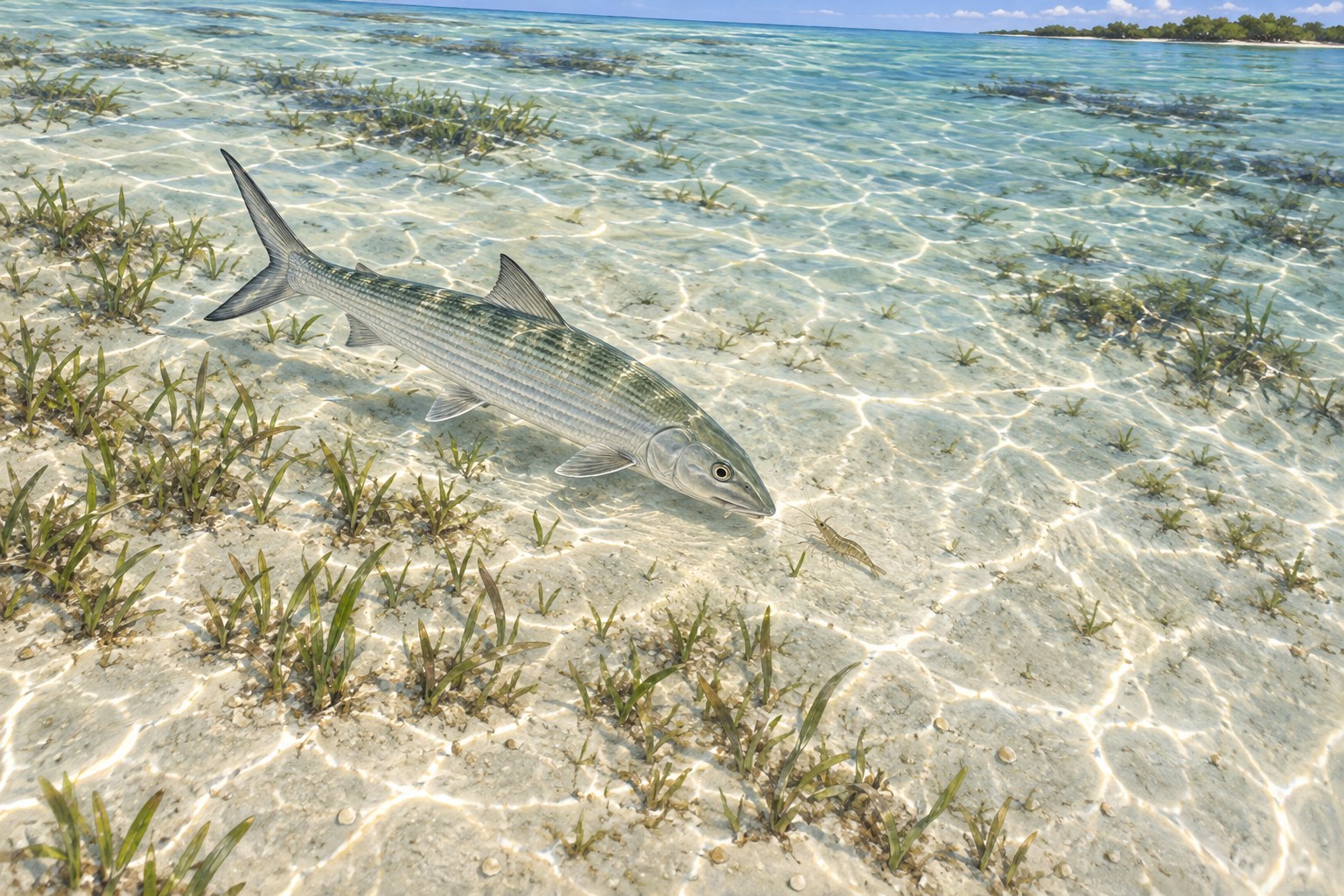
A flat is shallow water over sand, grass or mixed bottom. Its value changes with depth, tide, temperature and food. Bonefish may search for small crustaceans while remaining difficult to see against the bottom.
Look for movement rather than a perfect fish outline. A shadow crossing pale sand, a brief flash or a push of water can reveal a fish. Stop moving and establish its direction before casting.
Present a small shrimp or crab imitation ahead of the fish. Let it settle where the fish can encounter it naturally. A lure splashing on the fish’s back often turns a good sighting into a disappearing wake.
Match the target to the equipment
| Target | Water to consider | Starting approach | Important limit |
|---|---|---|---|
| Bonefish | Legal shallow sand-and-grass flats | Quiet sight casting with a small shrimp imitation | Avoid chasing fish across living grass |
| Permit | Suitable flats with feeding room | Accurate crab-style presentation | Expect a demanding target that may refuse good casts |
| Mangrove snapper | Permitted roots or structure beside depth | Small shrimp or cut bait on controlled tackle | Identify the snapper before keeping it |
| Tarpon | Channels with space and appropriate access | Tackle matched to the fish and a release plan | Do not use an undersized outfit for a prolonged fight |
| Yellowtail snapper | Legal Atlantic reef habitat | Boat-based presentation suited to current | Check sanctuary boundaries and sea conditions first |
This is a menu of distinct trips. A single light spinning outfit from a park launch does not safely cover all of them.
Accuracy matters more than repeated casts
Clear shallow water gives fish time to inspect both the lure and your approach. Keep movements slow and avoid hull noise. Have the lure ready before entering the area where you expect a sighting.
Practice a manageable cast with the actual rig before the trip. Knowing where the lure will land is more valuable than being able to reach a great distance once in several attempts.
If a fish changes direction, wait for a useful angle. Pulling the lure across its back or rushing a second cast can create more disturbance than opportunity. A missed chance is better than driving a kayak onto the flat to pursue it.
When glare makes sight fishing difficult, change the viewing angle or move to a legal channel-edge approach. Do not keep casting blindly into a protected or uncertain area merely because you cannot see the bottom.
A modest bayside outing
A nearby sheltered shoreline can be a better first trip than a broad crossing. Search for mangrove points, small depth changes and bait movement. Stay outside roots and make short accurate casts along the cover.
For a kayak, consider both the outbound wind and the return wind. A comfortable drift away from the launch may conceal a hard paddle home. Keep the first route short enough to reverse well before fatigue sets in.
Water that looks shallow and calm may still contain soft bottom, sharp material and channels. Do not assume it is suitable for wading. Stay in the craft unless access, bottom and conditions are clearly appropriate.
If the route reaches national park waters, check those boating and fishing requirements as well. Boundaries can add rules that a general village access page does not explain.
Separate fishing water from protected reef areas
Florida Keys National Marine Sanctuary contains zones with different restrictions. Some reef areas are protected from fishing. Use the current NOAA zone map and rules before selecting an Atlantic destination.
A popular snorkeling reef is not automatically a fishing reef. Mooring buoys and clear water do not establish permission to cast or anchor. Check the exact boundary and allowed activity.
Keep tackle and anchors off living coral. Where fishing is permitted, position over suitable bottom without damaging habitat. Carry required fish-handling equipment for the species and depth you intend to fish.
Plan around fronts and summer storms
Winter fronts can make exposed Atlantic water rough and cool shallow flats. Sheltered water may offer a more sensible option, but strong winds can affect the bayside too. A cancellation is a reasonable fishing decision.
Spring warming often draws attention to tarpon and active flats fishing. Boat traffic can also increase around well-known channels. Leave room for other users and avoid treating a crowded travel lane as a stationary fishing spot.
Summer provides warm-water opportunities with heat and thunderstorm limits. Begin early, carry water and leave a generous return margin. Distant offshore clouds can become relevant to an inshore trip faster than expected.
Fall conditions vary with wind, rain and moving bait. Choose a fishery that fits the actual day rather than trying to reproduce a photograph from another season.
Use depth and movement together
A higher tide may give fish access to a feeding flat, while lower water can concentrate travel along its edge. The useful stage depends on the flat’s height and nearby channels.
Check the Islamorada-area tide and weather outlook and observe the water at the launch. Note exposed bottom, current direction and whether the return route will remain usable.
If the flat becomes too shallow for the craft, leave before grounding. Propeller scars and repeated dragging damage the habitat that supports the fish you came to catch.
A realistic first session on the flats
Choose one legal shallow area near a suitable launch and a clear weather window. Spend time learning the difference between fixed bottom marks and moving fish. Keep the first goal modest: identify a fish and make one controlled presentation.
Carry a small selection of shrimp or crab imitations with different sink rates. A lure that settles gently may suit quiet shallows, while a deeper edge may require more weight. Change sink rate before assuming that color is the problem.
After each opportunity, consider the approach, landing point and retrieve. This gives you something specific to improve. Repeated long casts without observation teach much less.
Protect the fish after the bite
Review the FWC saltwater fishing guidance for current species rules and handling requirements. Bonefish, permit and tarpon deserve careful identification and an intentional release approach.
Keep fish supported and in the water when practical. Have dehooking tools ready before the bite. If predators are taking released fish, relocate rather than repeating the same risk.
Practice the cast before the fish arrives
Choose an empty patch of safe water and rehearse the distance you can place accurately. Watch the splash and sink rate, then retrieve without dragging through grass. If the lure lands harder than expected, reduce the force or change to a lighter offering before a fish appears. Keep loose line organized so it cannot wrap around fittings during the real cast. A partner can help by describing a fish’s direction calmly rather than shouting only that a fish is present. Agree on simple directions in advance. This makes a brief flats opportunity much easier to use and keeps the focus on a controlled presentation instead of hurried equipment changes.
Islamorada questions
Can I fish at Anne’s Beach?
The village lists fishing as prohibited there. Library Beach also has a no-fishing rule.
Are all nearby reefs open to fishing?
No. Check the current sanctuary zone map for the exact reef and activity.
Is bonefish fishing easy for a first-time visitor?
It can be challenging. Quiet approach, spotting ability and accurate casting matter as much as the lure.
Where can I find the park and zone references?
The Islamorada source notes list the official access and sanctuary material used here.