
NORTHEAST ATLANTIC
Mayport
fishing guide
Learn Mayport fishing around public river access, current seams, boat traffic, local targets and controlled bait presentations.
Explore the guide ↓Fishing beside the St. Johns River entrance
Mayport is a working river-mouth setting. Ships, tides, jetties and bait movement all shape the fishing. It is a place where the safest useful edge matters more than reaching the deepest water.
For a land-based visit, begin with a known public facility. Helen Cooper Floyd Park, often called Little Jetties, gives anglers an established fishing option near the river. Naval property and working waterfront areas should never be treated as casual public beach access.
Choose a modest target and a position from which it can be landed. Sheepshead around structure, flounder near a sandy transition and passing predators all call for different presentations. A single heavy rig cast into the strongest flow is not a universal Mayport method.
Start at Helen Cooper Floyd Park
The city lists Helen Cooper Floyd Park at 3600 State Road A1A. Its fishing pier was renovated in 2024. The listed park period is sunrise to sunset, so leave time to pack and return before closing.
Look at current signs for open facilities and any temporary restrictions. A recent renovation does not guarantee that weather or maintenance cannot interrupt access. Keep a second plan that does not require entering a closed area.
The public park is distinct from nearby military and commercial property. Stay within marked public routes. An attractive shoreline seen across the water or through a fence is not an invitation to explore it.
Before baiting up, examine the height above the water, nearby obstructions and room for other visitors. Decide whether a landing net can reach. If a large fish cannot be released sensibly from the position, choose a smaller target or another authorized spot.
Useful fish and presentations
| Fish | Habitat clue | Method to test |
|---|---|---|
| Sheepshead | Shell growth on hard structure | Small crab or shrimp close to the surface |
| Flounder | Sandy bottom beside a flow boundary | Slow minnow or soft-plastic presentation |
| Redfish | Current edge carrying bait | Fresh bait with controlled drift |
| Black drum | Bottom near shell-rich ground | Shrimp just outside the roughest patch |
| Jack crevalle | Visible baitfish pushed toward an edge | Strong, compact swimming lure |
Bluefish and Spanish mackerel can also pass through suitable coastal water when bait is present. Watch before switching methods. A brief splash from one fish is less useful evidence than repeated bait movement along the same lane.
Species and size determine the current harvest rules. A successful catch is not automatically a legal keeper. Keep identification tools available and release fish you cannot identify confidently.
Small baits beside pilings
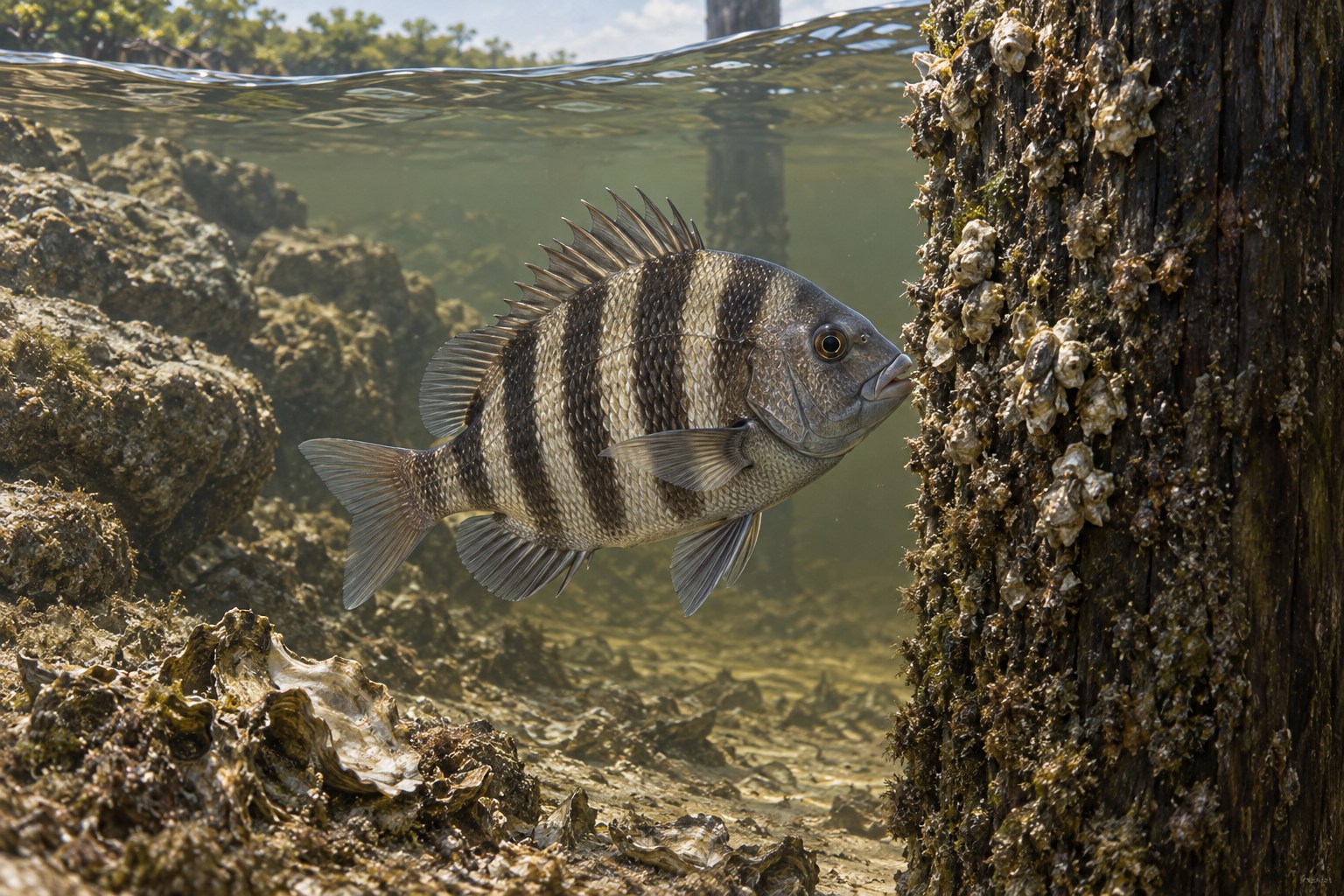
For sheepshead, accuracy often matters more than distance. Place a compact bait near the feeding surface without allowing the line to wrap around it. A short controlled drop may be more useful than a full cast.
Keep the bait small enough to be taken with the hook. A large loose piece invites picking. Check frequently when the rod gives tiny taps but no solid pull.
Use the minimum weight that keeps the presentation workable. Too little lets it sweep into a piling; too much can wedge it against the bottom. Adjust according to the current at that moment.
Do not scrape or damage public structures to collect bait. Bring legally obtained shrimp or crabs. Shell growth is habitat, and removing it from a pier is not necessary for a fishing session.
Choose the slower side of the seam
The river can carry substantial flow. Fish often use a nearby pocket rather than holding in the hardest current continuously. Look for the boundary where the water changes speed or direction.
Cast so the bait approaches the likely holding area naturally. If the rig rushes past too quickly to reach depth, wait for a different tide stage or choose another legal angle. Adding weight indefinitely can make the equipment harder to control without solving the presentation.
Check the line’s path below the surface. A straight-looking rod tip does not mean the sinker is directly underneath it. Current can bow the line toward structure or another angler.
When the tide turns, reset your assumptions. The useful side of a piling or bank feature may switch. Retrieve and watch before making the next cast into what used to be the productive lane.
Give working water plenty of room
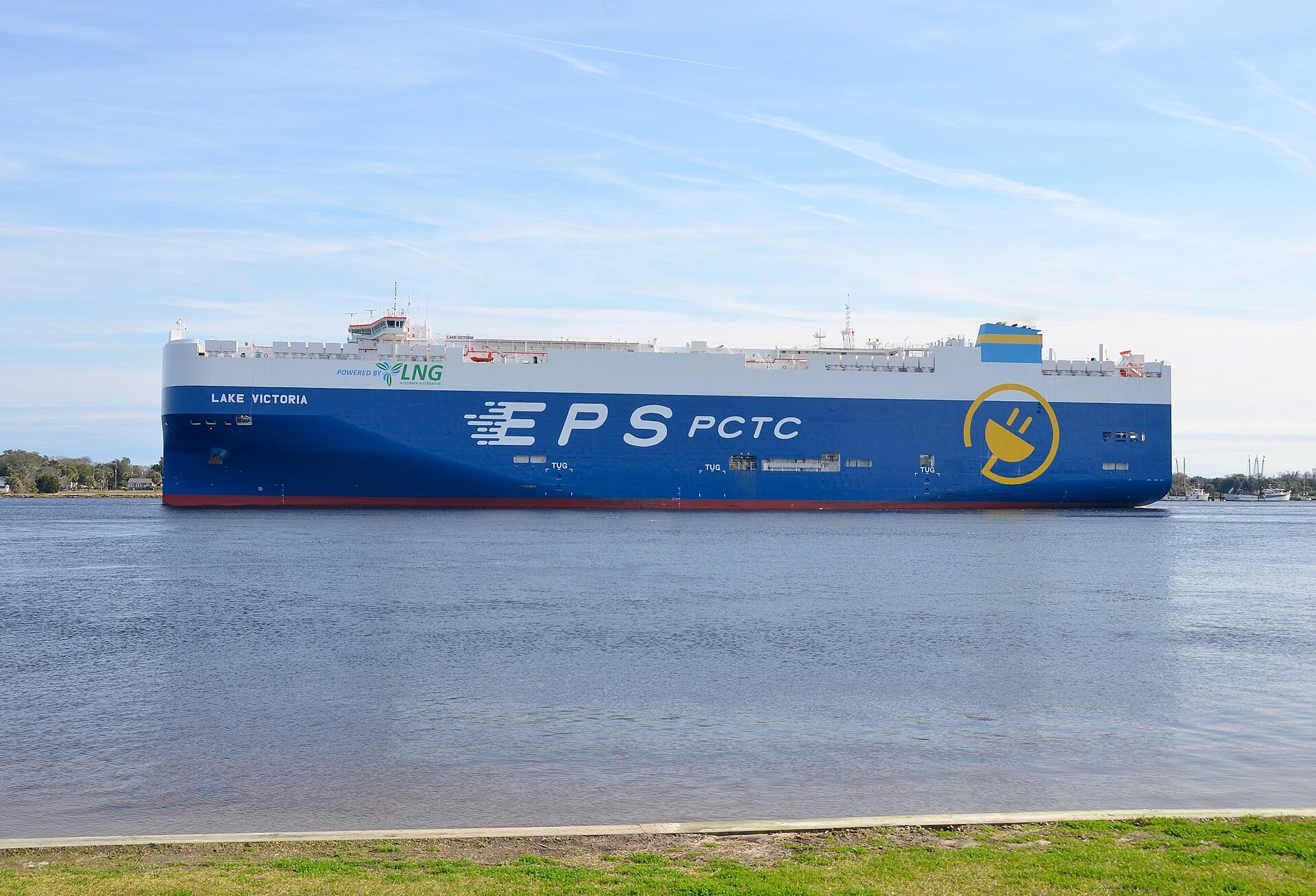
Large vessels are part of the St. Johns River setting. Their movement and wakes can affect the shoreline after they pass. Keep bait boxes and loose equipment above the wet edge, and remain aware of the river while tying knots.
Do not cast across a boat’s route. From a small craft, remain clear of shipping traffic and navigation channels. A promising fish mark does not justify stopping where a large vessel needs to travel.
Wind opposing current can produce steep chop. The surface near a sheltered bank may look easier than the exposed river. Check the marine conditions for the whole route before launching anything small.
This guide is for choosing fishing habitat and public access, not for navigating the river entrance. Boating at the inlet requires suitable equipment, current charts and experience with its conditions.
Work sand transitions for flounder
Flounder can hold where moving water brings prey across a sandy edge. Keep a minnow or soft plastic near the bottom and move it deliberately. A fast retrieve several feet above the sand tests a different part of the water.
Feel for changes between smooth bottom and rougher ground. If the rig begins to catch repeatedly, shorten the next cast or alter the angle. The transition itself may be useful without dragging through the snag.
Maintain enough contact to recognize unexpected weight. Avoid a long delay with natural bait after a bite. Prompt, controlled handling helps reduce the chance of a deeply hooked fish.
A net is useful when the fish reaches an appropriate low edge. Keep it ready before the final approach. Trying to assemble equipment while a fish twists beside structure often ends poorly.
Prepare for abrasion and a short visit
Bring spare leader, a few suitable sinkers and hooks, pliers and a measuring board. Inspect the leader after every rub against hard structure. Even a strong line can fail after a small damaged section develops.
Choose an outfit that can apply useful pressure while keeping a responsive tip. Extremely heavy gear makes small bites hard to read. Very light gear may leave no margin around rough cover. Match it to the target and position.
Keep bait shaded and cool. For live shrimp, aeration and a sensible stocking level matter. For fresh dead bait, take out a few pieces at a time rather than warming the whole supply.
Water, sun protection and a tidy tackle bag make a brief park session easier. Leave room on the pier for people who are walking or watching the river.
When to make the attempt
Cool-season visits can suit structure and bottom fishing. Warm periods may bring more visible bait activity and fast-moving predators. Autumn bait movement is worth watching, but weather and current can outweigh the calendar.
Use Mayport-area tide and weather planning to select a manageable period. The best tide for your tackle may be the one that lets the bait stay near the target, not the strongest movement of the day.
Summer heat and lightning favor shorter early outings. If weather deteriorates, pack before the route back becomes uncomfortable. A sheltered-looking pier is still an exposed place during a thunderstorm.
For a different shore experience, compare Huguenot Memorial Park across the wider river-mouth area. Its beach access and wildlife restrictions require their own check.
Licenses, limits and releases
Consult the FWC saltwater fishing regulations before deciding what to target or keep. Do not infer a license exemption from the presence of a public pier unless its operator confirms coverage.
Follow park hours and closed-area signs. Carry out line fragments and hooks, and keep bait away from birds. An organized release with wet hands and body support protects fish better than a long photograph session.
Keep navigation and fishing cues separate
A passing ship can change the water beside a public bank through wake and draw. Stop watching the bait long enough to assess that movement and step back when necessary. Do not place equipment at the lowest waterline simply because it is dry at arrival. Leave room for changing water without having to collect loose items in a hurry.
For the fishing itself, a shorter controlled cast can be preferable to reaching toward the main traffic route. The safer lane may also make it easier to keep bait near a current edge.
Mayport fishing questions
Where is the public starting point described here?
Helen Cooper Floyd Park, also known as Little Jetties, is at 3600 State Road A1A. Check its current notices before visiting.
Is nearby naval shoreline open to anglers?
Do not assume public access. Stay on confirmed public park routes and respect all military and commercial boundaries.
Why do small baits work around pilings?
Sheepshead often pick small food items from hard surfaces. A compact offering can place the hook where the fish takes the bait.
Should I fish the strongest current?
Only fish a flow that your position and tackle can handle safely. A slower edge often allows a better presentation and fewer snags.