
NORTHEAST ATLANTIC
Huguenot Memorial Park
fishing guide
Huguenot Memorial Park fishing guide with tidal beach access, nesting restrictions, surf tactics and a conservative plan for changing water.
Explore the guide ↓Plan around the park, not just the tide
Huguenot Memorial Park sits beside the St. Johns River entrance, with Atlantic beach, inlet influence and important shorebird habitat. It can offer an interesting fishing day, but access conditions deserve attention before the bait does.
High water, soft sand, visitor capacity and wildlife protection can limit where people may go. A successful plan leaves room for those limits. Do not assume that a route used on an earlier trip remains available.
For a first visit, choose a short shore session with light equipment and a clear way back. Look for small sand-feeding fish on an open beach stretch. Treat fast inlet water and large passing predators as a different level of fishing, with different tackle and landing demands.
Check the entrance and the open fishing area
The city lists the park at 10980 Heckscher Drive. Check the current opening schedule, admission arrangements and access notices before driving out. Busy days can reach capacity, and changing tides can affect movement inside the park.
Beach driving requires particular care. Four-wheel drive is recommended for the sand, but it does not guarantee access or prevent getting stuck. Follow staff directions and the current driving route. Do not cross a closed section because another vehicle appears to have done so.
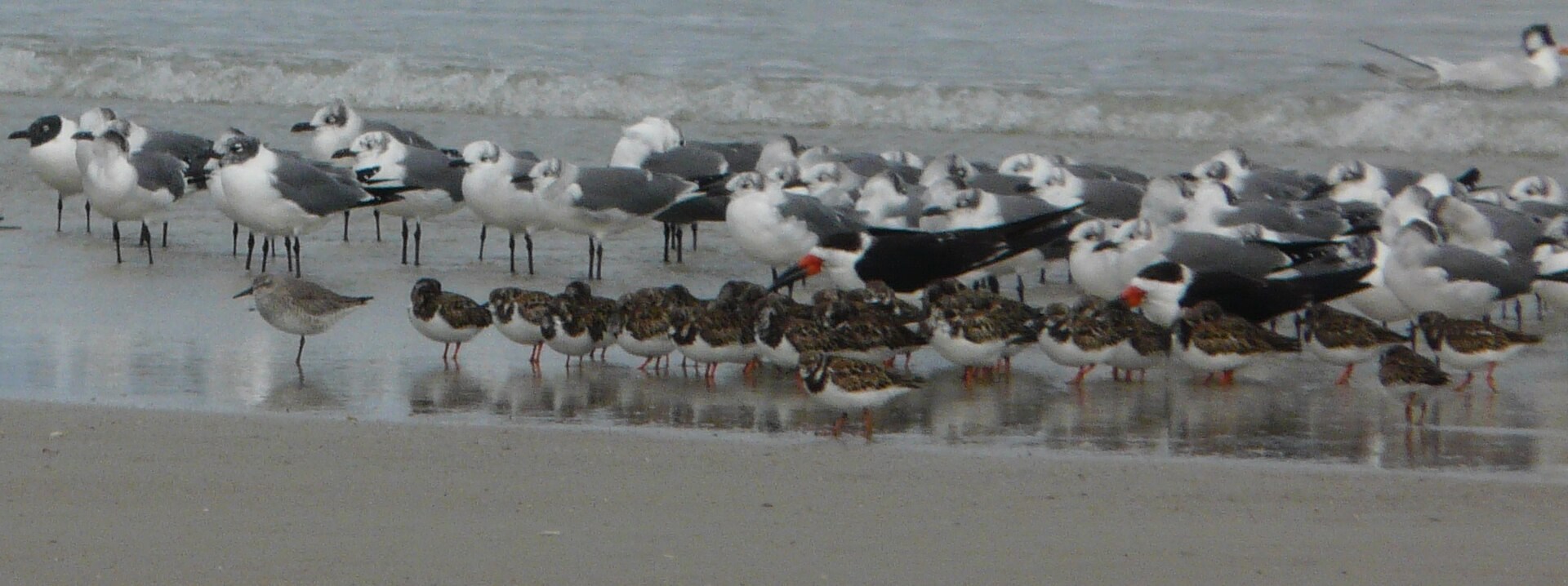
Nesting birds may require seasonal closures. Keep out of roped or signed areas and avoid approaching resting flocks. A quiet patch of sand can be important habitat even when no nest is obvious.
Choose a fishing position that will remain reachable as the tide rises. Leave a generous margin between the intended finish and the loss of a usable route. Waiting for the final bite is a poor reason to become cut off from the vehicle.
Separate beach water from inlet water
The Atlantic side has wave-shaped bars and troughs. A small bottom bait can work close to shore when conditions are gentle. The river entrance carries stronger tidal flow and vessel influence, so a familiar surf method may not behave the same way there.
Do not wade into an unfamiliar inlet edge. Deepening sand, moving water and wakes can create hazards that are difficult to judge from the surface. Fish from an authorized dry position with stable footing.
Watch where the line travels after the cast. A rig that immediately sweeps toward rocks, people or a closed area should be retrieved. More weight is useful only when the rod can handle it and the position remains suitable.
Public beach access does not make every visible rock or bank a permitted fishing platform. Stay within the park’s current boundaries and respect instructions from staff.
Match the target to the available lane
| Fish | Likely opportunity | Useful approach |
|---|---|---|
| Whiting | Inner surf trough over sand | Small shrimp bait on a controlled bottom rig |
| Bluefish | Bait moving along an open beach edge | Compact metal lure |
| Jack crevalle | Brief feeding activity near moving bait | Strong lure outfit in clear water space |
| Redfish | Current boundary with prey moving past | Fresh bait on appropriately matched tackle |
| Flounder | Sand beside a slower bottom transition | Slow minnow or soft plastic |
Pompano may also appear in suitable clean surf. Their arrival depends on conditions, so it is sensible to bring a bait that can also interest whiting. A flexible target makes a short visit more enjoyable.
Large jacks can pull hard even when they are not a harvest goal. Use tackle that can end the fight efficiently, and avoid deliberately hooking fish that cannot be landed or released from the chosen position.
Understand a sudden burst of surface action
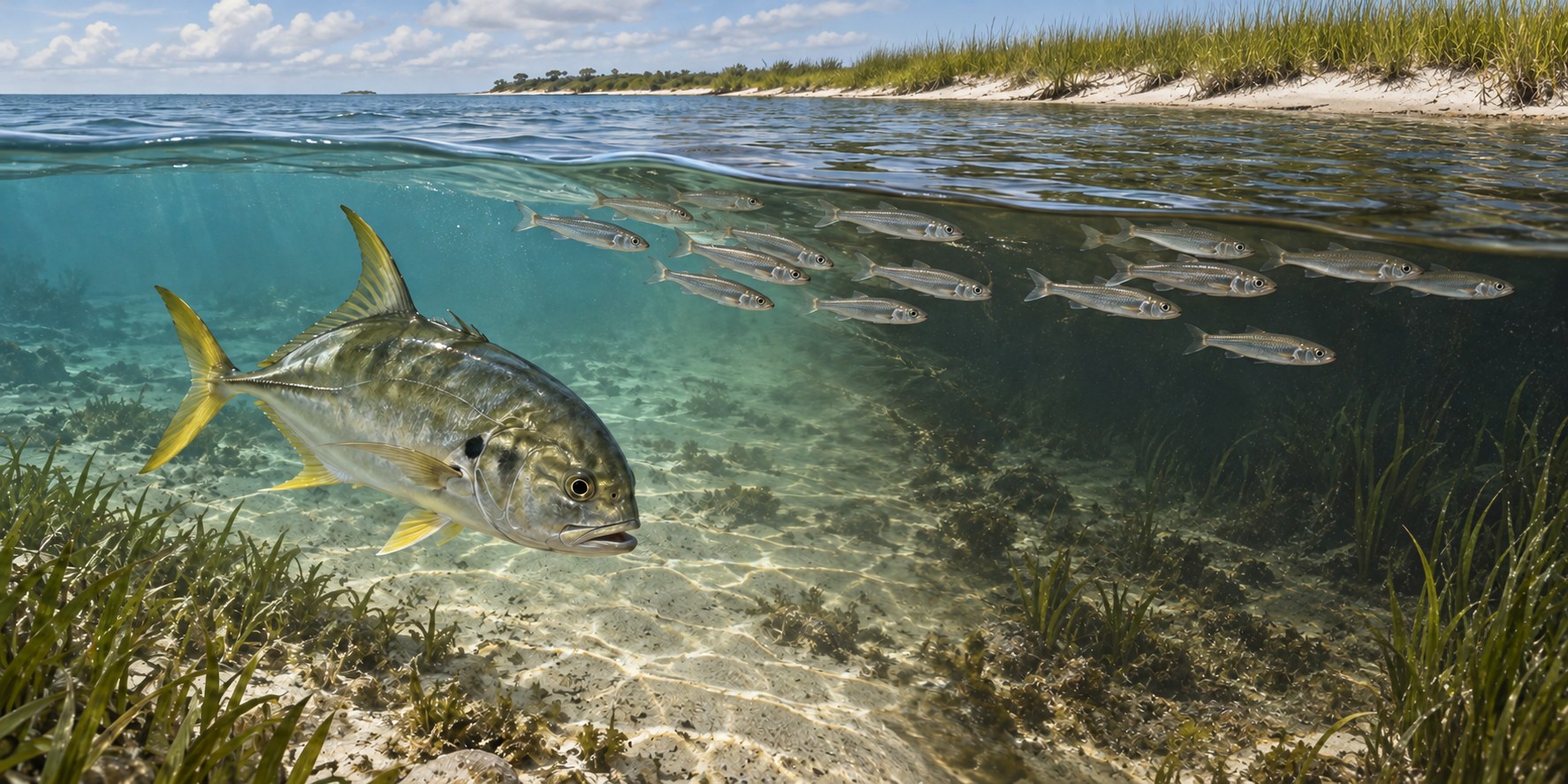
When baitfish scatter repeatedly in the same direction, look for a safe cast ahead of that movement. A lure pulled across the outer edge may be easier for a predator to find than one dropped into the densest part of the school.
Keep the lure near the size of the visible prey. A very large plug is not always useful when the bait is tiny. Begin with a steady retrieve, then vary speed if fish follow without taking.
Do not cast toward feeding birds. Their movement can change in an instant, and a hook flying through a flock is avoidable trouble. Wait for an unobstructed lane or continue with a bottom bait elsewhere.
Passing schools may disappear within minutes. That is normal. Return to the shore features you can fish consistently rather than running into restricted ground to follow them.
A reliable way to test the surf
Use a small shrimp portion and cast into the nearest trough that has room around it. Let the sinker settle, then tighten enough to see a bite. Too much loose line makes wave movement and fish movement difficult to distinguish.
Check after repeated taps. A stripped hook means something reached the bait, and a smaller offering may improve the next attempt. Heavy weed on the line suggests a different lane or a change of timing.
Choose a holding weight inside the rod’s stated range. If the surf demands more than the outfit can safely cast, do not force it. Another part of the park may be sheltered, but only use it if current access and fishing rules allow.
Keep bait in a closed cooler and take out small amounts. Birds quickly learn where loose food is available. Clean hands and an organized bait station also make it easier to handle the rod securely.
Give shorebirds space throughout the visit
Bird protection is part of fishing at Huguenot, not an obstacle to work around. Walk around resting groups with plenty of space. If birds repeatedly move away from you, increase the distance.
Keep all baited hooks under control. Put unused rigs in a closed box, and collect line pieces before they blow into the sand. Never leave a rig lying beside a cooler while attending another rod.
Follow the current marked route even if it makes the walk longer. Seasonal protection may change the usable shoreline. An old social-media photograph does not establish today’s boundary.
Children can enjoy watching birds while an adult manages the tackle. Make it clear that chasing a flock is not part of the outing.
Build a return margin into the day
Use the tide and weather forecast to plan both fishing and access. Rising water can reduce dry beach space. Wind can add waves even when the tide height looks modest.
Summer trips need a quick response to thunder. Leave exposed sand before weather reaches the park, and seek a substantial enclosed shelter. A vehicle may be the practical refuge, which makes the distance back important.
Spring and autumn can bring comfortable fishing windows between fronts. Winter sessions may work best with a slower bottom method and warm clothing for wind. No season removes the need to check the actual surface conditions.
If the park is closed or full, the Mayport guide describes a separate public fishing option. Do not improvise parking or access outside the park boundary.
What earns a place in the bag
Carry a rod suited to the chosen method, spare leaders, pliers, a ruler and enough drinking water. A small number of proven rigs is easier to manage than a loose collection of hooks and sinkers.
Bring a way to remove hooks without putting fingers near teeth or spines. Keep a release fish supported and close to the water. For larger catches, the landing plan should already be decided.
Take a rubbish bag and check the sand around your setup before leaving. This is particularly important where line can disappear among shells and bird tracks.
Keep harvest rules current
The FWC saltwater recreational regulations explain licensing, seasons and species limits. Park access rules are additional requirements, so check both before fishing.
Release uncertain species rather than guessing. If a fish is legal to keep, measure it properly and chill it promptly. Do not keep fishing simply to fill a cooler when the access window or weather is closing.
Plan what rising water does to the return
Before settling into a long session, look back toward the legal return route. A beach that was wide when you arrived can narrow as water rises, and loose sand can slow a vehicle or a person carrying equipment. Keep the fishing plan within the current park directions rather than relying on tracks left by someone else. Pack with enough time to return calmly, including the time needed to secure hooks and load wet gear.
Huguenot fishing questions
Does four-wheel drive guarantee beach access?
No. Sand conditions, tides, capacity and closures can still prevent access. Follow the park’s current instructions.
Can I follow baitfish into a marked bird area?
No. Wildlife closures remain in force even when fish are feeding beyond them. Stay in the open fishing area.
Which method is simplest for a newcomer?
A small shrimp bait in manageable surf is a practical first test. Avoid fast inlet water until you understand its demands and have suitable equipment.
Why should I finish before the tide reaches my position?
The return route can narrow before the fishing spot itself becomes wet. Leave enough time to travel back safely rather than waiting for the last possible cast.