
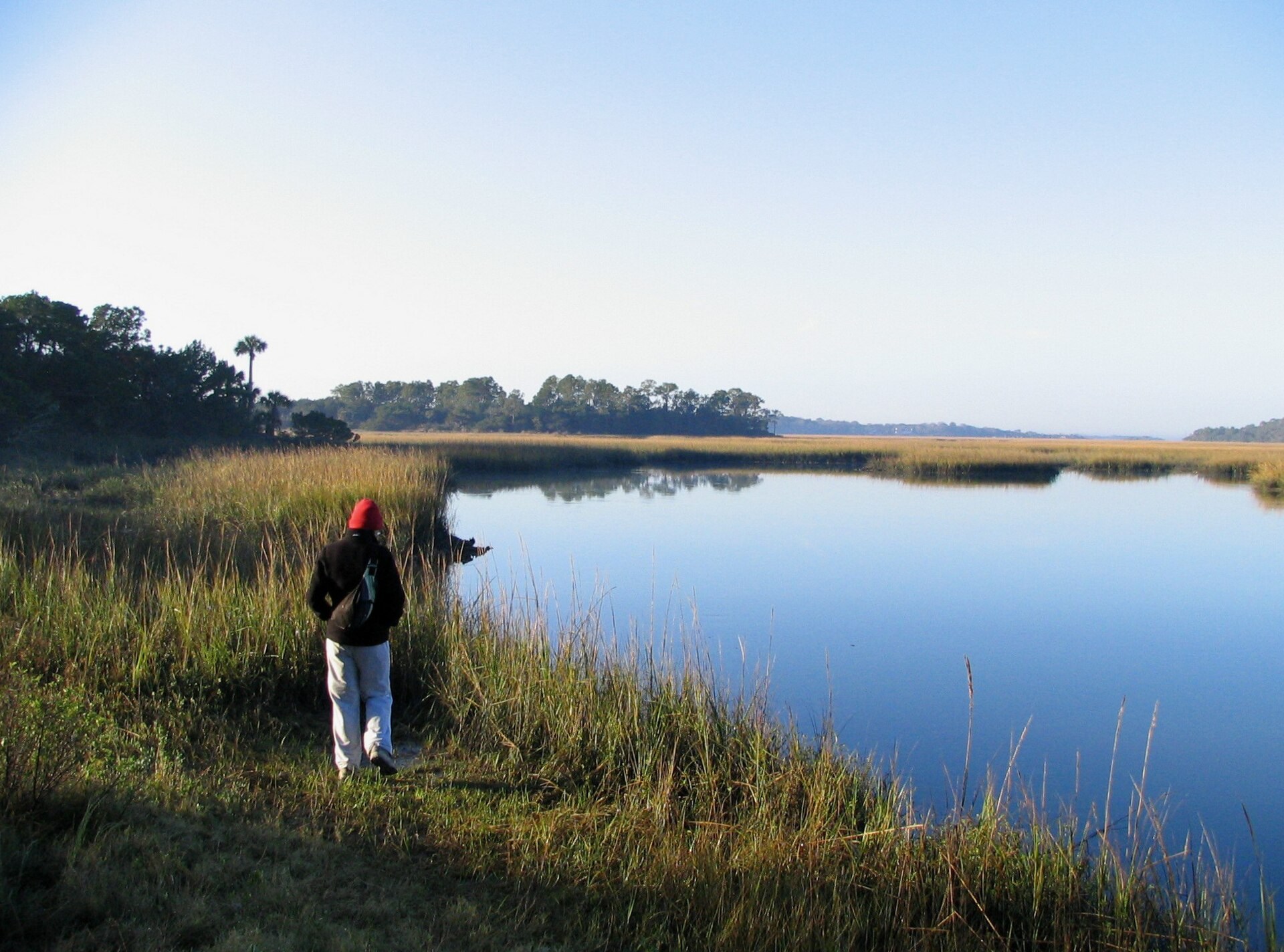
NORTHEAST ATLANTIC
Little Talbot Island
fishing guide
Explore Little Talbot Island fishing with current access notes, Atlantic sand, Myrtle Creek habitat and quiet shallow-water methods.
Explore the guide ↓A natural beach with a separate creek option
Little Talbot Island State Park offers a less developed Atlantic shoreline north of Jacksonville. The fishing appeal is not a row of piers or shops. It is the chance to study beach troughs, changing sand and nearby tidal habitat with fewer distractions.
The park also has a Myrtle Creek paddling setting. Keep that separate from the ocean fishing plan. A kayak route through tidal water requires a confirmed launch, enough water to return and experience with the wind.
Current beach access is limited in places. The park identifies beach accesses one, two and three, with closed areas south of boardwalk three. Follow the signs in place during your visit instead of assuming the whole island shoreline is open.
Begin at an open boardwalk
Choose an authorized beach access and carry tackle over the designated crossing. Do not walk through dunes to reach an apparently quieter fishing patch. Vegetation and nesting habitat are part of the protected shoreline.
Pay close attention to the boundary south of boardwalk three. The park’s current information restricts access there. A long walk toward the inlet should not be planned from an old map without confirming the open route.
There are no lifeguards, and inlet swimming is prohibited. Keep the fishing session on safe dry ground. A calm patch near an inlet can still have deep water and strong flow close to shore.
Ask park staff about any changed access before unloading a large cart. A smaller load makes it easier to use the open boardwalk and turn back if conditions do not suit the group.
Beach and creek targets
| Fish | Setting to consider | Useful method |
|---|---|---|
| Whiting | Atlantic inner trough | Small shrimp bait held near sand |
| Redfish | Tidal creek edges and marsh openings | Quiet soft-plastic cast or live shrimp |
| Spotted seatrout | Creek water with prey moving past | Suspended shrimp or small swimming lure |
| Flounder | Sand beside a deeper creek lane | Slow bottom presentation |
| Bluefish | Beach bait schools | A compact metal lure through open water |
Pompano are another possibility when surf conditions suit them. Do not make the outing depend on their arrival. Shrimp can keep the same basic rig useful for several smaller beach fish.
Creek fish may be present without showing on the surface. Look for a drain, a bend or a change in depth that brings food within reach. Those features give a cast a purpose.
Read a quiet marsh edge
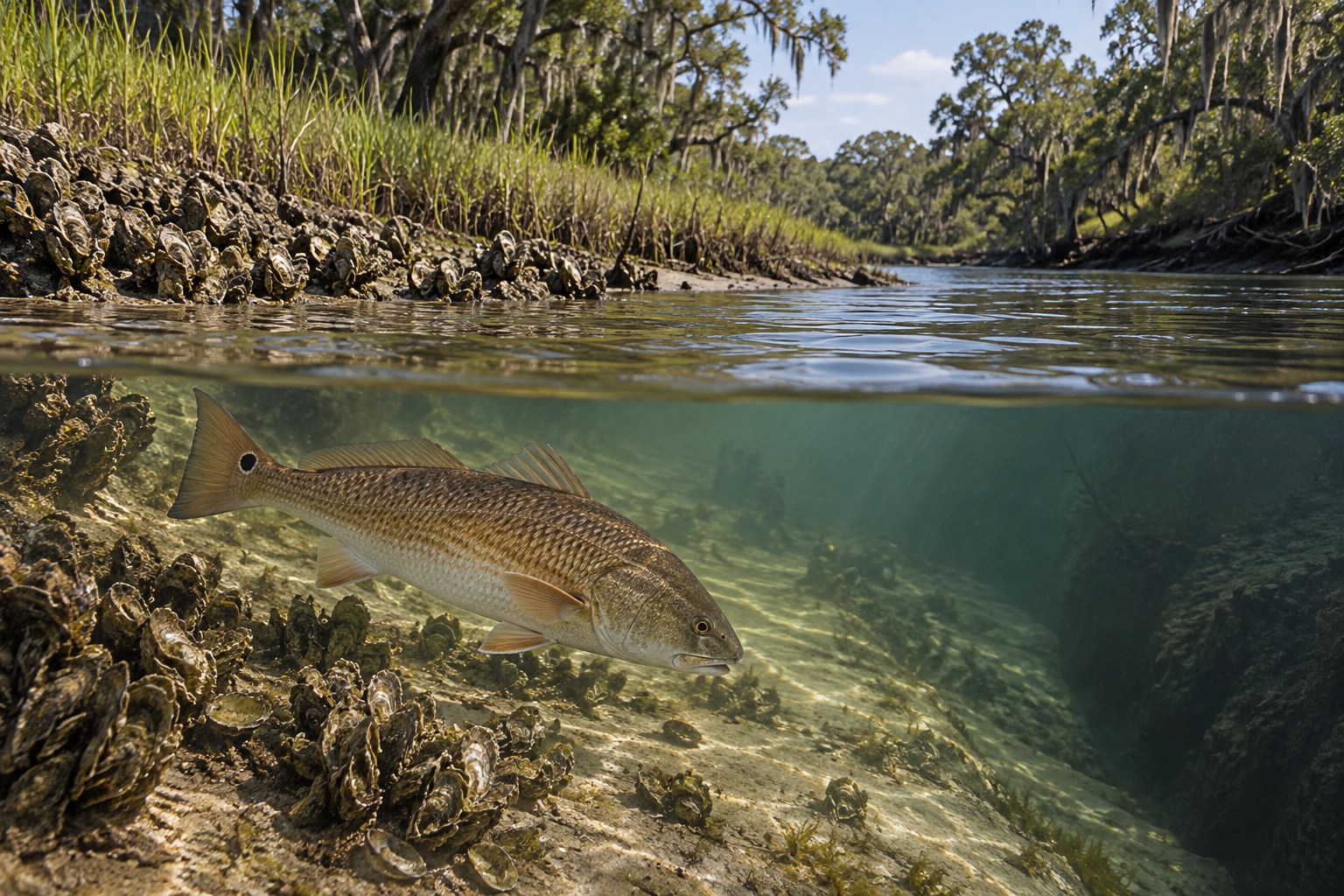
In tidal habitat, shallow water and deeper water work together. Fish may move up to feed when the edge floods, then retreat toward a channel as water leaves. A good position offers access to both without forcing the fish into the strongest flow.
Cast ahead of a visible fish rather than onto its back. Let the lure settle and move it into view. Sudden splashes from repeated close casts can make a shallow fish leave.
A weedless soft plastic can pass near grass and shell with fewer snags than an exposed hook. It still needs a careful angle. Pulling directly through an oyster patch is likely to damage line or lose tackle.
Do not step onto shell beds to improve the cast. Oysters are sharp, soft mud can be difficult to cross and the habitat does not need to be disturbed to fish its edge.
Find a small difference in the sand
The ocean beach may look uniform until you watch several wave sets. A trough can appear as a strip where waves briefly stop breaking. A shallow bar shows more repeated white water. Begin by placing a bait in the accessible trough.
Keep the first cast comfortable. Extreme distance can make bite detection and rig control harder, particularly for a beginner. Fish feeding in the wash may be much closer than expected.
Check bait regularly and compare what comes back. Small taps followed by missing bait call for a smaller portion or hook adjustment. A tangle of weed calls for another lane or a different day.
A gap in a bar can carry outward water. It is a fishing feature to observe from shore, not a route for wading farther out. Avoid entering unfamiliar surf to recover a snagged rig.
Keep the Myrtle Creek route modest
A paddling trip should begin with the launch rules and the return route. Confirm which facility serves your intended access and whether reservations, rental arrangements or other requirements apply. Do not assume a beach parking area is a kayak launch.
Choose a short route for the first visit. Tidal creeks can have similar-looking turns, and water levels change the appearance of banks. Record landmarks while traveling out and carry navigation information that remains usable without a phone signal.
Wear a life jacket and keep communication equipment within reach. A paddle secured to the boat and a plan shared with someone on land are useful even on a calm morning.
Avoid crossing exposed water simply because a fishing report mentions the other side. Wind may strengthen while you are away from the launch. Fishing should fit the safe route, not determine an unsafe one.
Bring two methods, not a tackle shop
For a shore visit, one bottom rig and one compact lure option cover useful situations. Carry fresh shrimp in a cool container and a few spare leaders. If the surf is too heavy for the rod’s weight rating, additional tackle will not fix the mismatch.
For a creek trip, a medium spinning outfit and a small selection of weedless plastics or floats are easier to manage. Keep loose hooks contained in the kayak. A dropped treble-hook lure can quickly complicate a cramped cockpit.
Bring pliers, a measuring device and enough water for the walk or paddle back. Sun exposure can be considerable even when the air feels mild. Protect the back of the neck and hands as well as the face.
Use wet hands for release fish. Keep them supported and close to the water while removing the hook. A quick photograph is enough; there is no benefit in carrying a fish back along the beach for a better background.
Choose weather that leaves room to learn
A moderate forecast gives more time to understand the beach. Strong onshore wind can bring rough surf and drifting weed. Strong wind in the creek setting can make a return paddle difficult even if the water initially appears sheltered.
Summer favors early visits and an exit before thunderstorms develop. Cooler weather may reduce surface activity but still leave opportunities for slow bottom fishing. Spring and fall often provide comfortable windows between fronts.
Use tides and weather for planning, then inspect the actual access and water. A predicted tide height does not show every shallow creek bend or temporary shoreline change.
For another nearby park with different access concerns, read the Huguenot fishing guide. Its driving and wildlife rules are specific to that park.
A useful first two hours
Spend the first few minutes checking signs and walking to an open beach area. Watch the waves before baiting a hook. Choose one trough and make several comparable casts.
After the first half hour, use the evidence. If bait is being taken, refine its size and presentation. If nothing is happening and the rig returns clean, try another distance or a short move along the authorized shore.
Leave time at the end to remove all line and return over the boardwalk. A fishing day at a natural park includes the walk out, not just the last cast.
Protect the place while fishing it
Check the FWC recreational saltwater requirements for licenses and harvest rules. Follow park restrictions as well, including closed shoreline and swimming boundaries.
Do not collect wildlife or disturb nesting areas while searching for bait. Keep food scraps and bait packaging contained. The park’s natural character depends on visitors leaving more than their favorite fishing patch undisturbed.
Use a smaller search area on the first visit
Pick one open stretch of ocean sand or one authorized creek route and learn its boundaries. Repeated short moves within that area can reveal more than a long walk that leaves little time to fish. Notice where the lure stays above cover and where the bait begins to snag. Keep those observations tied to the water level. A shallow edge that is reachable now may need a different casting angle later, even when the access itself remains unchanged.
Little Talbot Island fishing questions
Can I walk south beyond boardwalk three?
The current park information identifies closed areas south of that boardwalk. Follow the posted boundary and confirm any change with staff.
Is the inlet a safe wading shortcut?
No. Inlet swimming is prohibited, and current and drop-offs make entering the water hazardous. Stay on the authorized shore.
Should a beginner choose the creek or beach?
A manageable surf session from an open crossing is usually simpler. A creek paddle needs a separate launch, navigation and return plan.
What should I bring for small beach fish?
Fresh shrimp, a small bottom rig and a rod rated for the required sinker are a practical start. Add water, pliers and a ruler.