

PANHANDLE
Mexico Beach
fishing guide
Keep the beach plan simple. Read the first trough, use small baits and check current access before relying on the old fishing pier.
Explore the guide ↓A SMALL BEACH TOWN WITH A SIMPLE SURF PLAN
Build your visit around the beach, not the old pier
Mexico Beach offers a straightforward kind of shore fishing. You can carry a small bait supply across a public access, watch the waves and work a sandy trough. You do not need to fill a cart with offshore tackle to enjoy the coast here.
The city still lists the pier destroyed by Hurricane Michael as closed. Its rebuilding target is 2027, which is a plan rather than a confirmed opening date. Do not arrange a trip around fishing from that pier.
The photograph in this guide shows the coastline before Hurricane Michael. It helps explain the beach setting, but it does not show today’s pier condition. Current city notices and signs take priority over older travel photographs.
Choose a practical public access
Beach parks
Sunset Park at 1813 Highway 98 and Parker Park at 2500 Highway 98 are city-listed beach areas. Choose an entrance according to parking, the walk and your group’s needs. Read the rules at the access and set up away from swimmers.
Canal Park
The city identifies Canal Park as a public waterfront location. Fish only from permitted space and stay clear of boat movement. A canal edge is a confined place to cast, so a short, controlled presentation is more useful than a long cast across the water.
Boat launching
The public ramp is at 109 44th Street and requires the applicable city launch permit. The canal is an idle-speed route. The city also prohibits swimming and dumping fish carcasses or bait there. Prepare the boat before backing down and keep fishing gear out of the launch lane.
A ramp and a canal do not make an offshore trip easy. Check the Gulf forecast, your vessel and the return route before leaving protected water. First-time visitors can learn plenty from shore without making that decision.
Look for the trough before you cast
Stand where you can see several sets of waves. Breaking whitewater often marks a shallow bar. A smoother band closer to shore can mark a trough. Fish may travel along that band while feeding on small animals stirred from the sand.
Try a bait in the close trough first. After a quiet spell, compare a cast farther out. Change one thing at a time so you learn whether distance, bait size or a cleaner patch of water makes the difference.
A beach that looks featureless while you are standing in the wash can reveal useful changes when viewed from a little farther back. Avoid wading out to inspect a cut. Fish the feature from dry ground when possible.
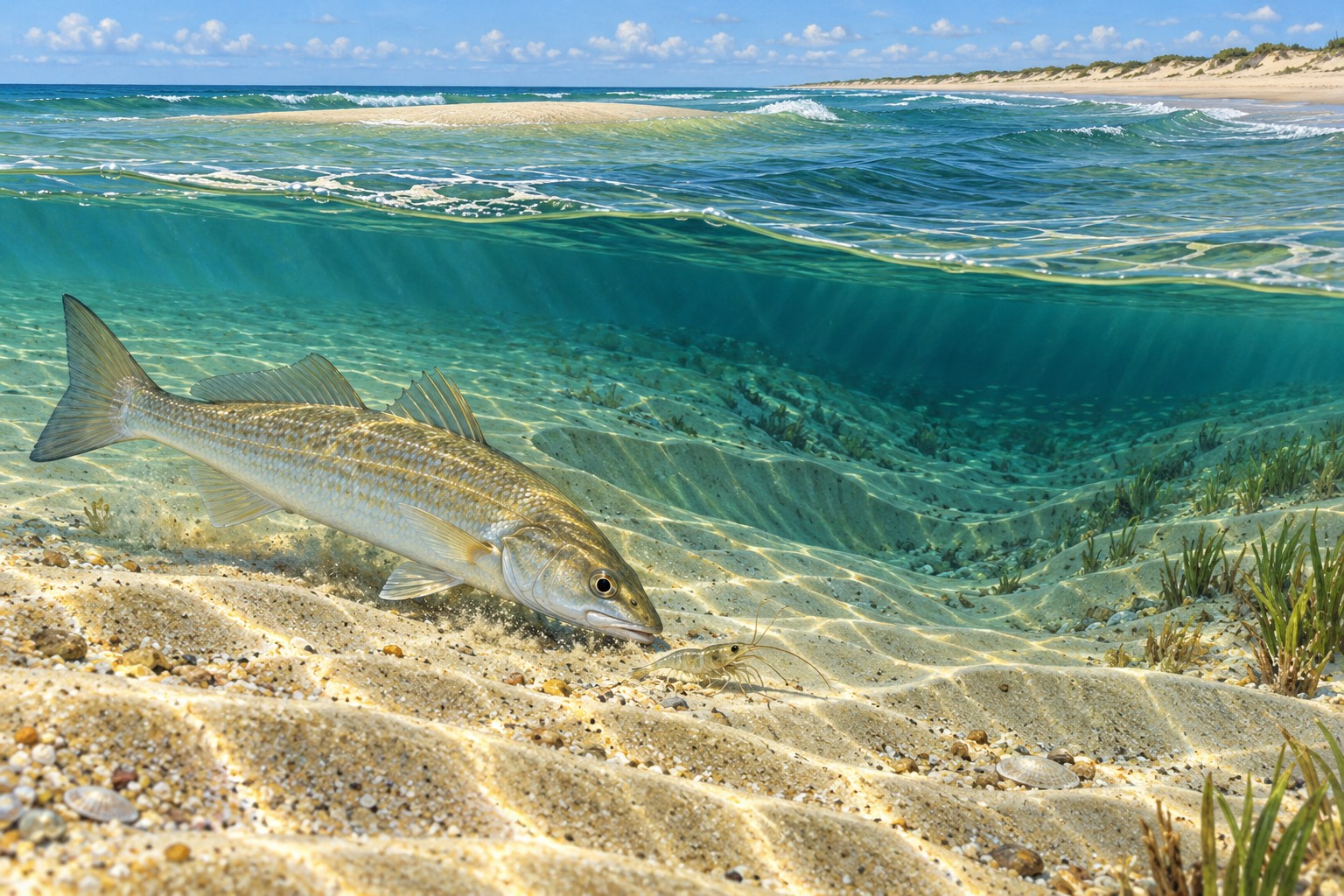
Fish that fit a beach visit
| Target | Presentation | Helpful detail |
|---|---|---|
| Whiting | Small shrimp pieces on a bottom rig | Keep the bait small enough for a modest bite |
| Florida pompano | Sand fleas, shrimp or scented bait strips | Look for clean moving water over sand |
| Redfish | A natural bait near a deeper cut | Use a leader suitable for the intended fish |
| Spanish mackerel | A small silver lure | Cast only when bait activity comes within safe reach |
| Flounder | A slow small lure near sandy structure edges | Maintain bottom awareness without dragging constantly |
Catfish and other unintended catches may also take a bait. Learn to identify sharp spines and keep pliers ready. A towel wrapped around an unfamiliar fish is not a substitute for knowing where its spines are.
Keep the surf rig small and tidy
A two-dropper rig is a useful starting point when you want to compare two small baits. Space hooks so they do not wrap around one another. Choose a sinker that holds the rig without making the cast difficult or unsafe.
The rod’s stated casting range matters. A heavy sinker on a light rod is not an effective way to overcome rough conditions. When the water requires more weight than your outfit handles, choose a calmer window.
Firm fresh shrimp is easy to divide into useful pieces. Leave the hook point exposed. Keep the unused bait cold and change pieces that have washed into empty shells. A lively bite can disappear simply because the hooks no longer carry food.
Place the rod holder where you can reach it quickly. Do not leave a spread of unattended rods across a public beach while you walk away. Reel everything in before moving your chair or following family members down the shore.
Use lighter control near the canal
A small shrimp or soft plastic can be easier to control near a confined edge than a surf rig. Watch the current and keep the bait within your allowed fishing space. Do not cast toward a moving vessel or let line stretch across its route.
Structure can hold fish because it gathers food and creates shade. Begin along the outside edge, where a hooked fish is easier to guide into open water. Inspect the leader after every contact with rough concrete, shell or a piling.
Leave boat operators room to work. If traffic makes a safe presentation impossible, return to the beach instead of trying to squeeze a line between boats.
Pick a comfortable window
Spring and fall can offer pleasant surf-fishing conditions, but wind determines whether an individual day is useful. Clean water and manageable waves are better clues than a broad claim about the best month.
In summer, early hours can reduce heat and beach crowding. Pack more water than you expect to drink. A distant storm moving toward the coast is a reason to shorten the session.
Winter often calls for patience and a smaller presentation. Use a mild spell and avoid assuming the warmest part of the air forecast means the water has already warmed. A sheltered walk and a short fishing session may fit the day better than a long commitment.
Check coastal weather and tides, then make the final choice at the beach. If weed, current or crowds make the chosen stretch unsuitable, move or save the trip for another window.
A first visit that stays enjoyable
Bring one beach rod, a small bait box, pliers and a measuring board. Choose an access with a return walk everyone can manage. Fish a single trough for a short session and let the result guide the next move.
Keep fish out of hot sand. Wet your hands before handling a release and support its body. Use a net when a fish cannot be landed gently by the shoreline.
Before keeping anything, check the species and current harvest rules with the Florida Fish and Wildlife Conservation Commission. A rebuilt town and changing facilities also make a quick access check worthwhile before every return visit.
Use two casting distances as a simple test
From a roomy legal beach position, choose one close target and one farther target. Fish them in turn with the same bait. Keeping the bait constant helps you learn whether the fish are using a particular band of water.
If the close cast gets bites, repeat it before making another long cast. Notice a landmark behind you so you can recognize the section of beach. Do not rely on a rod’s casting distance alone because wind and tide will change where the rig settles.
If both casts are quiet, inspect the bait and then move to a visibly different trough or bar pattern. A short relocation can place you beside a feeding lane. Walking a long way with no change in the water may simply make the return harder.
This approach works well with one rod. It keeps the beach clear and makes the result easier to follow. Multiple rods are useful only when you can watch them all and still leave safe room for other visitors.
Small-bait details that make a beach trip easier
Trim shrimp into firm pieces rather than threading a large soft bundle onto the hook. Keep enough of the point exposed to work. Replace the bait after repeated pecks instead of leaving a bare hook soaking while you wait for a stronger bite.
A prepared bait strip can be a useful backup because it is easier to carry and remains on the hook. It does not remove the need to find fish. Use it in the same careful distance test rather than treating it as a cure for unsuitable water.
Store spare rigs individually so hooks do not tangle. Bring a few weights within the rod’s casting range, a small pair of pliers and a safe place for used hooks. A tidy setup is especially valuable when sand is blowing or children are nearby.
Recognize when the day has changed
More weed on each retrieve may mean the water is no longer suited to your original spot. A line pulling steadily alongshore may indicate stronger flow. Increasing beach traffic may remove the casting room that existed when you arrived.
Respond to the new conditions instead of defending the original plan. Reel in, look at nearby permitted water and decide whether a move is worthwhile. Sometimes a shorter successful outing is better than a long struggle with wind and weeds.
Before leaving, count the small items as well as the rods. Hook packets, bait wrappers and clipped line are easy to lose against pale sand. Take a final look around the rod holders so the next beach visitor does not find your tackle underfoot.
Mexico Beach answers
Can I fish the city pier now?
No. At this guide’s review, the city continues to list it as closed. The planned rebuilding year is not an opening announcement.
Is the beach still a useful fishing choice?
Yes, when conditions and posted rules allow. Small bottom baits in sandy troughs provide a practical shore-based approach.
Does launching require a permit?
The city lists a permit requirement for its public ramp. Check the current option for your visit before arriving with a trailer.
Should I cast as far as possible?
Test the nearby water first. A short cast into an active trough can outperform a long cast beyond the feeding fish.