

SOUTHEAST ATLANTIC
North Beach Oceanside Park
fishing guide
North Beach Oceanside Park provides shade, beach access and recreation at the northern end of Miami Beach. Confirm any permitted fishing section with the city before casting. Its swimming shore, dog-use area and public paths need to remain separate from a hook route.
Explore the guide ↓Choose the park entrance and check the activity
The city describes the park along Collins Avenue between 79th and 86th streets. It includes beach access, pavilions and restrooms, with parking arrangements around the perimeter. Verify the current visitor schedule and entrance that suits your trip.
These amenities support a park visit rather than unrestricted fishing permission. Ask about the intended shore section and keep hooks away from swimming water. The city's land-based shark-fishing prohibition also applies.
The photograph shows a park pavilion, not a rod position on the ocean. Use it to recognize the recreation setting. The illustration explains sandy-surf habitat without establishing a legal fishing lane.
Study the open surf from a safe place
A repeated break in the waves can help reveal the bar, while the channel closer to shore may carry dislodged food. Watch several sets before interpreting a single darker patch. Cloud shadow and stirred sand can confuse the view.
Do not wade into a gap simply to reach farther water. A stronger flow may be part of what makes the gap visible. Observe from safe legal ground and use distance only when the presentation remains controlled.
A small notebook entry about the near trough, weed and wind can make a future authorized outing more focused. Observation is useful even on a day when hooks stay packed.
Use neat small bait in a confirmed surf lane
Whiting can feed over suitable sandy bottom close to shore. A little shrimp portion or firm strip bait offers a simple first test where fishing is allowed. Leave the point clear and keep loose bait sealed away from animals.
Attend one rod closely while learning the movement. A rig that rolls into another user's space needs immediate retrieval. Inspect short taps and check whether the bait remains usable.
Replace softened bait and shorten the checking interval if it is repeatedly stolen. A firmer compact piece can be more useful than adding a second unattended rod.
Consider crustacean bait without assuming a seasonal guarantee
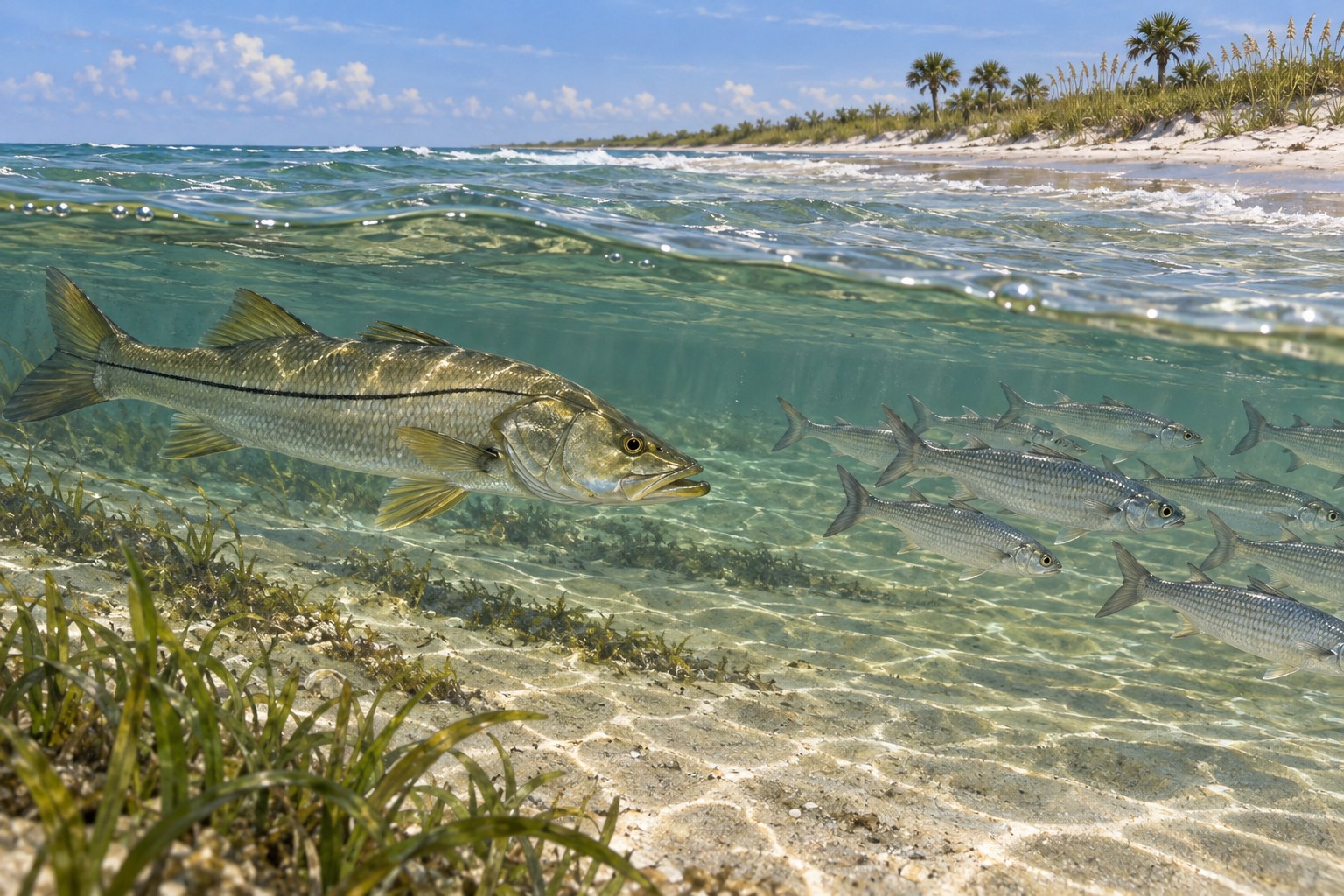
Pompano can search suitable surf for small crustaceans. Sand fleas or a small shrimp offering can test that habitat idea, subject to current bait-collection rules. Choose a clean legal lane rather than putting the rig into thick weed.
Watch what returns on the hook. A weed-covered bait has not provided a fair test of the food choice. A bare hook asks for a different inspection interval before a different rod.
Water conditions matter more than a simple month label. Keep the plan flexible if wind, recreation or access makes the initial idea unsuitable.
Keep each part of the visit in its proper place
The park can support a comfortable outing, but comfort facilities and fishing access are different parts of it.
| Part of the outing | Useful arrangement | Keep separate |
|---|---|---|
| Pavilion and shaded approach | Rest, water and packed tackle | Exposed hooks near visitors |
| Dog-use beach section | Follow current dog rules | Bait and line across animals |
| Authorized clear surf lane | One attended compact presentation | Swimming and access routes |
| No confirmed fishing position | Coastal observation | Assumed permission from public entry |
Carry a kit that leaves the public path open
Use a closed bag with only the tackle needed for the confirmed plan. Put hooks away before using the pavilions or walking through visitors. Keep the beach access route free of rods, carts and bait containers.
Plan the parking payment and return walk before a long visit. Bring water and sun protection rather than relying entirely on a concession or shaded seat. Check current facilities if restrooms are important to the group.
Leave bait waste sealed until it can be disposed of properly. Do not leave it beside a bin or on a table where wildlife can find it.
Let changing weather end the session early
Crosswind can bow line across a lane that was clear in calm conditions. Watch the presentation after every change in wind or waves. Shorten the cast or retrieve if control is lost.
Developing thunderstorms require a return to suitable shelter. A pavilion should not be assumed to provide lightning protection. Know the route back to the vehicle before the weather changes.
A short calm visit can teach more than waiting through difficult conditions. Record the actual conditions and recheck activity permission before coming back.
Prepare careful handling and remove every fragment
Use current FWC licensing and harvest information for the species targeted. Prepare pliers and measuring equipment before fishing. Release unwanted catches with wet support rather than placing them on hot sand.
Check the standing area for small line pieces and bait wrappers. Pack sharp tackle securely for the pavilion and parking route. Leave the recreation space safe for the next family and dog visitor.
Common questions
Where is North Beach Oceanside Park?
The city describes it along Collins Avenue between 79th and 86th streets in Miami Beach.
Does park admission authorize surf fishing?
No unrestricted fishing right is assumed. Confirm the exact permitted section with the city.
Can I place bait near the dog-use section?
Keep hooks, line and bait away from occupied dog recreation and follow its current rules.
What does the pavilion photograph show?
It shows the park's recreation setting. It is not a photograph of an authorized fishing station.
Prepare for your visit
Check local tides and weather. Read more about florida pompano, whiting. Check current FWC saltwater fishing rules.