
SOUTHEAST ATLANTIC
North Beach
fishing guide
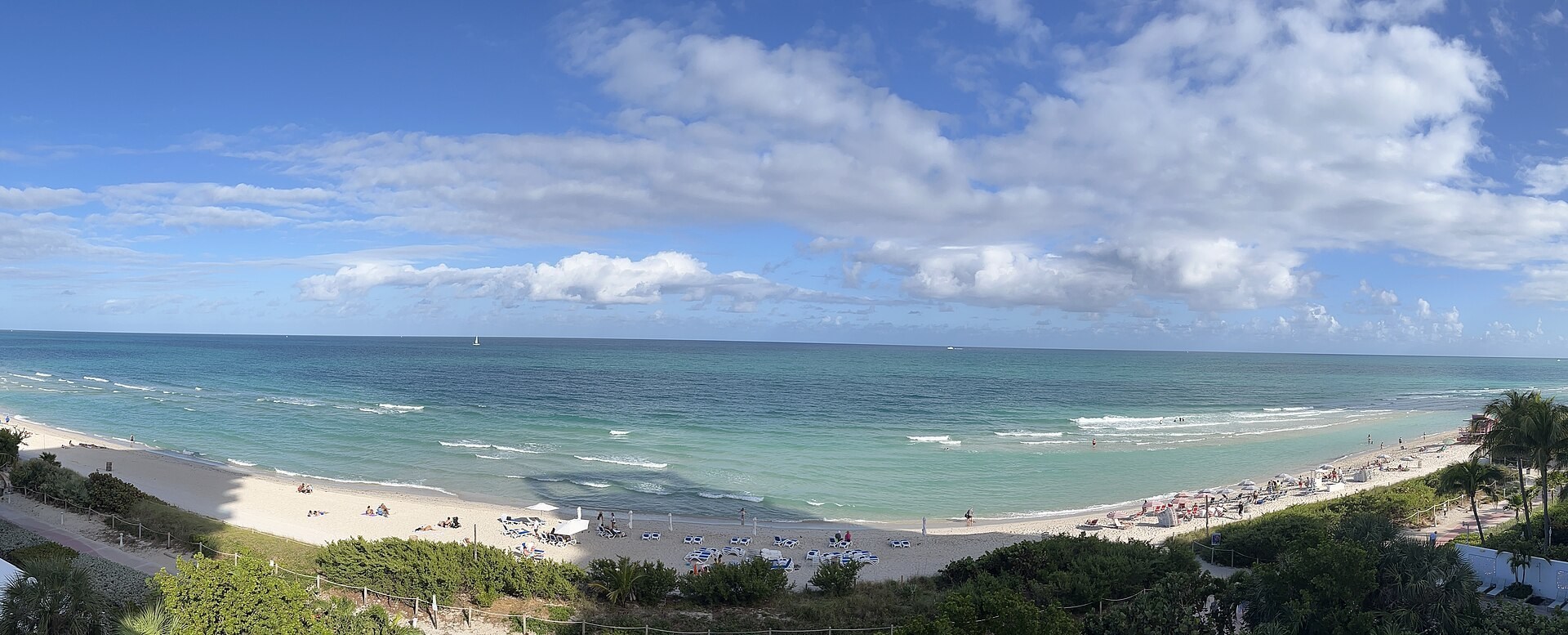
North Beach is the northern Miami Beach neighborhood, with a broad ocean setting and several public recreation routes. Confirm local angling access before using the shore. A simple sandy-trough plan can be useful where fishing is allowed and the water remains clear of other users.
Explore the guide ↓Identify the Miami Beach neighborhood you mean
This guide concerns North Beach in Miami Beach. It is not a generic name for every northern Florida shore, and it is not identical to North Beach Oceanside Park. Choose the specific public entrance before making the trip.
Ocean recreation, walking access and fishing permission are separate. Ask city staff about the intended section and keep hooks outside swimming areas. Miami Beach prohibits land-based shark fishing.
Do not rely on a quiet early view as proof that casting is allowed. Check signs and current local guidance. An explicitly designated facility can be a better alternative when permission is unresolved.
Watch the water nearest the sand
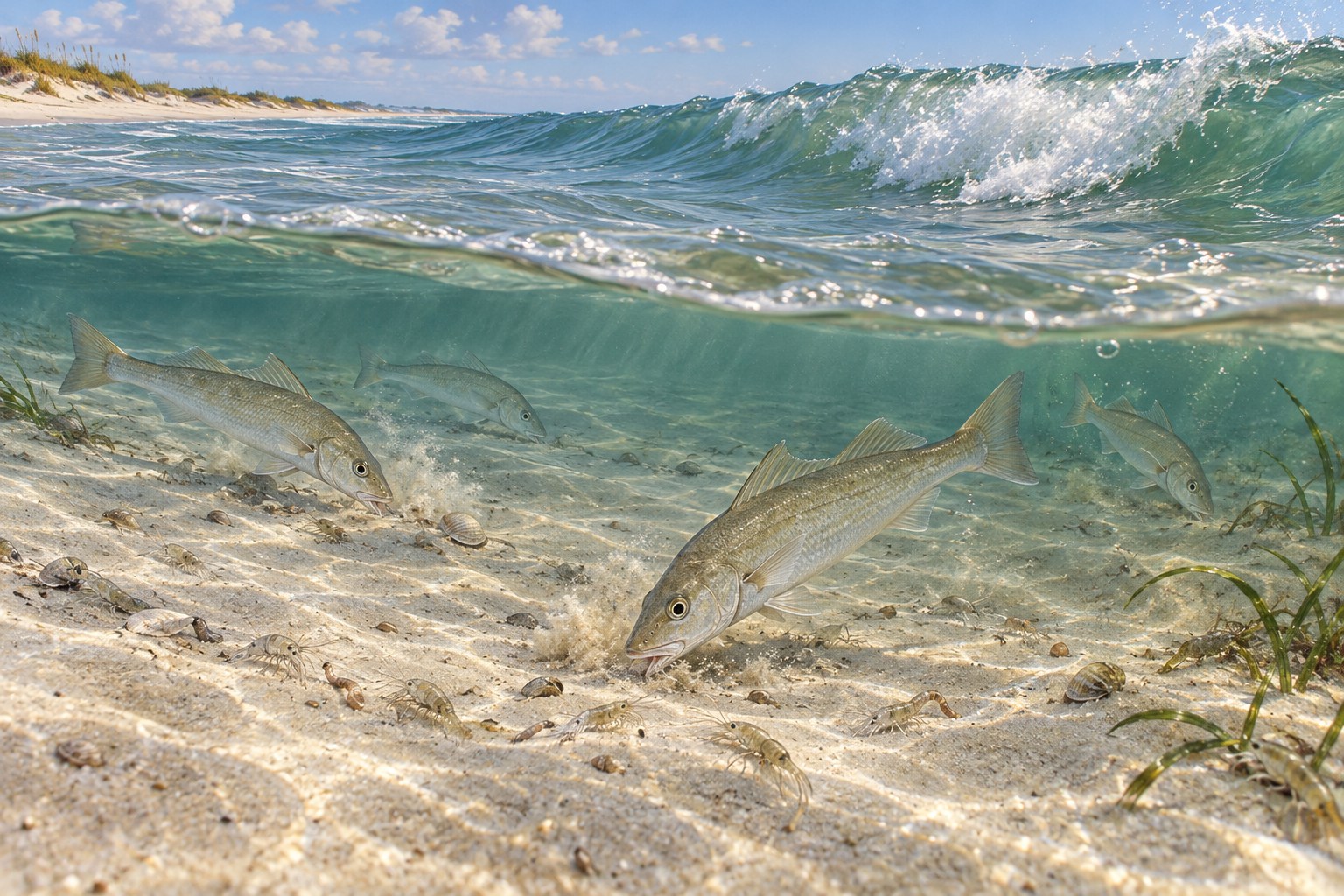
The nearest surf trough is easy to overlook when distant breakers attract attention. Watch where foam settles and where the next wave begins to rise. A repeated deeper strip can be a prey route.
Choose a safe authorized standing position and study several wave sets. A darker gap may be deeper water, but it can also carry stronger flow. Do not wade into it to improve casting distance.
A controlled short placement often teaches more than a long blind one. The illustration describes sandy-bottom feeding rather than an exact North Beach bar or depth.
Start with a small firm offering for whiting habitat
Whiting can search suitable sandy surf for small food. A little shrimp piece or firm strip bait keeps the presentation manageable. Avoid hiding the point inside a large soft bundle.
Use enough sinker hold to maintain the legal lane and keep the rod attended. Watch for small taps and changes in tension. Inspect the bait rather than assuming a still rod means an empty beach.
If small animals strip the hook quickly, shorten the checking interval or use a firmer portion. A simple adjustment may make the presentation last long enough for a different fish to find it.
Try a different food without rebuilding everything
Pompano habitat can overlap suitable clean surf, but a pompano plan is not the same as promising fish on every beach visit. Sand fleas or a compact shrimp offering can test the crustacean-feeding idea. Verify collection requirements before gathering bait.
Keep the initial placement comparable while changing the food. Keeping the placement steady helps compare the two food choices. If the bait is weed-covered, solve the lane problem before deciding the fish rejected it.
A seasonal cool-water idea still needs manageable waves, legal access and visible habitat. Do not let a calendar expectation override the actual conditions.
Carry a small lure for a clear moving opportunity
A passing school of small fish may draw jacks or Spanish mackerel through suitable ocean water. A compact lure can cover a clear authorized lane without leaving bait soaking. Match the direction of travel rather than casting behind the school.
Check the backcast as carefully as the water. Public paths and people on sand can be close to a seemingly open surf position. Stop when the complete hook route is no longer clear.
Keep pliers accessible and leaders inspected. A sudden bite should not leave the angler searching for handling tools among loose tackle.
Read what the rig tells you
Use the returned bait and line path as evidence. A few orderly checks can prevent unnecessary tackle changes.
| Observation | Question to ask | Useful response |
|---|---|---|
| Bait returns intact | Is it in a prey lane? | Test a nearby trough within legal space |
| Bait returns missing | How quickly is it stripped? | Inspect sooner or use firmer bait |
| Line angles sideways | Is the sinker staying controlled? | Shorten or relocate the presentation |
| Weed covers the hook | Is food hidden from fish? | Find a clearer permitted lane |
Keep Oceanside Park and its beach activities distinct
North Beach Oceanside Park has its own visitor route, facilities and activity areas. Use the separate park guide when that is your planned entrance. A neighborhood overview cannot establish every park rule.
Dog recreation and swimming require clear space without fishing line. Do not assume a gap between users provides a permanent casting lane. Ask about the exact activity permission first.
Plan parking and the walk with a compact kit. Avoid setting rod holders or bags where they obstruct a recreation route.
Plan a short session around comfortable conditions
Wind direction changes both line control and the amount of stirred sand. Notice how the nearest water looks instead of judging only the horizon. A calmer window may make bottom reading easier.
Leave time for the return before thunderstorms or poor light complicate the walk. Take water and sun protection even for a brief visit. Keep a dry place for keys and a phone.
Record the usable legal lane, bait condition and observed prey. Recheck local permission before returning rather than treating a past visit as permanent authorization.
Keep small catches and the beach in good condition
Check current FWC licensing and species rules. Identify the catch before retaining it, and release unwanted fish with wet supported handling. Avoid a prolonged photo on dry sand.
Remove discarded line, soft bait packaging and hook fragments. Secure sharp tackle before the walk back. A simple surf trip should leave no hidden hazard for the next visitor.
Common questions
Which North Beach does this guide cover?
The northern Miami Beach neighborhood, not another Florida beach with a similar name.
Is North Beach Oceanside Park the same destination?
It is a specific park within the broader setting and has a separate guide and visitor plan.
What is a straightforward bait method in authorized surf water?
A small shrimp piece or firm strip bait in a controlled sandy trough can test whiting habitat.
Does an empty beach automatically permit fishing?
No. Confirm the exact local activity permission and keep hooks outside swimming space.
Prepare for your visit
Check local tides and weather. Read more about florida pompano, whiting, spanish mackerel. Check current FWC saltwater fishing rules.