
HookCurrent Florida fishing
Spanish Mackerel
Catch Spanish mackerel from piers, beaches and boats. Learn their seasonal movements, how to find bait schools, and how to avoid confusing them with young kings.
Scomberomorus maculatus
Follow the bait, then make a clean cast
Spanish mackerel bring speed and movement to a Florida fishing trip. A quiet patch of water can suddenly fill with flashing bait, diving birds and slashing fish. The opportunity may last only a few minutes, so a simple ready-to-cast outfit is often more useful than a complicated spread.
These schooling predators feed throughout the water column. They can be caught from a boat, a suitable pier or a beach when bait comes within range. The main challenge is staying connected to the moving food supply without frightening the school or tangling with other anglers.
Tell Spanish mackerel from young king mackerel
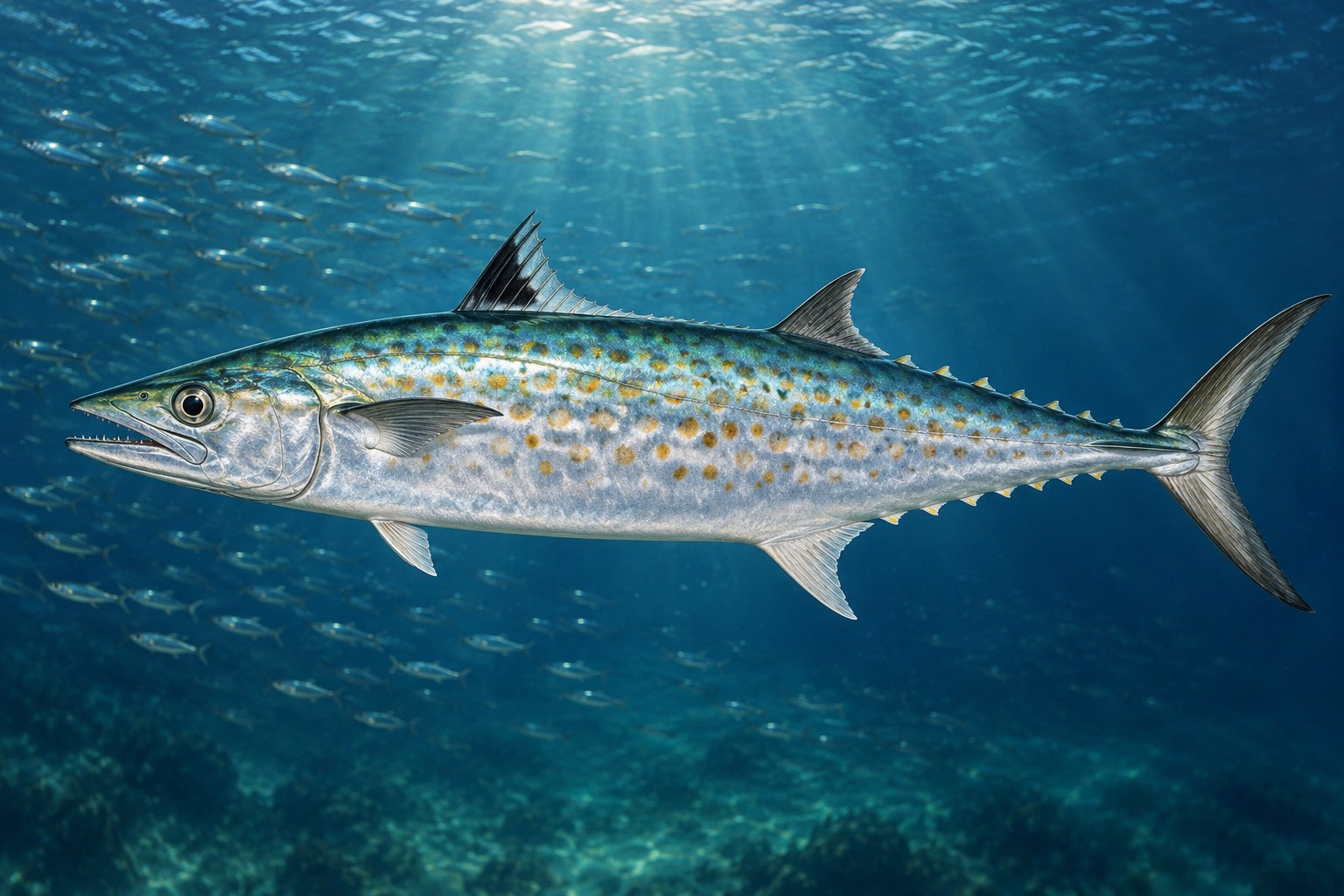
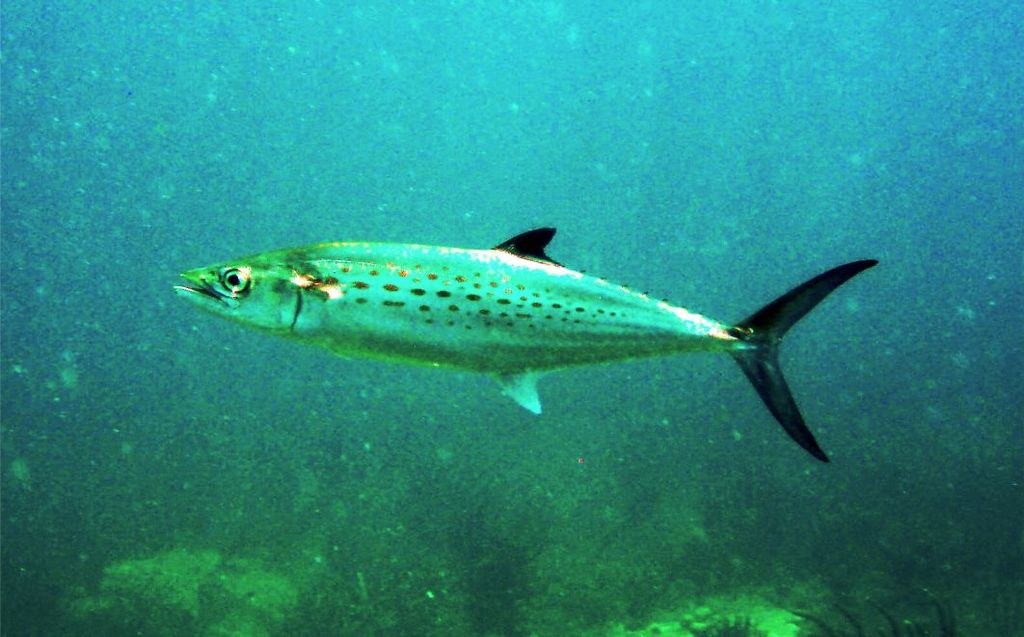
Spanish mackerel have golden spots along silver sides and a dark patch at the front of the first dorsal fin. Their lateral line curves gradually toward the tail. The back is greenish or blue-green.
Young king mackerel can also have spots, which is why spots alone are not enough. A king's lateral line drops sharply beneath the second dorsal fin, and the front of its first dorsal lacks the Spanish mackerel's dark patch. Compare these features before keeping a small mackerel.
Cero, more familiar in southern Florida, have a distinctive longitudinal stripe in addition to other markings. Wahoo have a different pattern and a long first dorsal fin. A fast-moving fish at the boat deserves a calm second look once it is safely controlled.
Coastal habitat and feeding water
Spanish mackerel use beaches, passes, bays, reefs and nearby open water. They are often associated with schools of small baitfish rather than a fixed piece of bottom. A reef can hold food, but the fish may feed well away from its center.
Inlets and passes create useful current lines. A color change, an edge of clearer water or bait pushed against a shoreline can form a temporary feeding area. These boundaries may shift during the same tide.
Do not assume that surface action marks the whole school. Some fish may feed below the visible disturbance. Once a surface burst fades, a slightly deeper retrieve can keep producing if the bait remains nearby.
Spring movement and cooler weather
Spanish mackerel generally expand northward as coastal water warms and shift south as it cools. This helps create familiar spring and fall opportunities along Florida's coasts. Northern Florida is less reliable during cold winter conditions, while southern waters can remain suitable.
The timing is flexible. A warm spell can bring an early appearance, and a cold front can move fish or scatter bait. Wind direction and water clarity can make two neighboring beaches fish differently on the same morning.
Use seasonal expectations to decide where to look, then let current evidence guide the actual fishing. Birds, bait schools and recent local catches are better immediate clues than a fixed date printed on an old calendar.
Spawning and life in schools
Spanish mackerel spawn offshore during the warmer part of the year. Eggs and larvae drift in the water, while older fish move and feed in schools. Growth is relatively quick compared with many long-lived reef fish.
Schooling helps predators find and overwhelm small prey. It also explains why catches may come in sudden bursts. A school can move beyond casting range even though the water conditions have not changed.
Do not chase every brief splash at full speed. A careful approach to the path of the bait often keeps fish accessible longer than repeatedly driving through the feeding area.
What Spanish mackerel eat
Small schooling fish are central to their diet. Glass minnows, sardine-like bait and other locally abundant small fish are common clues for anglers. They also eat invertebrates when available.
Lure size should match the prey reasonably well. When mackerel focus on tiny bait, a large plug may be ignored despite its bright finish. A compact spoon or small jig can be a better match.
Look at the bait's behavior. A tight nervous ball, small fish spraying across the surface or repeated bird dives can reveal predators beneath. Scattered bait swimming calmly is a different signal and may call for more searching.
Light tackle with tooth protection
A medium spinning rod and a reel around the 3000 size range suit many casting situations. Roughly 10 to 20 pound line gives useful distance and enough control for typical fish. Bigger surf, heavy pier traffic or larger mixed catches may justify a stronger setup.
Sharp teeth are the main leader problem. A heavier monofilament or fluorocarbon leader can reduce cutoffs without making the presentation as obvious as thick wire. It will not prevent every bite-off. A short suitable wire trace is another option when fish are cutting repeatedly, especially with valuable lures.
Check the leader after each fish and after unexplained bumps. A small nick can fail on the next cast. Keep pliers ready so fingers never need to enter the mouth to remove a lure.
Casting spoons and metal jigs
Small spoons cast well and imitate flashes from schooling bait. Begin with a brisk, steady retrieve that keeps the lure moving cleanly. Change speed if fish follow without striking. Some days a brief change of pace triggers more bites than simply reeling faster.
Compact metal jigs help when wind makes casting difficult or fish feed below the surface. Let the jig sink to the desired layer, then retrieve through it. Avoid letting a heavy lure fall into rocks when the school is feeding well above them.
Use suitable terminal connections to control line twist. Too much bulky hardware near a small lure can spoil its movement. Test the action beside the boat or shoreline before assuming a new spoon is working correctly.
Plugs, soft plastics and fly fishing
Small swimming plugs can work when mackerel chase larger bait. Check that the lure tracks straight at the chosen speed. A plug that rolls sideways may foul its own hooks and waste a good pass.
Soft plastics catch fish but may be cut quickly by teeth. A durable small bait can still be useful during a selective bite. Carry spare tails and inspect the lure after every missed strike.
Fly anglers can use small baitfish patterns with suitable bite protection. Clear loose line before a cast or hookup. A fast fish can turn a loop around a reel handle or shoe into a broken leader almost immediately.
Live bait and natural presentations
Small live baitfish can be freelined near a feeding school or presented from a permitted pier. Hook size and placement should let the bait swim naturally. A large weight is unnecessary when fish feed high in the water.
Cut strips can also catch mackerel, especially when they resemble injured bait drifting through current. Keep the strip straight and avoid a loose shape that spins uncontrollably. Watch for small fish stealing the offering.
Do not use a natural-bait rig copied from another fishery without checking current gear requirements. If the setup catches mixed species, identify each fish and apply its own rules.
Trolling to locate a school
A small spoon or suitable plug can cover water while searching for bait. Set the trolling speed to the lure's action, not to a single universal number. Watch the lure beside the boat before letting it back.
Use a modest spread that the crew can manage. Lines at different distances can help prevent tangles in turns. Keep an eye on floating weed and debris that can stop a lure from working.
When a fish strikes, note the position and direction of travel. Another pass alongside the bait may be productive. Avoid turning sharply through another boat's path or dragging lines across anglers already working the school.
Pier fishing etiquette and landing
Piers can provide access to moving bait and deeper water, but room is shared. Look behind you before casting, follow local tackle rules and coordinate when a hooked fish crosses neighboring lines.
A suitable landing net is useful where allowed. Do not swing a heavy fish over a rail on tackle that cannot safely support it. A flailing lure near someone's face is a serious avoidable hazard.
Keep catches and gear out of the walkway. If birds gather around bait or fish, control loose hooks and line. Never deliberately cast near a diving bird to reach the same bait school.
Reading a beach bite
Walk or watch the beach before committing to one position. Birds moving steadily alongshore may be following bait that will soon enter casting range. Cast ahead of the movement rather than directly into the center of the commotion.
Fish the edges of the bait school. A lure moving away from the group can resemble a vulnerable straggler. If the school remains too far away, wait or move to a legal access point instead of wading into unsafe surf.
Clear water is helpful for a sight-feeding predator, but slightly stained water can still produce. Heavy mud, large weed mats and dangerous breakers are stronger reasons to change the plan.
Useful Florida starting areas
Pensacola Beach, Destin and Panama City Beach offer seasonal beach, pass and pier opportunities. Tampa Bay and the surrounding Gulf beaches can hold active schools when bait is present. Atlantic inlets and coastal beaches provide another set of moving-water situations.
Check the location guide and current access before traveling to a pier. A familiar structure may be closed after storm damage or repair work. Charter trips can reach schools beyond shore range, but good weather and current local knowledge still matter.
Keeping quality and releasing extras
Mackerel quality declines when fish sit warm on a deck. If retaining legal fish, use enough ice and a clean cooler from the start. Do not catch more than you can handle and store properly.
For release, remove hooks with pliers while keeping the fish controlled and supported. Treble hooks require special attention because one hook can remain free while another is in the fish. Avoid prolonged photographs of a struggling fish.
Rules to check
Confirm Spanish mackerel measurement and bag limits before fishing. Learn the king mackerel differences because a spotted juvenile king follows a different rule. Local pier restrictions and special-area conditions may also affect tackle or access.
Consumption advice can differ among mackerel species and fish sizes. Do not treat Spanish mackerel and king mackerel as interchangeable when choosing what to serve. Consult current Florida health guidance when that question matters to your household.
Spanish mackerel questions
Can I catch them from the beach?
Yes, when bait and feeding fish move within casting range. A suitable trough, pass or beach current line can bring the action close.
Are spots enough to identify one?
No. Young king mackerel can have spots too. Check the first dorsal fin and the course of the lateral line.
Should every retrieve be as fast as possible?
No. Start with a clean brisk retrieve, then adjust to the fish. A controlled speed change can be more effective than maximum speed.
Why do I lose lures without feeling much pull?
Teeth may be cutting the leader. Inspect it, consider stronger bite protection and check whether fish are striking the connection rather than the lure.
What if birds dive but nothing bites?
Match the bait size, try the edge of the school and test a deeper layer. Birds can indicate food without proving that mackerel are the predators beneath it.
Is trolling better than casting?
Trolling helps find scattered fish. Casting provides control once a school is located. The two methods can complement each other during one trip.
Match your approach to the water
| What you find | An option to try | The detail that matters |
|---|---|---|
| Birds over small bait | Slim metal spoon | Cast beside the activity and retrieve without crossing birds. |
| Scattered coastal fish | Small trolling lure | Watch for weed and keep the lure tracking cleanly. |
| Repeated cut-offs | Suitable bite-resistant leader | Balance protection with a small, natural-looking presentation. |
Plan a spanish mackerel trip
Local access guides for spanish mackerel trip planning: Fort Walton Beach, Clearwater Beach, St. Augustine.
Tides and weather · Florida fishing charters
Read the current FWC rules for spanish mackerel.
Rules review: October 4, 2026.
Research and photograph credits · All fish species · Return to the beginning