
PANHANDLE
Fort Walton Beach
fishing guide
Explore the sound, bay and nearby island shore. Learn which access fits your trip and how to fish the edges around Fort Walton Beach.
Explore the guide ↓FISH THE SOUND BEFORE YOU CHASE THE GULF
Fort Walton Beach rewards a smaller plan
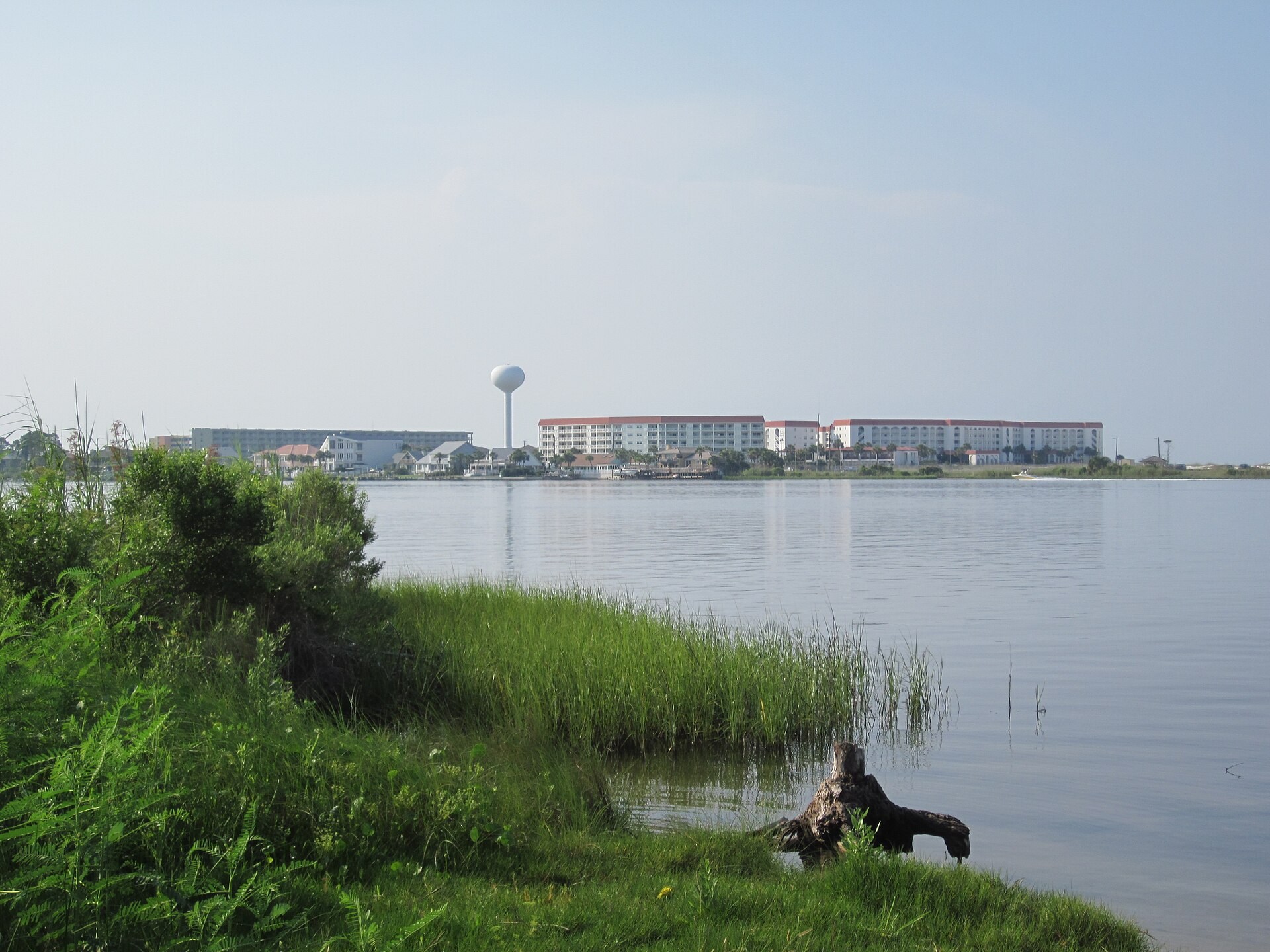
The water beside Fort Walton Beach is part of the attraction. Santa Rosa Sound runs behind the barrier island, while Choctawhatchee Bay opens to the east. That creates options for a short shore session, a careful kayak outing or a longer boat trip. You do not have to begin at a Gulf pass to find interesting fishing.
This guide concentrates on the town’s sound and bay setting. Nearby Okaloosa Island adds Gulf beach and pier choices, but those are a different style of trip. Choose sheltered shoreline fishing if the goal is learning to present a bait. Choose the Gulf side when the weather, access and equipment suit it.
The most useful water is often a small change: a dock shadow, an opening in grass, a creek mouth or a bank that falls into a slightly deeper lane. Learn to recognize one of these features and you can make more informed casts across the whole area.
Check the launch before loading the boat
The city’s July 2026 notice says the park’s west side, including the boat launch, was scheduled to close August 3 for improvements expected to take about six months. Do not plan on that ramp being available without a newer confirmation. An older park listing still describes the ramp and pier.
Liza Jackson Park
The park sits at 338 Miracle Strip Parkway and has a long public waterfront. The construction notice matters more than a general amenities list. Ask which portions are accessible on the day of your visit. A place that is normally a good family fishing stop can have a very different parking and walking arrangement during work.
Alternative boat ramps
The city names Cinco Bayou, Water Street, Marler Park, Meigs Park and Walkedge among alternatives in the surrounding area. Cinco Bayou’s listed trailer parking is limited. Match the ramp to your boat, trailer and intended water rather than selecting only the closest name on a map.
Shore access around the sound
Public access does not mean every waterfront edge is safe for fishing. Leave launch docks clear for loading boats. Avoid standing where your line crosses an active channel or pedestrian path. Look for a designated fishing area and a landing spot with enough room to control a fish.
Nearby island options
Okaloosa Island can offer a useful alternative when you want beach fishing. A sound-side outing and a Gulf-side outing call for different wind checks. The island’s shelter is not a promise of calm water if wind blows along the full length of the sound.
Read the shoreline in three layers
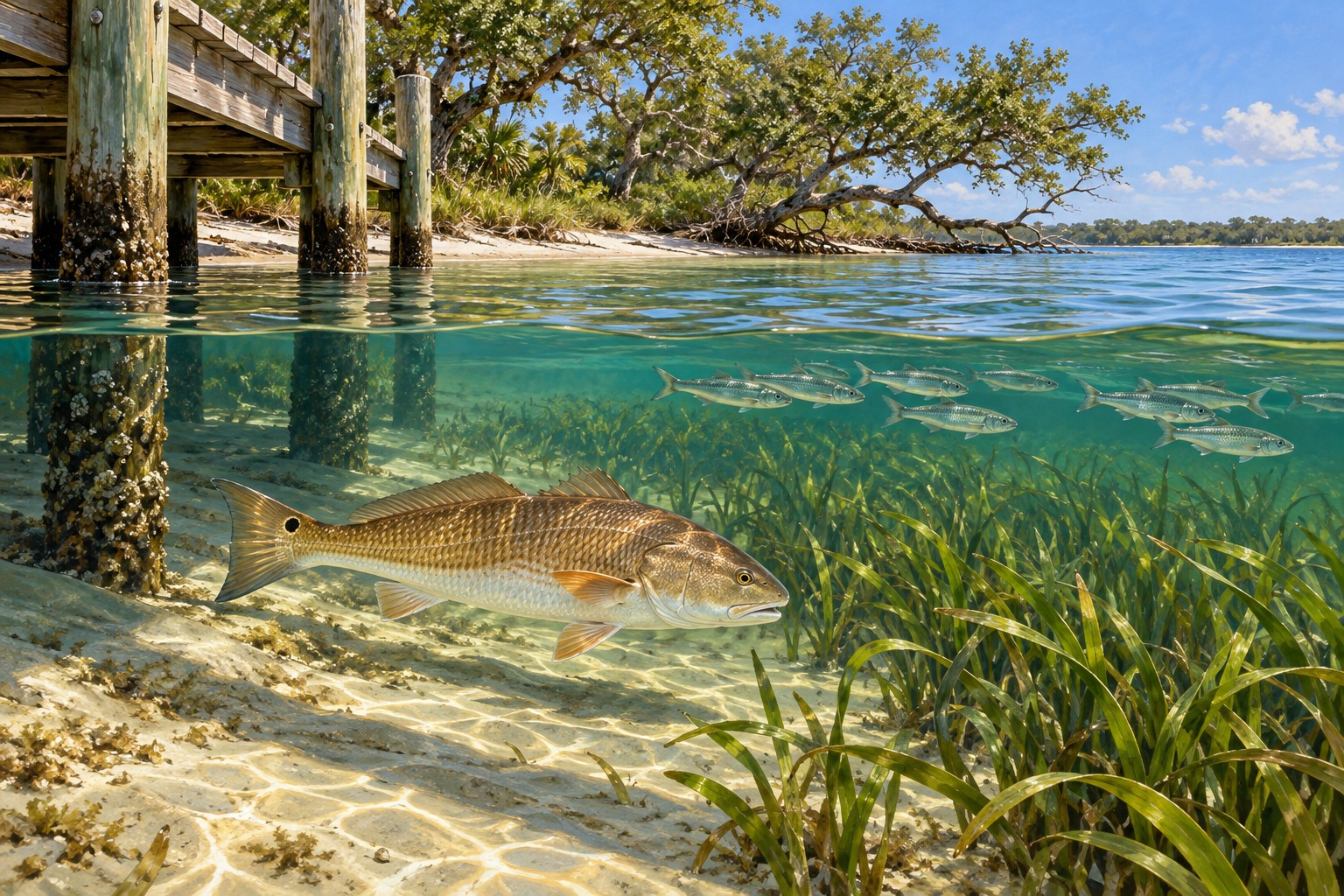
The bank: notice shade, overhanging growth and small drains. A redfish can patrol very close to the edge when enough water covers its feeding route. Stay back and make a soft first cast instead of walking straight into the shallows.
The grass edge: dark underwater patches can shelter shrimp and small fish. Cast beside the edge, not into the thickest growth. A lure that gathers grass on every retrieve is spending too much time on the bottom. Reduce weight, raise the rod tip or change the angle.
The deeper lane: water outside a flat or dock line gives fish somewhere to retreat. That change can become useful after a cold night or under a high summer sun. Let a lure sink a little longer there, but keep it out of the marked boat channel.
Clouds and wind make color harder to read. Dark water can also be shadow or bottom mud. Use a slow first pass and a chart if you are boating. Never treat a color difference alone as proof of navigable depth.
Build your day around an attainable target
| Target | Where to look | How to begin |
|---|---|---|
| Spotted seatrout | Grass edges and small open sand patches | Drift a shrimp above the grass or swim a small paddletail |
| Redfish | Quiet shorelines, drains and mixed sand or shell | Place a shrimp or weedless soft plastic ahead of the fish |
| Flounder | Sandy transitions beside moving water | Work a small jig slowly with brief pauses |
| Sheepshead | Pilings or other permitted hard structure | Lower a compact crustacean bait close to the surface of the structure |
| Black drum | Bottom near shell and deeper shoreline pockets | Let a scented natural bait rest without excessive weight |
A small fish can teach you where food is concentrated. Note whether a bite came beside shade, over sand or at the end of a drift. Repeat that useful part of the cast rather than changing every piece of tackle after each fish.
Make a shrimp behave naturally
A live shrimp under a small float is a forgiving place to start. Set the depth so the bait hangs above the grass rather than dragging through it. Cast slightly across the moving water and allow a short drift. Retrieve before the float approaches another person’s line or a boat’s path.
Pop the float once or twice, then give the bait time to settle. Constant splashing can make the rig less convincing in calm, clear water. If the shrimp repeatedly comes back tangled, shorten the leader or smooth out your cast.
For a natural bait on the bottom, add only the weight needed to control its position. A heavy sinker can pull it into mud or a snag. If small fish remove every shrimp, try a tougher small bait, move away from the busiest bait-stealing patch or switch to a lure you can keep moving.
Use the shrimp you have carefully. Keep live bait cool and well supplied with oxygen. Do not leave a bucket in a hot parked car while scouting. When handling a hooked fish, set the bait bucket where it cannot spill onto a walkway.
Three lure presentations to learn
Swim a paddletail above grass
Rig the soft body straight. A crooked lure spins and twists line. Begin with a steady retrieve fast enough to keep the lure above the grass. Add a short pause beside an open sand patch. If the lure constantly fouls, lighter weight is often a better change than more speed.
Work a dock edge from outside
Cast parallel to accessible structure rather than deep beneath a private dock. You are trying to keep the lure in the shaded feeding lane. Start farther away so a hooked fish has a little open water between you and the nearest piling.
Use a quiet surface lure in low light
A surface lure can be useful over shallow water before glare builds. Work it with small, controlled movements. Wait until the rod loads after a strike rather than yanking at the first splash. Switch below the surface if fish repeatedly follow without taking it.
Adjust to temperature and traffic
In cooler months, seek a comfortable wind window. Fish deeper edges more slowly and consider the warmer part of the afternoon after a cold morning. A sheltered pocket can fish very differently from an exposed shoreline only a short distance away.
During spring, work outward from deeper holding water as shallows warm. Small baitfish and shrimp around a flat give you a better reason to stop than a shoreline that merely looks attractive. Keep an alternate bank in mind if the wind changes.
Through summer, lower light can improve both comfort and presentation. Boat wakes and recreational traffic grow during the day. Give busy ramps room and avoid parking a kayak at the end of a launch lane while tying tackle.
In fall, follow concentrations of bait along the sound. A short move from an empty flat to an active drain can matter more than a long run across the bay. Fish can shift with the next weather front, so yesterday’s location is a starting clue rather than a guarantee.
A sound-side kayak trip needs an exit plan
Choose a legal launch near the shoreline you intend to fish. For an unfamiliar first trip, plan a short return route instead of crossing open water. An easy paddle with the wind can become a demanding return against it.
Carry a properly fitted life jacket, a whistle, drinking water and a protected phone. Make yourself visible to boaters. Cross a navigation route only when it is clear and do not stop in it to fish. Secure loose hooks before getting in or out of the kayak.
Use your paddle or a suitable shallow-water position to control a drift without scraping grass. If the water becomes too shallow, move back to your known route. Dragging a loaded kayak across shell or seagrass can damage the habitat and your equipment.
Review local wind and tide information before leaving. Watch the actual water level at your launch so you know whether the return will be easier or harder.
Choose a trip you can finish comfortably
A short shore visit: confirm an open fishing area, carry a single rod and start with shrimp. Spend the first half hour learning how the current carries the bait. If construction or crowds make the access awkward, change locations before setting out all your equipment.
A lure practice session: bring one paddletail rig and several replacement bodies. Fish a legal stretch of shoreline with casts at different angles. Keep track of depth and grass contact. The goal is to learn one presentation well, not empty a tackle box.
A family outing: prioritize a stable edge, nearby restrooms and a short walk. Keep spare hooks out of reach and give each person a clear casting space. End while everyone is still comfortable instead of waiting for one last bite in the hottest part of the day.
Check access and harvest separately
An open park is not the same as an open fishing season. Before retaining anything, consult FWC’s current saltwater regulations. Keep a measuring tool handy and release fish you cannot identify confidently.
For access, use current city construction notices and signs on site. Do not move a fence or enter a work area because an older fishing report mentions a productive dock. The sound offers enough choices that you can make a better plan without taking that risk.
Useful Fort Walton answers
Is Santa Rosa Sound always calmer than the Gulf?
It is more sheltered from ocean swell, but wind can build chop along the sound. Check direction and strength rather than judging from a protected parking lot.
Can I launch at Liza Jackson Park during the renovation?
Do not assume so. The city’s notice specifically includes the west-side boat launch in the work. Confirm a newer opening notice or choose a verified alternative.
What line strength should a beginner carry?
A medium spinning outfit with about 10- to 15-pound main line is a practical light-inshore start. Use a suitable leader and avoid forcing that outfit against large fish beside heavy structure.
Is the biggest bait the best choice?
Small shrimp and modest lures can catch several local inshore species. Match the bait to the fish you are trying to catch and the food you can see.