
PANHANDLE
Navarre Beach
fishing guide
Choose the pier, work a beach trough or explore the sound. Find a practical Navarre fishing plan with the right bait and room to cast.
Explore the guide ↓A PIER, A BEACH AND A QUIETER SOUND
Choose the side of Navarre that fits your day
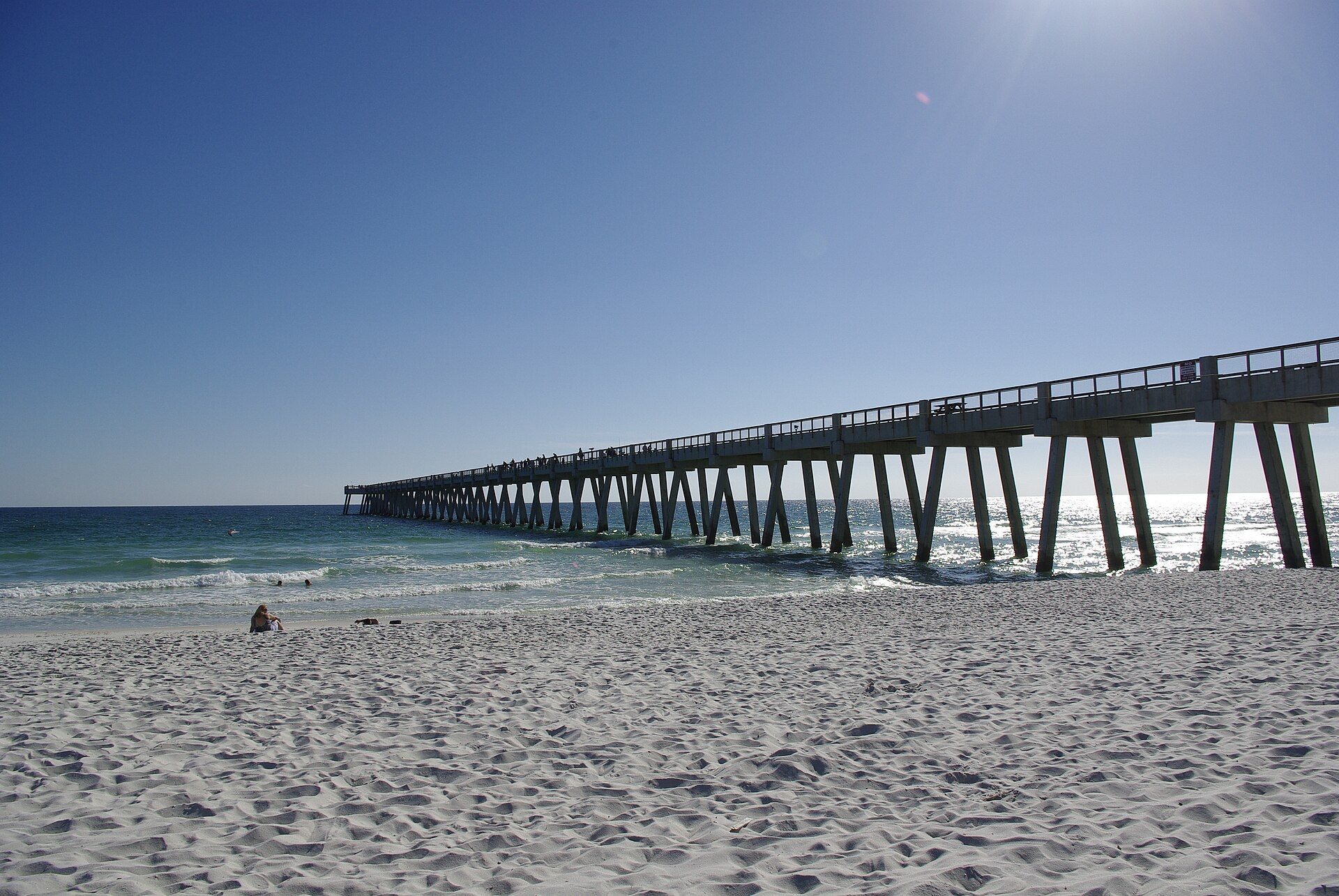
Navarre Beach gives you three very different ways to fish. The Gulf beach suits a small bait rig and a patient search along the sand. The long fishing pier puts you above deeper water without a boat. Santa Rosa Sound, on the island’s north side, offers a more sheltered setting when the Gulf is uncomfortable.
Start with the wind, then choose your fish. A calm-looking beach can still have a strong pull along the shore. A breezy pier can be difficult for a child even when people are catching fish. The sound may offer a better outing, but only from an allowed public access point. A dock behind a rental house is not public fishing access.
For a first visit, choose one simple goal: catch whiting from the beach, learn to fish a pier piling, or try a shrimp beside a sound-side grass edge. Carrying equipment for all three usually adds more work than useful options.
Try the pier if you need a firm walking surface and help choosing bait. Choose the surf if you want room to spread out. Consider a short sound-side session when you can identify legal access and a sheltered shoreline.
Where to begin
Navarre Beach Fishing Pier
The pier’s entrance is at 8579 Gulf Boulevard. The operator lists fishing passes, rod rental and bait sales. A fishing admission includes the license coverage for fishing from that pier. It does not cover a separate beach, kayak or boat trip. Hours change with the season, so confirm the opening time before planning a sunrise visit.
Walk out before choosing a rail position. Nearshore sections can produce bottom fish. Farther out, bait schools may attract Spanish mackerel and other moving fish. The far end is not automatically the best place for a beginner. Look for enough space to cast safely and a way to land a fish without lifting it by the line.
The Gulf beach
Use a marked public beach entrance. Walk over the dunes on the designated path. Set up away from swimmers, turtle nests and posted wildlife areas. Keep your rod holders close enough that you can watch every line. A long stretch of empty sand gives you more freedom to change casting distance than a crowded swimming beach.
Santa Rosa Sound
The quieter water behind the island can make light tackle enjoyable. Search for a change from pale sand to darker grass rather than casting blindly across the middle. Scout the exact access point in daylight. Do not assume you can fish from every park edge, launch lane or private seawall.
Beyond the main beach
Gulf Islands National Seashore lies west along the island. Its protected beaches have their own access and wildlife rules. Treat a trip there as a separate outing. Carry water and a plan for getting back, and follow any seasonal closures rather than stepping around a barrier to reach open sand.
Fish worth planning around
| Fish | Useful starting water | Bait or lure to try |
|---|---|---|
| Whiting | Nearshore sand and the first beach trough | A small piece of fresh shrimp on a modest hook |
| Florida pompano | Clean moving surf over sandy bottom | Sand fleas, shrimp pieces or a scented bait strip |
| Spanish mackerel | Pier water with small baitfish near the surface | A compact silver spoon or small metal jig |
| Redfish | Surf edges or sound-side feeding lanes | Shrimp, a small baitfish or a slowly worked paddletail |
| Spotted seatrout | Sound-side grass with nearby deeper water | A shrimp under a float or a light soft-plastic lure |
| Sheepshead | Hard structure and pilings | A small crustacean bait held close to the structure |
These are reasonable targets, not a promise that each is present on your visit. Watch what the water is showing you. Diving birds and flicking baitfish suggest a different approach from a quiet, sandy trough. A mullet jumping by itself is not proof that a predator is feeding underneath it.
Catch more by reading the first few yards
Stand back from the water and watch several sets of waves. A shallow bar makes waves break. A deeper trough may look smoother or darker. Fish can use that trough to move along the beach while searching for food washed out of the sand.
Make your first cast shorter than you think necessary. Put another cast beyond the first break only if your tackle can hold there. If every bite comes close, shorten the next cast too. Distance is a tool, not a measure of fishing skill.
A simple two-dropper surf rig can carry small baits above a sinker. Use only enough weight to keep the rig from sliding into another angler’s line. If even a sensible weight will not hold, move to calmer water rather than using tackle your rod cannot cast safely.
Fresh shrimp should smell clean and remain firm enough to stay on the hook. Small pieces often work better for whiting than a whole large shrimp. Keep spare bait chilled. Replace bait that has become a soft, empty shell, especially after a series of tiny taps.

Fish the pier without fighting the pier
Ask the attendant where your chosen method is allowed. Some anglers need room for a long drift or a special rig. Do not settle between them and then cast across their lines. Watch the direction of water movement before dropping a bait.
For bottom fishing, lower or cast the rig so it settles beside a piling rather than wrapping around it. Keep a little contact with the sinker. A completely slack line makes a light bite harder to feel. If the rig repeatedly catches on structure, shift your position or shorten the amount of line in the water.
For Spanish mackerel, a small lure can match the bait better than a large one. Retrieve through the edge of a visible school, not directly through another person’s float. Keep fingers away from teeth and use pliers to remove hooks. Replace a leader when its surface feels rough.
Plan the landing before the bite. A drop net is much better than trying to hoist a heavy fish on a rod. Ask nearby anglers for space and keep the walking lane clear. Never swing a fish or a rig with exposed hooks over people.
How the year changes the trip
Spring: look for returning bait
As coastal water warms, watch for small bait schools along the pier and beach. Pompano and mackerel can make spring interesting, but a passing cold front can interrupt that pattern. A stretch of settled weather is usually a more useful planning clue than a calendar date alone.
Summer: shorten the hot part of the day
Early beach sessions help avoid crowds and heat. On the pier, bring shade protection and drinking water even if your visit is short. In the sound, begin around lower light and pay attention to boat traffic. Thunderstorms are a reason to leave exposed water, not a reason to wait under a pier shelter.
Fall: follow food moving along the coast
Bait movement can create brief bursts of activity. Carry a lure rod ready to cast if fish begin chasing near you. Between those bursts, a small bottom bait can still make the outing productive. Do not abandon an active close trough just because birds are working beyond casting range.
Winter: use the gentler windows
Wind can matter more than the hour. Choose a comfortable day and reduce the size of your bait or lure presentation. In sheltered water, allow more time for a lure to sink and avoid racing it past fish that are moving slowly.
A small tackle bag that covers the basics
A medium spinning outfit with roughly 10- to 15-pound line is a useful starting point for light sound fishing. A longer surf rod helps keep line above breaking waves. Match the sinker to the rod’s printed casting range. A pier outfit may need more lifting control, but the landing net should still do the lifting.
Pack spare leaders, a few small hooks, two or three sinker sizes, pliers, line cutters and a measuring board. Add polarized glasses for spotting sand changes and protecting your eyes. A towel for your hands is useful, but handle a fish you intend to release with wet hands rather than a dry cloth.
Keep the active rig simple. If a float and shrimp are catching fish, learn that presentation before adding three different lures. When a fish breaks your leader, inspect the damaged end before deciding whether you need heavier line, a different knot or a safer angle around a piling.
Two easy ways to spend a morning
From the beach: arrive at an open public access, watch the waves for five minutes and choose a trough with room on both sides. Start with shrimp close to shore. Change distance after a quiet spell. Stop before the swimming crowd makes safe casting difficult.
From the pier: check hours, buy the correct pass and ask about current conditions. Spend a few minutes watching the water before rigging. Fish one method from a roomy rail position. Take a walk to look for bait movement between sessions instead of repeatedly casting at empty water.
Use HookCurrent’s tides and weather page when planning. A tide prediction is a guide to water level. The current you actually see beside the pier or shoreline should guide the final cast.
Leave with your tackle and the right fish
Identify a fish before putting it in a cooler. Check the applicable size, season and bag rules before your trip with the Florida Fish and Wildlife Conservation Commission. A good bite does not mean harvest is open.
Keep hooks out of bird reach. Never feed a pelican leftover bait. Pick up clipped line as you change rigs. If a turtle or other protected animal becomes hooked, alert pier staff and follow trained assistance rather than pulling it up or cutting everything loose without advice.
Navarre questions
Do I need a boat to catch something worthwhile?
No. The pier and beach provide practical fishing without a boat. Pick a target suited to those places rather than expecting an offshore catch from the sand.
Does my pier ticket cover fishing on the beach?
The operator’s listed license coverage applies to pier fishing. Check your own license requirements before moving to another location.
Should I use the same rig in the sound and surf?
Often you will want less weight in the sound. A heavy surf rig can bury in soft bottom or grass where a lightly weighted shrimp would move more naturally.
What if the beach is full of seaweed?
Inspect nearby water before casting again. A small relocation or a different side of the island may help. Repeatedly hauling weed with a heavier sinker rarely improves the outing.