

PANHANDLE
Opal Beach
fishing guide
Opal Beach combines a national seashore day-use area with open Gulf surf. The useful fishing plan starts outside the guarded swim section and focuses on the near sandbar, water clarity and a bait that stays in place.
Explore the guide ↓Distinguish the beach complex from roadside access
Opal Beach is in the Santa Rosa area of Gulf Islands National Seashore, between the Pensacola Beach and Navarre portions of the barrier island. The day-use complex and the individual roadside crossings have different facilities.
The National Park Service lists the Opal Beach complex's usual hours as 8 a.m. to sunset. The complex requires an entrance fee, with payment by credit card. Check current road and facility alerts before relying on those normal arrangements.
The main complex provides restrooms, showers and pavilions. Some separate crossings have no water, toilets or showers. Select an access that suits the people in your group instead of assuming every numbered lot is equally equipped.
Fishing is restricted in the swim beach when lifeguards are present. Check the flags and signs, then keep the bait and casting arc outside the occupied swimming space. A roadside crossing is not permission to enter a closed dune area.
Use the waves to sketch the bottom
An exposed Gulf beach has no permanent fishing lane. Watch where successive waves break and where foam drifts afterward. A break farther offshore with a calmer strip inside it can indicate a nearshore trough.
Look for changes along the beach as well as changes in distance. A patch that holds foam differently may have a different bottom shape. Make small moves within the open public section to compare those patches.
Water rushing back through a gap is a safety signal. Stay on the sand and avoid using wading to reach a supposedly better bar. The surf can deepen a cut between visits, including after a storm.
Keep the first bait small and fresh
For a beginner, a trimmed shrimp bait is easy to prepare and inspect. Fit it neatly on a suitable small hook. Leave the point exposed so a small fish can take the offering without pushing a thick shell into the hook gap.
Whiting can feed close enough that casting power is not the main challenge. Try a short presentation into suitable open sand, then vary the distance. Watch the rod for taps that repeat independently of the passing waves.
Freshness matters after the bait leaves the cooler. Work with small portions and keep the rest shaded. If the beach is hot, do not leave the whole supply in a tray beside the rod holder.
Search clean sand for pompano
Pompano are a reasonable surf target when conditions and seasonal movements suit the coast. Their small prey suggests a compact offering. Sand fleas or prepared strip bait can be used alongside shrimp to compare results.
A small float on a dropper can lift an offering above the sand. It should not make the bait swing uncontrollably across other visitors' water. Keep the rig simple enough to untangle and inspect quickly.
Give a promising trough enough time to test, but do not wait indefinitely on a baitless hook. Check the rig, renew the bait and note whether bites come at one particular casting distance.
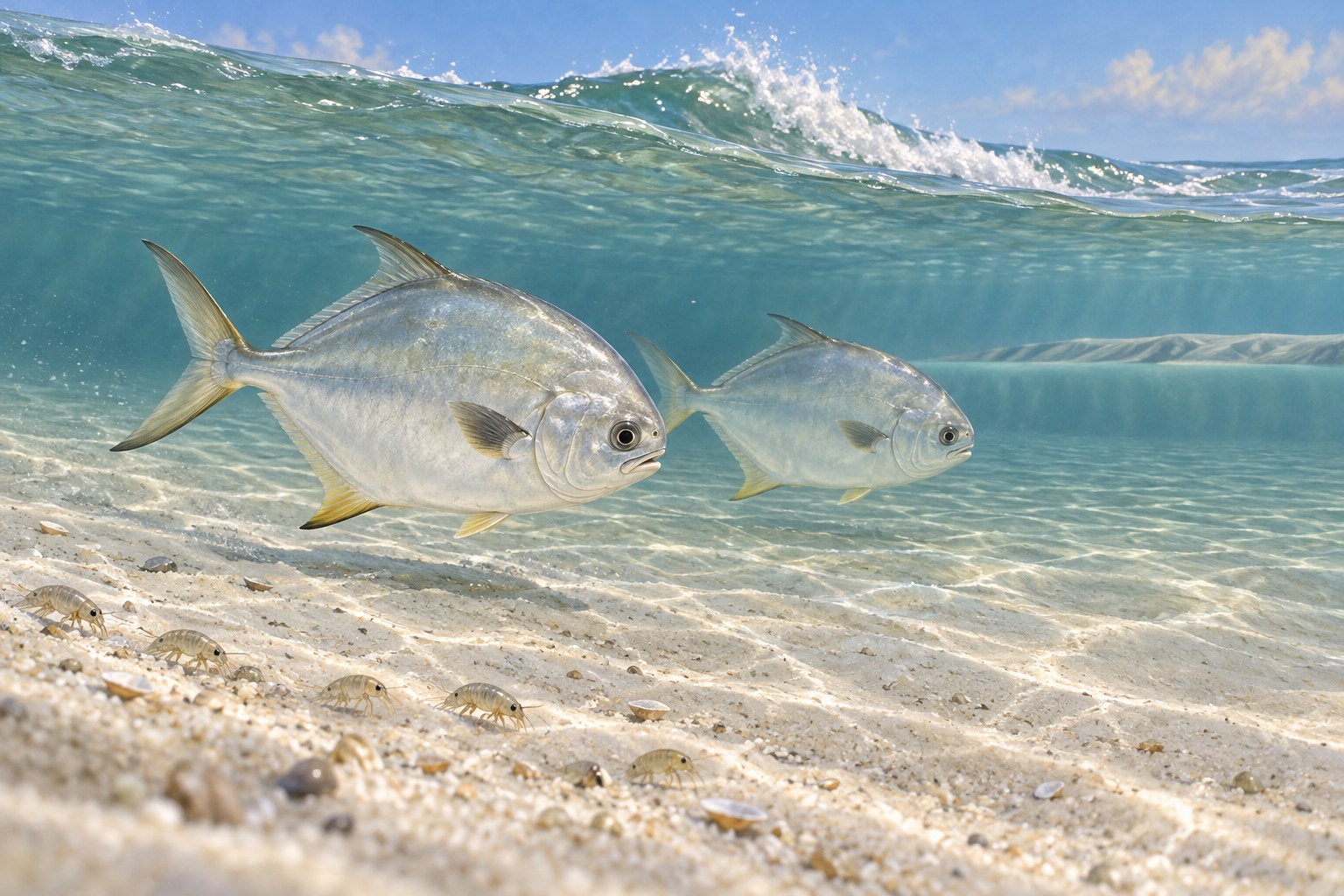
Switch tactics when prey moves through the wash
Small baitfish passing along the surf can attract mobile predators. A silver baitfish-shaped lure offers a different presentation from a stationary bottom rig. Use it when there is an open casting lane and visible reason to try it.
Retrieve parallel to a clear beach edge only when the line remains away from people. Vary speed without dragging the lure through breaking waves at your feet. Stop a retrieve before the hooks reach the occupied wash.
Toothy fish need careful hook removal. Carry pliers long enough to keep your hands away from the mouth. Do not try to control a lively fish by gripping the line directly above exposed hooks.
Balance the weight against side drift
Crosswind and water moving along the beach can bow the line. That extra pressure makes a light weight tumble and turns the rod tip without a bite. Before adding weight, reduce unnecessary slack and inspect the line path.
Choose a suitable sinker within the rod's safe casting range. More lead is not a cure for surf that carries the line into swimmers. When holding a narrow safe lane is no longer possible, change the location or end the outing.
Pack only the tackle you can keep organized on sand. A compact bag, measuring board and spare hook rig are easier to manage than a box spread across a windy beach.
| Beach signal | Fishing response | Safety limit |
|---|---|---|
| A clean inner trough | Test a short bait cast | Keep the landing wash clear |
| Repeated sideways drift | Check line tension and suitable weight | Stop if lines cross occupied water |
| A visible sandbar gap | Observe from dry sand | Do not wade through the outgoing flow |
| Small prey moving along shore | Try a compact lure | Cast only with space behind and ahead |
Choose manageable water over an ideal clock time
A forecast tide can help organize the day, but actual wave height and wind decide whether a shore rig is manageable. Observe the beach before unpacking the entire kit. The best-looking tide period may still have unsafe surf.
On a bright calm day, subtle changes in water color can be easier to see. In churned-up water, the visible trough may be harder to identify. Shorter test casts and frequent bait checks help you learn without guessing the bottom.
An early visit can offer more casting room, subject to the access schedule. Plan around the group using the beach, not only around fish. A quiet section can become a swimming section as the morning progresses.
Prepare for a crossing with fewer facilities
If you choose a separate access instead of the complex, confirm the services before arriving. Carry enough water for the return walk. A nearby road does not guarantee shade, a restroom or a place to rinse tackle.
Stay on the marked crossover and keep away from nesting enclosures. Dune vegetation holds sand in place and supports protected wildlife. Carry equipment rather than creating a drag trail through the plants.
Leave someone your access number or clearly named parking area. Mobile reception and road access should not be your entire emergency plan. Turn back early when heat, lightning or rising wind begins to change the outing.
Handle catches without making a mess of the beach
Arrange your landing tools and release method before casting at Opal. Bring a suitable measuring tool and learn how to identify the species you intend to retain. Keep a released fish supported and out of dry sand as much as practical.
Check current Florida rules together with national seashore restrictions. Do not interpret an old catch photograph as evidence of today's harvest season or facility condition. Beach chumming is not part of this fishing plan.
Collect your line scraps before opening the car door. Wind can lift small pieces out of a bag and spread them across the lot. A sealed tackle-waste container helps finish the session as neatly as it began.
Common questions
Are all Opal Beach access points equipped with restrooms?
No. The main complex has facilities, while some separate crossings do not. Confirm the access you intend to use.
Can I fish in the Opal Beach swim area?
The swim beach has fishing restrictions when lifeguards are present. Follow the current signs and keep well away from swimmers.
Do I need a very long surf rod?
Use an outfit suited to the weight and conditions you can safely handle. Nearby troughs can be worth testing before choosing a long-distance setup.
Is a sandbar gap a good place to wade?
No. A gap can carry strong returning water. Observe and cast from stable dry sand instead of wading into the flow.
Prepare for your visit
Check local tides and weather. Read more about florida pompano, whiting. Check current FWC saltwater fishing rules.