
PANHANDLE
Perdido Key
fishing guide
Perdido Key has several ways to reach the Gulf, but the island is not one continuous public fishing park. Start with a named open access, separate surf fishing from bay fishing and let the day's wind decide the scale of the outing.
Explore the guide ↓Choose a named access on Perdido Key Drive
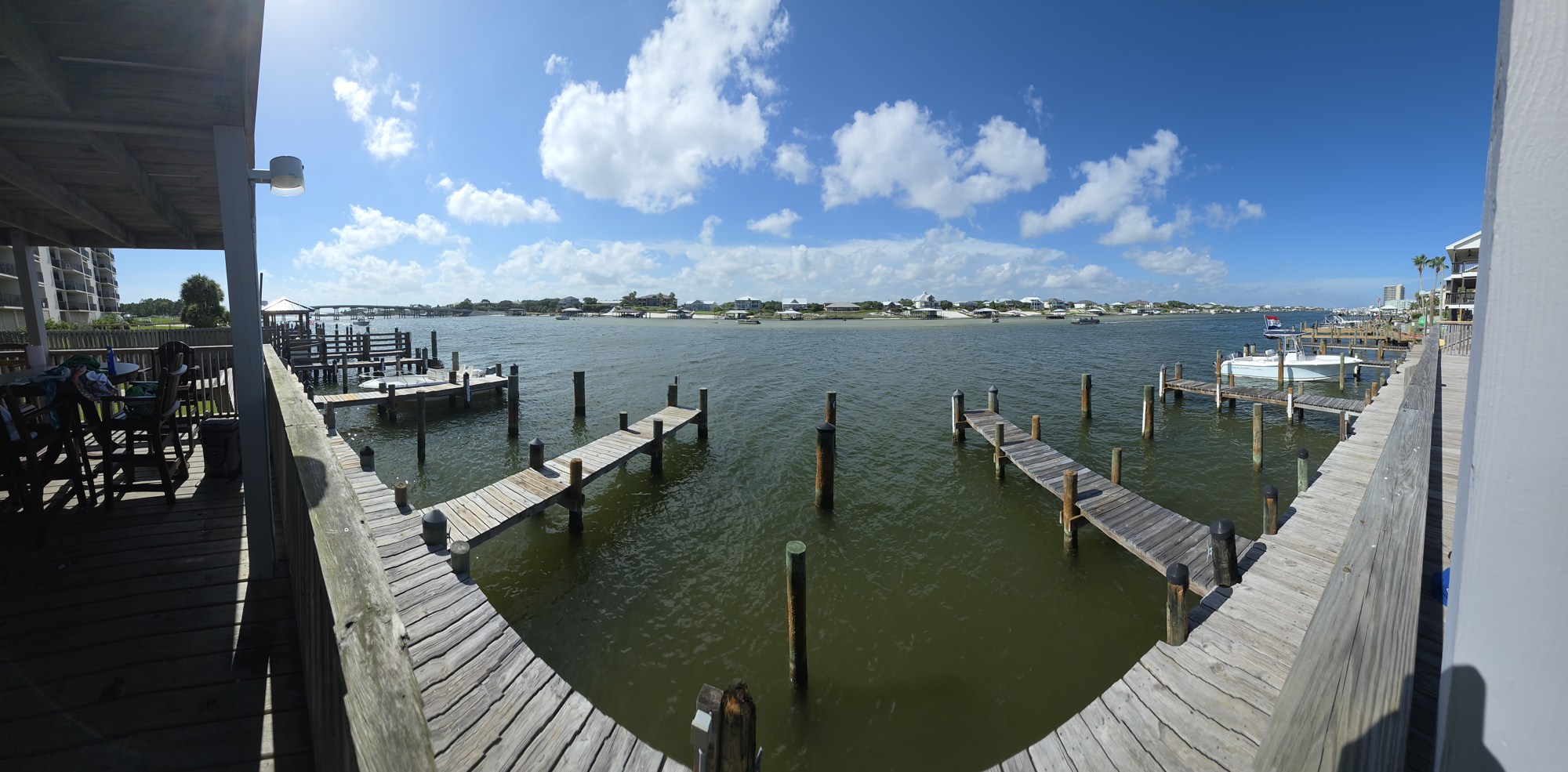
Perdido Key is a barrier island in the far western Florida Panhandle. The Gulf-facing beach, the national seashore and the nearby mainland lagoon provide different fishing settings. A holiday address on the island does not identify which setting you can legally enter.
The official visitor directory lists four numbered public accesses along Perdido Key Drive. Johnson Beach is a separate National Park Service destination, while Perdido Key State Park has its own entrance and operating rules. Match your route to the exact destination before driving.
As of the October 11, 2026 review, Perdido Key State Park and Big Lagoon State Park pages displayed closure notices. Confirm their reopening directly before planning those options. Do not extend a state park notice to every other island access, or assume another access is open without checking it.
Use a public crossing or one you have permission to use. Keep away from closed dunes, private buildings and marked wildlife enclosures. An attractive gap between properties does not establish a right to carry tackle through it.
Separate a surf trip from an inshore trip
The southern shore faces the Gulf and its moving sandbars. A bottom bait rig there needs enough weight to hold in the wash. The target is often a small feeding lane near sand, rather than a permanent piece of structure.
Sheltered water north of the island calls for an inshore approach. Vegetation edges, channel shoulders and bait movement matter more than an outer surf bar. Access must still come from a permitted landing or launch.
A flat Gulf forecast does not guarantee an easy lagoon crossing, and a protected mainland shoreline does not mean the open beach is safe. Plan each route with its own wind exposure and return distance in mind.
Begin the Gulf session with compact bottom baits
A trimmed shrimp bait is a useful first test for whiting and other small surf feeders. Thread it neatly and leave the hook point clear. Check the bait after repeated taps instead of interpreting every rod movement as a fish.
For pompano, try a small sand flea or an appropriate strip bait over clean sand. The purpose is to imitate small prey. A large float or oversized bait can add drag without improving that match.
Set the first cast into a manageable near trough. When the bait comes back clean and the rig stays in place, compare another distance. Work out which lane produces activity before choosing more elaborate tackle.
Think about redfish as traveling coastal fish
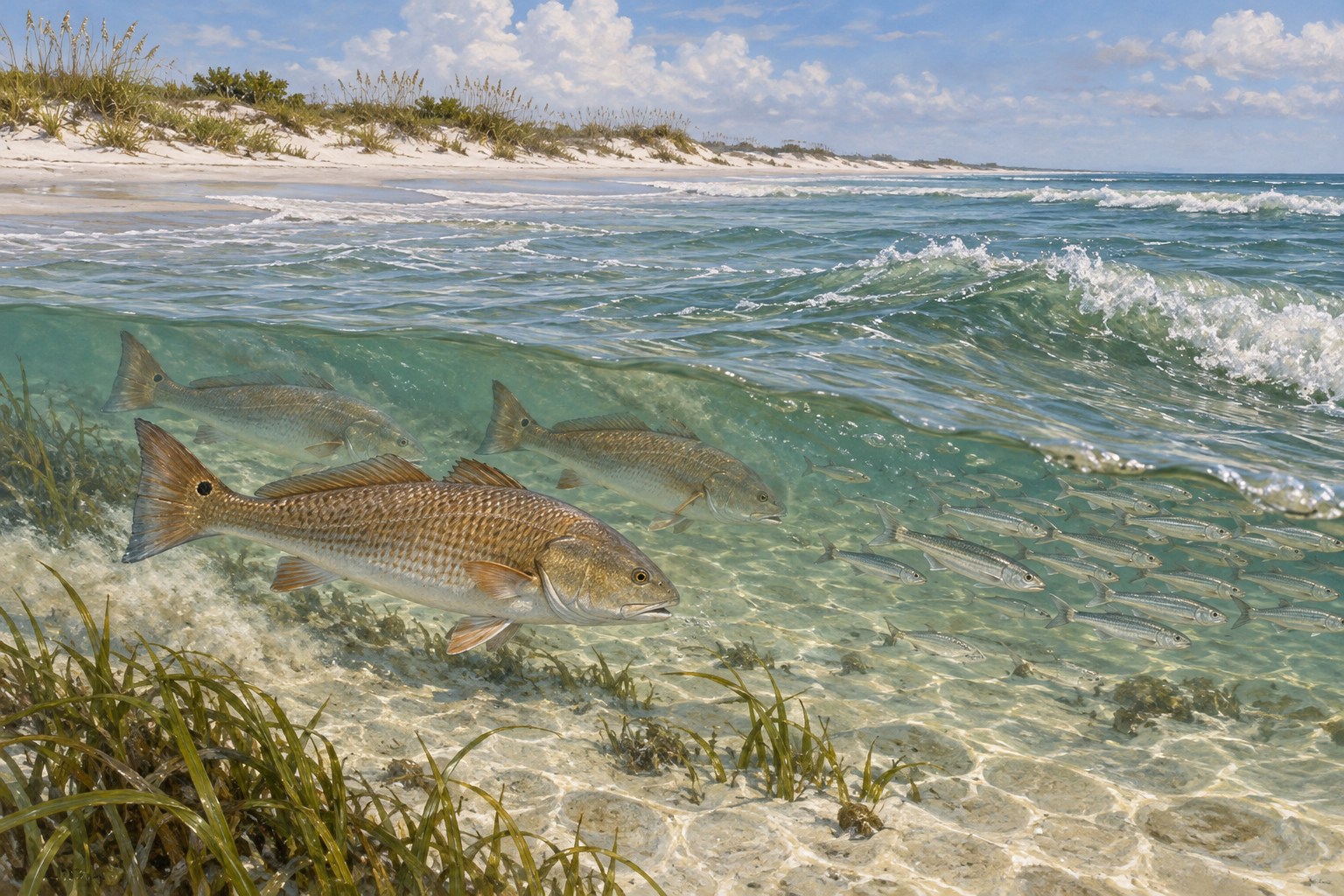
Redfish can use suitable sandy shorelines as well as estuary habitat. Look for prey moving along an edge or for a clean route beside a change in bottom depth. Their presence on the wider coast is not a promise of a catch at each beach crossing.
A small baitfish-shaped lure can cover an open lane when you have room to cast. Start with a steady pace, then slow it if the fish are less active. Use a lure weight that lets you control depth rather than repeatedly plow through the bottom.
A bottom bait presentation needs a sensible landing plan. If the line path crosses a deep cut, crowd or closed area, choose another position. Extra casting distance should never be the only reason to stand somewhere unsafe.
Watch prey before reaching for a fast lure
Spanish mackerel and bluefish are possible mobile coastal targets when bait comes within range. Repeated surface movement or small fish scattering gives you a reason to try a compact metal lure. A single passing bird does not establish a feeding school.
Keep the cast slightly beyond or beside the visible activity, with no people in the line route. Retrieve the lure through the open water at a controlled pace. Stop working it when the hook would enter a swimming area.
Both a toothy fish and a swinging lure require care. Use pliers, contain loose hooks and keep children behind the casting space. Take a break from casting while another person handles a catch nearby.
Bring tackle that fits the chosen route
A beach bag can hold a simple dropper rig, spare leaders, small hooks and suitable sinkers. An inshore bag may instead emphasize a float and small soft plastics. Packing both plans is useful only if you have a verified way to reach both waters.
Carry bait in small cooled portions and keep tools where you can reach them without emptying the bag onto sand. A measuring board helps with identification and harvest decisions. A closed line-waste container protects the beach from loose scraps.
Use the table to choose a basic method. It describes habitat and presentation, not a list of guaranteed catches at a specific parking lot.
| Water you can legally reach | First presentation | Main check |
|---|---|---|
| Clean Gulf surf trough | Small shrimp or sand flea rig | Whether the sinker holds a safe lane |
| Sheltered grass and sand edge | Suspended shrimp | Whether the hook clears vegetation |
| Open lane beside visible baitfish | Compact lure | Whether people or boats cross the line |
| Shallow sandy channel shoulder | Small soft plastic | Whether the lure stays recoverable |
Use seasonal change as a clue, not a promise
Spring warming can change bait movement along the Panhandle coast. Fall cooling can also bring useful opportunities around fronts. For one beach session, current clarity, wind and prey are more helpful than a confident claim about a fixed arrival date.
After strong weather, the nearshore sand can look different. A trough from the previous visit may have filled, and a new cut may have formed. Spend a few minutes reading the waves rather than casting to an old remembered distance.
Midday heat adds a practical limit even when the water looks inviting. Keep the session short enough for the people in the group, protect bait from warming and leave a comfortable margin for the return walk.
Build a small first outing you can repeat
Pick one confirmed open access and one primary target. Check the license and current fish rules before departure. If that destination has a closure or an occupied swimming section, choose a verified alternative instead of improvising across private land.
Record the wind direction, water color, casting distance and bait that survived on the hook. Those details help you compare a later visit. A fish count without conditions tells you less about why the session worked.
Pack out before the access closes or weather worsens. Check the area around every rod holder for loose line and hooks. The most useful first visit is one that leaves you with a clear, lawful plan for the next.
Common questions
Is all Perdido Key beachfront available through any nearby property?
No. Use a named public access or an entry you have permission to use. Respect marked boundaries and closed areas.
Which side is best for surf fishing?
The Gulf-facing shore provides surf habitat. Sheltered lagoon and bay water need different access and fishing methods.
Are the state parks and Johnson Beach under the same rules?
No. The state parks and national seashore are managed separately. Check the current rules and alerts for the destination you choose.
What should a beginner try first?
At a permitted Gulf surf section, test a small shrimp bait in manageable nearshore water. Start with a simple rig and adjust one detail at a time.
Prepare for your visit
Check local tides and weather. Read more about florida pompano, whiting, spanish mackerel. Check current FWC saltwater fishing rules.