
PANHANDLE
Perdido Key State Park
fishing guide
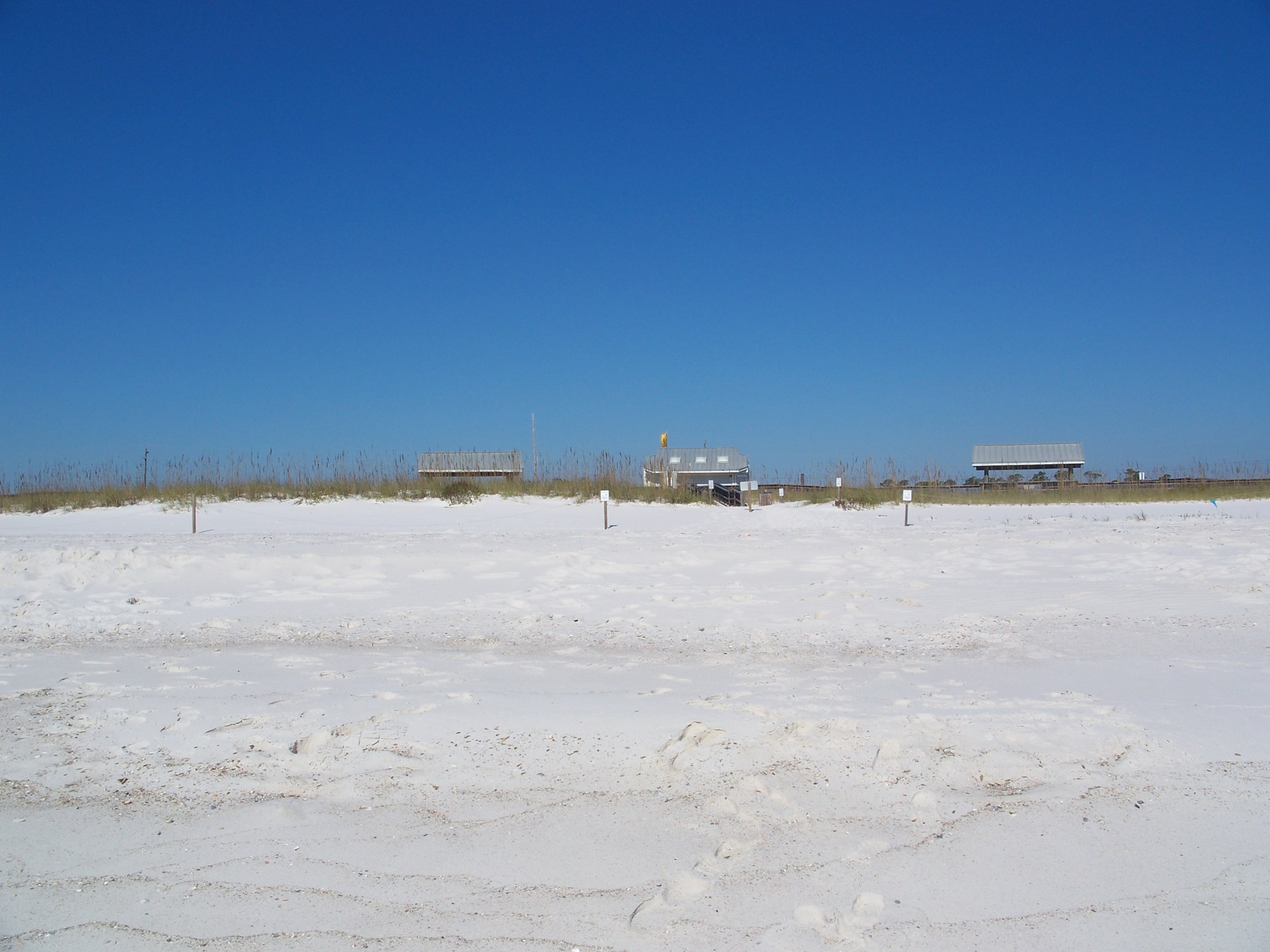
Perdido Key State Park protects a dune-backed Gulf beach with established boardwalk access. Surf fishing is a listed park activity, but the current closure notice must be checked before a visit. This guide explains the beach plan for an authorized reopened day.
Explore the guide ↓Confirm reopening before taking the beach route
Perdido Key State Park is at 15301 Perdido Key Drive, southwest of Pensacola. It is a Gulf beach park rather than a lagoon launch. Do not confuse its entrance with the Johnson Beach entrance farther along the island.
The official park page displayed a storm closure notice when reviewed on October 11, 2026. Check reopening with the park at 850-492-1595 before driving there. The fishing methods below apply only when the park and your intended beach section are open.
Normal listed hours are 8 a.m. to sunset, and the standard vehicle entry fee is $3. Confirm current payment instructions when the park reopens. A normal schedule printed below a closure notice is not confirmation that entry is allowed.
Boardwalks connect the parking areas with the beach while protecting the dunes. Carry the tackle over the designated route. Keep wheels, bags and rod tips clear of people approaching from the other direction.
Understand the beach you are entering
This coast combines pale sand, dunes and exposed Gulf water. The same wave action that carries food also moves the bottom. A useful fishing lane can shift after rough weather, even when the boardwalk and beach entrance look familiar.
The park protects wildlife including nesting shorebirds, sea turtles and the Perdido Key beach mouse. Posted enclosures are not fishing shortcuts or places to store gear. Stay outside the protected areas during every part of the visit.
Begin from stable sand with room behind the rod. Do not cross a dune ridge to seek a secluded casting position. Choose a lawful open section that lets you retrieve the rig and handle a catch without entering a swimming route.
Let whiting set the scale of the first rig
Whiting search sandy bottom for small food. A short piece of fresh shrimp can be more manageable than a large whole offering. Match the hook to that compact bait and keep its point available to set.
Make a moderate cast into a suitable near trough, then let the weight settle. Tighten only enough to see a bite. A heavily bowed line can conceal small taps and let the rig wander across the beach.
Inspect the bait as part of the test. If it disappears quickly, secure a smaller piece and check more often. If it returns untouched, compare a different distance or an open patch with a different wave pattern.
Offer pompano a neat crustacean-sized meal
Pompano are associated with sandy surf habitat and small crustacean prey. Sand fleas or an appropriate prepared bait strip provide useful alternatives to shrimp. Carry a few options without turning the beach into a spread-out bait station.
A simple dropper rig can suspend an offering near the bottom. Use small additions of float or bead only if they help the presentation you can control. Extra decoration does not solve a rig buried in weed or dragged sideways by current.
Confirm the identity of a deep-bodied silver catch before retaining it. Look beyond the color and learn the relevant features of pompano and permit. The applicable harvest rules belong to the identified fish, not the bait you intended to use.
Keep redfish and flounder plans tied to suitable bottom
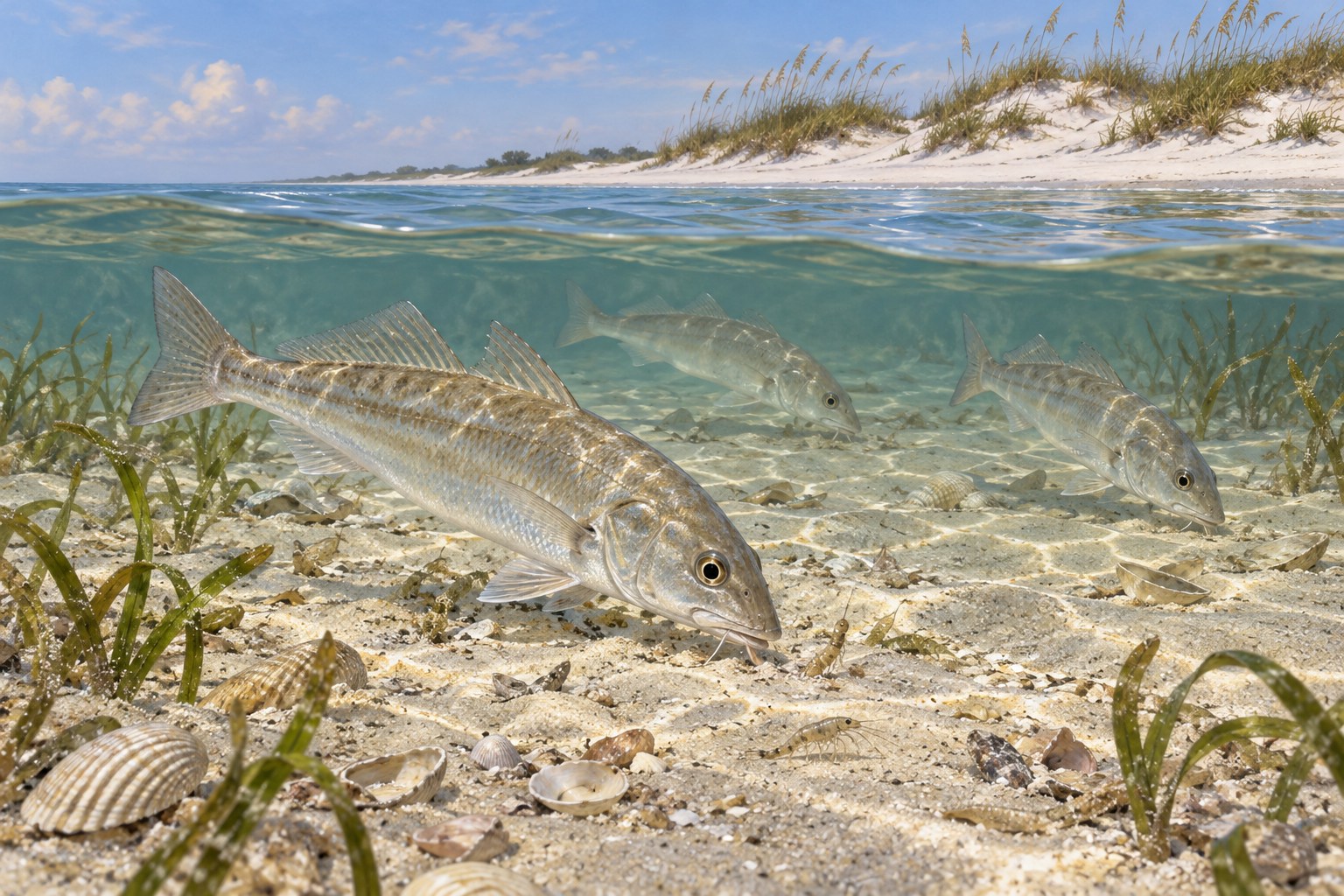
Park information identifies redfish and flounder among possible coastal catches. Their feeding styles are different. A redfish may travel along a sandy route, while a flounder can wait close to the bottom for small prey.
A small soft plastic can help you work a clean margin slowly. Keep it close enough to the bottom for the intended presentation without dragging into a snag on every retrieve. Reduce weight when a lighter lure remains easier to control.
Do not make a crowded or rough beach into a technical lure session. First check that you have the space, stable footing and line recovery route. Suitable habitat is useful only when the position is legal and manageable.
Build the outfit around wave size and rod rating
Use a rod that can cast your complete rig safely. Its stated weight range includes more than the bare sinker. Account for bait and tackle, and avoid a powerful cast with an overloaded outfit.
Select a weight that holds the bait within a narrow open lane. A different sinker shape may help when the surf pulls sideways. If ordinary adjustments still send the line into occupied water, the session needs a different place or different day.
Carry pliers, spare hook leaders, a measuring tool and a secure bag for line scraps. Keep the hooks contained during the walkover. A compact setup is easier to pack quickly when a squall approaches.
| Target or problem | Practical starting point | Adjustment to test |
|---|---|---|
| Whiting in sandy wash | Trimmed shrimp on a small hook | Reduce bait size after missed taps |
| Pompano over clean sand | Sand flea or prepared strip bait | Compare a second casting distance |
| Bottom-oriented lure fishing | Small soft plastic on suitable weight | Slow the retrieve without digging in |
| Rig carried sideways | Suitable holding sinker within rod rating | Change location if the lane stays unsafe |
Recheck the surf after weather changes
A reopening can follow a storm that altered the beach. Look for new erosion edges, debris and changes in the sandbar. Do not use old photographs to judge today's condition of the shoreline or facilities.
Wind direction affects both waves and line control. A small amount of whitewater can hide food movement, but strong sidewash makes tackle harder to manage. Read the actual water from shore before choosing a casting distance.
Use seasonal patterns as background information. A spring or fall opportunity still depends on the day's temperature trend, water clarity and available prey. If lightning or unsafe flags appear, the fishing plan ends.
Make the boardwalk return part of the plan
Choose a kit you can carry back comfortably with a wet bag and tired hands. Avoid leaving a heavy cooler far along the beach unless the return route and conditions suit the group. The distance feels longer when the sun is high.
Keep drinking water separate from bait and fish storage. Use shade and sun protection where permitted without blocking public passage. Make room on the boardwalk for visitors with mobility needs and bulky beach equipment.
Tell the group when you will pack up. A fixed return time helps avoid rushing in fading light or arriving at the lot after closure. Allow extra time to remove line, wash sand from hands and secure every hook.
Protect fish and dune wildlife together
Check the current fishing license requirements and species harvest rules before the outing. An open beach and an open fishing activity do not mean every fish can be kept. Have a practical release method ready before casting.
Support a released fish with wet hands and limit its time out of water. Keep it clear of hot dry sand where possible. Do not chase a difficult hook toward a dangerous wash; use an appropriate tool or cut the leader when that is the safest sensible option.
Before leaving, collect bait packaging, hooks and line from the sand. Leave shells, plants and wildlife undisturbed. A protected beach is worth returning to because visitors keep both the access and the habitat in good condition.
Common questions
Is Perdido Key State Park currently confirmed open?
Its official page showed a closure notice during this guide's October 11, 2026 review. Confirm reopening directly with the park before visiting.
Is surf fishing listed as a park activity?
Yes. It remains subject to current park access, posted restrictions and Florida fishing rules.
Can I reach a quiet section by crossing the dunes?
Use the designated boardwalks and open beach routes. Dune plants and protected wildlife areas must not be crossed for a shortcut.
What is the simplest starter setup after reopening?
Choose a suitable surf outfit with a compact shrimp bait, a small hook and a sinker that holds safely within the rod's rating.
Prepare for your visit
Check local tides and weather. Read more about florida pompano, whiting, permit. Check current FWC saltwater fishing rules.