
PANHANDLE
St. George Island
fishing guide
Search a wide beach one trough at a time. Compare Gulf and bay methods and understand access at the island’s eastern and western ends.
Explore the guide ↓WIDE BEACHES, BAY SHALLOWS AND ROOM TO EXPLORE
Pick an island side before packing the rods
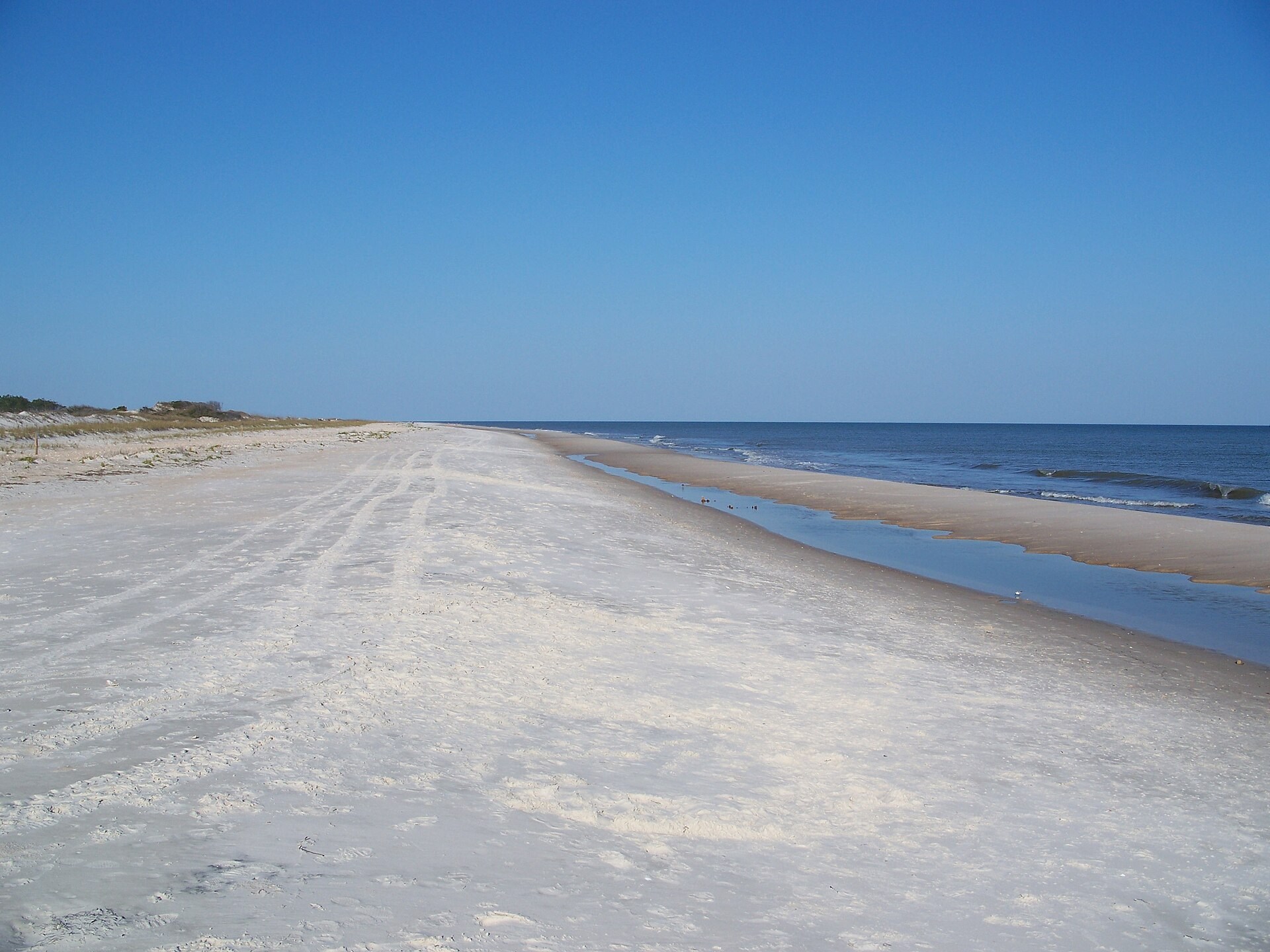
St. George Island separates the Gulf from bay and sound waters near Apalachicola. Its long beach invites a walking surf-fishing trip. The protected side offers a different search around shallow edges, grass and channels.
The island’s ends involve more than a drive to the last visible road. The eastern state park controls access to sensitive areas. The western Plantation is a private community, and Sikes Cut is not a general public drive-up fishing spot. Choose a clearly allowed destination before building a plan around either end.
For a first outing, the beach is an understandable starting point. Carry small baits, choose uncrowded legal space and learn to read one stretch of waves. You can add a bay trip after learning its access and water conditions.
Where to focus your access search
Dr. Julian G. Bruce St. George Island State Park
The state park occupies the island’s eastern section and provides beach and bay recreation. Use its designated accesses and ask about the day’s fishing arrangements. East-end access may involve permits, gates or restrictions. Do not assume an old map guarantees you can drive there today.
A long beach walk requires a realistic return plan. Take water and reduce the gear you carry. Leave wildlife areas untouched and never step around a closure because the sand beyond looks empty.
The public island beach
Use signed public beach entrances in the developed area. Keep your fishing station away from swimming activity and leave paths open. A rental-house boardwalk does not become public access because it points toward the same beach.
Bay-side fishing
Establish the exact legal shore access or launch before heading for the bay. Some appealing docks are private. A kayak can expand your range, but shallow water, wind and a longer return still need planning.
Read a broad beach in small pieces
Instead of looking for a perfect mile of shoreline, inspect the next short section. Watch for a deeper-looking lane, a change in breaking waves or a slight bend in the beach. Those features can concentrate food within an otherwise similar stretch.
Begin with a small bait close to the first trough. Make the next cast at a different distance only if you have room to compare. If all bites occur close, keep fishing close. Casting farther is not an improvement by itself.
A two-dropper rig can hold shrimp pieces or sand fleas above a sinker. Use a weight that stays in your fishing lane. Stop casting if the rig rolls into other people or the surf is beyond your equipment’s limits.
Choose fish that match the outing
| Setting | Targets to consider | Starting presentation |
|---|---|---|
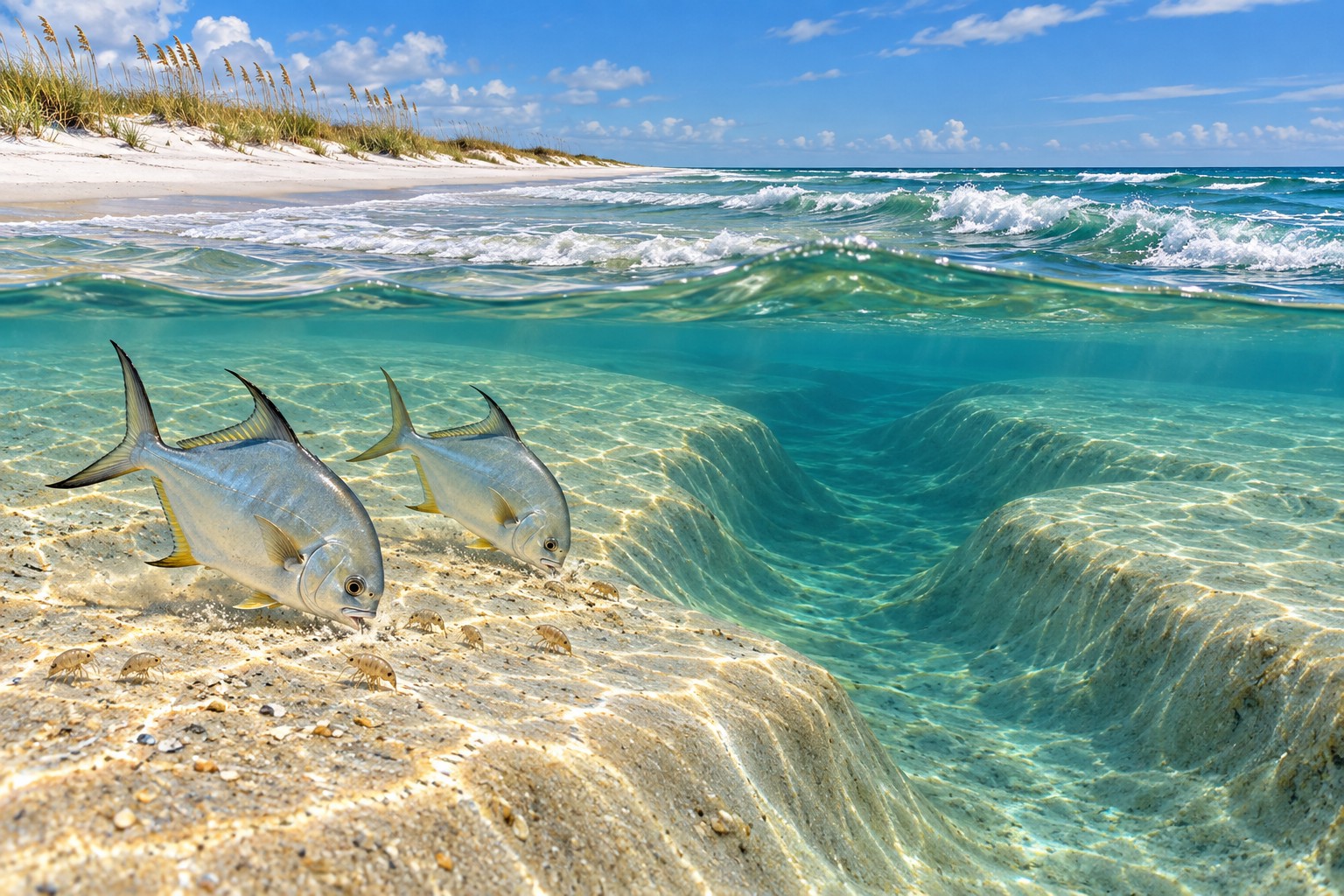
| Gulf sand | Whiting and pompano | Compact shrimp, sand-flea or prepared bait-strip rig |
| Deeper surf cuts | Redfish | A natural bait positioned outside the strongest flow |
| Bay grass edges | Spotted seatrout | A light lure or shrimp kept above the grass |
| Sand beside a channel | Flounder | A slow small jig with controlled pauses |
| Visible coastal bait schools | Spanish mackerel | A compact metal lure worked briskly |
Not every target will be available on every visit. A beach full of small bites can be more enjoyable than waiting all morning for an uncommon large fish. Let the conditions set a realistic goal.
Keep a bay presentation above the bottom growth
Grass provides cover for shrimp and small fish. A lure that collects grass on every cast is spending too much time in it. Lighten the jighead or raise the retrieve until the lure travels cleanly.
A float and shrimp can help you compare depths. Begin shallow enough to stay clear of vegetation. If the bait moves freely but receives no interest, lengthen the setting a little where depth permits. Check that the shrimp is still lively.
Fish the outside of a likely edge before crossing it with a boat. Give another angler’s drift plenty of room. Driving through a small feeding area can end the opportunity for everyone nearby.
What changes with the season
Spring can bring more activity along both beach and bay as the water warms. Clean surf is a useful clue for a sand-based trip. A cold front may make a sheltered bay edge the more comfortable choice.
Summer beach fishing works best when heat and crowds remain manageable. Early hours often help with both. Keep a clear exit plan for thunderstorms, especially if you have walked far from the parking area.
Fall invites a search for moving bait. Carry one small lure ready for brief surface activity. Do not chase diving birds so aggressively that your hooks become a danger to them.
Winter trips benefit from a flexible start time. A mild afternoon may be more pleasant than dawn. Use smaller movements in cool water and look for a safe position near a change in depth.
Water movement is useful until it becomes unsafe
Moving water brings food past waiting fish. It also makes exposed ends and cuts more demanding. Do not equate a predicted high or low tide with a safe crossing or gentle current.
Use the HookCurrent tide and weather tools to narrow the day’s options. At the beach, watch several wave sets before deciding where to stand. From a kayak, stay within a route that remains safe if wind increases.
Never wade toward an island pass to gain casting distance. A bottom that feels firm can drop sharply, and the current can be much stronger than it looks from the beach.
A simple island fishing day
Choose one public entrance with facilities that fit your group. Spend the first few minutes looking at the water rather than assembling every rod. Fish small baits at two distances and keep a note of where the bites happen.
If the surf is poor, make a new plan rather than forcing the original one. A walk, a sheltered legal shoreline or a later weather window may be the better use of the day. Do not replace a safe beach session with an unplanned trip to a difficult cut.
Keep shorebirds away from bait and collect every clipped leader. Confirm license and harvest requirements with the Florida Fish and Wildlife Conservation Commission. Handle releases with wet hands and return them without a long photo session on the sand.
A beach walk with a fishing purpose
Before carrying a full setup down the island, walk a short permitted stretch with your eyes on the waves. Compare where they break, where foam returns seaward and where the nearshore water looks a little deeper. Pick a feature, not just an empty patch of sand.
Set up with enough space on both sides. Begin with a modest bait in the closer water and inspect it after a few minutes. If it is being stripped, shorten the wait between checks. If it is untouched, test another distance.
A short move should bring a meaningful change, such as a different bar shape or cleaner water. Moving simply because another person caught a fish farther down the beach can put you in their space without improving your own understanding.
Keep the return distance realistic. A long outward walk feels different after hours in the sun with wet tackle and a cooler. Water, footwear and a light load can matter more than a fourth rod.
Use the fish’s food to choose the method
Surf-feeding fish search for small items exposed by waves. A compact shrimp piece, sand flea or prepared strip fits that kind of meal. A large bait may stay on the hook while receiving pecks from fish too small to take it properly.
Bay predators often feed on shrimp and small fish around vegetation. A lure swimming above the grass represents moving food. Its path matters. Dragging through the plants changes both its appearance and its ability to hook a fish.
Near a sandy drop, a flounder-style presentation stays lower and moves more slowly. Short movements help keep track of the bottom. That method belongs on suitable sand, not in the thickest grass where the lure repeatedly fouls.
When a school of bait passes within reach, keep a small lure available. Cast through clear water at the school’s edge. Do not cast over birds or other anglers to reach the most dramatic splash.
Let the failed cast teach you something
A rig returning covered in weed points to a location or depth problem. A clean but untouched bait suggests testing another distance or feature. A rough leader suggests contact with abrasive structure. Each result tells you something different.
Change one detail and compare several casts. That makes the next decision clearer and avoids a tiring cycle of replacing every rig without learning why the first one failed. On an island with many similar-looking stretches, careful observations are your most useful fishing notes.
St. George Island questions
Can anyone drive to Sikes Cut?
No. The western Plantation has private access. Do not plan a public road trip to the cut without lawful access arrangements.
Is the state park’s east end always reachable?
Access conditions can involve gates, permits or temporary restrictions. Ask the park before committing to the trip.
What bait should a new surf angler carry?
Start with a small supply of firm shrimp and a compact alternative such as a prepared bait strip. Learn the close trough before adding more options.
Can I move from the beach to the bay on foot?
Only through allowed routes and accesses. Dunes, private property and protected habitat limit where you can cross.