
PANHANDLE
Carrabelle
fishing guide
Follow the river toward St. George Sound. Learn to read changing water, choose public access and fish a useful edge close to town.
Explore the guide ↓FOLLOW THE RIVER TO THE SOUND
Carrabelle rewards attention to changing water
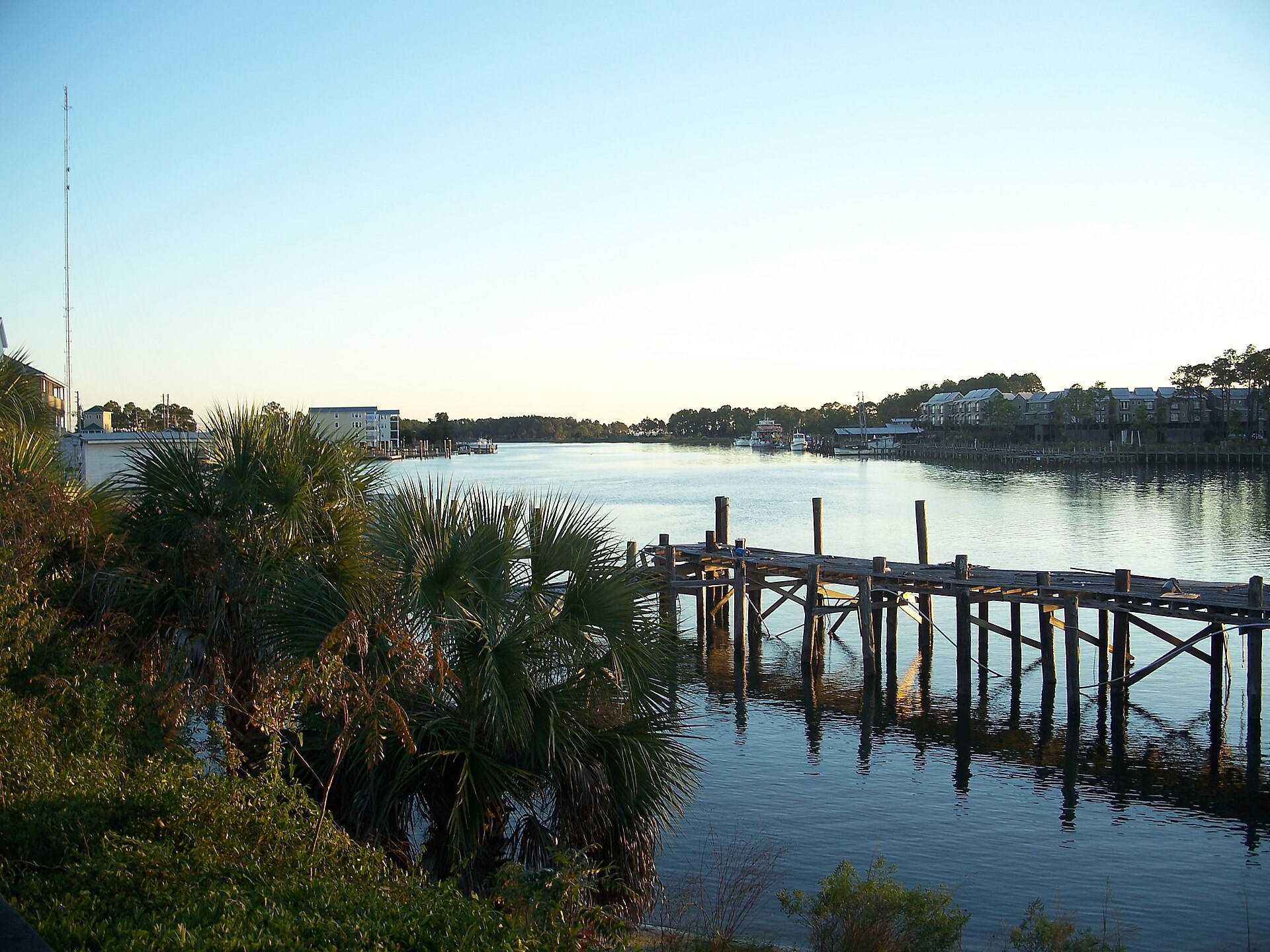
Carrabelle is a working river town beside St. George Sound. Its fishing choices range from public waterfront structure to bay edges beyond the river mouth. Freshwater influence, wind and tide can change which part of that system is most useful.
The river is not simply a narrow version of the beach. It has boat traffic, deeper bends, shaded structure and water that may be stained by runoff. The sound spreads into broader shallows where grass, sand and wind become more important.
Choose a short stretch to understand first. A fishable edge near town can be a better starting point than a long run toward distant islands.
Public places to investigate
Carrabelle Riverwalk and Wharf
The public riverfront provides a way to inspect the working waterfront and identify designated fishing space. County recreation material lists fishing facilities and a launch in this area. Confirm present access on site because older facility lists cannot show every repair or temporary closure.
Keep the main boat route clear. Fish from an allowed position and avoid extending a line across slips or a launch lane. A short cast beside a permitted edge is easier to manage than a long cast into the channel.
Island View Park
Island View Park is a county coastal park with fishing access. A January 2026 county notice concerns storm-related parking repairs, so check current work and access before relying on every facility. Treat posted barriers as closures even if an older photo shows a finished walkway.
Carrabelle Beach and the sound
The beach faces sound waters rather than the same open surf found on the Gulf side of St. George Island. Scout permitted fishing space away from swimmers. Shallow water may require a lighter presentation and a different expectation from a deep-water pier.
Dog Island
Dog Island is a separate boat-access destination. It is not a casual extension of a shore outing. Plan legal access, weather and the open-water crossing before considering it, and do not treat private docks as public landings.
Look for a useful edge between waters
River water can form a visible boundary with clearer sound water. Small baitfish may gather near that boundary. A color change is a place to inspect, not a guarantee of fish.
Watch for life before casting. A moving school of bait, repeated surface disturbance or birds focused on a small area adds useful evidence. Floating leaves alone tell you about current, not necessarily feeding.
Place a lure beyond the active edge and bring it through naturally. Avoid positioning a boat directly on the place you want to fish. If debris is heavy, use a presentation that stays clean or choose another edge.

Targets from river edge to open sound
| Fish | Where to concentrate | Presentation to test |
|---|---|---|
| Redfish | Shoreline bends, creek mouths and shell edges | A shrimp or slowly moving soft plastic |
| Spotted seatrout | Sound-side grass near sandy pockets | A light lure held above the grass |
| Flounder | Sand beside deeper routes | A small jig worked patiently along the edge |
| Sheepshead | Allowed access beside hard structure | A small crab or shrimp piece close to cover |
| Black drum | Bottom around structure and feeding edges | A natural bait with enough weight for contact |
Do not use a single rig for every row of the table. A float is helpful over grass but may pull a bait away from a piling. A heavy bottom rig may stay put in a channel and drag uselessly through vegetation.
Learn one river presentation well
Start with a modest natural bait and enough weight to keep track of it. Cast slightly up-current within your allowed space. Let it settle and move toward the likely holding edge. Maintain contact without pulling it continuously across the bottom.
If the rig sweeps too far, shorten the cast or choose gentler water. More weight is not always the answer. It can increase snags and make a delicate bite harder to read.
Near rough structure, check the leader often. Keep a landing net ready before a larger fish arrives. Do not try to lift a fish onto a high walkway with the rod tip alone.
For a lure approach, use short, repeatable casts. Cover the near edge first, then extend a little. This helps you understand where the strike happened and avoids disturbing all the available water at once.
Rain changes the search
After heavy rain, the river may carry more freshwater and debris. Watch the trend over several days rather than assuming the mouth is always the best place. Cleaner water farther into the sound may offer a different option when a safe route exists.
Stained water can still produce fish. Keep the bait close to useful cover and allow time for fish to find it. Extremely poor visibility, strong flow or floating hazards are reasons to change plans.
Check the weather and water-level outlook before launching. Wind across the sound can create a difficult ride even while the riverfront feels sheltered.
A seasonal way to plan
Spring brings a reason to search warming shallow edges. Try areas with both food and nearby depth. After a cool night, wait for conditions to improve rather than moving constantly at dawn.
Summer trips should include shade breaks and an early return option. The river is an active navigation route, so remain visible and attentive. A kayak angler must leave space for vessels that cannot stop or turn quickly.
Fall can make a mixed river-and-sound plan appealing. Watch bait movement and concentrate on the smaller areas where food gathers. A quiet shoreline beside activity deserves more attention than a broad empty flat.
Winter often favors a slower presentation around depth changes. Pick mild weather and avoid an exposed sound crossing just to reach a remembered summer spot.
Keep the first outing close and observant
Begin with a public waterfront visit and one manageable method. Notice current direction, boat movement and the bottom your rig touches. If you can explain why one casting position seems better than another, you are learning useful local information.
For a small-boat trip, identify a nearby backup before leaving. Carry navigation equipment and avoid unmarked shallow shortcuts. Put the return route ahead of the desire to reach another fishing area.
Confirm the rules for any fish you intend to keep through the Florida Fish and Wildlife Conservation Commission. Release uncertain catches carefully rather than guessing from color alone.
Fish a working waterfront politely and effectively
Commercial and recreational vessels need room along the river. Before placing a bait, consider where it will drift if a boat passes or current changes. Keep the line within a space you can control rather than relying on others to steer around it.
Use a short leader and manageable weight when the setting allows. Too much loose line can wrap around a piling or move under a dock. Keep the rod in hand when fishing close to rough cover so you can respond promptly.
If a vessel needs the space, retrieve early and let it work. A few minutes without a bait in the water is better than a propeller carrying away tackle. Do not leave rods leaning where lines cross a walking route.
Ask about permission before fishing beside a business dock. Clear permission improves the trip more than a guess based on an old photograph. Public access and attractive habitat are separate questions.
Make a two-location plan after rain
Choose one permitted river position and one reachable sound-side option before leaving home. After rain, inspect the river first. Look at debris, visibility and the speed of flow. If those conditions make fishing difficult, the alternative should already be realistic.
Do not assume the entire sound will be clearer. Wind can stir shallow bottom there too. Compare actual conditions and signs of bait rather than chasing a perfect water color.
In moderately stained water, a natural bait held near a useful edge can give fish time to find it. A lure worked too quickly may pass unnoticed. Slow down enough to remain in the holding area while keeping control of the rig.
In clearer grass water, reduce unnecessary weight and keep the presentation above vegetation. A bright float can help you follow the bait’s path, but the depth below it still needs adjustment.
Choose a safe stopping point
A first boat visit should have a limit beyond which you will not travel that day. Set it according to experience, weather and daylight. Seeing birds farther out is not a reason to abandon that limit.
For shore anglers, the limit may be simpler: stop when the platform becomes crowded, the weather deteriorates or the safe casting lane disappears. A useful fishing habit is knowing when the conditions no longer match the plan you arrived with.
Carrabelle fishing questions
Is Carrabelle Beach open-Gulf surf?
It faces St. George Sound. Its conditions and shallow-water fishing differ from the Gulf side of the offshore barrier islands.
Does brown river water mean fishing is poor?
Not necessarily. Look for bait, manageable current and a useful edge. Debris and unsafe flow matter more than color by itself.
Can I fish from any waterfront dock?
No. Many docks serve private property or working boats. Use designated public space and follow its signs.
Should I include Dog Island on a first kayak trip?
Do not treat that crossing as a beginner shortcut. Start with sheltered legal water and a route suited to your experience.