

PANHANDLE
Alligator Point
fishing guide
Look for food along a marsh turn or oyster edge. Plan Bald Point access and a short route with enough water to get home comfortably.
Explore the guide ↓MARSH CREEKS, OYSTER EDGES AND QUIET BEACHES
Think in terms of edges, not distance
Alligator Point sits near the meeting of Ochlockonee Bay and Apalachee Bay. The coast combines sandy shore, marsh and shallow water. A promising fishing feature may be a small creek mouth or oyster edge rather than a distant deep-water destination.
The area suits an observant angler willing to work a compact stretch. Find a legal access, study the water level and look for food moving past cover. A careful short cast can be more useful than a long cast across a shallow flat.
Do not confuse a quiet setting with easy navigation. Low water can expose shell and leave a kayak a long way from its launch. Soft shorelines are not reliable walking routes.
Bald Point State Park is the main starting point
Bald Point State Park protects a mix of shore and marsh near the eastern end of the peninsula. Use designated fishing and launch areas, and check the park’s current notices. Habitat restoration work may affect parts of a visit without closing the entire park.
Choose your position according to the day’s water. A shoreline that looks easy at higher water can become a broad exposed flat later. Keep your return on established ground rather than walking farther onto a draining bottom.
Chaires Creek and Tucker Lake
The park describes Tucker Lake and Chaires Creek as connected coastal paddling water. This is a brackish marsh system, not an ordinary inland freshwater lake. The park recommends sufficient tide for the route because shallow sections can become difficult to pass.
For fishing, start with a short section you can retrace. Watch the water level against a fixed bank or piling. If it is falling quickly, turn back before the shallowest passage becomes a problem.
Other beach access
Use signed public entrances along the peninsula. Many shoreline paths and docks serve private property. Establish permission before carrying tackle through a yard or parking on an unmarked shoulder.
Fish beside shell without losing every rig
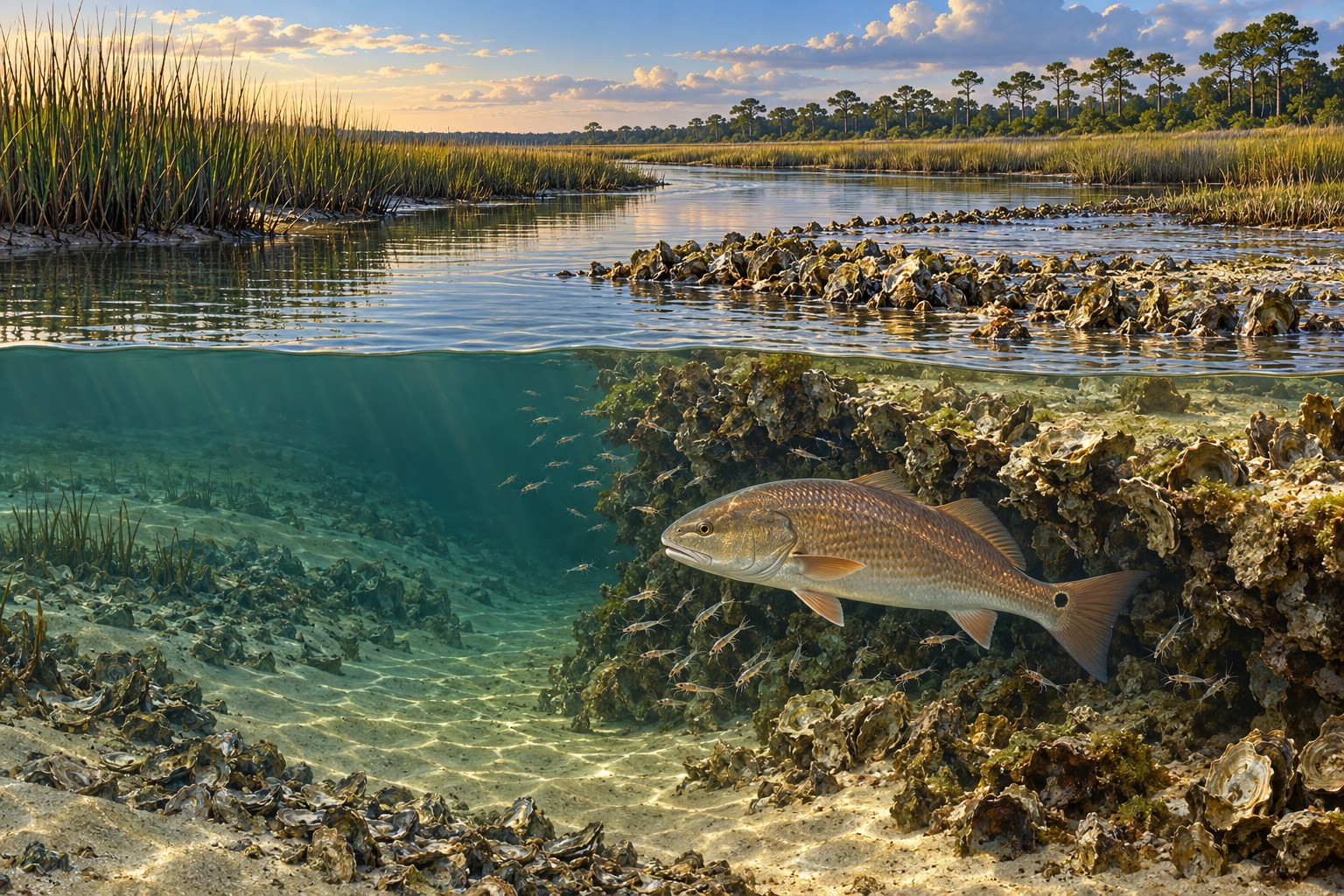
Oyster habitat holds small crabs, shrimp and fish. Predators often search the edge where that food meets a deeper lane. Dropping a bait into the thickest shell is usually less useful than presenting it just outside.
Start on the down-current edge if you can do so safely and legally. Cast so the bait moves toward the holding water without dragging across the whole bar. A float can keep a shrimp above shell. Adjust its depth when the bottom rises.
For a soft plastic, use the lightest practical weight and a hook arrangement that resists snagging. A steady swim beside the bar often avoids the problems caused by repeated bottom hops.
What to look for in each habitat
| Target | Useful water | Bait or lure |
|---|---|---|
| Redfish | Marsh turns, creek mouths and shell edges | A shrimp, small crab bait or weed-resistant lure |
| Spotted seatrout | Grass near a deeper pocket | A suspended shrimp or lightly weighted paddletail |
| Flounder | Sandy lanes outside cover | A small lure kept near the bottom |
| Sheepshead | Hard structure and shell-rich edges | A compact crustacean bait |
| Whiting | Suitable sandy beach water | A small piece of fresh shrimp |
A mullet school can show that a shoreline is active, but jumping mullet do not guarantee predators underneath. Combine that clue with current, depth and a useful edge.
Higher water opens doors and lower water closes them
As water rises, fish may move toward flooded shore cover. As it falls, they may use drains and slightly deeper routes. Plan casts around those movements without following fish into water too shallow for your return.
The same drain that concentrates food can also concentrate current. Fish it from a secure position. Never step into a creek mouth because the surrounding flat appears shallow.
Wind can change the expected depth across this low coast. Use HookCurrent’s tide and weather planning page, then compare the forecast with what the bank actually shows. Leave a margin for a lower-than-expected return.
A kayak plan that leaves room for mistakes
Launch only from an allowed place and tell someone which short route you intend to take. Wear a life jacket and keep communication equipment protected but reachable. Put essential tackle where you can use it without standing up.
Begin against a manageable breeze if that gives a safer return, but do not rely on the wind staying constant. Turn around while the trip still feels easy. A first visit should teach the route, not test your longest paddling distance.
Avoid anchoring in a strong channel flow. Keep lines clear of the paddle and your body. If a lure snags deep in shell, do not lean beyond your balance point to recover a cheap piece of tackle.
Plan around temperature and exposure
Spring warming can make shallow feeding edges worth a careful look. A small lure worked slowly beside cover is a sensible first choice after a cool night. Increase movement only when fish show they are chasing.
Summer favors the cooler part of the day and a short route. Insects can be persistent near marsh vegetation, so bring protection that lets you stay comfortable without rushing. Watch the sky before committing to open water.
Fall often offers enjoyable conditions for exploring creek mouths and nearby grass. Fish a series of small features rather than drifting aimlessly through the middle.
Winter low-water events deserve particular caution. Wind and tide may leave normally passable shallows exposed. Focus on accessible deeper edges and choose a land-based alternative when a paddle route is uncertain.
Useful gear for a quiet coast
A medium spinning outfit, a small selection of soft plastics, floats and hooks can cover most introductory inshore fishing. Bring extra leader because shell can damage it quickly. Add pliers, a measuring board and a compact net.
Wear footwear suitable for sharp shell near access points. Do not turn that footwear into permission to walk across oyster habitat. Stay on firm allowed routes and avoid soft mud.
Check fish identification and current harvest rules with the Florida Fish and Wildlife Conservation Commission. Keep releases in the water as much as possible and leave the marsh cleaner than you found it.
Keep the bait above the shell
A float rig is useful when the goal is to carry a shrimp past an oyster edge without dropping it into the bar. Set the bait shallower than the bottom you expect to cross. Watch one complete drift before lengthening the setting.
If the float hangs at the same point on every pass, the bait is probably touching something. Retrieve, check for damage and shorten the depth. Repeatedly striking at the same snag will not turn it into a fish.
A lightly weighted soft plastic offers more direct control. Rig it straight and swim it along the outside of the shell. Do not let it fall through the whole bar on every pause. Keep spare leader available and replace any section that feels rough.
When a hooked fish moves toward cover, guide it into open water with steady pressure. Avoid a sudden pull that breaks a damaged leader. Have a landing net ready so the final step does not become a scramble beside sharp shell.
Read a creek bend before entering it
The outside of a bend may carry a deeper lane while the inside becomes shallow. That general pattern is a clue, not proof of a safe route. Look for the actual channel and maintain a return path with enough water.
Position the craft where it will not drift onto shell while you cast. A quiet approach helps, but boat control comes first. If wind or current prevents you from holding a safe position, move away and choose easier water.
Fish the first reachable edge before paddling farther. A bait near a small drain may tell you whether fish are active without committing you to a long creek exploration. On a first visit, learning the route is part of the result.
What to do when water starts falling
Compare the bank with how it looked when you arrived. Newly exposed shell or a widening mud edge is useful evidence. Do not wait until the kayak touches bottom to begin the return.
Keep the shallowest known part of the route in mind. It may be behind you rather than at the fishing spot. A deep bend can feel comfortable while the connecting creek loses the depth needed to leave.
For shore fishing, stay on dependable ground. Avoid chasing a receding edge across soft flats. If useful water moves beyond safe casting range, change the outing rather than following it. The same caution protects both the angler and the fragile marsh surface.
A simple record of launch time, water level and return difficulty will help the next visit. Add the kind of edge that produced bites. Those details are more useful than a broad note saying the creek was good.
Alligator Point questions
Is Tucker Lake a freshwater fishing lake?
It belongs to a coastal creek and brackish-water setting. Do not plan a freshwater trip based on its name alone.
Why is the tide so important for paddling?
Shallow creek sections can lose enough water to block an easy return. Plan the route around usable depth, not only the hoped-for bite.
Should I cast directly onto an oyster bar?
Start beside it. The edge offers feeding opportunities with fewer snags and less disturbance.
Can I count on a completely sheltered trip?
No. Creek bends may offer protection, but the approach and return can still cross wind-exposed water.