

SOUTHWEST
St. James City
fishing guide
Understand the marina recreational-use schedule before launching, then work mangrove points and current edges near southern Pine Island.
Explore the guide ↓Fishing from the southern end of Pine Island
St. James City sits close to the lower end of Pine Island, with access toward Pine Island Sound and San Carlos Bay. Canals and mangrove shorelines give way to wider water, grass and channels. It is a place to build an inshore route around current, water level and shelter rather than around a single famous fishing spot.
Snook, redfish and seatrout are sensible targets for anglers exploring the surrounding habitat. Small snapper can use shaded structure, and jacks or ladyfish may reveal themselves by chasing bait. The same day can offer quiet shoreline fishing and rough open-water conditions only a short distance apart.
Private waterfront is common. A canal mouth may be interesting fish habitat without offering a public place to stand. Begin with a verified launch and respect docks, boat lifts and residential property throughout the trip.
The commercial marina has limited recreational days
Pine Island Commercial Marina is at 6001 Maria Drive. Lee County allows recreational use on Saturdays, Sundays and recognized county holidays. Weekday access is for commercial use. Do not arrive on an ordinary weekday assuming the public recreational ramp will be available.
The reviewed recreational hours are 6:30 a.m. to 8:30 p.m., with a daily parking charge. Confirm the latest schedule and leave time to retrieve before the gate closes. The facility serves working boats as well as recreation, so keep the launch and loading areas clear.
Lee County specifically directs motorized vessels to the marked channel along the Demere Key causeway because nearby seagrass has suffered propeller damage. Follow that route and its posted speed controls. Clear-looking water outside it is not an invitation to cut across the flat.
Find where a shoreline changes direction
A mangrove point can give fish both shelter and passing food. On one side, water accelerates around the corner. On the other, a quieter pocket forms. Snook may hold close to the boundary instead of swimming continuously through the strongest flow.
Cast from outside the point and let the bait cross the edge. Keep enough distance to avoid bumping roots or throwing a large wake against the bank. If your first cast lands in branches, retrieve carefully and change position rather than repeatedly pulling at vegetation.
Redfish often search the nearby softer bottom. Look for a moving wake, a tail or bait reacting to something below it. Cast ahead of the sign and let the fish reach the offering. A lure dropped directly onto a shallow fish usually announces your presence too clearly.
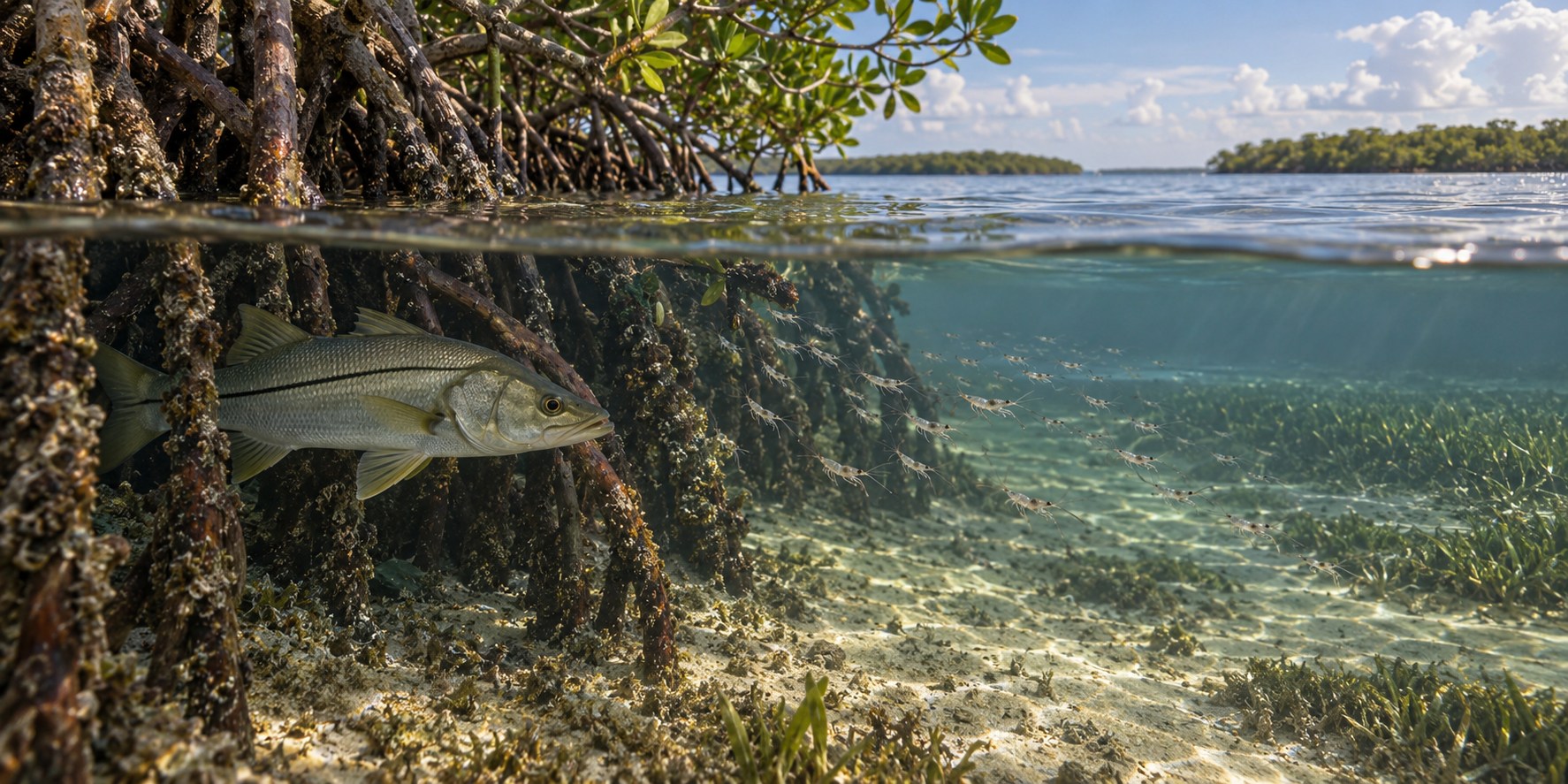
Match the method to the water outside town
| Fish | Search pattern | Useful tackle choice |
|---|---|---|
| Snook | Work points and drains beside deeper water | A paddletail or live shrimp with an abrasion-resistant leader |
| Redfish | Scan shallow mixed bottom near cover | A weedless lure or a softly landed shrimp |
| Spotted seatrout | Compare grass edges with nearby sand pockets | A light jig or a shrimp suspended above grass |
| Mangrove snapper | Inspect legal shaded structure | A small bait presented with close line control |
| Jacks and ladyfish | Follow visible feeding activity without running through it | A small durable lure that can be cast quickly |
A mixed inshore outing works best when you carry a few methods you understand. A box full of unfamiliar rigs can waste the short period when current and bait align at a useful point.
Use grass flats without damaging them
Keep the boat in sufficient depth and fish toward the grass from outside it. A sand pocket can provide a clear path for the bait, while the surrounding blades shelter food. Retrieve above the vegetation and pause briefly over the opening.
When drifting, watch the depth ahead rather than only the rod tip. Stop before the hull or propeller reaches the bottom. Reposition through a channel or use a method appropriate to the shallow water without scarring it.
If the tide falls while you are fishing, the route out can change. Do not keep working a shallow pocket until the only exit requires dragging over grass. A fishable flat and a navigable flat are not always the same thing.
San Carlos Bay can change the return trip
Open reaches allow wind to build waves. A protected canal at launch time can give a misleading impression of the bay. Look beyond the immediate shelter and consider the forecast for the hour you expect to come back.
For a kayak, choose a route that stays within your ability if the breeze strengthens. Wear the life jacket and keep a way to call for help accessible. Do not make a crossing simply because another paddler appears comfortable doing it.
Check the southern Pine Island tide and weather options before departure. Pair the water forecast with the marina’s recreational schedule so a good tide does not tempt you into a return after closing.
Seasonal adjustments for a repeatable trip
Cold fronts in winter can push fish away from very shallow feeding areas. Try nearby depth and a slower bait. A sheltered shoreline with a little afternoon warmth can be worth inspecting, but do not assume all fish have moved to the warmest visible surface patch.
Spring encourages more movement around points and grass. Watch for bait entering the sound and use that activity to narrow the search. The first visible feeding fish may reveal a better pattern than the waypoint selected at home.
Summer means early starts, shaded bait containers and a short storm escape route. Thunderstorms can make open-water travel unsuitable quickly. Finish the fishing portion before the return becomes a race against weather.
Fall can offer active inshore fish as water temperatures become more comfortable. Use a range of nearby features so you can change tactics without a long run. A wind shift may make one shoreline better and another much harder to fish.
Rig before reaching the current seam
Prepare a medium spinning outfit with a leader suited to roots and shell. If larger snook close to cover are the main target, increase control rather than relying on a long fight with light tackle. Check the drag before the first cast.
Keep a lightly weighted shrimp rig and a small swimming lure ready. A weedless option helps around vegetation. Avoid leaving unused hooks loose on the deck, especially when fishing from a small craft that may rock in a passing wake.
Carry a net, pliers and a ruler where you can reach them without unpacking. The fish should not wait on a hot surface while you search for a camera or measuring tool. Release preparation is part of rigging, not an afterthought.
A useful short route from a confirmed launch
Begin with a nearby shoreline that has a point and a drain. Fish the outer edge, then the corner, then the deeper opening. This sequence tests several feeding positions while keeping the boat away from the shallow cover.
Move to a grass edge if the shoreline lacks bait. Use a lure that stays above the grass and watch for follows. If fish show interest without striking, reduce the lure size or make the retrieve more natural before changing locations again.
Set a turnaround time before leaving the ramp. A small, well-observed route gives you information you can use next time. An exhausting tour of the entire bay often produces less understanding of why a particular fish bit.
Share the sound with dolphins and manatees
The real photograph shows dolphins in the wider Pine Island Sound setting. Do not approach or feed them. If dolphins begin following hooked fish, move away or stop fishing that area. Keep fish scraps and bait out of the water around wildlife.
Observe manatee zones and slow when animals are present. Check FWC’s current saltwater fishing requirements for the intended catch. The St. James City access and photo notes record the marina restrictions and the photograph’s actual location.
Make the weekend launch worthwhile without overextending
Because recreational launch access at Pine Island Commercial Marina is limited to weekends and recognized county holidays, prepare a modest plan before arriving. Choose one nearby habitat and a second sheltered option if wind changes. Keep the marked channel in your route rather than making a shortcut over grass to save a few minutes. At the first stop, establish boat control before casting toward roots. If the crew spends the whole time correcting position, move to easier water. A short route that lets everyone fish comfortably is more useful than a long island circuit that consumes the available day in travel and difficult handling.
St. James City fishing questions
Can visitors use the commercial marina on Monday?
Ordinary weekday use is commercial only. Recreational access is limited to the county’s stated weekend and recognized holiday schedule.
Why is the marked channel important near Demere Key?
It keeps boats off shallow seagrass that has already suffered propeller scarring. Follow the channel and posted speed limits even when a shortcut looks clear.
Are canals good places to begin?
They can hold fish, but public access and private property still control where you may stand or launch. Avoid fishing across working docks or boat traffic.
What should I do when dolphins follow the boat?
Do not feed them or offer an exhausted hooked fish. Change areas and allow the animals to move away before resuming.