
SOUTHWEST
Cape Coral
fishing guide
Distinguish private canals from public fishing access. Learn how seawalls, shade and river connections influence fish location.
Explore the guide ↓Choose the right water in a city of canals
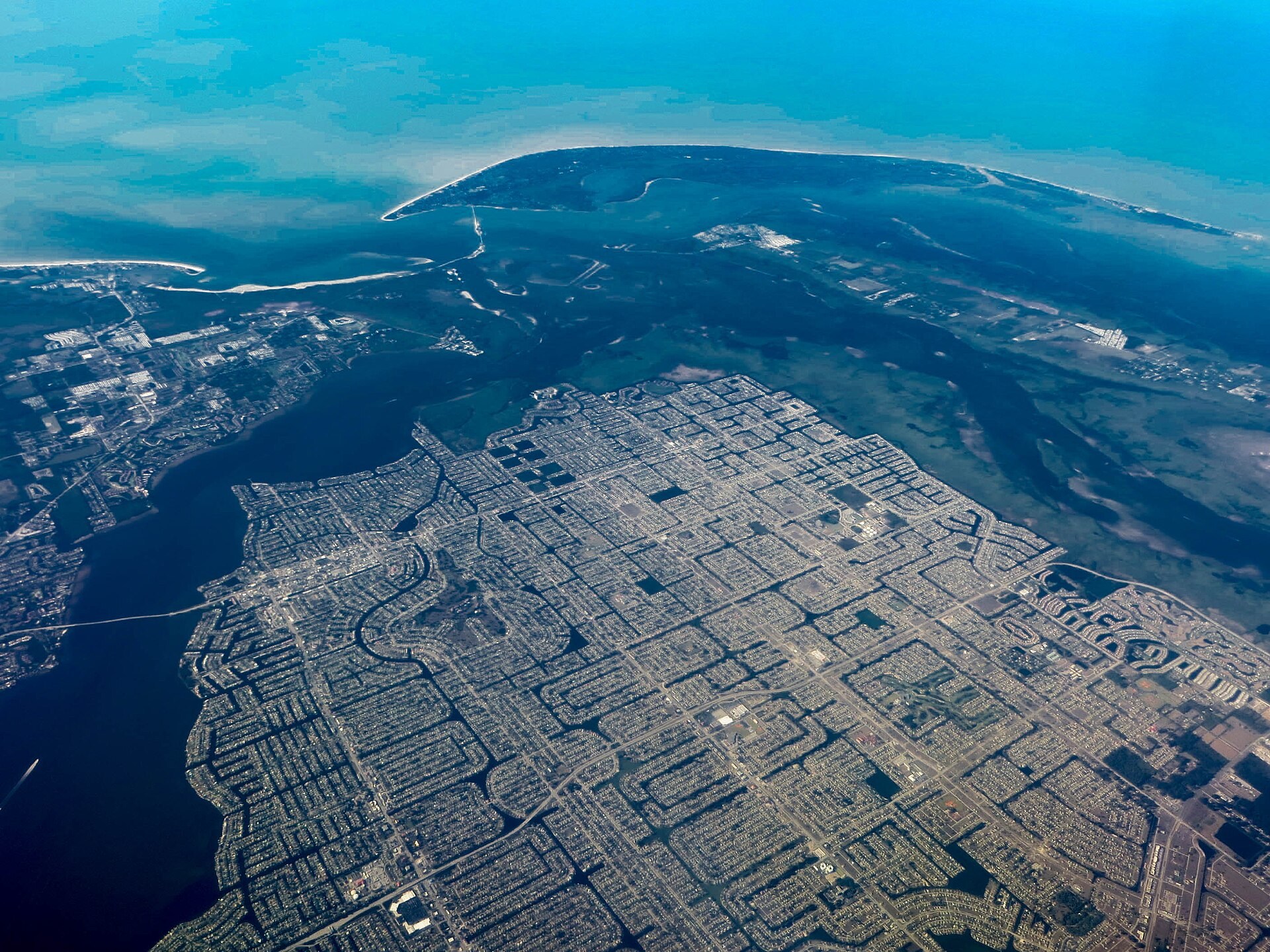
Cape Coral’s many canals can make fishing look simpler than it is. Some connect to saltwater, others belong to freshwater systems, and much of the bank is private property. A blue line on a map tells you where water lies. It does not tell you whether you may stand there, what fish to expect or which license applies.
For a coastal fishing visit, focus on confirmed public access to tidal water and the nearby estuary. Snook, redfish, mangrove snapper and jacks can use connected canals and shorelines. Grass habitat farther out can offer seatrout opportunities. Fish respond to food, shade and current rather than to the number of canals in the city.
A useful first outing is short and specific. Choose an open park fishing area or a manageable paddle route, then learn one junction or shoreline edge. Avoid turning a first visit into a search through residential streets for an unverified bank spot.
Sirenia Vista is a clear public starting point
Sirenia Vista Park, at 3916 Ceitus Parkway, lists a fishing area, kayak launch and restrooms among its amenities. The launch connects paddlers with the Calusa Blueway through the Matlacha area. Use the designated fishing space and keep the launch available for people entering and leaving the water.
Four Mile Cove Ecological Preserve needs a separate status check. The city’s repair notice scheduled boardwalk, pier and related facility closures from August 17 through September 30, 2026, while keeping the Kayak Shack Road launch area available. A scheduled end date does not prove work finished. Confirm reopening before planning around the boardwalk or piers.
The Yacht Club waterfront has its own rebuilding program. Do not use an old pier recommendation as current access advice. This guide favors verified facilities and clearly separates a park’s existence from the condition of every structure inside it.
Why a canal junction can hold fish
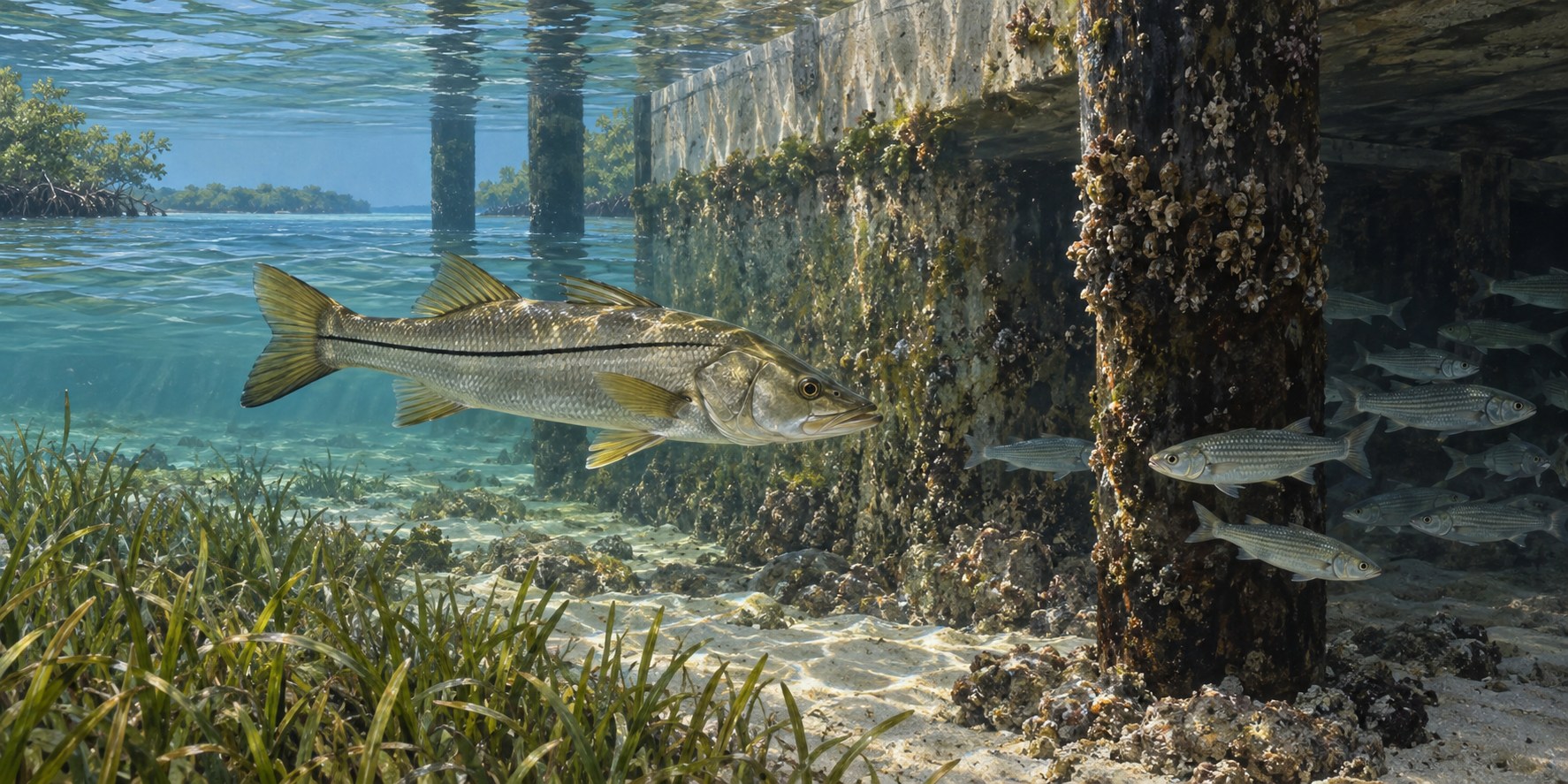
Where a smaller canal meets larger tidal water, the flow changes direction and speed. Bait may collect along a seam or against a shaded edge. Snook can wait beside a wall or piling and move a short distance to intercept it.
Look for the combination of current, cover and a safe casting position. A long, still canal with no bait may be less useful than a small opening with visible movement. Do not assume deeper water is always better if the food is concentrated near a shallow edge.
From lawful public access, cast so the lure passes the junction naturally. Avoid lines stretched across boat traffic. From a kayak, remain clear of entrances and give powered boats a predictable route past you.
Targets for tidal Cape Coral water
| Target | Where to look | First presentation |
|---|---|---|
| Snook | Canal mouths, mangrove points and shaded edges | A paddletail or live shrimp guided along cover |
| Mangrove snapper | Hard structure with shade and depth | A small shrimp on a compact rig |
| Redfish | Shallow estuary margins and shell edges | A weedless soft lure or fresh bait placed quietly |
| Sheepshead | Encrusted pilings in permitted fishing areas | A small crab or shrimp with minimal slack |
| Jacks | Baitfish pushed along walls or through junctions | A sturdy small plug or fast paddletail |
| Spotted seatrout | Suitable grass outside the canal network | A lightly weighted shrimp imitation above the grass |
Freshwater canals require a different plan. Do not apply this saltwater species list to every neighborhood waterway. Confirm the system, public access and applicable fishing requirements before choosing tackle and bait.
Fish the shade without touching the property
A dock’s shadow can be attractive habitat, but the dock itself remains someone’s property. Do not step onto it, tie to it or cast where a hook may strike a boat, cover or person. Public water access does not erase those boundaries.
Choose a clear edge and make a controlled cast. Let the bait pass near the shade while keeping the line away from ropes and lifts. If a fish takes, guide it toward open water with suitable tackle rather than allowing a prolonged fight through mooring lines.
In a public park, use the designated fishing area as your limit. If a promising-looking corner lies beyond a fence or behind a private home, leave it alone. There are enough legal patterns to learn without creating an access dispute.
Current can matter more than clock time
Tidal canals do not all move at the same rate. Distance from open water, narrow connections and wind can change the timing. Watch debris or small baitfish to see what the current is doing at your position.
A slow flow can allow a lightly weighted shrimp to drift along an edge. Stronger movement may require more control or a different angle. When the water becomes still, work a nearby shade boundary or deeper pocket instead of expecting the same current presentation to keep producing.
Check the Cape Coral-area tide and weather choices before setting out. Treat the predicted tide as context, then use the observed flow to decide where the bait should travel.
How weather changes the canal and estuary plan
Cooler months can make deeper protected water important for snook. Avoid repeatedly targeting cold-stressed fish, and pay attention to current closures or emergency rules after severe weather. A sheltered canal may offer comfort for the fish without producing an active bite.
Spring often improves feeding around mouths and shorelines as temperatures rise. Look for small fish moving through the system. Match their size with a modest lure and work the edges before crossing the whole opening.
Summer calls for early sessions and care with heat. Canals can have boat traffic, reflected heat from seawalls and limited shade for anglers. Carry water, keep live bait cool and leave before a thunderstorm makes the return unsafe.
In fall, changing bait and water levels can create short feeding windows. Keep notes on the actual current and wind when fish strike. Those observations are more useful than assuming the same hour works throughout the season.
A modest paddle from Sirenia Vista
Choose a route within your ability and check the wind beyond the launch. The surrounding waterways connect to larger, more exposed water. A calm departure area should not persuade a beginner to make a long crossing.
Wear a life jacket, carry a whistle and keep communication equipment accessible. Watch for manatees and move without crowding them. In narrow passages, remain predictable and leave room for other craft rather than drifting across the whole route while casting.
Turn around with energy to spare. If the tide is falling, avoid exploring a shallow shortcut without knowing the exit. Keep fishing stops close enough that a weather change still leaves a straightforward return.
A practical outfit for walls and roots
A medium spinning outfit with a replaceable leader covers many smaller tidal-water targets. For snook close to hard cover, use enough strength to steer the fish away quickly. Check for abrasion after contact with concrete, shell or wood.
Carry small hooks, a few jig weights, shrimp and two or three swimming lures. Use only the weight needed for the depth and flow. A bait that sweeps naturally past a junction is usually more convincing than one pinned awkwardly beneath oversized hardware.
Keep pliers and a net ready. Do not lift a heavy fish vertically by the jaw or let it fall onto concrete. If the shore edge makes a safe release impossible, choose a different target or position before casting.
Make a short session teach you something
Start with one public fishing position and watch it through a change in current. Note where the bait gathers and whether the shade moves across the feeding lane. Try a close cast and a slightly wider one instead of repeatedly aiming for maximum distance.
When you get a bite, remember the depth and direction of travel. Repeat the useful part of the presentation, not just the lure color. If the bite stops, inspect the bait and check whether the current has shifted before moving elsewhere.
Keep the bank tidy. Line scraps, bait containers and loose hooks cause problems long after the angler leaves. A small closed rubbish container is especially useful in a breeze.
Check the water type and the rules
Use FWC’s fishing and license information to confirm the requirements for the system and species you will fish. Cape Coral includes both freshwater and saltwater opportunities, so the correct choice depends on more than the city’s coastal location.
The Cape Coral access notes and photo record document Sirenia Vista and the repair notice discussed here. Keep a newer official closure or on-site sign ahead of any older fishing recommendation.
Cape Coral fishing questions
Are all Cape Coral canals saltwater?
No. The city has different canal systems. Verify the waterway before assuming the fish, bait and license requirements match this coastal guide.
Can I fish from an empty residential lot?
Not without permission from the owner. Use a confirmed public fishing area or a lawful boat access route.
Is Four Mile Cove fully reopened after September 30?
The scheduled repair end date is not confirmation of reopening. Check the city’s current notice for the exact facility you need.
What makes Sirenia Vista a useful first stop?
It has a listed public fishing area and kayak launch, giving visitors a clear starting point instead of an uncertain roadside or residential access.