
SOUTHWEST
Fort Myers
fishing guide
Fish the river city as its own destination, with tidal water, shoreline cover and a different plan from Fort Myers Beach.
Explore the guide ↓Fort Myers fishing begins with the river
Fort Myers sits on the Caloosahatchee, a broad river that changes from fresh to brackish and coastal water along its course. This guide focuses on the city waterfront and the tidal fishing setting downstream. It is different from Fort Myers Beach, which lies on Estero Island and has its own surf and pass opportunities.
The river is not one uniform fishing spot. Rainfall, managed freshwater flow, wind and tide can all change conditions. Snook, jacks, mangrove snapper and tarpon can use parts of the tidal system, but their presence at a particular bank depends on the water and food there.
For a short visit, begin at an established public facility. Learn the current around one open fishing area before planning a long boat trip. A city riverfront offers useful access, but it also includes private docks, active ramps and places intended for walking rather than casting.
Centennial Park and the downtown waterfront
The city lists Centennial Park at 2000 West First Street, with a fishing pier, docks and a launching ramp among its features. Confirm the condition of the specific facility on the day of your visit. General amenity listings can remain online while a structure is under repair or temporarily restricted.
Choose a position with a clear casting lane and a practical way to land a fish. Do not fish across boat boarding areas or trail a line through a busy ramp. Waterfront events can also change how much space is available, so a quieter period may suit fishing better.
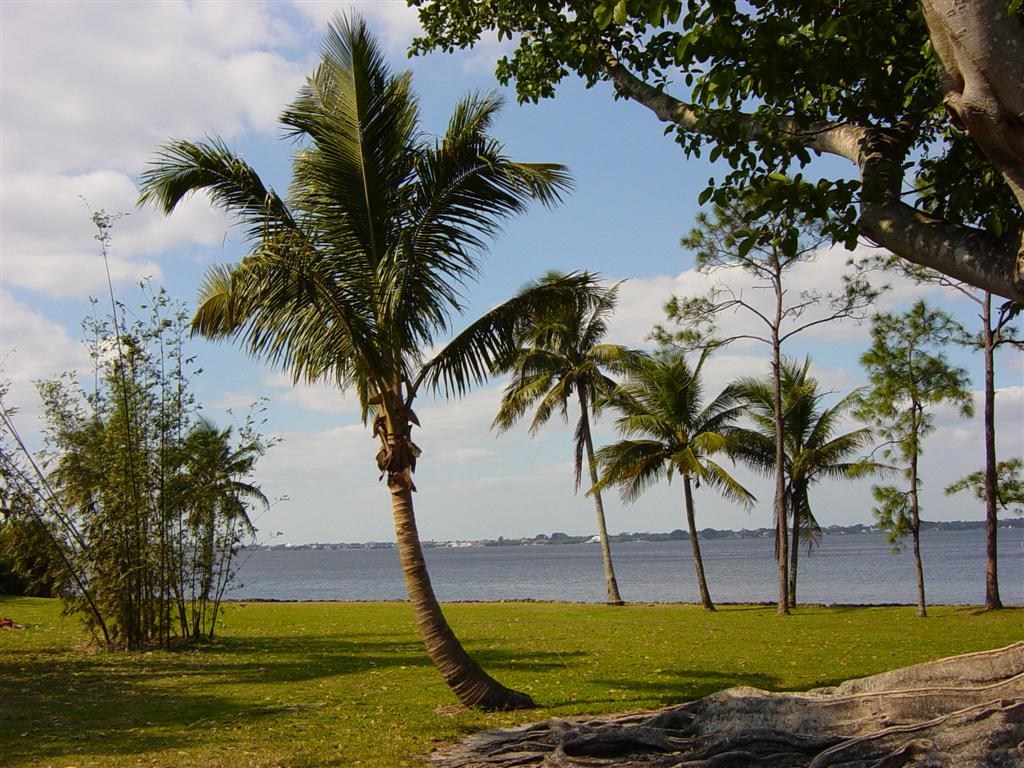
The photograph of the Caloosahatchee was taken from the Edison and Ford Winter Estates grounds. It shows the river setting, not a recommendation to fish from that property. Use designated public fishing access and respect the rules of visitor attractions and private waterfronts.
Understand the moving freshwater influence
Brackish water contains a mixture of fresh and saltwater. That mixture changes along the river and over time. A place that holds one group of fish during a dry period may fish differently after heavy rain or a change in river flow.
Look for healthy bait activity and usable cover rather than judging by color alone. Natural stained water can hold fish. An obvious algae problem, dead fish or a posted advisory calls for a different plan. Do not handle or fish through a visible bloom because an old report names the area.
When conditions change, think along the river rather than only across it. Fish may move toward a more suitable salinity or a better feeding edge. A boat trip gives more room to adjust, but a shore angler can still compare nearby permitted positions with different current and shade.
Fish that fit a tidal river plan
| Target | Useful clue | Starting method |
|---|---|---|
| Snook | Shade beside a current break | A small paddletail or live shrimp passing the edge |
| Jacks | Baitfish scattering along a wall or open seam | A sturdy lure retrieved through the outside of the activity |
| Mangrove snapper | Hard cover with suitable salinity | A small shrimp fished close to structure |
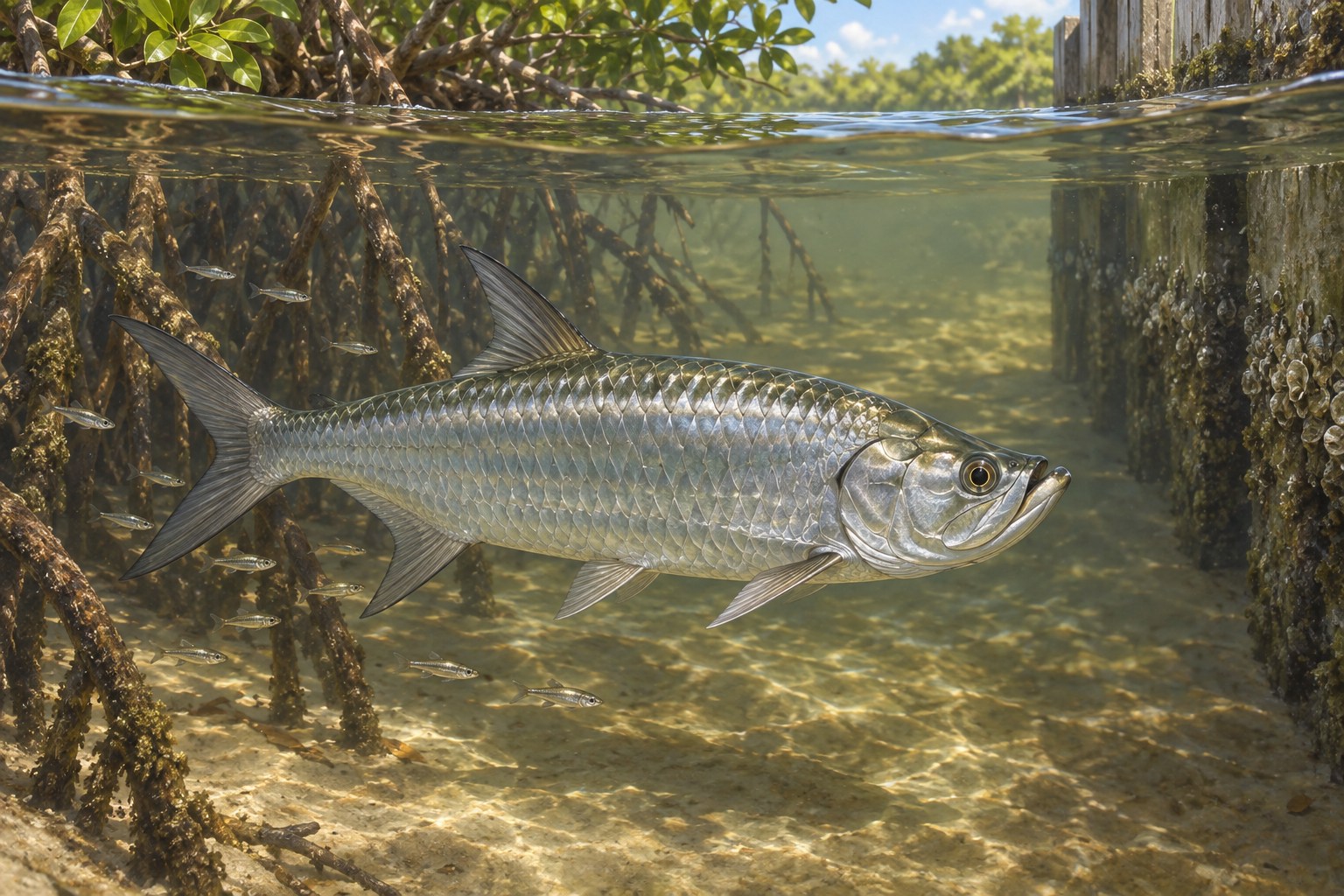
| Tarpon | Rolling fish in appropriate tidal habitat | Dedicated tackle and a careful release plan |
| Sheepshead | Encrusted structure in more saline water | A small crustacean bait held near the cover |
This list is not a promise that every species lives beside every downtown park. Freshwater targets farther upriver require a different approach. Check the actual water, fish identification and applicable license before choosing what to pursue or keep.
Fish the slower side of moving water
A piling, seawall corner or small opening can interrupt the current. Predators may sit in the slower pocket while food passes nearby. Watch floating debris to see the flow, then cast so the bait enters that lane without dragging unnaturally against it.
Use enough weight to reach the intended depth, but avoid pinning the bait beneath a heavy sinker when a gentle drift would work. If the line bows far under a structure, retrieve and change the angle. Leaving it there increases the chance of a snag or a fish becoming wrapped.
Keep the presentation within a safe landing area. A fish hooked beside a high wall still needs to be released or landed carefully. Do not wait until it is tired at the surface to discover that your net cannot reach the water.
How to adjust as the year changes
Winter can draw attention to protected depth and slower presentations. Snook are sensitive to cold, and fish under severe temperature stress should be left alone. Check for current emergency restrictions after unusual weather rather than relying only on normal seasonal patterns.
In spring, increasing warmth can improve movement around tidal edges. Watch for bait entering or leaving smaller openings. A modest lure that matches the visible prey is a sensible first choice.
Summer combines warm water with rain and thunderstorms. Fish early when possible and keep a short route back to shelter. Heavy rain may change the river’s water quality and salinity, so yesterday’s report may not describe today’s conditions.
Fall offers another transition. Look for active bait and usable current as temperatures ease. Wind may funnel along the river and make a boat return rougher than expected, even when the launch looked comfortable.
A river forecast needs more than a tide time
Tide predictions help describe coastal water movement, but river flow and wind also influence the Caloosahatchee. The strongest current at your position may not match the hour printed for a station nearer the Gulf.
Compare the local forecast with actual conditions. If drifting debris moves faster than expected or wind pushes waves against the current, shorten the route. For a shore visit, a change in water level may affect the net reach and usable bank.
Use HookCurrent’s Fort Myers-area planning data alongside current local notices. A weather window should cover the return trip as well as the first hour of fishing.
Bring control and a landing plan
A medium spinning outfit suits many smaller river targets, with stronger tackle needed when large fish or heavy cover are expected. Use a leader appropriate to concrete, shell and wood. Feel for roughness after each snag or close encounter with structure.
Carry small bait hooks, a few jig weights, shrimp and a durable swimming lure. Avoid unnecessary hardware in clear or lightly stained water. Keep spare tackle in a closed container so it cannot scatter across a public walkway.
A long-handled net may be useful at an approved bank or pier, provided it matches the access. Pliers, a measuring device and a wet-hand release routine should already be in place. Do not lift a heavy fish by the line or swing it onto hard pavement.
A downtown session in four steps
- Inspect the posted rules and current condition of the chosen public fishing area.
- Watch the water for several minutes to locate flow, shade and bait.
- Fish one edge with a controlled bait presentation, then change angle or depth before changing the entire rig.
- Finish with time to remove line scraps and leave the walkway clear.
Keep the trip small enough that a busy event, repair barrier or poor water condition does not force you into an unsuitable alternative. A nearby park may be enjoyable for a river walk even when fishing is not the right activity that day.
If using a boat, prepare a separate route that accounts for marked channels, bridge traffic and speed zones. Do not treat a shore-fishing guide as a navigation plan.
Handle river fish and wildlife thoughtfully
Do not feed dolphins or other wildlife with bait or fish scraps. Move away if animals begin taking hooked catches. Keep a generous distance from manatees and obey posted slow-speed areas rather than assuming an empty-looking river is clear.
Check FWC’s fishing rules and license information for the species and water involved. The river’s changing salinity makes that distinction especially relevant. A freshwater-looking bank can still hold a saltwater species with its own rules.
The Fort Myers research and photo notes identify the public facility source and the actual viewpoint of the river photograph. They also keep the scenic image separate from a claim of fishing permission.
Compare the two sides of a small current seam
At a legal river position, a seam may separate water moving at slightly different speeds. Try the slower side first, then place the next cast so the bait approaches from the faster side. Watch how long it remains at the intended depth. The result can tell you whether weight or angle needs changing. Keep casts clear of boat traffic and avoid assuming that deeper is always better. A fish may use the edge where food arrives comfortably rather than the middle of the strongest river flow.
Fort Myers fishing questions
Is Fort Myers the same fishing area as Fort Myers Beach?
No. The city riverfront is on the Caloosahatchee. Fort Myers Beach is on Estero Island and involves different access, surf and pass conditions.
Can I assume the park pier is open because it is listed online?
Check current notices and the structure itself. A general facilities page identifies amenities but may not reflect a short closure or repair barrier.
What should I do if I see an algae advisory?
Choose another location and follow the local health guidance. Do not treat poor water quality as merely a reason to change lure color.
Does a rolling tarpon mean an easy catch?
No. Rolling is not the same as feeding, and tarpon need suitable equipment and careful release handling. Do not target a large fish without a workable landing plan.