
SOUTHWEST
Fort Myers Beach
fishing guide
Find a lawful beach route around current pier and parking work. Target shallow feeding lanes with a compact bait or lure outfit.
Explore the guide ↓Build the trip around Estero Island’s open shoreline
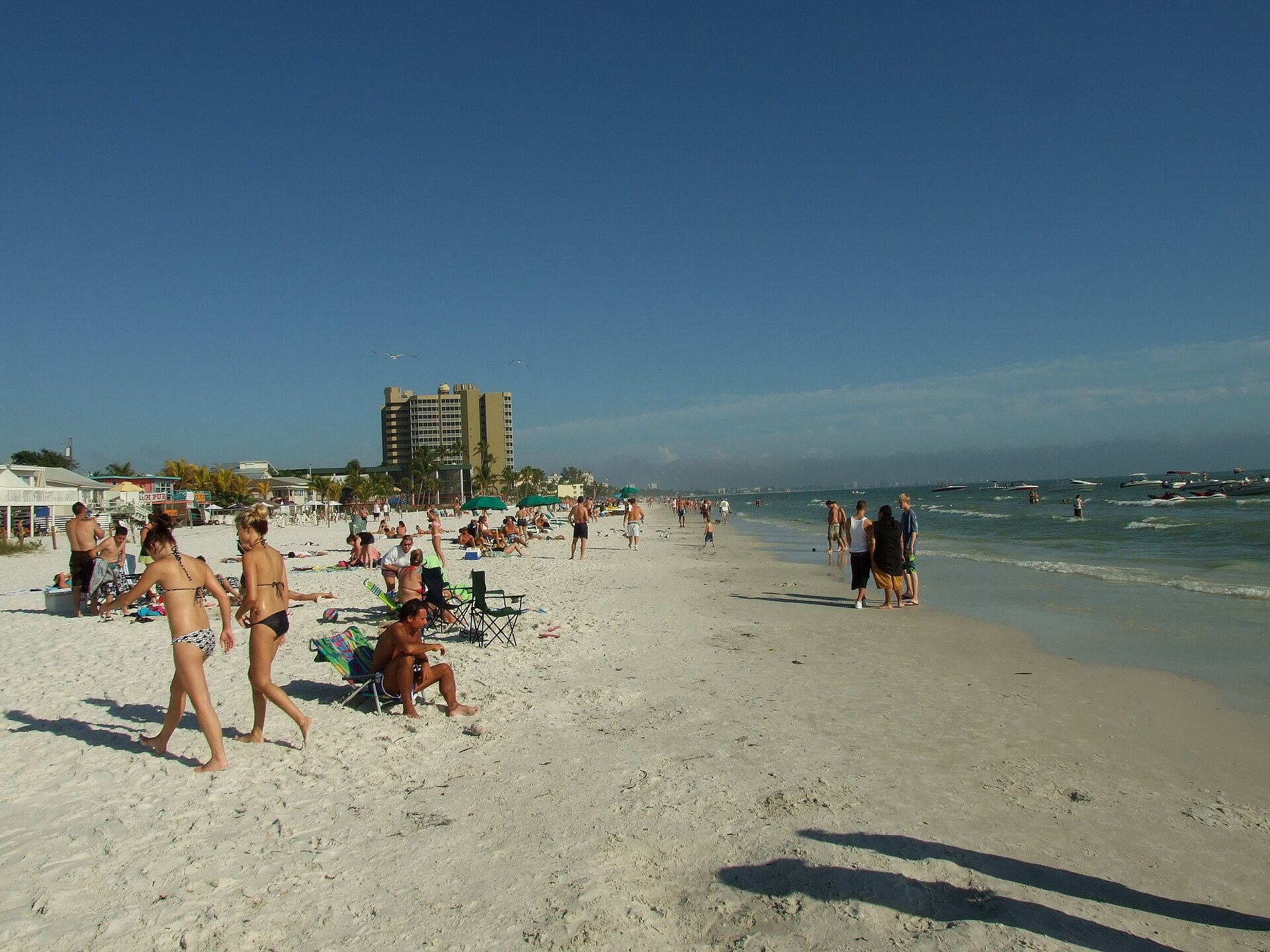
Fort Myers Beach sits on Estero Island between the Gulf and Estero Bay. Beach anglers can look for whiting, pompano and snook along the sand. Boaters and paddlers have a different set of bay and mangrove possibilities. The northern end near Matanzas Pass adds current, vessel traffic and more demanding water.
Recovery work remains an important part of access planning. Do not arrive expecting to fish the old Fort Myers Beach Pier. Its replacement is a construction project, and the surrounding work zone is not a fishing area. Nearby beach routes and parking can change as the work progresses.
A good first visit is a compact surf session through a confirmed open entrance. Choose a stretch with room to cast outside swimming activity. Learn the nearshore trough before considering the stronger water at the island’s end.
What to know about the north end
Bowditch Point Park
Lee County’s current notice closes the parking lot and park amenities from September 8, 2026, for repairs. Pedestrian beach access and the LeeTran stop remain available. That distinction matters: the beach route is not the same as a usable parking lot, restroom or dock.
Pier and Lynn Hall area
Plan around active pier construction rather than old fishing photographs. Stay outside barriers and keep lines, boats and people away from the work area. Follow posted walking detours when the beach route is interrupted. Do not wade around a closure to avoid returning to the street.
Other public beach entrances
Use a currently open town or county access and check its parking and posted rules. Leave enough time to return by the same lawful route. A beach entrance beside private accommodation does not make the accommodation’s lot or facilities public.
The first trough is a good place to learn
Stand on dry sand and watch where the waves break. The smoother water between two breaking lines can mark a trough. Small fish search that lane for food moved by the surf. A short cast may reach it more accurately than a long one.
For whiting, try a small shrimp piece on a modest hook. Keep the bait near the bottom and check it after taps. If the rig sweeps sideways through the lane, adjust weight or position without allowing the line to cross into a swimming area.
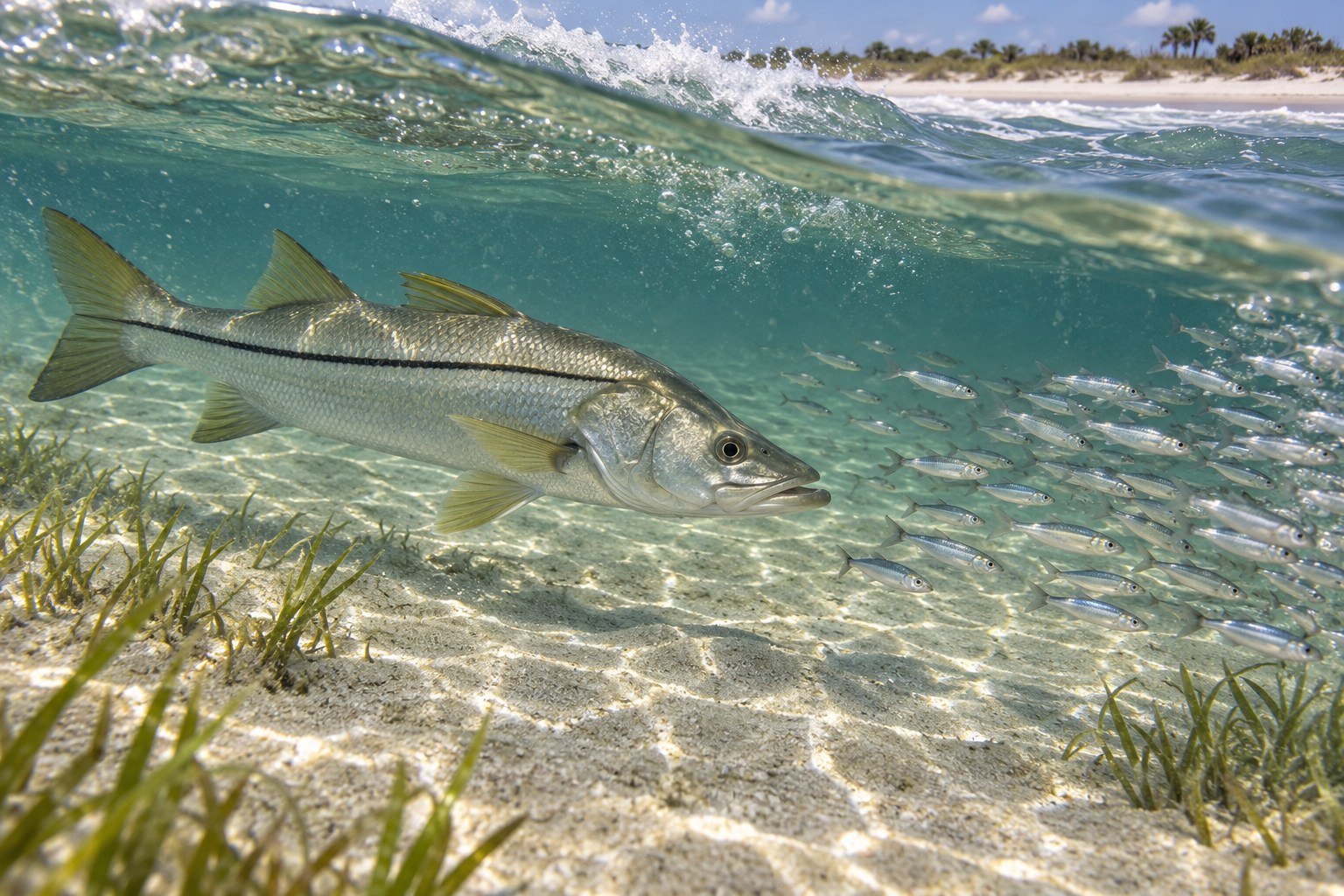
When snook are visible in the shallow wash, switch from waiting on the bottom to a quiet moving presentation. Cast ahead of their path. The fish can be much closer to the beach than expected, so avoid walking through the exact water you want to fish.
Useful targets without relying on a pier
| Target fish | Where to focus | First bait or lure |
|---|---|---|
| Whiting | Inner surf trough over sand | Small, freshly cut shrimp bait with the hook point exposed |
| Pompano | Clean sandy lanes with manageable waves | Sand fleas, shrimp or a compact pompano jig |
| Snook | Warm shallow beach water and current edges | A slim paddletail matched to the visible bait |
| Spanish mackerel | Bait schools feeding within safe casting range | A small spoon retrieved briskly |
| Ladyfish | Open pockets where little fish are active | A light jig or drifting shrimp |
| Redfish | Suitable bay-side mangrove and shell habitat | A weedless soft lure from a lawful boat or paddle route |
The bay-side entry in this table is not a recommendation to cross private waterfront. Reach that habitat only through a confirmed access route suited to the craft and forecast.
Treat Matanzas Pass as working water
The northern end of the island sees boats entering and leaving the bay. Current may run strongly along a point or shoreline edge. Watch traffic and keep fishing lines out of navigation routes. A boat wake can reach the bank long after the vessel passes.
Do not wade toward deeper water to reach a visible school. Channels can drop quickly, and moving water is not judged safely from its surface appearance alone. Fish from a stable, permitted position with an easy retreat.
If the pass-side conditions are too busy or rough, choose the open beach elsewhere. The purpose of a backup plan is to reduce difficulty, not to find a more exposed place simply because it has fewer anglers.
Seasonal choices for the island
Cooler weather can make a patient surf trip attractive. Whiting and pompano are sensible targets in clean water and moderate waves. After a front, wait for the sea to settle and inspect the beach shape again because sandbars may have changed.
Spring bait activity can bring mackerel and other predators close to shore. Carry a lure you can tie on quickly, but avoid casting through birds or other anglers in the excitement. Fish the outside of the school rather than landing directly in its center.
Summer often favors dawn and the early part of the morning. Snook can use beach shallows, while heat and thunderstorms shorten comfortable fishing time. Keep handling brief and leave enough time to reach shelter before weather arrives.
Fall offers changing bait movements and periods of good beach fishing between weather systems. Tropical conditions can alter access and water quality, so revisit the current notices rather than relying on a plan made weeks earlier.
Match the forecast to the route on foot
A beach trip includes the walk from the entrance and the walk back. Check whether rising water, construction detours or an eroded section could make that return harder. Do not assume you can always continue along the sand past a restricted work zone.
Wind from the Gulf can add waves and drifting grass. An offshore breeze may flatten the surf while creating a different hazard for paddlers. Judge each activity on its own conditions rather than treating a calm-looking beach as a general boating forecast.
Use the Fort Myers Beach tide and weather forecast and set a sensible stopping time. A short fishing window can still be worthwhile if you spend it on one well-chosen trough.
Carry less and fish more deliberately
A medium spinning outfit, a few small hooks, several sinkers and fresh shrimp are enough to begin a mixed surf session. Add a spoon and a paddletail for visible bait activity. Keep the leader appropriate to the fish and inspect it after abrasion or a bite from a toothy species.
Use a hook that matches the bait rather than hiding a small shrimp on oversized tackle. Keep the point exposed. With circle hooks, steady pressure is more effective than a forceful strike when the fish moves away.
Bring pliers, a measuring tool, water and a container for discarded line. A light bag makes walking detours easier. If fishing with children, avoid a setup that requires several unattended rods spread across a busy beach.
Use the first hour to test distance
Begin in the nearest sandy lane and give the bait time to work. If there is no activity, try the next trough rather than immediately walking far away. Compare the two distances while keeping the bait and hook consistent.
When small fish are stripping the bait, reduce its size or change the hook proportion. When grass repeatedly buries the rig, look for cleaner water within the available access. When a school of bait appears, switch to a moving lure and follow it only as far as safe public space allows.
Leave the beach as soon as lightning becomes a concern. A fishing rod and an open shoreline are poor places to wait for a storm to pass. Ending with time in reserve is especially useful when parking or transit adds to the return.
Keep recovery work and wildlife undisturbed
Stay clear of construction equipment, marked dunes and nesting areas. Do not leave hooks where people walk barefoot. Release unwanted fish over wet sand or in the water, with gentle support and minimal handling.
Confirm the FWC saltwater fishing and harvest rules before your outing. The Fort Myers Beach access notes separate current repair notices from the older photograph used to show the beach setting.
Do not let an old landmark choose the whole trip
Many visitors remember fishing around the pier or using a particular parking lot. Current construction means those memories need to be checked against today’s access. Select a lawful beach entrance first, then search the nearby water for a trough or bait lane. This keeps the fishing plan useful even when the familiar structure is unavailable. A small casting outfit makes it easier to adjust within the open public beach. Leave enough time to follow a detour back to the vehicle, and do not use a fenced work area as a shortcut. The productive feature may be a temporary sandbar rather than the landmark that originally brought you here.
Fort Myers Beach questions
Can I fish from the old pier location?
The replacement pier area is an active construction setting. Stay outside its restricted area and use a different confirmed beach fishing position.
Is Bowditch Point completely inaccessible?
The reviewed notice retains pedestrian beach access and the transit stop while closing parking and park amenities. Plan for those limits instead of expecting normal facilities.
What is the simplest beach target?
Whiting on small shrimp is a practical starting plan in manageable surf. Test the close sand before trying long casts.
Can I avoid a beach detour by walking through shallow water?
No. Follow the posted route around construction or closures. Water beside a work zone is not a public shortcut.