
SOUTHWEST
Sanibel
fishing guide
Explore shell beaches and shallow snook lanes while distinguishing open beach parks from the closed Lighthouse fishing pier.
Explore the guide ↓Use Sanibel’s different shorelines to your advantage
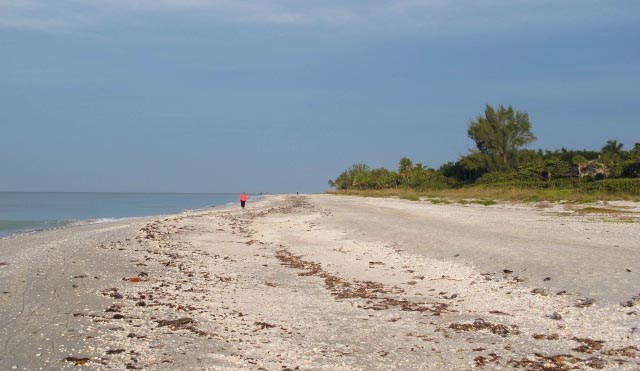
Sanibel curves across the coast, giving anglers beaches with different exposure to wind and waves. The Gulf shore, the eastern tip and the area near Blind Pass do not fish like one continuous straight beach. Choose the part of the island that fits the day’s conditions rather than returning automatically to a favorite parking lot.
Snook in the shallow surf are an appealing warm-weather target. Whiting and pompano offer a smaller-bait approach over clean sand. Bait schools can draw ladyfish, mackerel and jacks within reach. The challenge is finding a legal, uncrowded fishing lane with healthy water and a sensible landing area.
Sanibel’s public beach parks have reopened in many places, but the Lighthouse fishing pier remains a separate closure. An open beach park does not mean every structure inside it is usable. Make that distinction before choosing the day’s equipment.
Choose a beach park, not a remembered pier
Lighthouse Beach Park
The city lists the beach park as open while identifying the fishing pier as closed until further notice. Plan for permitted shore fishing and current beach conditions, not a pier session. Stay outside any fenced repair area and keep access paths clear.
Gulf-side beach entrances
Public entrances along the island provide ways to reach the sand. Use the parking zone appropriate to visitors and observe its time limits. A nearby resident-only area or private driveway is not an alternative when the public spaces fill.
Blind Pass and Turner Beach
The western end puts anglers near moving water between Sanibel and Captiva. That setting deserves more caution than an open stretch of mild surf. Confirm the current park notice, keep away from unstable edges and never treat the pass as a place to wade across.
Make a beach snook walk slow and quiet
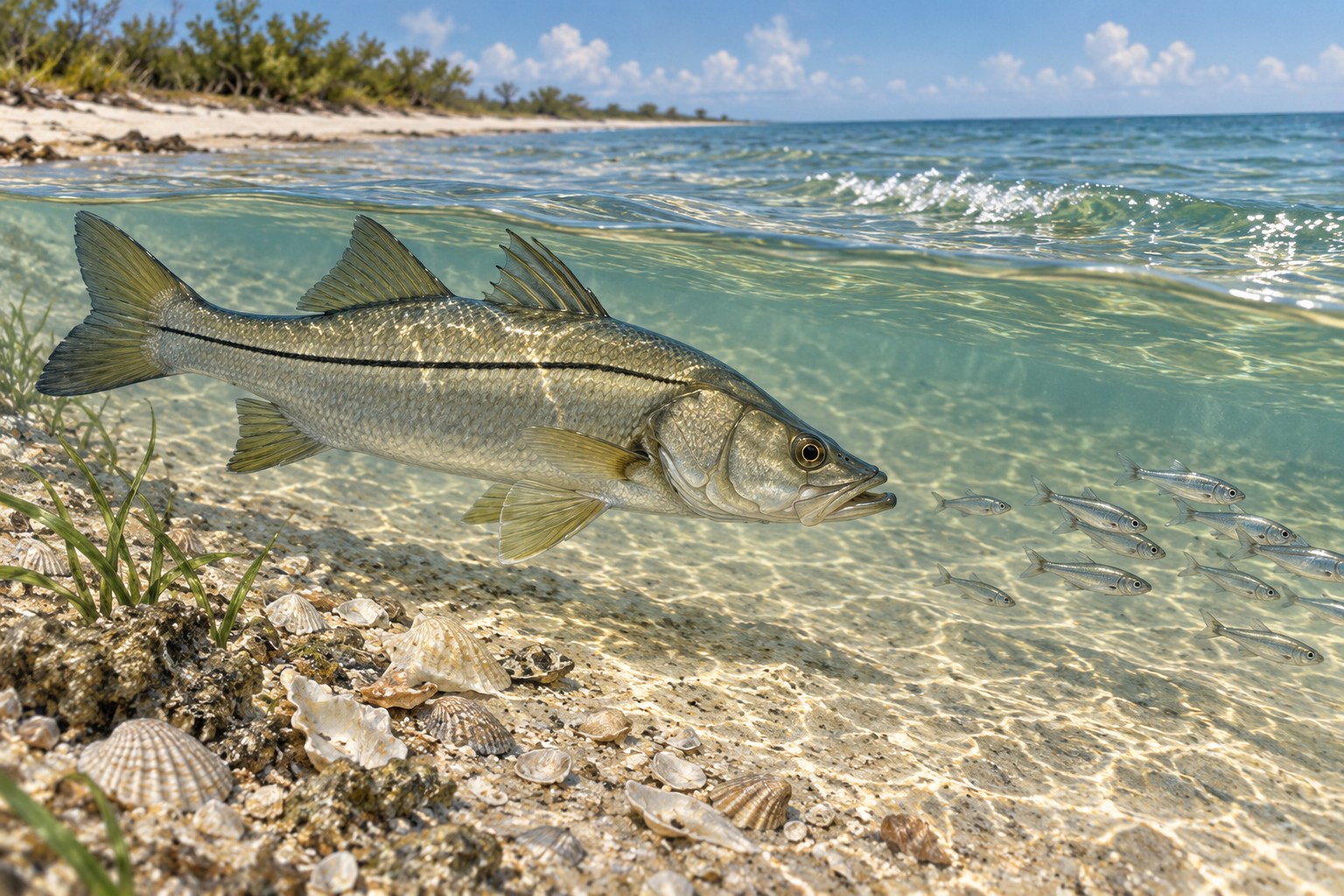
Carry one manageable rod and walk above the wash. Look ahead through polarized glasses for a dark line, a shadow or a fish moving against the pale bottom. Snook can travel so close to shore that an angler standing in knee-deep water has already passed them.
When a fish appears, pause and read its direction. Place the lure ahead of it and let the fish discover the offering. A natural path across its view is more useful than repeated splashes directly over it.
Choose a lure similar in size to the small bait present. A slender paddletail or small swimming plug can cover the shallow lane without much weight. If the lure scrapes bottom or arrives wrapped in shell, adjust the depth before making another cast.
Other fish worth planning for
| Fish | Useful condition | Bait or lure to test |
|---|---|---|
| Whiting | Gentle surf over open sand | A small piece of fresh shrimp near the bottom |
| Pompano | Clean troughs with food moving in the wash | Sand fleas, shrimp pieces or a compact jig |
| Spanish mackerel | Small baitfish being chased offshore of the wash | A silver spoon retrieved above the bottom |
| Ladyfish | Active schools along a trough or current edge | A light jig with brief pauses |
| Jacks | Fast surface feeding around bait | A durable swimming lure on suitably strong tackle |
Do not keep a fish merely because it resembles a familiar species. Pompano, permit and several jacks can confuse beginners. Carry a reliable identification reference and check the current rule for the actual fish before deciding to harvest it.
Fish beside shell, not through every pile
Shell deposits show where waves and currents move material, but the deepest shell patch is not always the best place for a hook. Fish the softer sand beside it. Small bottom feeders can search that edge while your rig remains easier to retrieve.
Use a bait small enough for the target to take. A large loose shrimp piece can be stripped quickly or tumble into shell. Inspect it after several taps and replace it before spending another long cast with an empty hook.
Shell collectors often work close to the wash. Leave them plenty of room and reel in when someone approaches the line. Fishing and shelling can share the beach when neither activity occupies the other’s safe space.
Choose the island side after checking the wind
Wind exposure can differ around Sanibel’s curve. A beach with manageable waves may be available even when another stretch is unpleasant, but access and swimming restrictions still apply. Do not use an exposed point just because it is closest to the parking lot.
Strong onshore wind brings surf and can gather floating grass. Offshore wind may make the water look smooth while making a paddleboard or kayak trip risky. Keep a shore-fishing decision separate from any plan to launch.
Use the Sanibel-area tide and weather outlook to compare conditions. Watch the actual wave sets before choosing where to stand, and keep a clear route back to the entrance as the water rises.
Seasonal patterns around Sanibel
Cooler months often suit a small-bait beach plan for whiting and pompano. A front can temporarily dirty the water and change the sandbars. Reassess the troughs after the sea settles instead of assuming the productive cast is still the same distance.
Spring warming can bring more visible bait and predators along the shore. Carry one lure that can be worked quickly when a school appears. Avoid running through a flock of feeding birds or casting where the line may hook one.
Summer offers the classic shallow-water snook search, especially during quieter early hours. Fish can be stressed by warm water and lengthy handling. Keep the release short and avoid dragging a catch onto hot sand for a photograph.
Fall can produce changing bait movements and comfortable walking weather between storms. Tropical weather may also change beach access or water quality. Check current notices even if the last visit was only a few weeks earlier.
Keep Blind Pass in a separate category
A tidal pass combines moving water, changing bottom and boat wakes. Fish may feed along the edges, but that does not make the middle suitable for wading. Stay on stable permitted ground and avoid trying to gain a few extra yards by entering stronger flow.
Watch how a lure or bait moves before adding more weight. A presentation swept into rocks or a busy channel is not controlled. Fish the slower edge if there is a safe position, or choose a beach session elsewhere.
Do not rely on old photographs to judge the pass opening or shoreline shape. Storms and sand movement can alter both. Current signs and the visible conditions should decide how close you approach.
A beach kit that stays easy to carry
A medium spinning outfit with a replaceable leader covers a range of beach targets. Choose stronger leader material for snook abrasion, while keeping small-fish rigs compact. A few small hooks, sinkers, jigs and one spoon are enough to begin.
Bring polarized glasses, water, pliers and a measuring tool. Keep bait cool rather than carrying more than you can use. A small closed container for line ends prevents them from blowing into shells and becoming difficult to find.
For a family visit, separate the fishing position from the swimming setup. One adult should manage the rods and hook storage. Stop casting whenever the space behind the rod is not clear, even if a visible fish is moving past.
A useful first Sanibel morning
Choose one open public entrance and a manageable walking distance. Begin with observation: water clarity, the first trough, bait and other beach users. If conditions suit bait fishing, test the close lane. If snook are visible, keep moving slowly and make selective casts.
After a quiet spell, change one part of the approach. Try a smaller bait, a shallower lure path or the next trough. Avoid walking so far that the return becomes tiring in heat or inconvenient within the parking allowance.
End with time to clean the area and release any unwanted fish carefully. A few notes about wind direction and water color can help you choose the better side of the island next time.
Respect wildlife and current fishing limits
Stay away from marked nests, avoid disturbing resting shorebirds and keep lights off nesting beaches at night. Do not leave bait for wildlife. If birds gather around the line, pause fishing until the casting lane is clear.
Check the FWC recreational saltwater rules for licenses and harvest. The Sanibel access and photograph notes identify the city’s park notices and separate open beach access from the closed Lighthouse fishing pier.
Sanibel fishing questions
Is the Lighthouse fishing pier available?
The reviewed city page says the pier is closed until further notice. The beach park being open does not change that separate restriction.
Do I need to wade to find snook?
Often you can look for them from dry sand. Walking above the wash may help you see fish that would be disturbed by wading through their shallow lane.
Can I fish wherever people are shelling?
Only where fishing is permitted and there is safe separation. Reel in when shell collectors or swimmers enter the line’s path.
What should I do if the first beach is rough?
Compare another lawful entrance with different wind exposure or postpone the trip. Do not substitute a hazardous pass position for an uncomfortable surf beach.